
Choosing between a propane or natural gas grill depends on your outdoor space and cooking style. Propane offers portability and higher heat for smoky flavors, while natural gas provides continuous fuel and steady temperatures for easier cooking. If you want flexibility, go propane; for a permanent setup, natural gas might be better. To discover which suits your needs best and learn more about these options, keep exploring your choices.
Key Takeaways
- Propane grills are portable with lower initial costs, while natural gas grills are permanent, offering continuous fuel supply.
- Natural gas provides consistent heat and easier long-term operation; propane heats faster but requires tank refills.
- Installation of natural gas lines is more costly but eliminates refilling, whereas propane tanks are easier to set up and move.
- Propane enhances smoky flavors with higher heat, while natural gas offers cleaner, more even cooking performance.
- Choose based on outdoor space, lifestyle, and aesthetic preferences—built-in natural gas for permanence or portable propane for flexibility.

3-Burner Propane Gas Grill with Side Burner, 34,000 BTU Stainless Steel BBQ Grill – Heavy-Duty Porcelain-Enameled Grates for Patio and Outdoor Cooking
Powerful 34,000 BTU Output for Perfect Grilling: This gas grill features 3 stainless steel main burners plus a…
As an affiliate, we earn on qualifying purchases.
As an affiliate, we earn on qualifying purchases.
Understanding the Basics of Propane and Natural Gas
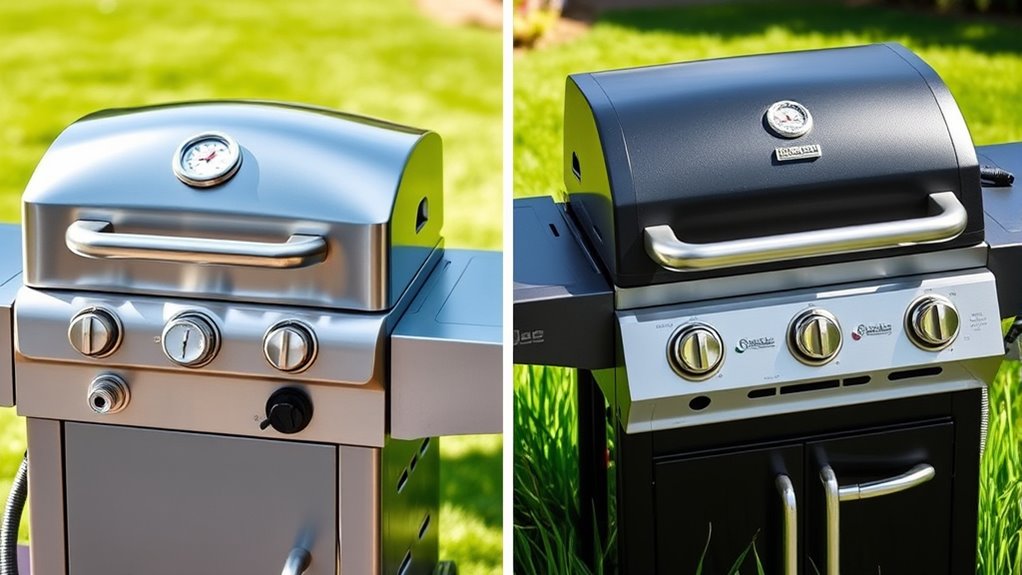
While both propane and natural gas are popular fuel choices for grills, they have distinct differences in their composition and source. Propane is stored as a liquid in pressurized tanks, making fuel storage straightforward and portable. Natural gas, on the other hand, is supplied through pipelines directly connected to your home, eliminating the need for tank storage. Safety regulations play a *vital* role in handling both fuels; propane tanks require proper ventilation and regular inspections to prevent leaks, while natural gas lines must be correctly installed and maintained to avoid hazards. Understanding these basics helps you choose the right fuel type for your grilling setup, ensuring safe operation and compliance with local codes. Proper knowledge of fuel storage and safety regulations is essential for confident, worry-free grilling.

Spire Premium 5 Burner Built In Gas Grill Island Head, Stainless Steel 30 Inch Propane Grill with Rear Burner, 63,000 BTUs, 750 SQ In Racks, Dual Fuel Compatibility – 740-0788P
Premium Stainless Steel Frame For Durability: Designed with a rust-resistant stainless steel frame, this outdoor grill combines exceptional…
As an affiliate, we earn on qualifying purchases.
As an affiliate, we earn on qualifying purchases.
Cost Comparison: Initial Investment and Operating Expenses
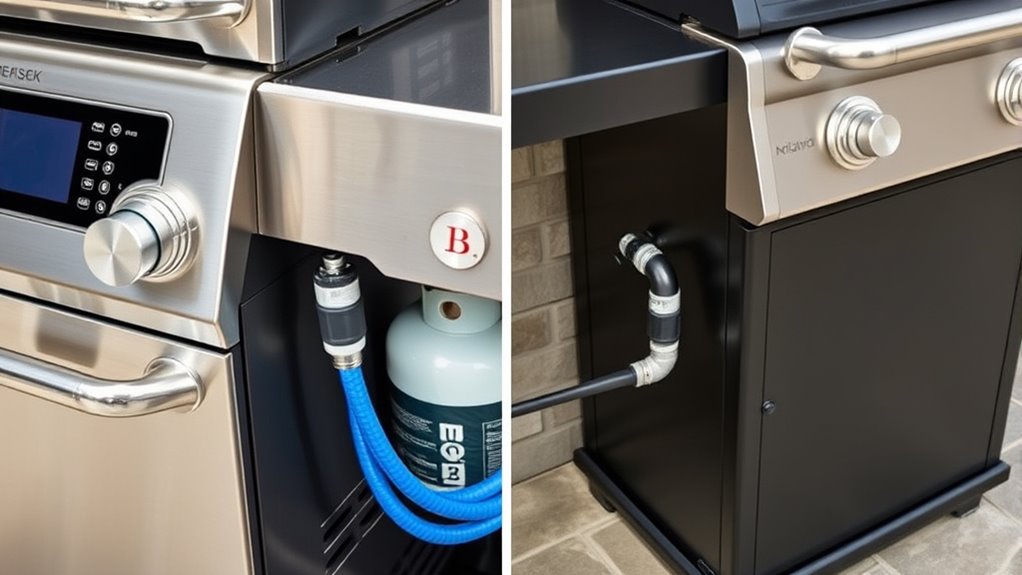
When comparing propane and natural gas grills, the initial investment and ongoing costs can considerably influence your choice. Propane grills often have lower upfront costs but require you to buy fuel tanks and manage fuel storage, which can add to expenses over time. Natural gas grills tend to have a higher initial price, especially if you need to install a gas line, but they offer better cost efficiency since you’ll connect directly to your home’s gas supply. Operating expenses for natural gas are usually cheaper because natural gas is less expensive than propane per unit. Additionally, with natural gas, you avoid the hassle of replacing or refilling fuel tanks, making it a more economical choice in the long run.

Charbroil Portable Convective 1-Burner Propane Gas Grill – 465133010
COOKING SYSTEM: With the power of liquid propane this Portable Gas Grill is convenient and versatile
As an affiliate, we earn on qualifying purchases.
As an affiliate, we earn on qualifying purchases.
Convenience and Accessibility for Home Grilling

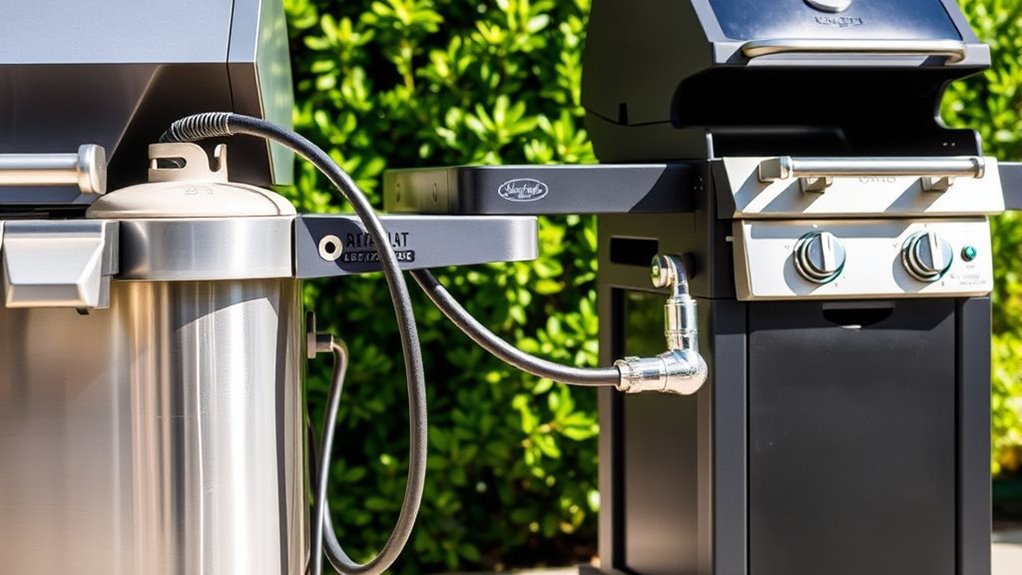
Natural gas grills often provide greater convenience and accessibility because you can connect them directly to your home’s gas line, allowing for continuous fuel without needing to refill tanks. This means less interruption during your cookouts and more time enjoying your outdoor space. To maximize convenience, consider these factors:
- Easy connection to your home’s gas line saves time and effort.
- No need to store or replace propane tanks frequently.
- You can enhance your outdoor furniture setup for a more comfortable grilling area.
- Use compatible grill accessories for seamless cooking and cleanup.
This setup ensures your grilling experience is hassle-free, making outdoor cooking more enjoyable and integrated into your lifestyle.

12 Feet 1/2 Inch ID Natural Gas Hose with Quick Disconnect for weber, charbroi, Grill, Pizza Oven, Patio Heater and More NG Appliance, Propane to Natural Gas Conversion Kit – CSA Certified
Strong Quality: Material upgrade – The propane hose is made of high-quality rubber, connected with solid brass connector,…
As an affiliate, we earn on qualifying purchases.
As an affiliate, we earn on qualifying purchases.
Flavor and Cooking Performance Differences

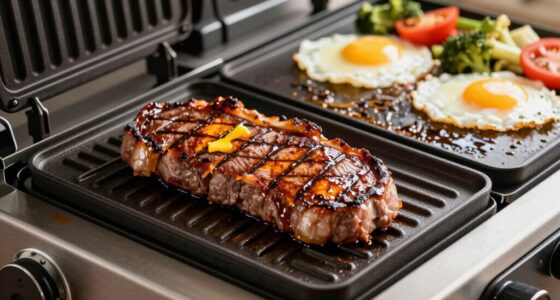
You’ll notice that propane and natural gas can impact flavor intensity and how evenly your food cooks. Propane often provides higher heat, which can enhance smoky flavors, while natural gas offers more consistent heat distribution. These differences influence your cooking versatility and the overall taste of your grilled dishes.
Flavor Intensity Variations
Propane and natural gas grills produce distinct flavor profiles that can markedly impact your cooking experience. You might notice that propane often delivers a richer smoke flavor, enhancing the aroma and depth of your dishes. Natural gas, on the other hand, tends to produce a lighter, cleaner taste, allowing the natural flavors of your ingredients to shine. Here are some key differences:
- Propane’s higher heat can intensify smoke flavor and aroma enhancement.
- Natural gas offers a subtler flavor, ideal for delicate dishes.
- Propane may develop a more robust char, boosting flavor complexity.
- Natural gas provides consistent, milder flavors, perfect for everyday grilling.
Choosing between them depends on your preference for flavor intensity and aroma enhancement in your grilling experience.
Heat Distribution Consistency
While flavor differences are prominent, the way heat is distributed across the grill surface considerably impacts cooking results. Proper temperature control relies on even heat distribution, ensuring your food cooks uniformly without hot spots or cold areas. Natural gas grills often provide more consistent heat distribution because of a steady fuel supply, allowing for precise temperature control. Propane grills, on the other hand, can sometimes exhibit uneven heat, especially if the tank’s pressure fluctuates or the burners aren’t well calibrated. This inconsistency can lead to uneven cooking or longer cooking times. When choosing between the two, consider how important consistent heat is for your grilling style. A grill with better heat distribution will give you more predictable results, making your grilling experience smoother and more enjoyable.
Cooking Versatility Differences
The choice between propane and natural gas considerably influences both flavor and cooking performance. Propane tends to produce higher heat, which can enhance searing and grilling for smoky flavors. Natural gas offers a steadier, more consistent flame, ideal for maintaining cooking style flexibility. Consider these factors:
- Flavor Impact: Propane’s hotter flames can produce a richer, more intense smoky flavor.
- Cooking Style Flexibility: Natural gas’s steady heat allows for precise temperature control during delicate cooking.
- Grill Accessory Compatibility: Some grill accessories are designed specifically for propane or natural gas, affecting your customization options.
- Cooking Performance: Propane heats quickly and reaches higher temperatures, while natural gas provides longer, more stable cooking sessions.
Installation Requirements and Safety Considerations
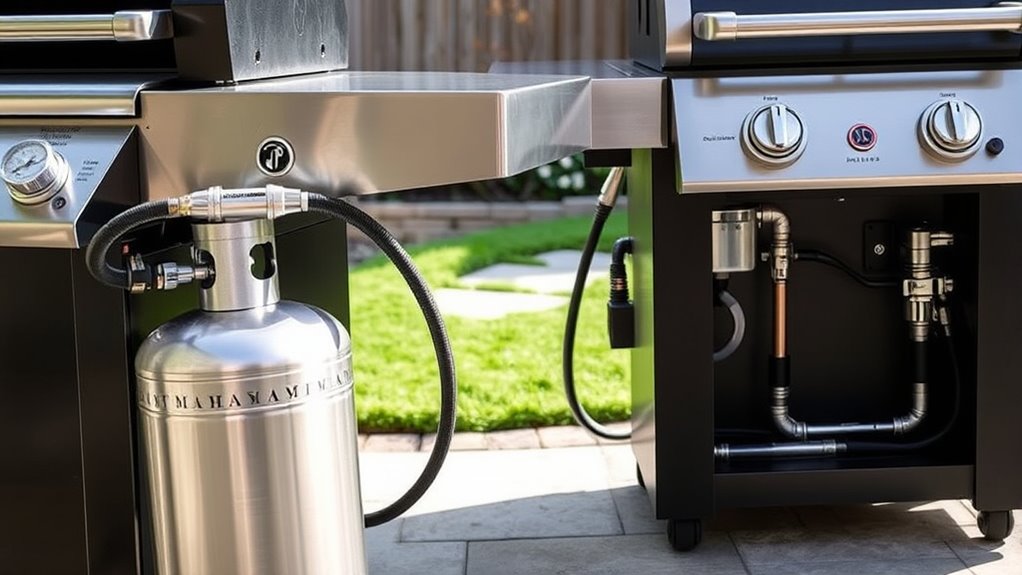
Installing a grill safely requires careful attention to location, ventilation, and connection procedures. You must guarantee your setup meets all installation safety standards and adheres to local code compliance. Choose a flat, stable surface outdoors, away from overhangs, deck rails, or combustible materials. Proper ventilation is critical to prevent gas buildup and ensure safe operation. When connecting propane or natural gas lines, double-check fittings for leaks using soap solution or a leak detector. Follow manufacturer instructions precisely, and never bypass safety features. Installing a grill correctly minimizes the risk of fire, gas leaks, or explosions. Always consult local codes and, if unsure, hire a professional to handle gas connections and ensure all safety considerations are met effectively.
Environmental Impact and Sustainability Aspects

Choosing between propane and natural gas grills involves weighing their environmental impacts, as each fuel source affects air quality and resource consumption differently. Your decision impacts your carbon footprint and reliance on renewable sources.
Here are key points to consider:
- Natural gas generally produces fewer emissions, reducing your carbon footprint.
- Propane emits more greenhouse gases per unit, impacting air quality.
- Both fuels are fossil fuels, but natural gas is often seen as a cleaner option.
- Neither is renewable, but natural gas infrastructure can be more sustainable long-term.
Ultimately, if sustainability is a priority, natural gas offers a lower environmental impact, but both options still contribute to fossil fuel consumption.
Maintenance and Long-Term Durability

Taking care of your grill’s fuel system is key to ensuring it lasts. Regular cleaning prevents clogs and corrosion that can weaken components over time. By maintaining your grill properly, you’ll enjoy reliable performance and extend its lifespan.
Fuel System Durability
Fuel system durability is essential when considering long-term performance, and both propane and natural gas grills require regular maintenance to stay reliable. Proper care ensures your fuel system components remain efficient and resistant to wear. To enhance durability, focus on:
- Inspecting fuel lines for cracks or leaks regularly.
- Ensuring connections remain tight and corrosion-resistant.
- Protecting metal parts from moisture to prevent rust.
- Using corrosion-resistant fittings and materials.
Maintaining these aspects helps prevent corrosion and prolongs the life of your fuel system. Both fuel types have components designed for longevity, but neglect can lead to failures. Regular checks and proper storage considerably improve fuel system resilience, ensuring your grill stays dependable season after season.
Cleaning and Care
Regular cleaning and proper care are essential for maintaining your grill’s performance and extending its lifespan. To keep your grill in top shape, regularly perform grill cleaning to remove grease, food residue, and debris that can cause corrosion or affect flavor. Pay special attention to the burners and ports to ensure proper airflow. When it comes to fuel storage, always store propane tanks outdoors in a well-ventilated area and check for leaks before use. For natural gas grills, inspect the gas line connections for leaks and ensure they’re secure. Cover your grill when not in use to protect it from the elements. Proper maintenance not only improves cooking quality but also prolongs the durability of your grill, saving you money in the long run.
Making the Best Choice for Your Lifestyle and Home Setup
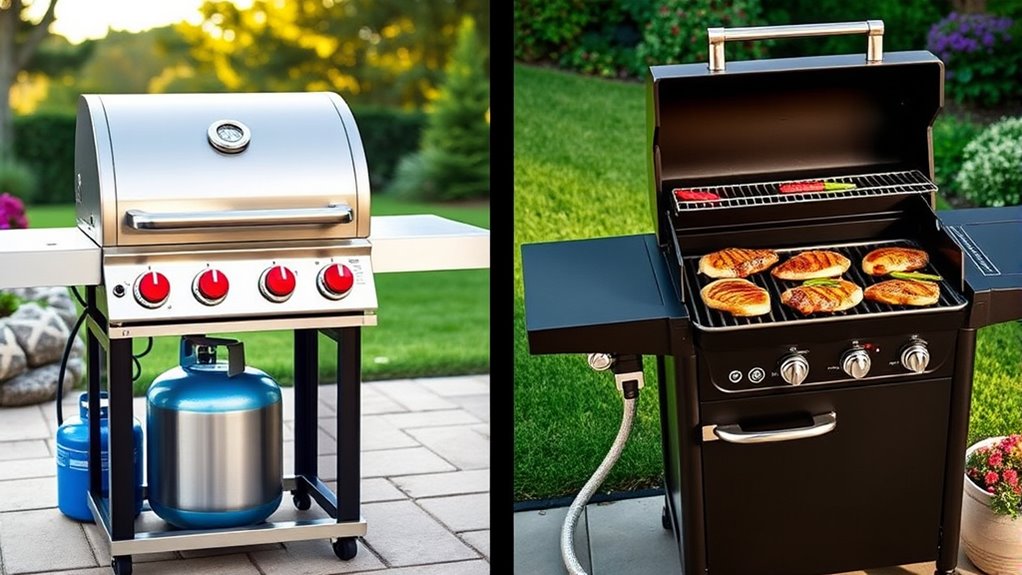
Choosing between propane and natural gas grills depends largely on your lifestyle and home setup. To make the best choice, consider these factors:
Your outdoor setup and lifestyle will guide your ideal grill choice—propane for portability, natural gas for permanence.
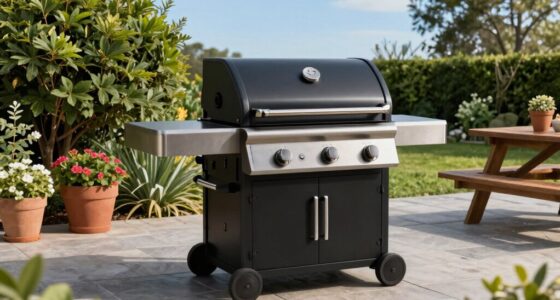
- Installation Flexibility: Natural gas requires a permanent hookup, ideal if you want a built-in setup. Propane offers portability for movable setups.
- Convenience: Propane tanks are easy to replace, while natural gas connects directly to your home’s supply.
- Outdoor Decor & Space: Think about how the grill fits into your outdoor decor. A built-in natural gas grill can enhance your backyard’s aesthetics.
- Grill Accessories: Ensure your chosen grill supports your favorite accessories, like side burners or rotisseries, for versatile cooking.
Your setup influences not only functionality but also how seamlessly your grill integrates into your outdoor space.
Frequently Asked Questions
Can I Convert a Propane Grill to Natural Gas Later?
Yes, you can convert a propane grill to natural gas later through a grill conversion kit. Make certain your grill is compatible with natural gas, as not all models are. You’ll need to check fuel compatibility and follow the kit’s instructions carefully. Conversion involves replacing the orifices and connecting a natural gas supply line. Always consult a professional if you’re unsure to ensure safety and proper installation.
Which Type of Grill Offers Better Temperature Control?
You’ll find natural gas grills offer better temperature control because they provide more consistent heat and easier heat regulation. Propane grills can fluctuate in temperature, making precise cooking trickier. With natural gas, you get steady temperature consistency, which helps you maintain the perfect heat for various foods. If you value precise control and consistent results, a natural gas grill is typically the better choice for managing heat regulation during your cookouts.
Are There Health Concerns Associated With Propane or Natural Gas?
You might wonder if propane or natural gas poses health risks. Both fuels can affect indoor air quality if used indoors or improperly ventilated. To stay safe, always prioritize gas leak prevention by regularly inspecting connections and using detectors. Proper ventilation minimizes exposure to fumes, reducing health concerns. As long as you follow safety guidelines, using either fuel type shouldn’t compromise your health or indoor air quality.
How Long Does It Typically Take to Install a Gas Hookup?
Installation of a gas hookup usually takes about one to two days, depending on your home’s setup. You’ll need to contemplate the installation timeline and permit requirements, which can add extra time if approvals are needed. It’s best to schedule your installation in advance and confirm with your local authorities. A professional installer can help streamline the process, ensuring all safety standards and permits are properly handled for a smooth hookup.
Which Fuel Type Is More Cost-Effective Over the Grill’s Lifespan?
Natural gas is generally more cost-effective over your grill’s lifespan because it offers better fuel efficiency and consistent pricing. You’ll save money in the long term since natural gas tends to be cheaper than propane, especially with regular use. Plus, with a steady supply, you won’t need to constantly refill tanks. Overall, choosing natural gas can lead to significant long-term savings and easier fueling.
Conclusion
Choosing between propane and natural gas grills boils down to your lifestyle and setup. Consider what fits best with your budget, convenience, and environmental values. Remember, the right choice might be the one that keeps your grilling game on point without causing a headache later. Don’t put all your eggs in one basket—assess your needs carefully, and you’ll find the perfect grill to turn every cookout into a memorable feast.