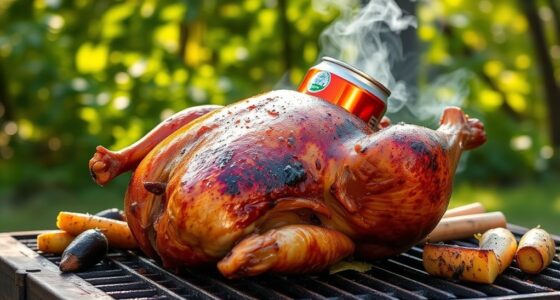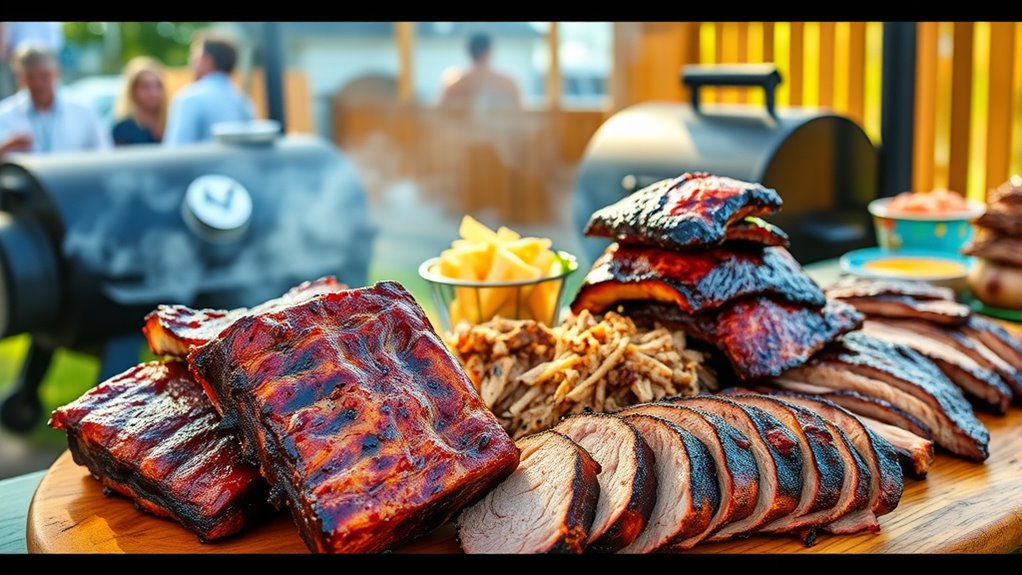

Regional BBQ styles each have unique flavors and techniques that reflect their local ingredients and culture. In Texas, expect beef brisket, smoky over mesquite or oak, with a simple salt and pepper rub, emphasizing meat quality. Carolina BBQ features pork, slow-smoked over hickory or apple wood, with vinegar or tomato-based sauces that balance richness. Kansas City offers thick, sweet, and sticky sauces with diverse meats and smoky woods. To understand how these styles shape the BBQ landscape, keep exploring these flavorful traditions.
Key Takeaways
- Texas BBQ emphasizes beef, especially brisket, smoked low and slow over mesquite or oak, with simple salt and pepper seasoning.
- Carolina BBQ primarily features pork, with vinegar-based sauces in the East and tomato-based in the West, smoked over hickory or apple wood.
- Kansas City BBQ is known for thick, sweet, and sticky sauces with diverse rubs, using hickory or pecan wood for a variety of meats.
- Regional variations incorporate local ingredients and traditions, shaping distinct flavors, cooking techniques, and cultural identities.
- Key elements include specific sauce styles, smoking woods, main proteins, and regional influences that define each BBQ style.

Have you ever wondered how barbecue styles vary across different regions? It’s fascinating to see how local ingredients, culture, and history influence the flavors and methods each area develops. When exploring regional BBQ, you’ll notice that sauce varieties and cooking techniques are key elements that define each style. These differences aren’t just about taste—they reflect the identity of the communities and their culinary traditions.
In Texas, barbecue is primarily about the meat itself. You’ll find that Texans prefer beef, especially brisket, cooked low and slow over mesquite or oak wood. The cooking techniques focus on simplicity—seasoning with just salt and pepper, letting the quality of the meat shine through. Sauces are usually reserved and served on the side, often thin, tangy, and tomato-based, allowing the smoky flavor to remain prominent. This style emphasizes the meat’s natural taste, complemented by the smoky aroma and tender texture achieved through precise, slow cooking.
Moving to the Carolinas, barbecue takes on a different personality. Here, the focus shifts to pork, especially pulled pork and ribs. The cooking techniques often involve smoking the meat over hickory or apple wood, and the process can take many hours. The sauce varieties are a hallmark of Carolina BBQ, with a strong emphasis on tangy, vinegar-based sauces in the eastern part and sweeter, tomato-based sauces in the west. These sauces are integral, adding moisture and acidity that balance the richness of the pork. The use of vinegars and mustard in some regional recipes reflects the local palate and agricultural practices, making each Carolina style uniquely flavorful.
Kansas City BBQ is renowned for its rich, thick, and sweet sauces. The cooking techniques here often include smoking a variety of meats—ribs, chicken, sausage, and beef—over hickory or pecan wood. The hallmark is the sauce, which is thick, sticky, and loaded with molasses or brown sugar, offering a sweet, smoky taste. This style also emphasizes a diverse array of rubs and marinades, creating layers of flavor that complement the sauce. The emphasis on sauce varieties and the use of different cooking techniques make Kansas City BBQ versatile and accessible, appealing to a broad range of tastes.
Beyond these well-known styles, regional BBQ continues to evolve. Each area incorporates local ingredients and traditions, shaping distinct flavors and methods. Whether it’s the dry rubs of Memphis or the unique sauces of Alabama, understanding the sauce varieties and cooking techniques helps you appreciate how regional influences create the rich tapestry of American barbecue.
Frequently Asked Questions
What Equipment Is Essential for Authentic Regional BBQ?
You need a reliable smoker for authentic regional BBQ, ensuring it’s well-maintained for consistent results. Choose the right wood selection, like hickory or oak, to match your style. Regular smoker maintenance helps prevent issues and enhances flavor. A good thermometer is essential for monitoring temperature, while quality fuel and proper ventilation keep the smoke steady. These tools and practices guarantee authentic, flavorful BBQ every time.
How Do Regional Sauces Influence Flavor Differences?
Regional sauces substantially influence flavor profile distinctions by incorporating unique ingredient variations. For example, Texas sauces often feature bold, smoky flavors with chili and tomato, while Carolina sauces lean toward tangy, vinegar-based profiles. Kansas City sauces are thick, sweet, and tomato-rich. These sauce ingredient variations shape the overall taste, making each regional style stand out and giving you a distinct BBQ experience depending on the sauce used.
What Are Common Side Dishes in Each BBQ Style?
You might think sides are just extras, but in BBQ, they’re the real stars. In Texas, you’ll find classic sides like baked potatoes and pinto beans, while Carolina loves coleslaw and hushpuppies. Kansas City favors potato salad and baked beans, and beyond, you might enjoy pickles or cornbread. These side dish variations perfectly complement regional sauces and condiments, adding layers of flavor that make each style uniquely delicious.
Are There Traditional Beverages Served With Regional BBQ?
You’ll find that traditional beverages often complement regional BBQ perfectly. In Texas, you might enjoy a cold beer or whiskey, while Carolina pairs well with sweet tea or bourbon. Kansas City’s cultural drink traditions include craft beers and root beer, enhancing the smoky flavors. These regional beverage pairings reflect local tastes and history, making your BBQ experience more authentic and enjoyable. Cheers to discovering the perfect drink with every bite!
How Do Regional Climates Affect BBQ Cooking Techniques?
You might think the weather’s no big deal, but regional climate impact on smoking can turn your BBQ into a soggy mess or a desert dryout. In humid areas, you battle excess moisture, while in dry climates, you need to keep the fire steady. Regional weather variations demand different techniques—covering your smoker or adjusting vents—so your BBQ stays perfect, no matter how the climate tries to outsmart you.
Conclusion
Now that you know the unique flavors of Texas, Carolina, and Kansas City BBQ, you’ll appreciate each style’s distinct charm. Imagine hosting a backyard gathering with friends, serving smoky Texas brisket and tangy Carolina pulled pork—you’ll impress everyone with your newfound knowledge. Understanding these regional differences lets you savor BBQ like a local, making every bite an authentic experience. So next time you’re at a BBQ joint, you’ll confidently spot and enjoy your favorite regional style.