Spatchcocking your chicken involves removing the backbone and pressing it flat, which helps it cook more evenly and quickly on the grill. This technique exposes more surface area, leading to crispy skin and juicy meat. It also reduces grilling time and makes turning easier. To do it, cut along both sides of the backbone and flatten the bird. Keep going to discover step-by-step tips for perfect grilled spatchcocked chicken.
Key Takeaways
- Spatchcocking involves removing the backbone to flatten the chicken, ensuring even cooking and faster grilling.
- It exposes more surface area, promoting crispy skin and better flavor absorption from marinades.
- Proper temperature control (375°F-450°F) and a two-zone setup prevent burning and promote even doneness.
- Marinate the chicken for several hours to enhance tenderness and infuse flavor before grilling.
- Rest the chicken after grilling to allow juices to redistribute, resulting in juicier, more flavorful meat.
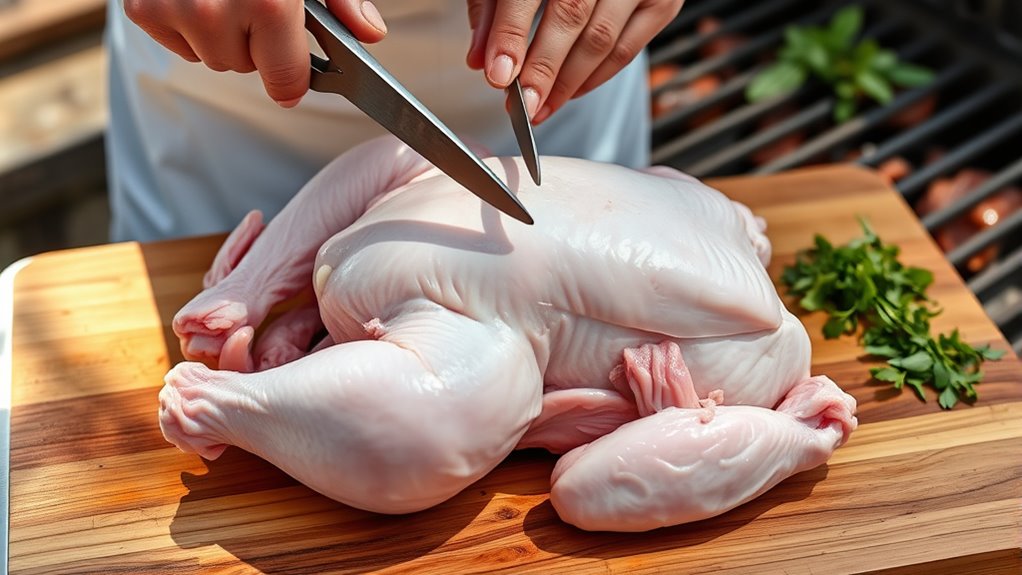
If you want perfectly cooked, juicy chicken on the grill, spatchcocking is the technique to master. This method involves removing the backbone and flattening the chicken, which allows for even cooking and quicker grilling times. But before you get to the grill, you’ll want to focus on marinade techniques. A good marinade not only adds flavor but also helps tenderize the meat. You can keep it simple with herbs, garlic, lemon, and olive oil, or get more adventurous with spices and acidic ingredients like vinegar or citrus juice. Whichever you choose, make certain to marinate the chicken for at least a few hours—preferably overnight—to maximize flavor infusion. When it’s time to grill, proper grilling temperature is vital. A medium-high heat, around 375°F to 450°F, works best for spatchcocked chicken. This range ensures the skin crisps up nicely while the meat remains juicy inside. To achieve this, preheat your grill thoroughly and maintain a consistent temperature throughout the cooking process. Using a two-zone setup—hot side and cooler side—gives you more control. Start by searing the chicken over direct heat to get that golden, crispy skin, then move it to indirect heat to finish cooking through without burning. Keep a close eye on the temperature of the meat, aiming for an internal temperature of 165°F in the thickest part of the thigh. This precise heat management prevents the chicken from drying out, which is a common mistake when grilling chicken. The flattened shape of spatchcocked chicken exposes more surface area to the heat, so it cooks faster and more evenly than traditional whole chickens. Plus, it’s easier to turn and baste, giving you more control over the final result. Remember, the key to success is balancing the marinade techniques with the grilling temperature. A well-marinated chicken cooked at the right temperature will have crispy skin, tender meat, and rich flavor in every bite. Rest the chicken for a few minutes after removing it from the grill to allow the juices to redistribute. This step is essential for maximum juiciness. Additionally, understanding grilling temperature control can help prevent common issues like uneven cooking or charring. Whether you’re grilling for a weeknight dinner or a weekend cookout, mastering spatchcocking combined with thoughtful marinade techniques and precise grilling temperature will elevate your chicken game to restaurant quality.
Frequently Asked Questions
Can Spatchcocked Chicken Be Grilled With Marinades or Dry Rubs?
Yes, spatchcocked chicken can be grilled with marinades or dry rubs. The flattened shape allows better marinade absorption and flavor infusion, ensuring every part gets coated evenly. You can marinate the chicken beforehand for deeper taste or apply dry rubs directly before grilling. Just make sure to let the marinade sit long enough, and if using a dry rub, give the chicken a little time to absorb the flavors before grilling.
What Tools Are Best for Spatchcocking a Chicken?
You’ll want sturdy kitchen tools like sharp poultry shears or a boning knife for spatchcocking your chicken. These tools make the cutting and flattening easier, turning a complex cooking technique into a breeze. Forget dull knives; they turn a simple process into a dangerous game. With the right tools—preferably stainless steel and well-balanced—you’ll master this technique effortlessly, transforming your cooking game and impressing everyone at the grill.
How Do I Ensure Even Cooking of Spatchcocked Chicken?
To guarantee even cooking of spatchcocked chicken, focus on temperature control and heat distribution. Keep your grill at a consistent medium heat, around 375°F, and use indirect heat for thicker parts. Rotate the chicken occasionally and flip it if necessary. Using a meat thermometer helps monitor internal temperature, aiming for 165°F. Proper heat management guarantees a juicy, evenly cooked spatchcocked chicken every time.
Is Spatchcocking Suitable for Small or Large Chickens?
Sure, spatchcocking is perfect whether you’re dealing with a tiny bantam or a hefty fryer. You’ll want to take into account size considerations, especially chicken weight, to ensure even cooking. Smaller chickens cook quickly and are easier to handle, while larger ones might need more attention and longer grilling times. So, go ahead—spatchcock that big guy or tiny bird, and enjoy perfectly cooked meat every time.
How Long Can I Marinate the Chicken Before Grilling?
You can marinate your spatchcocked chicken for 1 to 24 hours, depending on the marinade type. For acidic marinades like lemon or vinegar, stick to 1-2 hours to prevent texture breakdown. For oil-based or herb marinades, you can marinate up to 24 hours for maximum flavor. Just avoid over-marinating, as it can affect the chicken’s texture and taste, especially with highly acidic marinades.
Conclusion
Spatchcocking your chicken for the grill not only speeds up cooking time but also guarantees even, juicy results. It’s a technique that’s gaining popularity—over 60% of home grillers now try spatchcocking at least once. By flattening the bird, you get crispy skin and perfectly cooked meat every time. Once you master it, you’ll find it’s the easiest way to elevate your grilling game and impress everyone at your next cookout.