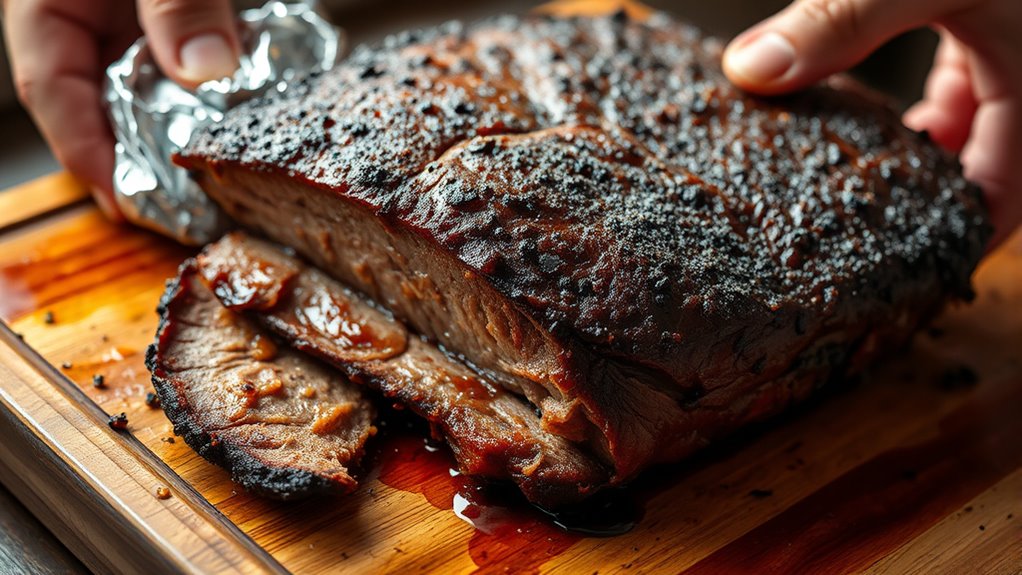
The Texas Crutch is a popular method where you wrap your brisket in foil or butcher paper during smoking. This speeds up the cook, retains moisture, and makes the meat more tender. It also helps push through the stall and controls bark development. Wrapping can lead to juicier, flavorful brisket with a great texture. If you want to master this technique and understand when and how to use it, you’ll find valuable tips ahead.
Key Takeaways
- Wrapping at 160-170°F speeds up cooking, retains moisture, and prevents the stall in brisket smoking.
- It enhances tenderness and juiciness by trapping steam and rendering fats inside the wrap.
- The Texas Crutch helps control bark development and maintains consistent smoker temperature.
- Use foil or butcher paper to wrap, adding flavors like juice or broth for extra richness.
- Wrapping is a strategic tool to achieve tender, flavorful brisket with a desirable bark texture.
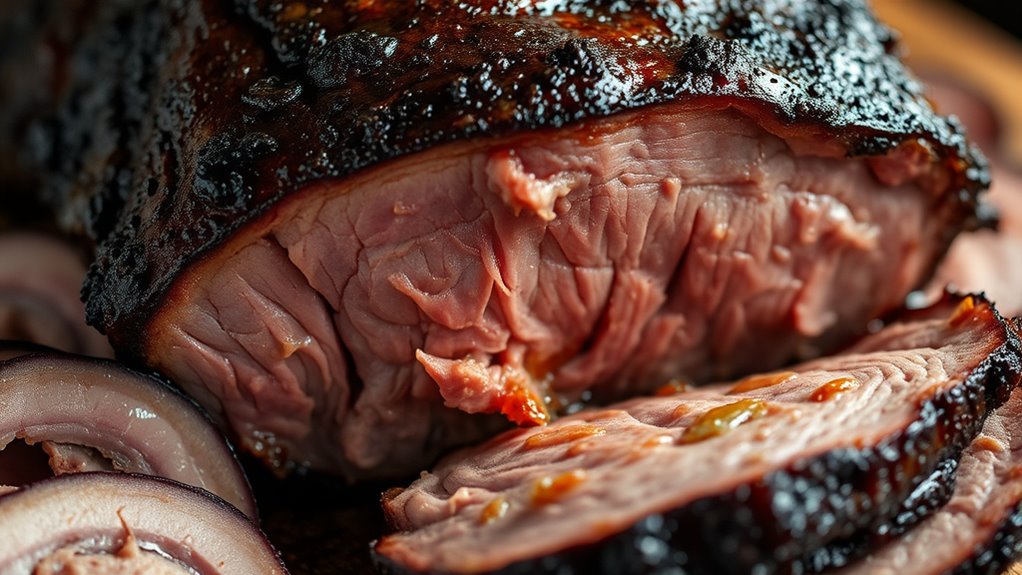
If you’re aiming for perfectly tender, flavorful barbecue, mastering the Texas Crutch can make all the difference. This technique involves wrapping your meat, typically brisket, in foil or butcher paper during the smoking process. The goal is to speed up cooking, retain moisture, and improve tenderness. When it comes to smoking techniques, the Texas Crutch acts as a game-changer, helping you control the bark development while ensuring the meat remains juicy. It’s especially useful when you’re aiming to prevent the infamous stall—when the internal temperature plateaus due to evaporative cooling. By wrapping your brisket at the right moment, you can push through this phase more efficiently.
Using the Texas Crutch also offers a significant advantage in flavor enhancement. When you wrap the meat, the juices and rendered fat stay locked inside, which results in a richer, more flavorful bite. The steam created inside the foil or paper tenderizes the meat further, breaking down connective tissues and making each bite melt-in-your-mouth tender. Plus, wrapping allows you to infuse additional flavors—like adding a splash of apple juice, beef broth, or even a dash of your favorite seasoning—directly into the wrap. This extra step can elevate the overall taste profile of your brisket, giving it a deeper, more complex flavor.
Wrapping locks in juices and flavors, making each bite richer and more tender.
Timing is vital when employing the Texas Crutch. Many pitmasters recommend wrapping the brisket when it reaches an internal temperature of around 160-170°F. At this point, the meat has developed a nice bark, but it’s also starting to stall. Wrapping then helps seal in moisture and heat, allowing the meat to continue cooking more rapidly. You’ll want to monitor your smoker’s temperature carefully—keeping it steady around 225-250°F—to ensure even cooking and excellent smoke flavor. While some purists prefer to cook unwrapped for a crisper bark, the Texas Crutch is a strategic move to balance bark development with tenderness and moisture. Understanding smoking techniques can further improve your results and help you master the process.
In the end, whether you choose to wrap or not depends on your desired outcome. But learning the ins and outs of smoking techniques, including the Texas Crutch, allows you to control the process more precisely. It’s a method that not only speeds up cooking but also amplifies flavor, giving you a juicy, tender brisket with a beautifully developed bark. When used correctly, it’s a powerful tool that can elevate your barbecue game to professional levels.
Frequently Asked Questions
Does Wrapping Affect the Overall Flavor of Brisket?
Wrapping your brisket does affect its flavor by enhancing moisture retention, which keeps the meat juicy and tender. While some argue it may slightly mute the smoky flavor, it also helps preserve the overall flavor profile by preventing it from drying out. If you want a moist, flavorful brisket, wrapping is a great technique. It balances flavor preservation with moisture retention, giving you a consistently delicious result.
Can You Over-Wrap and Ruin the Brisket?
Yes, you can over-wrap your brisket, which may trap too much moisture and lead to a soggy texture. Using proper wrapping techniques helps maintain meat moisture without overdoing it. To avoid ruining your brisket, wrap it firmly but not too tightly, and monitor the cooking process. This way, you preserve tenderness and flavor while preventing excess moisture buildup that could spoil the meat’s texture.
What Are the Best Alternatives to the Texas Crutch?
Like a guiding star in the night, alternative techniques can lead you to perfect brisket without wrapping. Try foil or butcher paper for flavor preservation, which traps moisture while allowing the meat to breathe. Wrapping in towels or using a cooler can also maintain heat and moisture. These methods help you achieve tender, flavorful results without relying solely on the Texas Crutch, giving your brisket a unique, delicious finish.
How Does Wrapping Influence Smoke Ring Development?
Wrapping your brisket encourages smoke ring development by trapping moisture and smoke, which helps the pink ring form more prominently. This process also infuses more flavor into the meat, enhancing its overall taste. As you wrap, you create a barrier that allows the smoke to penetrate deeper, resulting in a richer, more pronounced smoke ring and a more flavorful, tender brisket.
Is the Texas Crutch Suitable for All Types of Barbecue?
The Texas Crutch isn’t suitable for all types of barbecue, but it’s great for maintaining flavor preservation and controlling moisture. If you’re cooking lean meats or want to speed up the cooking process, wrapping techniques like foil or butcher paper help lock in juices and keep the meat tender. However, for those seeking a smoky crust, you might skip the crutch to preserve the bark, making it less ideal for certain barbecue styles.
Conclusion
Think of the Texas Crutch like a safety net—use it wisely, and it’ll catch your brisket when the heat gets tough. But rely on it too much, and you might miss out on that perfect, crispy bark. Just like a tightrope walker needs a balance between confidence and caution, you should decide when to wrap based on your progress. Ultimately, mastering the crutch means knowing when to lean on it and when to stand on your own.