
To avoid over-smoking your food, start with a small handful of wood chunks and add more gradually if needed. Maintain a steady temperature between 225°F and 275°F, and manage airflow to keep the smoke steady but not thick. Be mindful of the smoking duration based on the type of food—shorter for delicate items and longer for tougher cuts. Controlling how much wood you use and when guarantees a balanced smoky flavor; if you want to learn more, keep exploring these tips.

Get kitchen gear delivered free — and shop member deals
- Fast, free delivery on millions of items
- Access to Prime Big Deal Days deals on October 6–7
- Prime Video, Amazon Music and more included
Key Takeaways
- Start with a small handful of wood chunks and add more gradually as needed.
- Use hardwoods like oak, hickory, or fruitwoods for balanced smoke without overpowering.
- Maintain a steady temperature between 225°F and 275°F to ensure controlled smoldering.
- Manage smoke production by adjusting vents and airflow to prevent thick, bitter smoke.
- Limit smoking time based on food type, aiming for a subtle smoky flavor rather than overpowering.
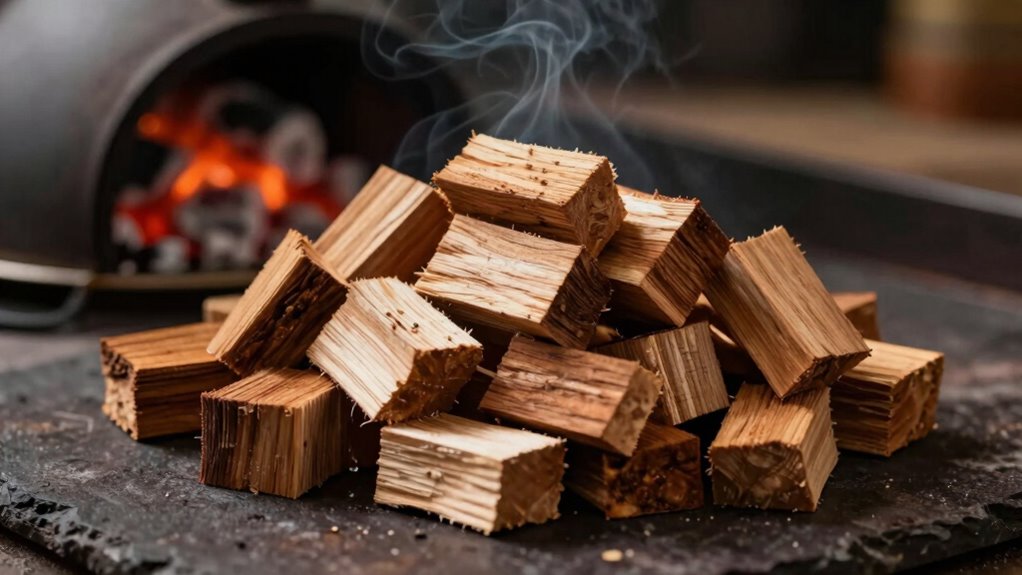
Using wood chunks for smoking can add rich, smoky flavor to your food, but if you’re not careful, they can also lead to over-smoking and an overpowering taste. The key to avoiding this is understanding how to properly manage your wood selection and smoking duration. When choosing your wood chunks, opt for hardwoods like oak, hickory, or fruitwoods such as apple and cherry. These woods burn steadily and produce a balanced smoke that enhances your food without overwhelming it. Avoid softwoods like pine or cedar, which can produce harsh flavors and create excessive creosote buildup on your grill or smoker.
Once you’ve selected the right wood, think about your smoking duration. The length of time your food is exposed to smoke directly influences the intensity of the smoky flavor. For delicate foods like fish or chicken, keep the smoking period shorter—around 1 to 2 hours—so the smoke adds flavor without overpowering the natural taste. For tougher cuts like ribs or brisket, you can extend the smoking time to 4 to 6 hours, but always monitor to prevent over-smoking. Remember, the goal isn’t to fill your food with smoke but to impart a subtle, smoky aroma that complements the natural flavors.
For delicate foods, 1-2 hours of smoking adds flavor without overpowering; extend to 4-6 hours for tougher cuts.
Controlling the amount of wood you use at a time also influences the smoking duration. Start with a small handful of chunks and add more gradually if needed. Using too many chunks at once can lead to an overwhelming amount of smoke early on, which might result in bitter or acrid flavors. Instead, add wood in increments, letting each batch burn down before adding more. This approach gives you more control over the smoke production and helps prevent over-smoking.
Temperature management plays a critical role as well. Keep your grill or smoker at a steady, moderate temperature—around 225°F to 275°F—so the wood smolders evenly, producing a consistent smoke without burning too quickly. If you notice the smoke becoming too thick or bitter, reduce the heat slightly or open vents to allow more airflow, which helps burn the wood more cleanly.
As an affiliate, we earn on qualifying purchases.
Frequently Asked Questions
Can I Reuse Wood Chunks for Multiple Smoking Sessions?
Yes, you can reuse wood chunks for multiple smoking sessions if they’re safe and dry. Always check wood chunk safety before reuse—avoid any mold, moldy, or chemically treated wood. Reusing reduces waste and minimizes environmental impact, making your smoking more eco-friendly. Just guarantee they’re clean, dry, and free from contaminants to prevent off-flavors and health risks. Properly stored, reused wood chunks can enhance your smoking experience sustainably.
What Types of Wood Chunks Are Best for Different Meats?
For different meats, choose wood chunks based on flavor profiles and wood compatibility. For beef, opt for hickory or oak, which add robust, smoky flavors. Chicken pairs well with fruit woods like apple or cherry, offering a mild sweetness. Pork benefits from apple, cherry, or hickory, enhancing its savory taste. Fish and seafood suit alder or cedar, as they provide delicate, subtle smoky notes. Select the right wood for a balanced, complementary flavor.
How Long Do Wood Chunks Typically Last During Smoking?
Think of your wood chunks as tiny fire-breathing dragons—you’ll want to keep them in check. Typically, they last about 30 to 45 minutes during smoking, depending on their size and type. To guarantee ideal smoke, monitor wood chunk freshness and replace them before they burn out completely. This way, you control smoke intensity, preventing over-smoking while maintaining a steady, flavorful flow for your meat.
Should Wood Chunks Be Soaked Before Use?
You don’t need to soak wood chunks before use, as soaking can hinder proper wood preservation and reduce smoke production. Instead, dry wood enhances flavor enhancement and creates a steady, controlled smoke. If you want a longer smoke, you can soak the chunks briefly, but generally, dry chunks provide better flavor without over-smoking. Remember, using dry wood helps you control the smoke levels and achieve the perfect smoky flavor.
How Do I Store Leftover Wood Chunks Properly?
Storing leftover wood chunks is like tending a delicate garden; proper care extends their life. Keep your wood in a cool, dry place to prevent moisture and mold. Use a breathable container or a paper bag for wood storage, avoiding plastic that traps humidity. This way, your wood chunks stay dry and fresh, ensuring chunk longevity. Proper storage means you’ll savor smoky flavors without sacrificing quality or wasting your investment.
As an affiliate, we earn on qualifying purchases.
Conclusion
Now that you know how to use wood chunks without turning your cookout into a smoky inferno, you can confidently master the art of flavorful grilling. Remember, a little goes a long way—think of it as your secret weapon, like a dash of exotic spice in a medieval feast. Keep an eye on your smoke levels, and with patience, you’ll impress even the most discerning of diners. Happy grilling, and may your food be as legendary as a knight’s feast!
As an affiliate, we earn on qualifying purchases.
As an affiliate, we earn on qualifying purchases.
Fall Picks
fall essentials
As an affiliate, we earn on qualifying purchases.



![Dove Mangiare A Milano: Le Nuove Aperture [In Aggiornamento]](https://backyardoven.com/wp-content/uploads/2026/09/dove-mangiare-a-milano-le-nuove-aperture-in-aggiornamento-featured-260x140.jpg)