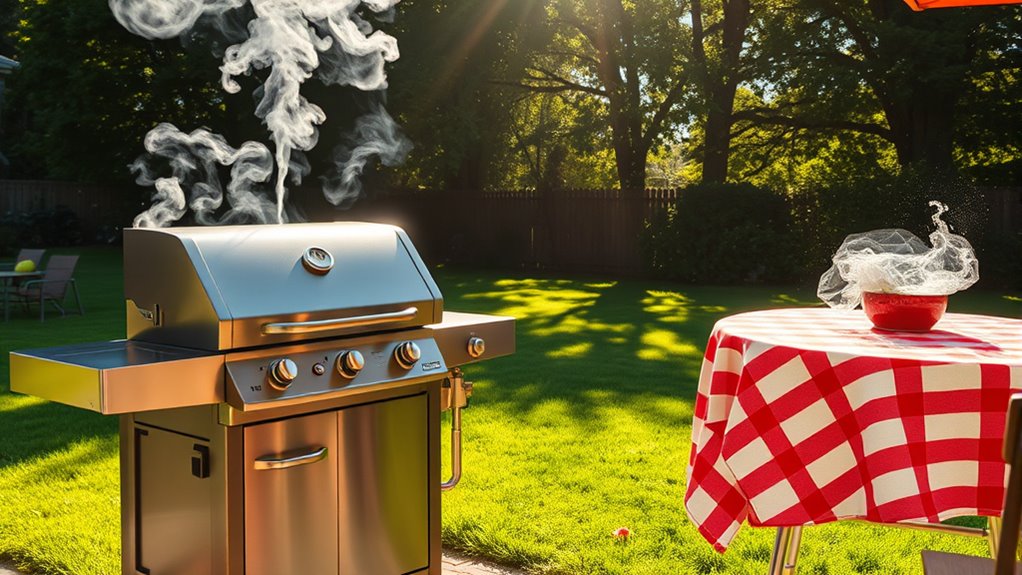
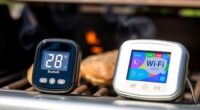
Weather affects your grilling in various ways. Hot days can cause food spoilage and make it hard to maintain consistent temperatures, so keep marinades chilled and clean the grill often. Cold weather means longer preheating and slower cooking, while wind can cool down the grill and cause uneven heat. Humidity slows down cooking times and increases flare-ups. Staying aware of these conditions and adjusting your techniques helps ensure a successful cookout—discover more tips below.

Get kitchen gear delivered free — and shop member deals
- Fast, free delivery on millions of items
- Access to Prime Big Deal Days deals on October 6–7
- Prime Video, Amazon Music and more included
Key Takeaways
- Hot weather can cause food spoilage and flare-ups; keep marinated items refrigerated and wipe excess marinade before grilling.
- Cold temperatures require longer preheating and the use of lids to maintain consistent grill heat.
- Wind cools the grill, causes uneven cooking, and increases the risk of flare-ups; position the grill in sheltered areas.
- High humidity prolongs cooking times and increases flare-up risk; adjust timing and partially close vents to control airflow.
- Proper grill maintenance, including cleaning and monitoring internal temperature, is essential across all weather conditions for successful grilling.

Have you ever wondered how weather impacts your grilling plans? If you’re like many outdoor cooks, you’ve probably faced unexpected challenges when the weather shifts suddenly. Hot days can seem ideal for grilling, but they also bring their own set of issues, like food spoilage or difficulty maintaining a consistent temperature. To combat this, it’s smart to keep marinade tips in mind. Marinating your meat can help lock in moisture and flavor, especially when the heat’s intense. Just remember to keep marinated items refrigerated until you’re ready to grill, and don’t forget to wipe excess marinade off the surface before placing it on the grill. This prevents flare-ups and promotes even cooking. Proper grill maintenance becomes even more imperative during hot weather. Regularly cleaning your grill grates ensures maximum heat transfer and minimizes sticking, which is essential when the temperature rises. A clean grill also prevents flare-ups caused by accumulated grease, reducing the risk of burnt food. When temperatures soar, you might be tempted to crank up the heat, but be cautious—overheating can make grilling unpredictable. Use a thermometer to monitor the internal temp of your grill and keep it within a safe range. Additionally, understanding projector contrast ratio can help you better visualize how lighting conditions may affect your outdoor cooking setup, especially if you’re grilling in areas with varying light levels. Cold weather presents its own set of hurdles. It can be tempting to postpone grilling, but with some adjustments, you can still enjoy outdoor cooking. Cold air tends to lower your grill’s temperature, so you might need to preheat longer or use a lid to trap heat. Covering your grill with a weatherproof cover can help maintain consistent temperatures and protect it from snow or rain. Wind is another factor that can throw off your grilling plans. Wind cools down the grill and can cause uneven heat distribution, leading to inconsistent results. To combat this, position your grill in a sheltered spot, away from gusts, and consider using windbreaks or barriers. Wind can also blow debris onto your food or ignite flare-ups, so keep a close eye on your grill and ensure it’s stable and secure. Humidity is often overlooked but can profoundly affect grilling. High humidity can make your meat take longer to cook and might cause flare-ups due to increased grease dripping. To counter this, adjust your cooking times and keep your grill’s vents partially closed to control airflow. Staying attentive to weather conditions means you’ll need to adapt your grilling techniques, from marinade tips to grill maintenance, to achieve the best results.
outdoor grill weatherproof cover
As an affiliate, we earn on qualifying purchases.
As an affiliate, we earn on qualifying purchases.
Frequently Asked Questions
How Does Rain Impact Outdoor Grilling Safety?
Rain impacts outdoor grilling safety by increasing slip hazards and risking electrical issues if you’re using electric grills. To guarantee rain safety, always cover your grill with a waterproof shield and avoid grilling in heavy downpours. Take outdoor precautions like keeping a fire extinguisher nearby, staying alert for slippery surfaces, and never leaving the grill unattended in wet conditions. These steps help keep your grilling safe despite rainy weather.
Can High Humidity Cause Food Spoilage During Grilling?
High humidity can cause food spoilage during grilling by promoting mold growth and bacteria development. Imagine you’re grilling chicken; if the humidity is high, moisture lingers on the surface, increasing the risk of spoilage. This moisture creates a perfect environment for mold and bacteria to thrive, compromising food safety. To prevent humidity spoilage, make certain of proper storage and keep grilled foods covered to limit exposure to humid air.
What Temperature Range Is Best for Grilling in Winter?
For winter cooking, aim for a temperature range of 225°F to 275°F for low-and-slow grilling or 350°F to 450°F for direct grilling. You’ll want to focus on temperature control, as cold weather can cause your grill to struggle. Keep your grill sheltered from wind, and consider using a grill blanket or cover to maintain consistent heat and prevent heat loss during winter grilling.
How Does Wind Affect the Safety of Charcoal Lighting?
Wind safety is vital when lighting charcoal, as strong gusts can cause lighting challenges and increase fire risk. You should shield the grill from the wind, use a stable, non-flammable surface, and keep a spray bottle of water nearby to control unintended flare-ups. Always light your charcoal in a well-ventilated area, and avoid lighting near flammable objects. Proper precautions help guarantee safe, enjoyable grilling even on windy days.
Are There Specific Grill Types Better Suited for Hot Weather?
For hot weather, choose a grill with good ventilation and a sturdy lid, like a kettle or gas grill, to maintain consistent heat. Regular grill maintenance keeps it functioning efficiently, especially in high temperatures. These grills tend to be fuel-efficient because they retain heat better, saving you fuel and ensuring even cooking. Always guarantee proper placement to avoid overheating and maximize safety during hot days.
digital meat thermometer for grilling
As an affiliate, we earn on qualifying purchases.
As an affiliate, we earn on qualifying purchases.
Conclusion
So, next time you fire up the grill, remember that weather isn’t just a background blur—it’s the puppet master of your perfect cookout! Hot days turn your burger into a fiery dragon, cold ones make your steaks shiver, and wind? It’s basically the prankster messing with your flame! Humidity’s the sneaky villain turning your crispy fries into soggy messes. Embrace the weather’s wild mood swings, or prepare for a grilling adventure more chaotic than a carnival ride!
As an affiliate, we earn on qualifying purchases.
grill cleaning brush and scraper
As an affiliate, we earn on qualifying purchases.
As an affiliate, we earn on qualifying purchases.
Fall Picks
fall essentials
As an affiliate, we earn on qualifying purchases.