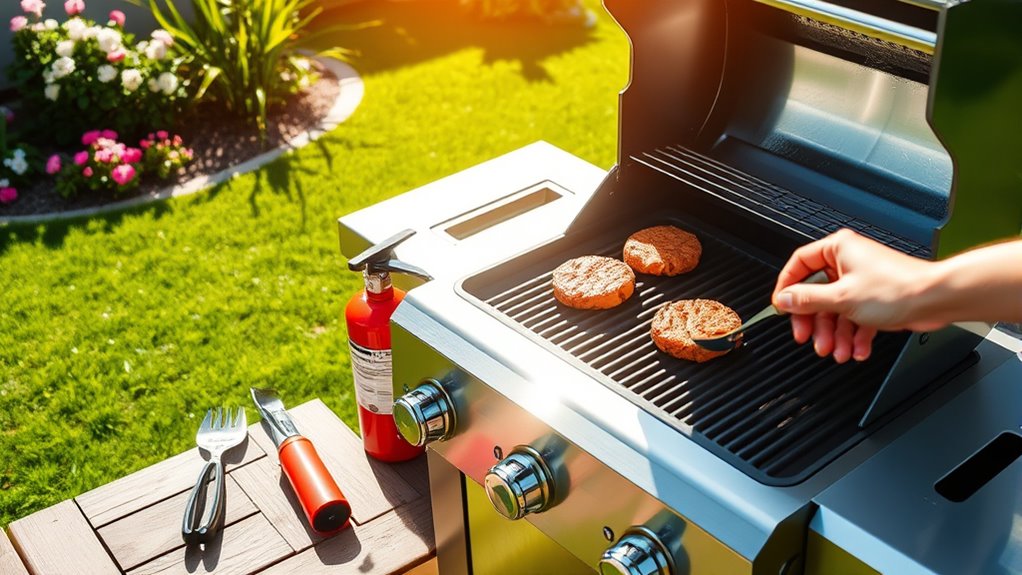
To prevent fires and accidents while barbecuing, choose a safe, flat spot away from structures, branches, and furniture. Inspect your grill for damage, keep fuels sealed and stored properly, and stay vigilant during cooking by monitoring flare-ups and keeping flammable items away. Always have safety gear like a fire extinguisher nearby, and ensure everything is properly turned off and cooled after grilling. Continue to learn more to keep your cookouts safe and enjoyable.

Get kitchen gear delivered free — and shop member deals
- Fast, free delivery on millions of items
- Access to Prime Big Deal Days deals on October 6–7
- Prime Video, Amazon Music and more included
Key Takeaways
- Choose a safe, stable location away from flammable materials, overhanging branches, and low-hanging eaves.
- Regularly inspect and maintain your grill, checking for leaks, rust, and proper vent function.
- Store fuels in ventilated, shaded areas away from heat sources and handle them carefully to prevent spills.
- Keep at least 3 feet of clearance around the grill, removing combustible clutter and ensuring children and pets stay away.
- Always monitor the grill actively, manage flare-ups promptly, and properly extinguish and clean after grilling.
As an affiliate, we earn on qualifying purchases.
Choosing a Safe and Suitable Grill Location
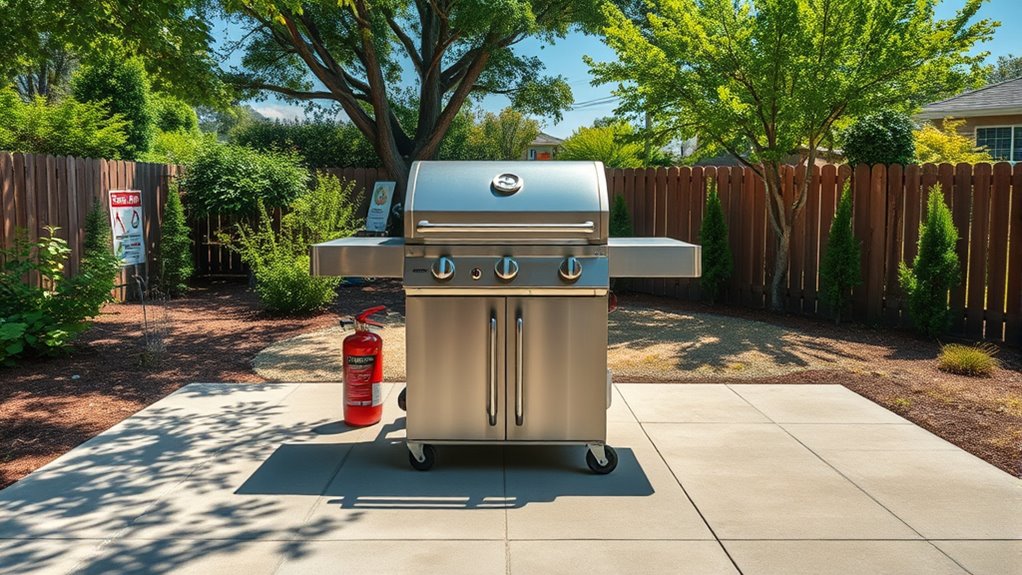
Choosing a safe and suitable grill location is essential to prevent accidents and enjoy your barbecue. Start by selecting a spot away from garden fencing that could catch fire, and verify there’s enough clearance around the grill. Place it on a flat, stable surface to avoid tipping. Keep outdoor furniture at a safe distance to prevent sparks from igniting cushions or fabric. Avoid under low-hanging branches or overhanging eaves, which can trap heat or flames. Consider wind direction, so smoke and sparks aren’t blown toward your house or neighbors. A well-chosen location reduces the risk of fire spreading and keeps everyone safe. Proper placement makes your grilling experience enjoyable without unnecessary hazards or concerns.
As an affiliate, we earn on qualifying purchases.
Inspecting and Maintaining Your Grill

Regularly inspecting and maintaining your grill is essential to guarantee safe and efficient barbecuing. Start with a thorough grill inspection before each use—check for rust, cracks, or damage to the burners, hoses, and grates. Clean grease buildup from the cooking surfaces and ensure vents open properly. Proper equipment maintenance prevents flare-ups and malfunctions that could cause fires or injury. Tighten loose connections and replace worn or damaged parts promptly. Keep an eye out for leaks in propane hoses or corrosion on charcoal components. By consistently performing these checks and upkeep tasks, you reduce safety hazards and extend your grill’s lifespan. Well-maintained equipment not only cooks better but also keeps you safe during every barbecue session.
As an affiliate, we earn on qualifying purchases.
Properly Handling and Storing Propane and Charcoal
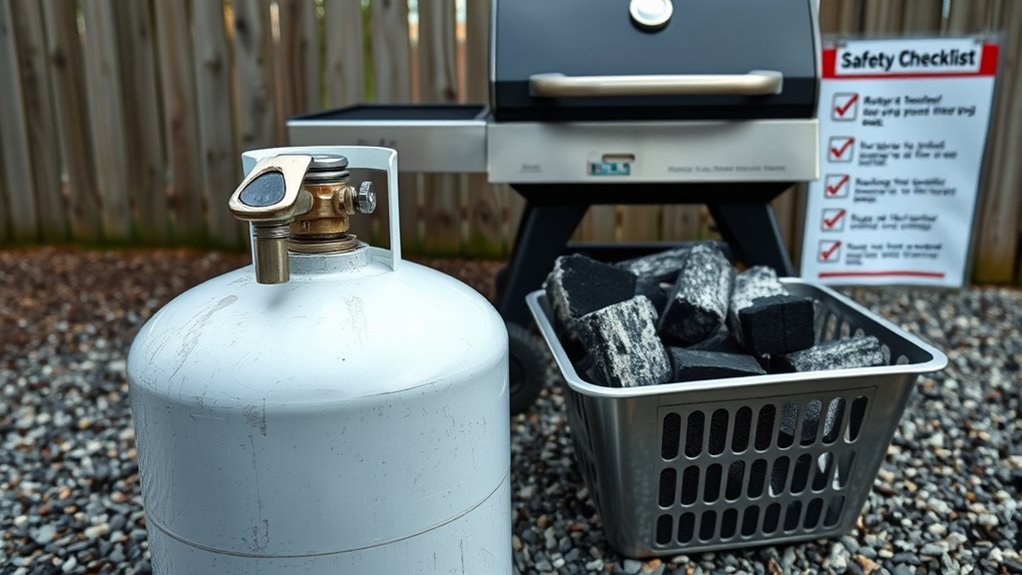
Handling and storing propane and charcoal safely is essential to prevent accidents and guarantee your grilling area remains secure. For propane tank storage, always keep tanks upright in a well-ventilated, shaded spot away from heat sources and flames. Make sure the valves are closed tightly when not in use, and never store tanks indoors or in enclosed spaces. When it comes to charcoal, follow proper handling procedures by keeping bags sealed until use and never adding lighter fluid to hot coals. Store unused charcoal in a cool, dry place away from ignition sources. Always keep a fire extinguisher nearby and handle both fuels with care, ensuring no leaks, spills, or accidental ignition occur. Proper storage and handling are key to safe grilling.
As an affiliate, we earn on qualifying purchases.
Keeping a Safe Distance and Creating a Clear Zone

Maintaining a safe distance from your grill and establishing a clear zone around it helps prevent accidents and keeps everyone safe. A safe distance minimizes the risk of burns or fires caused by flare-ups or hot surfaces. Make sure no one, especially children or pets, gets too close to the grill while it’s in use. Create a clear zone by removing any combustible materials like paper, leaves, or clutter near the grill area. Keep tools, chairs, and other items at least three feet away from the heat source. This extra space not only reduces fire hazards but also gives you room to move safely while cooking. Prioritizing a safe distance and a clutter-free zone is essential for a secure and enjoyable grilling experience.
Managing Flammable Materials and Clutter
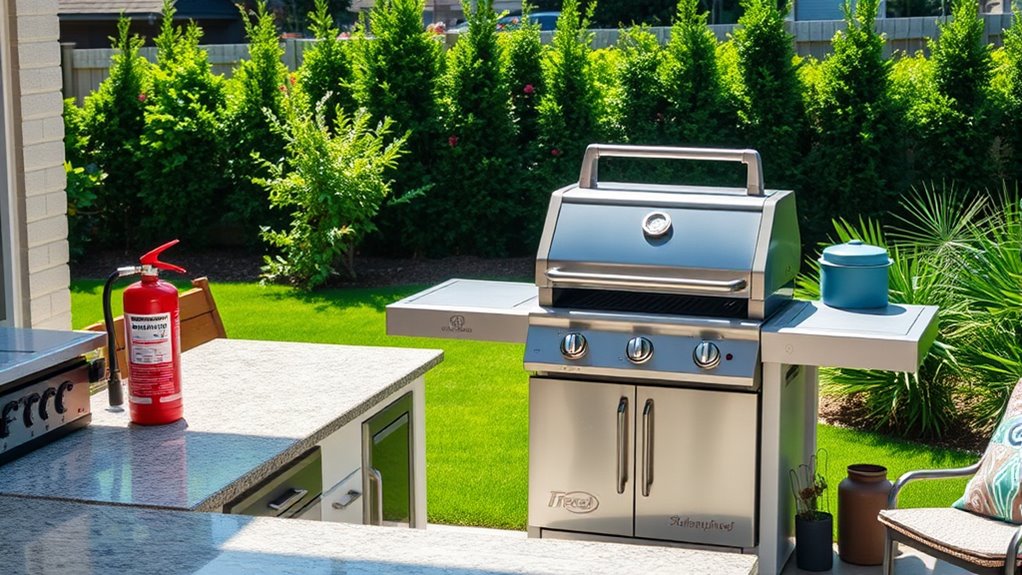
Make sure your cooking area is clear of unnecessary items to prevent accidents. Store flammable liquids in a safe, designated place away from the grill. Keep clutter to a minimum around your grilling station to stay safe and avoid fires.
Clear Cooking Area
To make certain safe grilling, you need to keep the cooking area clear of flammable materials and clutter. A tidy space reduces fire risks and makes cooking safer. Check your grill size; a larger grill requires a bigger clear zone. Keep all cooking utensils nearby but organized, so they don’t clutter the area or accidentally fall into the flames. Remove any leaves, paper, or other flammable debris from around the grill. Use the table below to help visualize safe setup:
| Safe Items | Unsafe Items |
|---|---|
| Properly stored utensils | Loose paper or paper towels |
| Clear space around grill | Clutter or debris nearby |
| Fire extinguisher nearby | Flammable liquids or aerosols |
| Adequate lighting | Overhanging branches or decorations |
Keeping your area clean ensures safer, more enjoyable grilling.
Store Flammable Liquids Properly
Since flammable liquids like lighter fluid and aerosol sprays can easily ignite if mishandled, it’s crucial to store them properly away from your grilling area. Follow proper flammable liquid storage practices by keeping these items in a cool, well-ventilated place, away from heat sources and direct sunlight. Use safety container guidelines to ensure they are stored in approved, clearly labeled containers designed for flammable materials. Always close caps tightly and avoid leaving excess quantities near your grill or in the garage. Remember, improper storage increases the risk of accidental fires. By adhering to safe flammable liquid storage methods, you reduce hazards and help keep your BBQ area safe for everyone. Proper storage is a simple but essential step to prevent accidents.
Minimize Clutter Near Grill
Clutter around your grill can turn a safe cooking space into a fire hazard, especially when flammable materials are nearby. To guarantee safety, focus on clutter reduction by removing unnecessary items and keeping the area clear. Store tools, utensils, and supplies in designated containers or cabinets to improve storage organization. Keep lightweight, combustible materials like paper towels, napkins, and cleaning rags away from the grill. Regularly inspect the area and tidy up before each use. A clutter-free environment minimizes the risk of accidental fires and allows you to move quickly in case of emergencies. Maintaining a clean, organized space not only improves safety but also makes grilling more enjoyable and efficient. Stay vigilant and keep clutter to a minimum around your grill.
Monitoring the Grill During Cooking
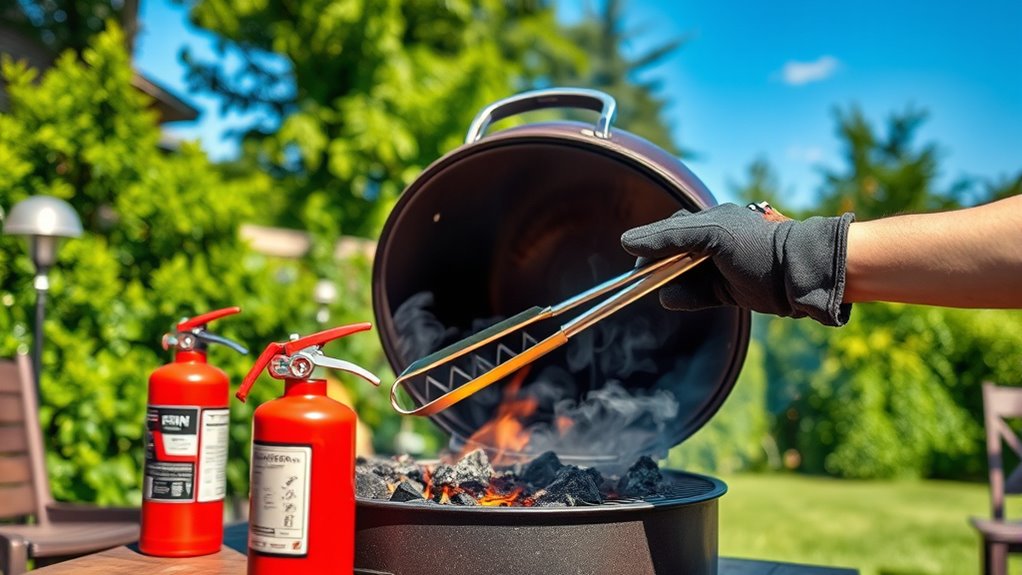
While cooking, you should constantly check your grill to spot any flare-ups or hazards early. Keep flammable items like paper towels and sauces away from the heat to prevent fires. Make sure your lighting is adequate so you can see clearly and avoid accidents.
Constant Visual Checks
Constant visual checks are essential to guarantee your barbecue stays safe and cooks evenly. By performing a visual inspection regularly, you can spot potential hazards like flare-ups or grease buildup before they escalate. Ongoing monitoring means you stay attentive throughout the cooking process, avoiding unattended flames or excessive heat. Keep a close eye on the grill’s temperature, flames, and food to ensure everything stays within safe limits. Don’t rely solely on timers or assumptions—your direct observation is your best tool for safety. If you notice anything unusual, like smoke or unexpected flames, you can act immediately to prevent accidents. Staying vigilant through constant visual checks helps you maintain control, ensuring a safe, enjoyable grilling experience for everyone.
Keep Flammable Items Away
Have you ever considered how quickly a small flammable object can turn into a dangerous fire on your grill? Keeping flammable items away is essential. Always clear your grilling area of combustible materials, such as paper towels, napkins, or cardboard. Be cautious with flammable liquids like lighter fluid or gasoline—never pour them near an active grill. For added safety, follow these tips:
- Store flammable liquids well away from the grill.
- Remove any paper or cloth that could catch fire.
- Keep a fire extinguisher nearby in case of emergency.
Use Proper Lighting
Proper lighting is key to maintaining safety while grilling. When you set up your outdoor ambiance, choose lighting that illuminates your cooking area clearly without creating shadows or glare. Avoid relying solely on decorative lighting, which can be dim or uneven, making it harder to monitor the grill closely. Use bright, focused lights directly over the grill to keep an eye on flames, flare-ups, and food. This helps you spot potential hazards early and prevents accidents. Keep a flashlight nearby in case of power outages or if you need extra illumination. Proper lighting guarantees you can see what you’re doing, monitor your food, and respond quickly if something goes wrong, keeping your grilling safe and enjoyable.
Having Safety Equipment Ready and Accessible

To guarantee safety during barbecues, it’s vital to keep safety equipment easily accessible. You should ensure fire extinguisher readiness by placing it near the grill where it can be grabbed quickly if needed. Additionally, keep a first aid kit within reach to handle minor burns, cuts, or scrapes promptly. Here are three essentials to have handy:
- Fire extinguisher positioned nearby and checked regularly.
- First aid kit stocked with burn ointment, bandages, and antiseptic wipes.
- A bucket of water or sand for quick fire control.
Having these items accessible minimizes delays during emergencies, helping you respond swiftly and confidently. Regularly check your safety gear to guarantee everything is in working order and ready when needed.
Properly Extinguishing and Cleaning Up After Grilling
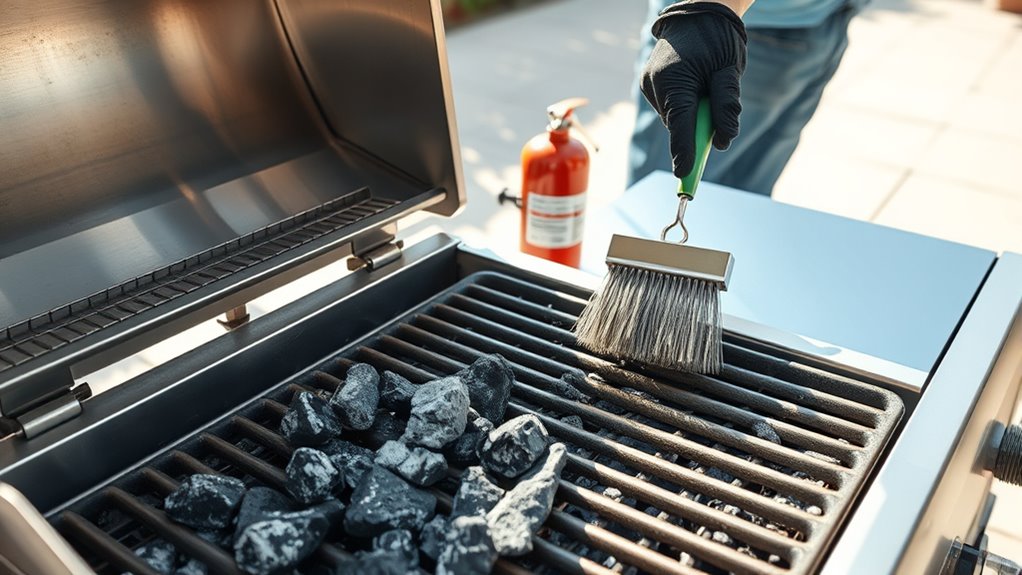
After you finish grilling, it’s essential to extinguish any remaining flames and prevent accidental fires. Properly extinguishing involves turning off the grill’s burners, closing the lid, or using a fire extinguisher if needed. Never leave hot coals or embers unattended, and allow them to cool completely before cleaning up. Once cooled, carefully dispose of ashes in a metal container to prevent re-ignition. Cleaning up involves removing grease, food debris, and charred residues from the grill surfaces to reduce fire risk and maintain hygiene. Use a wire brush or scraper for thorough cleaning, and wash grates with soap and water. By properly extinguishing and cleaning up, you minimize fire hazards and keep your grilling area safe for future cookouts.
Frequently Asked Questions
What Are Common Signs of a Grill Fire Hazard?
You should watch for fire hazard indicators like a strong smell of gas, excessive smoke, or grease buildup near burners, which are clear grill safety signs. Flames that flare up unexpectedly or if the grill’s surface becomes very hot even when not in use also signal potential hazards. If you notice these signs, turn off the grill immediately, clean it thoroughly, and make certain proper ventilation to prevent a fire.
How Often Should I Replace My Grill’s Components?
You should replace your grill’s components as part of regular grill maintenance to guarantee safety and efficiency. Typically, burners, hoses, and grates need replacement every 3 to 5 years, depending on usage and wear. Keep an eye on the component lifespan—if you notice rust, corrosion, or damage, replace them sooner. Regularly inspecting and updating your grill parts helps prevent accidents and keeps your grilling safe and enjoyable.
Can Certain Clothing Increase Fire Risk During Grilling?
Did you know that wearing loose, flowing clothing increases fire hazard risk by 40%? During grilling, clothing fire hazards become a real danger, especially if you wear synthetic fabrics that melt or ignite easily. To stay safe, opt for flame resistant apparel or tight-fitting clothes that won’t catch fire. You can enjoy your barbecue without worry by being mindful of what you wear and avoiding loose, dangling garments near open flames.
What Should I Do if I Smell Propane Fumes?
If you smell propane fumes, act immediately. First, turn off the grill’s propane valve to stop the leak. Use your sense of smell for smell detection, but don’t rely solely on it—if the smell persists, open windows and get away from the area. Avoid igniting any flames or sparks, and call emergency services if the leak continues. Safety first: guarantee proper ventilation and professional inspection before using the grill again.
Are There Specific Weather Conditions That Make Grilling Unsafe?
Grilling in certain weather conditions is like riding a wild stallion—both exciting and risky. Strong wind can blow flames or sparks, turning a safe cookout into a fire hazard, so avoid grilling during gusty days. Weather hazards like rain or thunderstorms also make grilling unsafe because they can cause electrical issues or slippery surfaces. Always prioritize wind safety and check the weather forecast before firing up your grill.
Conclusion
By following these tips, you’ll enjoy safe, fire-free barbecues that even a caveman would appreciate. Remember to choose a good spot, keep your gear in check, and stay alert—like a knight guarding his castle. Always have a fire extinguisher nearby, and don’t forget to clean up after your feast. With a little common sense and some modern tools, your grilling adventures will be legendary, not legendary disaster. Happy grilling!
Fall Picks
fall essentials
As an affiliate, we earn on qualifying purchases.