To calibrate your meat thermometer, start by preparing an ice water bath with crushed ice and cold water, making sure the temperature stays at 32°F (0°C). Submerge the thermometer probe without touching sides or bottom, and check the reading. If it’s off, follow your manufacturer’s instructions to adjust or calibrate it, then verify by testing again. Keep practicing these steps to ensure your thermometer remains accurate—if you keep reading, you’ll learn more about perfect calibration techniques.

Get kitchen gear delivered free — and shop member deals
- Fast, free delivery on millions of items
- Access to Prime Big Deal Days deals on October 6–7
- Prime Video, Amazon Music and more included
Key Takeaways
- Use an ice water bath (32°F/0°C) to test the thermometer’s accuracy.
- Submerge the thermometer probe without touching container sides or bottom during testing.
- Compare the reading to the standard freezing point of water (32°F/0°C).
- Adjust the thermometer per manufacturer’s instructions, using calibration screws or nuts if available.
- Recheck after calibration to confirm the thermometer reads accurately at standard temperatures.
digital meat thermometer for calibration
As an affiliate, we earn on qualifying purchases.
As an affiliate, we earn on qualifying purchases.
Gather the Necessary Supplies
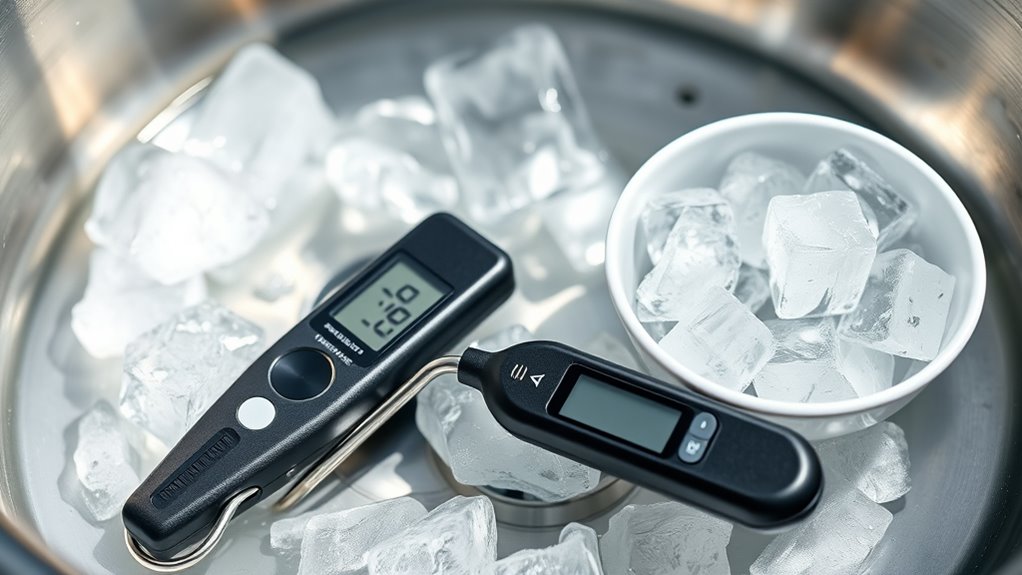
To begin calibrating your meat thermometer, you’ll need a few essential supplies. First, gather your calibration tools, such as a digital or analog reference thermometer known for accuracy. Having a reliable device ensures precise results. Next, prepare safety precautions — wear gloves if necessary and handle cold or hot items carefully to avoid injury. You’ll also want a clean, damp cloth or paper towel for cleaning the thermometer afterward. Keep a pen and paper nearby to record your readings if needed. Make sure your workspace is clear and safe, especially when working with ice water or hot water. Using the right calibration tools and following safety precautions guarantees a safe, effective process that will help your thermometer stay accurate over time.
analog meat thermometer calibration tool
As an affiliate, we earn on qualifying purchases.
As an affiliate, we earn on qualifying purchases.
Prepare the Ice Water Bath Test
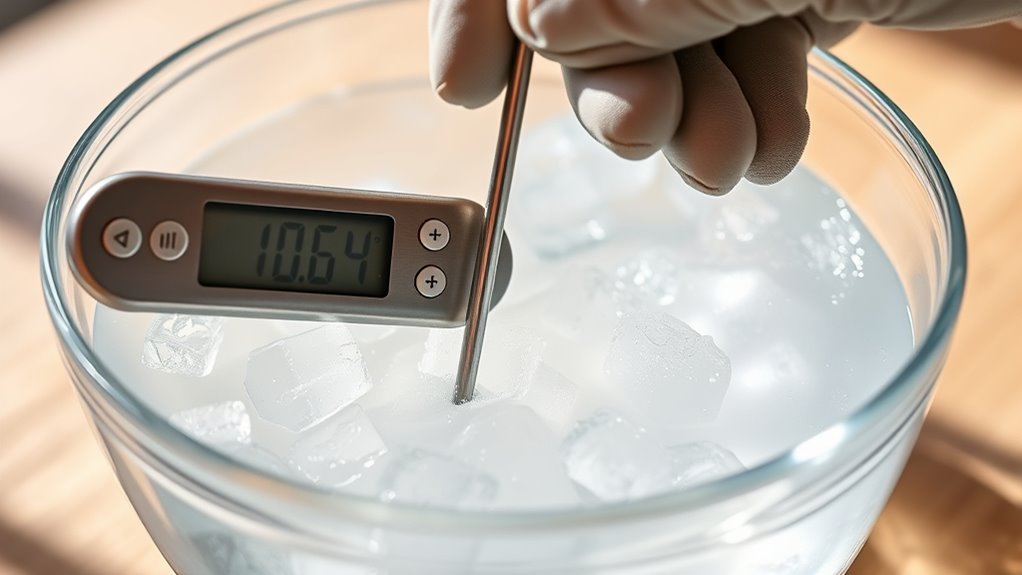
Start by filling a large container with crushed or chipped ice, then add cold water until the container is nearly full. This creates the perfect ice water bath for your calibration method. Stir the mixture gently to guarantee an even temperature. The goal is to reach a stable 32°F (0°C), which serves as the reference point for your thermometer. Once the ice water bath is ready, submerge your meat thermometer’s probe without touching the sides or bottom of the container, as this can give inaccurate readings. This step is essential to accurately assess whether your thermometer reads correctly at freezing point. Preparing the ice water bath test carefully helps ensure your calibration method is precise, leading to more reliable temperature readings during cooking.
As an affiliate, we earn on qualifying purchases.
Check Your Thermometer’s Reading

Once your thermometer is submerged in the ice water bath, observe its reading and compare it to the standard 32°F (0°C). This step helps you verify the temperature consistency of your device. Use calibration tools like a timer or a notebook to record your findings. If the reading differs, note the discrepancy for future adjustments. Here’s a quick reference:
| Thermometer Reading | Correct Temperature | Difference |
|---|---|---|
| 31°F | 32°F | -1°F |
| 0°C | 0°C | 0°C |
| 33°F | 32°F | +1°F |
Accurate readings ensure your meat is cooked safely. Regularly checking your thermometer’s reading keeps it reliable and ready for precise temperature measurements.
kitchen thermometer with calibration screws
As an affiliate, we earn on qualifying purchases.
As an affiliate, we earn on qualifying purchases.
Adjust or Calibrate Your Thermometer

If your thermometer shows a discrepancy during the ice water test, it’s time to calibrate it to guarantee accurate readings. To do this, start by adjusting the sensor if possible, following your thermometer’s maintenance instructions. Some models have a calibration nut or screw, while others require a simple reset. Regular sensor maintenance helps keep your thermometer accurate over time. Consider calibration frequency based on usage; if you use it daily, calibrate weekly or monthly. For less frequent use, quarterly calibration may suffice. Always recheck after adjustments to ensure accuracy. Proper calibration ensures your meat reaches safe temperatures, preventing undercooked or overcooked food. Maintaining your thermometer’s sensor and calibrating regularly keeps it performing reliably and extends its lifespan.
Verify Accuracy With a Second Test

After calibrating your thermometer, it’s important to verify its accuracy with a second test. Use calibration tools like a boiling or ice water bath to compare readings. Place the thermometer properly in the test environment, ensuring correct thermometer placement—either fully submerged in boiling water without touching the sides or bottom of the container, or fully immersed in ice water. Wait a few seconds for the reading to stabilize. If your thermometer’s reading matches the expected temperature (212°F for boiling, 32°F for ice), it’s precise. If not, note the discrepancy and adjust accordingly. Conducting this second test confirms your calibration was successful and helps ensure your meat thermometer provides reliable measurements every time.
Frequently Asked Questions
How Often Should I Calibrate My Meat Thermometer?
You should calibrate your meat thermometer at least once a year or whenever it gives inconsistent readings. Proper calibration guarantees meat safety and cooking precision, helping you avoid undercooked or overcooked dishes. Always check the thermometer before each use if you’re preparing a large meal or cooking at high temperatures. Regular calibration maintains accuracy, so you can confidently serve safe, perfectly cooked meat every time.
Can Digital Thermometers Be Calibrated Manually?
Yes, digital thermometers can be calibrated manually using calibration tools like ice water or boiling water. You simply adjust the thermometer according to its instructions, often by using a calibration screw or button. This process helps verify your thermometer accuracy remains reliable, especially when you’re cooking meats that require precise temperatures. Regular calibration with proper tools keeps your digital thermometer functioning correctly and guarantees safe, perfectly cooked food.
What if My Thermometer Can’t Be Calibrated?
If your thermometer can’t be calibrated, don’t let it be a sinking ship. Instead, explore alternative calibration methods like using boiling or ice water tests, or consider thermometer replacement options. Sometimes, a trusty new device can be your best bet for accurate readings. Keeping your thermometer in top shape guarantees your meats are cooked safely and perfectly, turning every meal into a culinary masterpiece.
Are There Any Risks of Damaging My Thermometer During Calibration?
You might risk damaging your thermometer if you don’t follow proper calibration safety steps. Avoid sudden temperature changes or submerging the device improperly, which can affect thermometer precision. Use gentle handling and precise procedures, like adjusting only if your thermometer allows it. Carefully read your device’s instructions to prevent damage. Proper calibration safety guarantees your thermometer stays accurate without risking harm, helping you cook safely and confidently.
How Do I Calibrate Different Types of Thermometers (Digital vs. Analog)?
You can’t just toss your thermometers into a magic calibration bath, but you can definitely compare digital and analog types with simple calibration tools like ice water or boiling water. For digital thermometers, press calibration buttons if available, or adjust settings. Analog thermometers might need a gentle twist of the calibration nut. Think of it as a fun science experiment—your thermometer comparison game just got way more accurate!
Conclusion
By regularly calibrating your meat thermometer, you’re honing a silent skill that guarantees every meal is a masterpiece. Think of your thermometer as a compass guiding your culinary journey—accuracy is its true north. When you trust its reading, you’re embracing precision and care, turning simple ingredients into memorable moments. Keep calibrating, and let your kitchen be a sanctuary where every dish reflects your dedication to quality and perfection.
Fall Picks
fall essentials
As an affiliate, we earn on qualifying purchases.