To verify if your grill’s built-in thermometer is accurate, perform an ice water test by filling a glass with crushed ice and water, then insert the probe without touching sides or bottom. If it doesn’t read 32°F, use a screwdriver to calibrate it if possible. Regular calibration and maintenance help help guarantee your thermometer gives precise readings, so your food cooks perfectly and stays safe. Keep exploring to learn more about keeping your thermometer reliable.

Get kitchen gear delivered free — and shop member deals
- Fast, free delivery on millions of items
- Access to Prime Big Deal Days deals on October 6–7
- Prime Video, Amazon Music and more included
Key Takeaways
- Use the ice water test: submerge the thermometer in crushed ice and water; a correct reading is 32°F (0°C).
- Adjust the calibration screw or dial gently with a small screwdriver to correct any inaccuracies.
- Regularly verify calibration before grilling to ensure consistent temperature readings.
- Keep the thermometer clean and protected from extreme weather to maintain accuracy.
- Replace the thermometer if it cannot be properly calibrated or shows persistent inaccuracies.
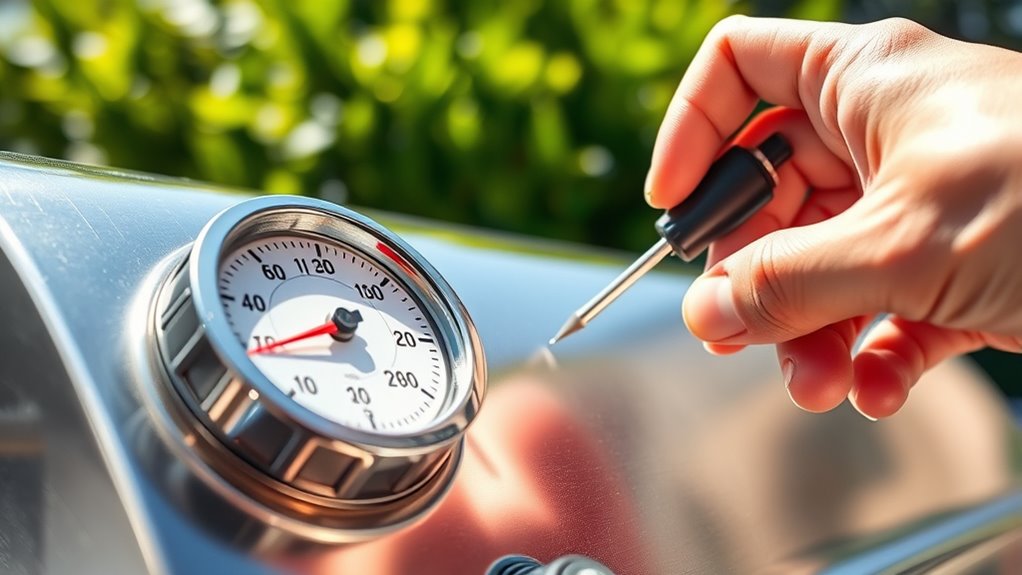
A properly calibrated grill’s built-in thermometer is essential for achieving perfect results every time you cook. When you’re grilling, accurate thermometer readings help you maintain consistent temperatures, ensuring your food cooks evenly and safely. Without proper calibration, you risk over- or undercooking, which can ruin your meal and diminish your confidence in your grill. Regular grill maintenance, including checking and calibrating your thermometer, keeps your equipment in top shape and guarantees thermometer accuracy. This simple step can make a significant difference in your grilling success.
To start, you need to verify whether your built-in thermometer is reading correctly. The most straightforward method involves using an ice water test. Fill a glass with crushed ice and add just enough water to fill the gaps, creating an ice slurry. Insert the thermometer probe into the mixture, making sure it doesn’t touch the sides or bottom of the container. Wait for about a minute and then check the reading. If your thermometer is accurate, it should read 32°F (0°C). If it’s off by a few degrees, it’s time to calibrate.
Calibration is usually a simple process, but it depends on your specific grill model. Many built-in thermometers have a calibration screw or dial near the face of the gauge. Using a small screwdriver, gently turn the screw until the needle points to 32°F when tested with the ice water method. If your grill’s thermometer doesn’t include a calibration screw, you might need to consult the manufacturer’s instructions or consider replacing the thermometer altogether. Remember, thermometer accuracy is crucial for grilling precision, so taking the time to calibrate it ensures you’re always cooking with reliable data.
In addition to calibration, consistent grill maintenance plays a vital role in ensuring your thermometer remains accurate. Keep the exterior and surrounding components clean, free of grease and debris, which can interfere with proper readings. Also, avoid exposing the thermometer to extreme weather conditions that can affect its accuracy over time. Regularly testing and calibrating your thermometer, especially before long grilling sessions or when cooking delicate dishes, helps you avoid surprises and achieve the desired results. Being aware of equipment reliability and maintaining your grill accordingly can greatly improve your overall grilling experience.
Ultimately, understanding how to calibrate your grill’s built-in thermometer and maintaining it properly allows you to master your grill’s performance. When your thermometer is accurate, you can confidently set precise temperatures, monitor your cook, and serve perfectly grilled meals every time. It’s a small investment of time that pays off with perfectly cooked food and greater enjoyment of your grilling endeavors. Remember, diligent grill maintenance and thermometer accuracy aren’t just about equipment—they’re about elevating your entire grilling experience.
grill built-in thermometer calibration kit
As an affiliate, we earn on qualifying purchases.
As an affiliate, we earn on qualifying purchases.
Frequently Asked Questions
How Often Should I Calibrate My Grill’s Thermometer?
You should calibrate your grill’s thermometer at least once a year for proper grill maintenance. If you notice inaccurate readings, do it more often to guarantee reliable temperature control. Regular calibration extends the thermometer’s lifespan and keeps your cooking precise. Checking it before each grilling season helps catch any issues early, maintaining your grill’s performance. Remember, a well-maintained thermometer makes all the difference in perfecting your grilled dishes.
Can Outdoor Weather Affect Thermometer Accuracy?
Like a storm in a teacup, outdoor weather can impact your thermometer’s accuracy. Weather interference causes thermometer drift, especially with extreme heat, cold, or humidity, making readings less reliable. You might notice inconsistent temperatures during a heatwave or cold snap. To guarantee accuracy, regularly calibrate your grill’s thermometer and avoid grilling in extreme weather conditions. This way, you keep your cooking on point, no matter the forecast.
What Tools Do I Need for Calibration?
You’ll need a reliable digital or analog thermometer for the calibration procedure. Start by placing both your grill’s thermometer and the reference thermometer in a pot of boiling water or ice water for a temperature comparison. Use the readings to determine if calibration is required. If so, adjust your grill’s thermometer accordingly. This simple process helps guarantee your temperature readings are accurate, giving you better control over your cooking.
Is Digital or Analog More Reliable After Calibration?
When it comes to reliability after calibration, digital comparison often wins out over analog precision. You’ll find digital thermometers tend to be more consistent and easier to read, making them a dependable choice. Analog thermometers, while charming and traditional, can sometimes drift slightly over time. So, if you’re aiming for peace of mind and accuracy, go digital—it’s the more reliable option for keeping your grill perfectly calibrated.
How Do I Know if My Thermometer Is Broken?
You’ll know your thermometer is broken if it consistently reads temperatures that don’t match a known standard, like boiling or ice water. Over time, thermometer lifespan can cause inaccuracies, so check if it’s due for calibration based on your usage frequency. If calibration doesn’t fix the readings, consider replacing it. Regular calibration guarantees accuracy, especially if you cook often, but don’t ignore signs of malfunction that could affect your grilling results.
digital meat and grill thermometer
As an affiliate, we earn on qualifying purchases.
As an affiliate, we earn on qualifying purchases.
Conclusion
Now that you know how to calibrate your grill’s built-in thermometer, you’re armed with a secret weapon for perfect cooking every time. Think of it as tuning your culinary compass, guiding you through the smoky seas of grilling. Don’t let a faulty thermometer steer you wrong—regular calibration keeps your grilling adventures on course. With a little effort, you’ll be the captain of your backyard barbecue, serving up delicious, perfectly cooked meals that impress every time.
As an affiliate, we earn on qualifying purchases.
As an affiliate, we earn on qualifying purchases.
Fall Picks
fall essentials
As an affiliate, we earn on qualifying purchases.