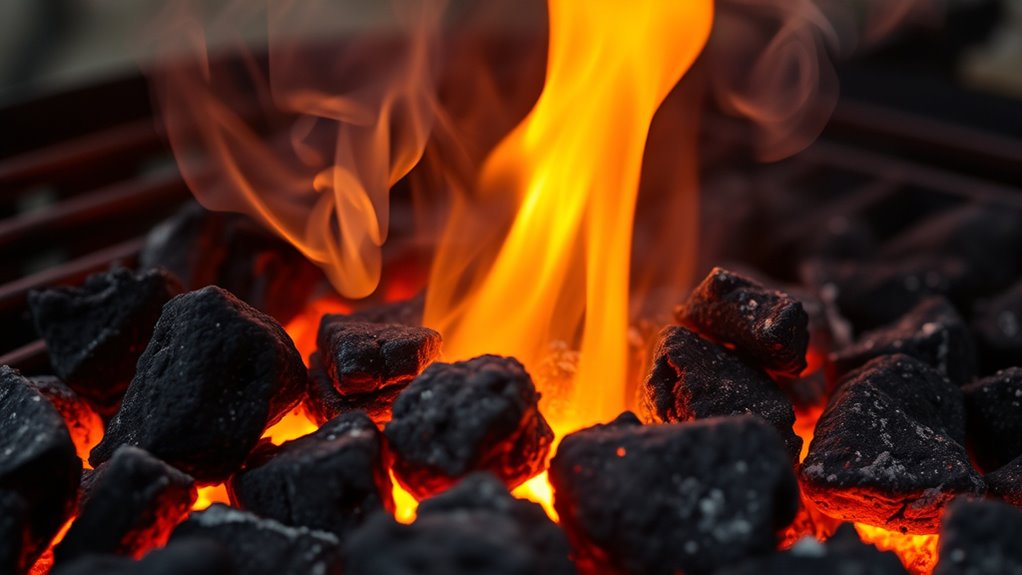
If your charcoal grill’s temperature spikes unexpectedly, it’s likely due to poor fuel management, airflow problems, or excess ash buildup. Adding too much charcoal at once causes sudden heat surges, while restricted airflow from clogged vents or ash can starve or flood the fire. To keep it steady, manage your fuel carefully, clean out ash regularly, and adjust vents properly. Keep an eye on these factors, and you’ll gain better control over your grill’s heat.
Key Takeaways
- Excess ash blocks airflow, causing uneven burning and sudden temperature spikes.
- Overloading the grill with charcoal can lead to rapid, uncontrolled heat increases.
- Improper vent adjustments can either suffocate the fire or cause excessive airflow, resulting in spikes.
- Using low-quality or flavored briquettes can cause unpredictable combustion and temperature fluctuations.
- Insufficient or inconsistent fuel addition leads to unstable temperatures and sudden heat surges.
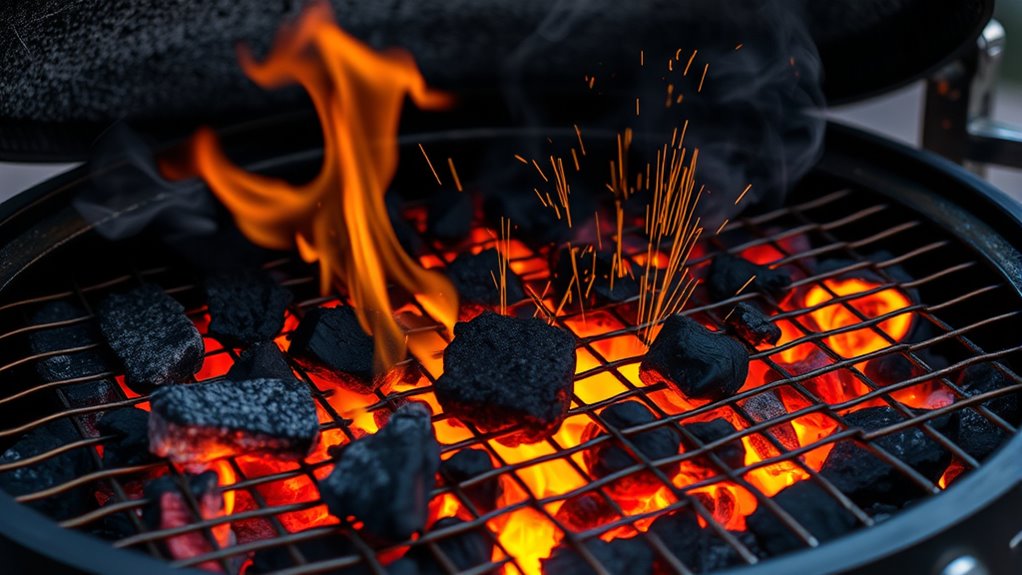
If you’ve noticed your charcoal grill’s temperature suddenly spiking, you’re not alone. This sudden increase can be confusing and frustrating, especially when you’re trying to maintain consistent heat for perfect grilling. One of the key reasons behind this sudden temperature jump is related to how you manage your fuel and ash. Understanding how fuel efficiency and ash management play a role can help you regain control over your grill’s heat levels.
First, let’s talk about fuel efficiency. When you add too much charcoal or use high-sugar flavored briquettes, the combustion process can become unpredictable. Overloading the grill causes uneven burning, which can lead to sudden temperature spikes. Conversely, if you don’t use enough fuel, the heat can fluctuate as the fire struggles to sustain itself. Properly managing your fuel ensures a steady burn, preventing sudden surges in temperature. It’s best to start with the right amount of charcoal for your cooking needs and avoid adding too much at once, which can cause a rapid increase in heat. Using high-quality charcoal also helps, as it burns more evenly and efficiently, reducing the chances of sudden spikes caused by inconsistent fuel consumption.
Adding too much or low-quality charcoal can cause unpredictable heat surges during grilling.
Ash management is another essential factor. As your charcoal burns, it produces ash that can quickly accumulate and interfere with airflow. When ash builds up around the burning coals, it can block critical air vents, causing the fire to intensify suddenly when airflow is partially restored or disturbed. This can result in unpredictable temperature spikes. Regularly clearing out excess ash not only improves fuel efficiency but also maintains a consistent airflow, helping your fire burn evenly. Proper ash management ensures that you don’t unintentionally starve or flood the fire, both of which can cause temperature fluctuations. Using a scoop or ash tool to remove buildup during grilling sessions is essential, especially if you’re cooking for extended periods.
In addition, be mindful of how airflow is adjusted. Too much airflow can cause rapid combustion, leading to a sudden spike in temperature, while too little airflow can smother the fire, causing uneven burning. Striking a balance with your vents and keeping them clean prevents unintended air blockages and helps maintain a stable temperature.
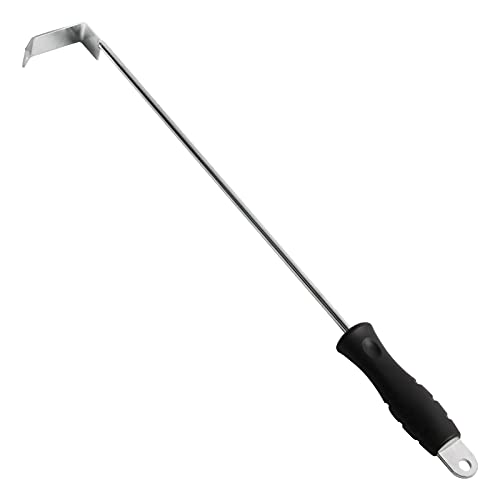
OLIGAI BBQ Ash Tool for Big Green Egg Stainless Steel Ash Poker for Kamado Joe Charcoal Smoker Wood Burning Stove Ash Rake,Ash Tool for Other Charcoal Grills Corner Cleaner Accessories 17.5"
【Effective Tools for Ashing】The extended ash scraper can easily clean the ash in the furnace.The bottom is flat,which…
As an affiliate, we earn on qualifying purchases.
As an affiliate, we earn on qualifying purchases.
Frequently Asked Questions
Can Weather Changes Cause Grill Temperature Spikes?
Yes, weather changes can cause grill temperature spikes. Sudden shifts in weather patterns, like temperature drops or increases, directly affect the airflow and heat retention of your grill. Wind effects are especially influential, as gusts can intensify the fire, causing unexpected temperature spikes. To maintain steady heat, monitor weather conditions and shield your grill from wind and rapid weather changes, adjusting your vents accordingly.
How Does Charcoal Quality Affect Temperature Stability?
A stitch in time saves nine, and using high-quality charcoal helps you maintain temperature stability. Good charcoal offers consistent burn and minimal ash buildup, preventing sudden spikes. Low-quality charcoal often produces uneven heat and excessive ash, which blocks airflow and causes temperature fluctuations. When you choose quality charcoal, you guarantee better control, fewer surprises, and a more enjoyable grilling experience.
Is It Safe to Leave a Grill Unattended During a Spike?
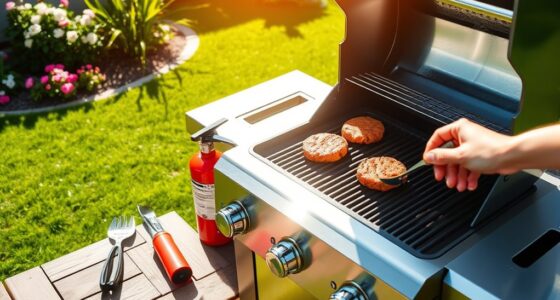
No, it’s not safe to leave your grill unattended during a temperature spike. Grill safety is essential, especially when flames flare unexpectedly or heat levels rise suddenly. You should always stay nearby and monitor your grill to prevent accidents or fires. Unattended grilling increases the risk of smoke damage, flare-ups, or even a fire spreading. Stay alert, keep a fire extinguisher within reach, and never leave your grill unattended during any temperature change.
Do Different Grill Brands Handle Temperature Spikes Differently?
Like comparing fine wines, grill brands differ in their approach to temperature regulation. Some brands excel at maintaining steady heat, reducing spikes, while others may be more prone to sudden changes. These differences stem from design, vent placement, and build quality. Knowing your grill’s brand helps you anticipate how it handles temperature fluctuations, so you can better manage your cook and avoid surprises that could ruin your meal.
Can Using Lighter Fluid Cause Sudden Temperature Increases?
Using lighter fluid can definitely cause sudden temperature increases. The hazards of lighter fluid include flare-ups and ignition delay, which can lead to dangerously high flames. When you pour it on the charcoal, it might ignite unexpectedly, spiking the temperature quickly. To avoid this, opt for natural ignition methods like chimney starters, and always wait until the flames die down before cooking to guarantee safe, steady heat.

Dong LIM Binchotan-Thai Style Charcoal Briquettes 100% Natural Hardwood, High Heat, Low Ash, Long Burning, for Japanese & Korean BBQ, Grill, Kebab (5lbs)
Binchotan-Style Performance: Extremely hot, clean-burning charcoal that delivers restaurant-quality results
As an affiliate, we earn on qualifying purchases.
As an affiliate, we earn on qualifying purchases.
Conclusion
If your charcoal grill’s temperature keeps spiking, it’s probably due to sudden airflow changes or excess ash blocking airflow. Honestly, it’s like your grill’s just trying to find balance—think of it as a fiery dance, not a malfunction. Instead of stressing, try controlling the vents and cleaning out ash regularly. Trust me, once you get the hang of it, your grill will stay steady, making your cookouts way more enjoyable and stress-free.

DOZYANT BBQ Charcoal Grill Smoker Temperature Gauge Pit Barbecue Thermometer Fahrenheit and Heat Indicator for Meat Cooking Port Lamb Beef, Stainless Steel Temp Gauge
The 2 3/8" large face of the temperature gauge makes it easy to read and classify the temperature…
As an affiliate, we earn on qualifying purchases.
As an affiliate, we earn on qualifying purchases.

Wi-Fi & Bluetooth BBQ Smoker Temperature Controller with Automatic Smoker Fan, INKBIRD ISC-027BW Grill Thermometer with 4 Probes for Big Green Egg, Kamado Joe, Primo, Vision Grill, Akorn Kamado, Weber
【2.4GHz Wi-Fi & 5.0 Bluetooth Suppor】Bluetooth 5.0 function and supports 2.4GHz Wi-Fi networking, which can control and monitor…
As an affiliate, we earn on qualifying purchases.
As an affiliate, we earn on qualifying purchases.