

To deep clean your gas grill, start by gathering supplies like brushes, scrapers, and soapy water, and wear protective gear. Remove the grates and drip trays, scrub away grease and residue, then soak and rinse them thoroughly. Clean interior components and burners, ensuring all debris is gone. Wipe down the exterior and control panel for a pristine look. Finish with a safety check of gas connections and igniters—continue, and you’ll learn all the detailed steps for a thorough clean.
Key Takeaways
- Remove and soak grates and drip trays in warm, soapy water, then scrub and dry thoroughly.
- Detach burners and clean burner ports and interior surfaces with a wire brush and soapy water.
- Wipe down the exterior and control panel with a soft cloth and mild cleaner.
- Inspect gas connections for leaks with a soapy water solution and ensure all fittings are secure.
- Check ignition system, burners alignment, and control knobs for proper function before reassembling.
Prepare Your Grill and Gather Supplies
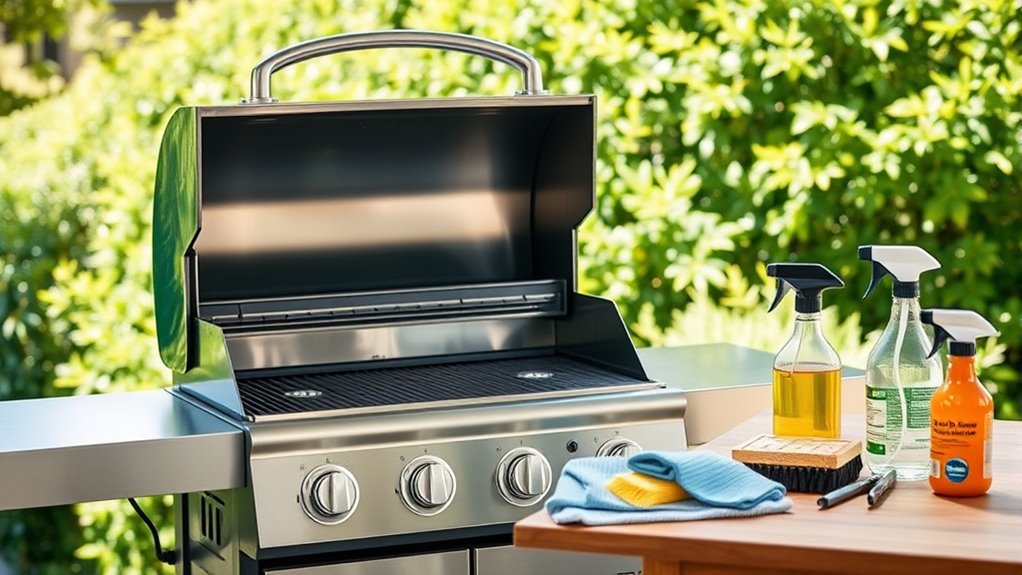
Before you begin cleaning your gas grill, it’s essential to prepare the area and gather all necessary supplies. Ensuring cleaning safety is your top priority, so wear gloves and eye protection, and work in a well-ventilated space. Gather cleaning tools like brushes, scrapers, and cloths, along with cleaning solutions suitable for grills. Don’t forget a bucket of warm soapy water, a putty knife, and aluminum foil for scrubbing stubborn spots. Proper storage tips also matter—store propane tanks upright in a cool, dry place away from direct sunlight and heat sources. Clearing the surrounding area of debris and flammable items minimizes hazards. Preparing your workspace and supplies guarantees a safer, more efficient deep cleaning process, setting the stage for a spotless grill.
Remove and Clean Grates and Drip Trays
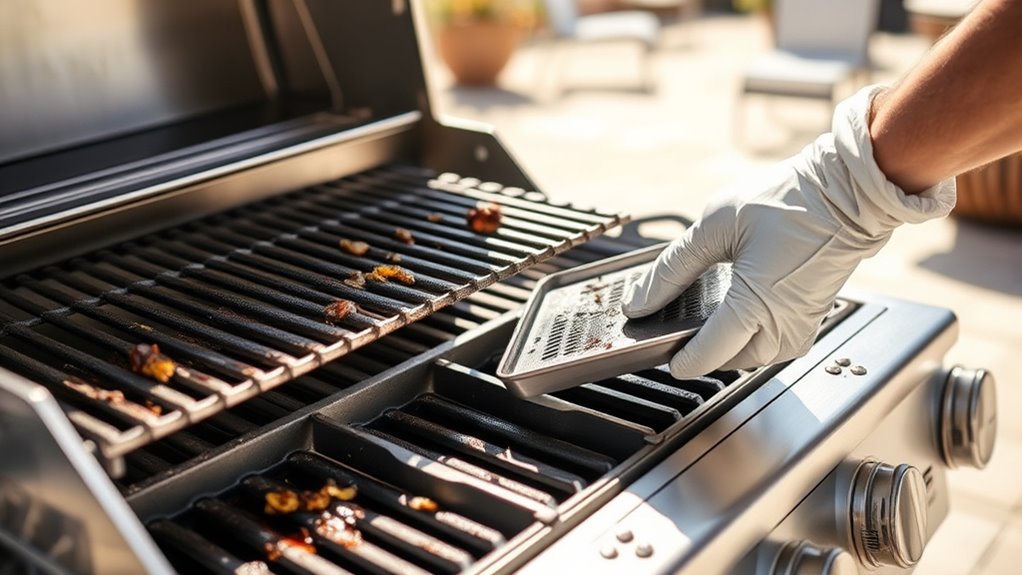
Start by removing the grates and drip trays from your grill. Inspect the grates for signs of grate corrosion or buildup of grease and grime. Next, take note of the drip trays, which often collect drip tray oils and debris that can cause flare-ups. To clean them effectively:
Remove and clean grill grates and drip trays regularly to prevent corrosion and flare-ups.
- Scrape off any burnt-on residue using a grill brush or scraper.
- Soak the grates and drip trays in warm, soapy water to loosen grease and oils.
- Rinse thoroughly and dry completely before reassembling.
This process helps prevent grate corrosion and ensures your grill remains in good condition. Removing and cleaning these components regularly also minimizes flare-ups caused by accumulated drip tray oils, keeping your grill safer and functioning properly.
Clean the Interior Components and Burners

To guarantee your grill cooks evenly and safely, it’s essential to clean the interior components and burners thoroughly. Start by removing the burners and inspecting the grill interior for grease, debris, and residue buildup. Use a wire brush or a stiff brush to scrub the burners, paying special attention to the burner ports to ensure they aren’t clogged. Burner cleaning is vital because clogged ports can cause uneven heat distribution or flare-ups. Next, wipe down the interior surfaces, removing ash and leftover debris. For stubborn deposits, use warm soapy water or a grill cleaner. Make sure all parts are dry before reassembling. Properly cleaning the grill interior and burners helps maintain peak performance and prolongs the lifespan of your grill.
Wipe Down the Exterior and Control Panel
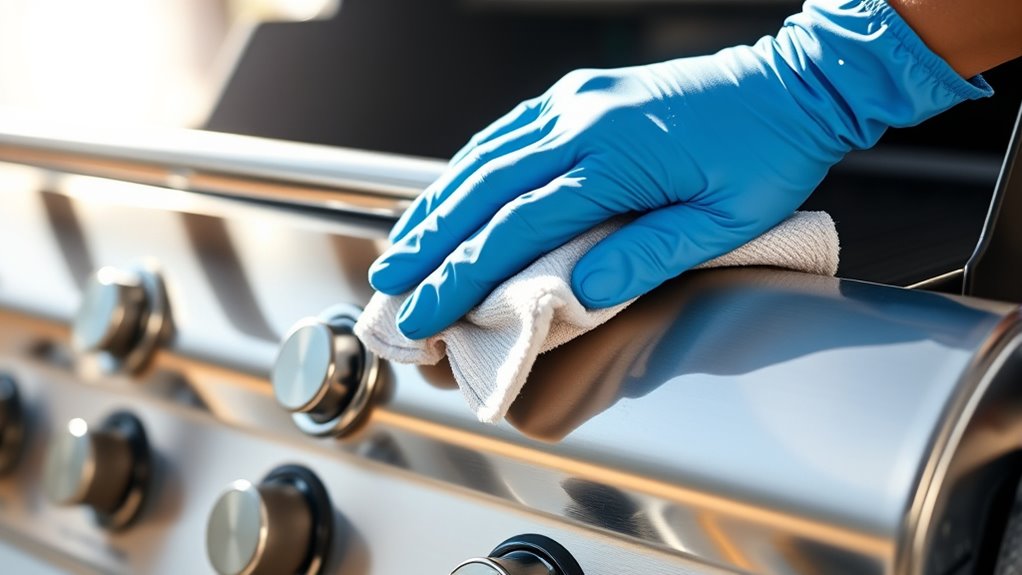
After cleaning the interior components and burners, focus on wiping down the exterior and control panel to keep your grill looking and functioning like new. Use cleaning tools such as a soft cloth or sponge to gently remove dirt and grease. To guarantee a thorough job, follow these steps:
- Wipe the control panel with a damp cloth, paying attention to knobs and buttons.
- Clean the exterior surfaces with a mild cleaner, avoiding abrasive scrubbers.
- Use a brush or cloth to clean grill accessories stored on the side shelves or hooks.
This process helps prevent rust and buildup, keeping your grill in top shape. Regularly wiping down these areas also enhances the appearance and prolongs the life of your grill’s exterior.
Perform a Final Check and Maintenance
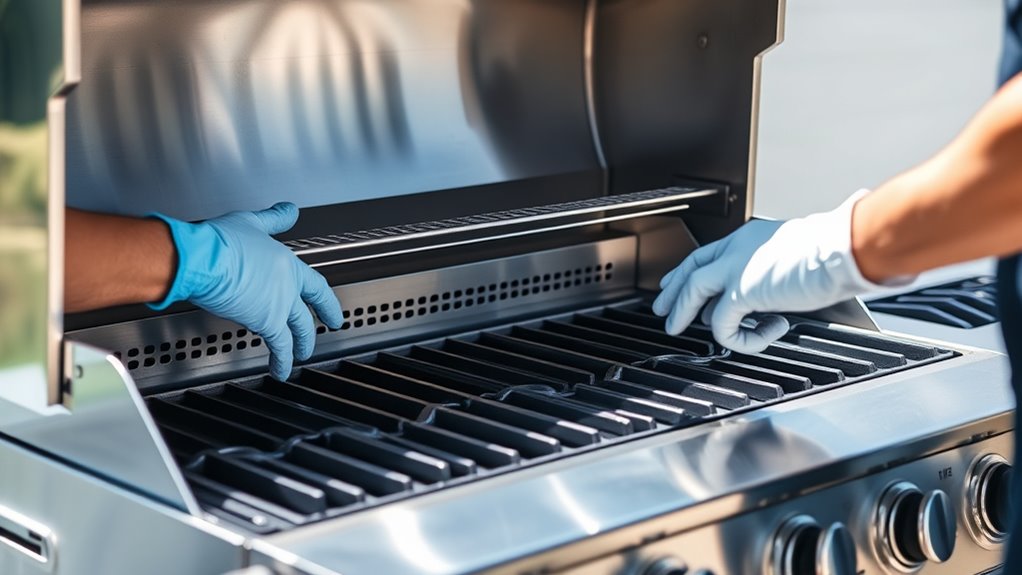
Performing a final check and maintenance guarantees your gas grill is safe, efficient, and ready for your next cookout. Start by inspecting all gas connections for leaks to prevent gas leak prevention issues—use a soapy water solution to identify any bubbles indicating leaks. Next, check the ignition system to ensure it sparks reliably; clean or replace worn-out igniters if needed. Confirm that the burners are properly aligned and free of debris, and verify that the control knobs function smoothly. Tighten any loose fittings and ensure all gas lines are secure. Doing these steps helps avoid potential hazards and guarantees your grill performs at its best. A thorough final check keeps your grilling experience safe, enjoyable, and hassle-free.
Frequently Asked Questions
How Often Should I Deep Clean My Gas Grill?
You should deep clean your gas grill at least once or twice a year to maintain ideal grill maintenance and guarantee safety. If you use it frequently, consider cleaning it every 3-4 months, especially after heavy cooking or grilling messy foods. Regular cleaning frequency helps prevent grease buildup, rust, and ensures your grill performs well. Make it a habit to deep clean to prolong your grill’s lifespan and enjoy delicious, safe meals.
Can I Use a Pressure Washer on My Grill?
You can use a pressure washer on your grill, but beware—it’s like risking a tsunami to wash your car. A pressure washer can cause serious grill damage, especially to delicate parts and seals. If you decide to go this route, keep the pressure low and stay at a safe distance. Otherwise, stick to safer cleaning tools to protect your grill and keep it in top shape.
What Cleaning Products Are Safe for Grill Surfaces?
For grill cleaning, use safe cleaning products like a mixture of dish soap and warm water or a specialized grill cleaner labeled safe for your grill surfaces. Avoid harsh chemicals that can damage the finish or leave residues. You can also use a vinegar and water spray for eco-friendly cleaning. Always check your grill’s manufacturer guidelines to verify your chosen safe cleaning products won’t harm the materials.
How Do I Prevent Rust After Cleaning?
Did you know that 60% of grill owners experience rust within a year? To prevent rust after cleaning, focus on seasoning maintenance regularly. Apply a thin layer of high-heat oil to the grates and exterior to create a protective barrier. Follow rust prevention tips like storing your grill in a dry place and covering it when not in use. This keeps your grill in top shape and rust-free longer.
Is It Necessary to Replace Parts During Deep Cleaning?
You don’t always need to replace parts during deep cleaning, but it depends on their condition. If your grill maintenance reveals rust, cracks, or significant wear, replacement necessity becomes clear. Regularly inspecting components like burners, grates, and valves helps you determine if they’re still functional or need replacing. Staying proactive with maintenance ensures your grill performs at its best, and you avoid costly repairs later on.
Conclusion
Don’t skip deep cleaning your grill—it’s easy, saves money, and keeps your food tasting great. Some worry it’s too time-consuming, but once you get into the routine, it takes just a little effort for big results. Plus, a clean grill is safer and lasts longer. So, roll up your sleeves and give your grill the care it deserves—you’ll enjoy perfect, flavorful barbecues every time!


