Your homemade pizza might fall short because you’re using the wrong flour, rushing fermentation, skipping out on quality ingredients, baking at the wrong temperature, or overloading toppings. Using the right flour, giving your dough enough time to develop flavor, choosing fresh ingredients, preheating your oven properly, and limiting toppings can make a huge difference. If you want to master making pizzeria-quality pizza every time, this guide has all the tips you need.
Play games included with Prime
Start a Prime free trial and play with Amazon Luna on your devices.
As an affiliate, we earn on qualifying purchases.
Key Takeaways
- Use the correct flour, like bread flour for chewiness, to ensure proper dough texture and elasticity.
- Allow sufficient fermentation time for flavor development and a light, airy crust.
- Invest in high-quality ingredients such as fresh cheese, basil, and premium toppings for better flavor.
- Preheat your oven and use a pizza stone or steel for even baking and a crispy crust.
- Avoid overcrowding with toppings; limit to 3-4 thin layers to prevent sogginess and ensure even cooking.
As an affiliate, we earn on qualifying purchases.
Using the Wrong Flour for Your Dough
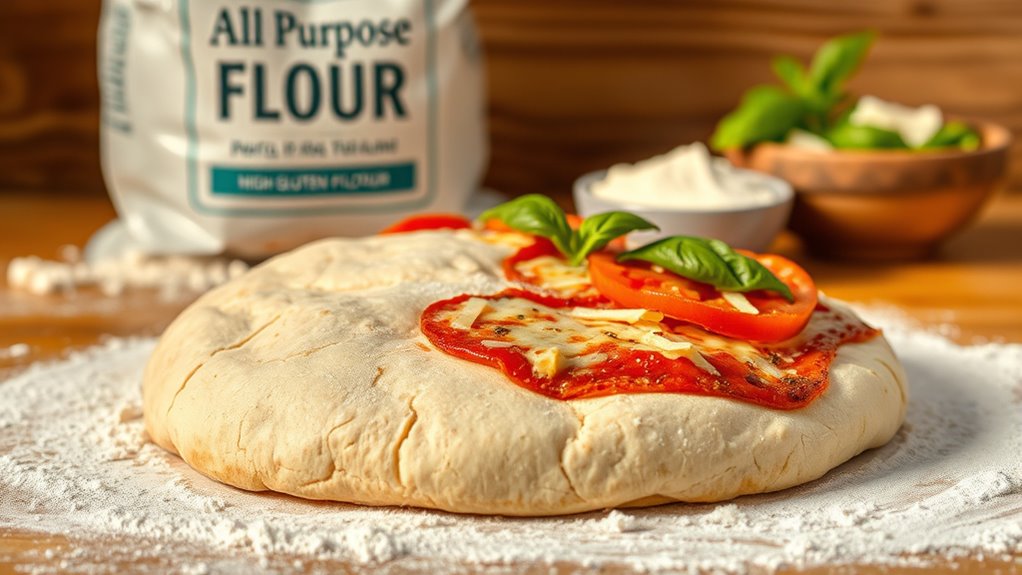
Choosing the right flour is essential for making a great pizza dough, and many home cooks overlook this step. Different flour types markedly affect your dough’s texture and stretchiness. For a chewy, crispy crust, opt for bread flour, which has a higher gluten content to develop better elasticity. All-purpose flour can work but may produce a softer, less chewy crust. If you want a tender, thin crust, you might try a blend or even some specialty flours. Using the wrong flour can lead to dough that’s either too dense or too sticky, making it hard to work with. Selecting the proper flour helps you achieve the ideal dough texture—firm yet pliable—so your homemade pizza comes out as good as a pizzeria’s.
As an affiliate, we earn on qualifying purchases.
Not Allowing Enough Time for Proper Dough Fermentation
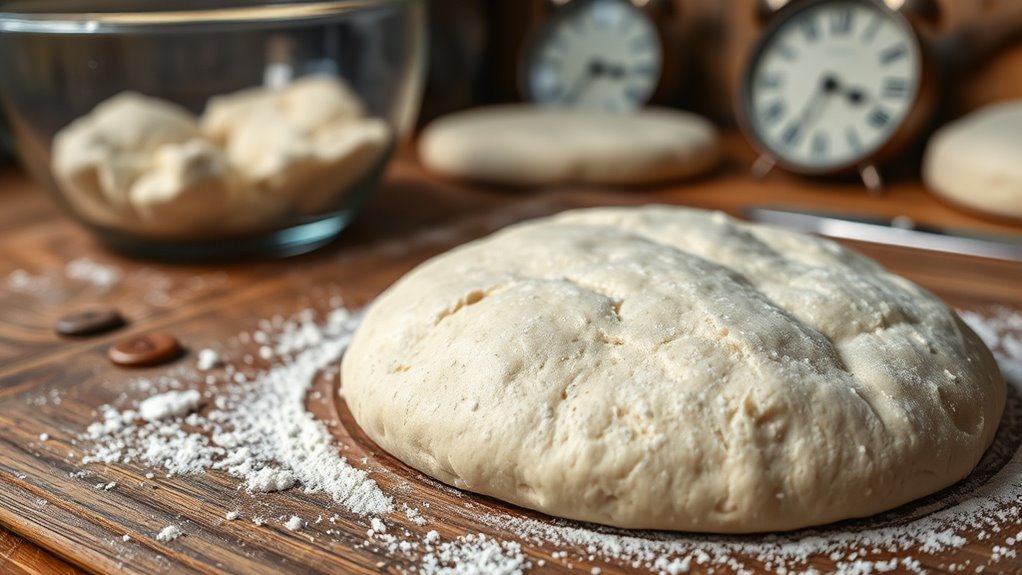
Rushing the fermentation process prevents your dough from developing the flavors and texture that make pizzeria-quality pizza. If you don’t give it enough fermentation duration, your dough won’t fully develop the complex flavors and airy structure you’re aiming for. Proper dough resting time is essential; it allows gluten to relax and fermentation to work its magic. Skimping on this step results in a dense, less flavorful crust that’s hard and less satisfying. To improve, plan for a longer fermentation, whether that’s a slow overnight rest in the fridge or a few hours at room temperature. This extra time boosts flavor, improves texture, and helps your dough stretch easily, bringing your homemade pizza closer to that pizzeria-quality standard.
As an affiliate, we earn on qualifying purchases.
Skimping on High-Quality Ingredients
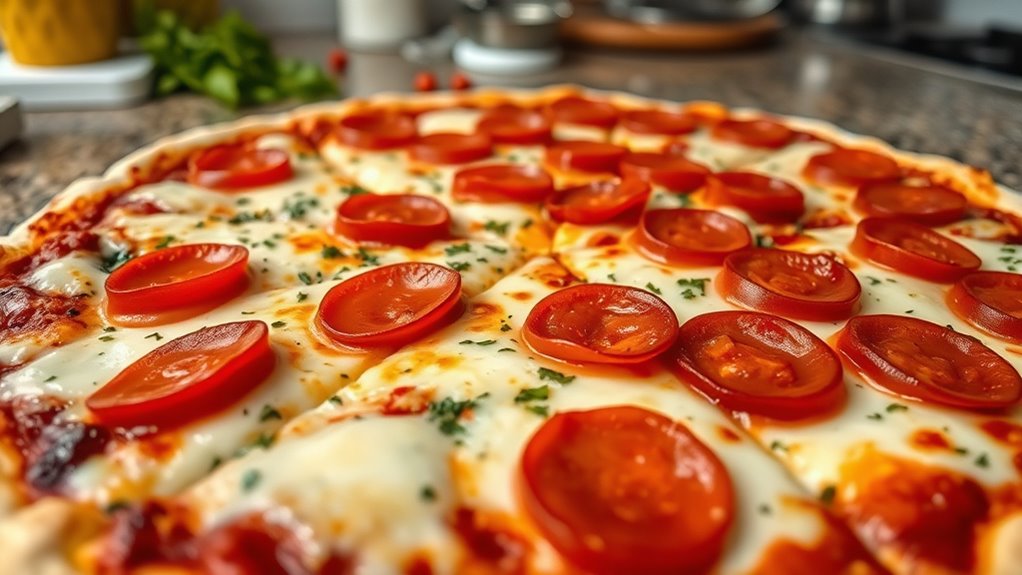
Using high-quality ingredients makes a noticeable difference in your homemade pizza. When you skip on premium cheese or fresh basil, you weaken the flavor profile that makes pizzeria pies so appealing. To elevate your pizza, focus on these essentials:
- Choose a rich, flavorful cheese like fresh mozzarella or a high-quality blend.
- Use freshly picked basil for vibrant aroma and taste.
- Opt for premium toppings such as cured meats or organic vegetables.
- Invest in high-grade olive oil for drizzling after baking.
These small upgrades bring out the best in your ingredients. Cheap or processed options may save money but often lack the depth and freshness that make a pizza truly outstanding. Prioritize quality to mimic that authentic pizzeria flavor at home.
As an affiliate, we earn on qualifying purchases.
Improper Oven Temperature and Baking Technique

One common mistake in homemade pizza is not setting the oven to the right temperature or baking it properly. Oven heat plays an essential role in achieving that crispy crust and perfectly melted cheese. If your oven isn’t hot enough, your pizza can turn out doughy and undercooked; if it’s too hot, it might burn before the toppings are done. Using the correct baking method—like preheating your oven at the highest setting and placing the pizza on a preheated pizza stone or steel—can make a big difference. Avoid simply using a baking sheet at a low temperature. Instead, focus on high oven heat and proper placement within the oven. This ensures even baking, mimicking restaurant-quality results and giving your homemade pizza that professional finish.
Overloading Your Pizza With Toppings
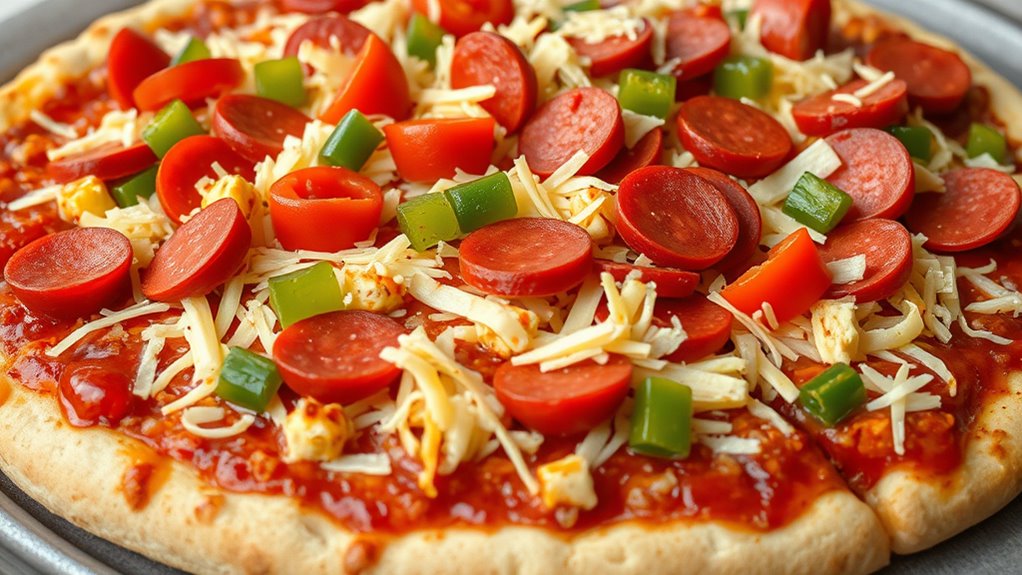
Adding too many toppings to your homemade pizza might seem like a way to make it more flavorful, but in reality, it can hinder the baking process. Topping overload causes moisture buildup, leading to a soggy crust and uneven cooking. Excessive toppings also weigh down the pizza, making it difficult for heat to penetrate properly. To avoid this, consider these tips:
Too many toppings can cause soggy crusts and uneven cooking—stick to a few thin layers for the best results.
- Limit toppings to 3-4 types for a balanced flavor.
- Use thin layers of each topping to prevent moisture issues.
- Pre-cook watery ingredients like mushrooms or peppers before adding.
- Place heavier toppings closer to the crust for better support.
Frequently Asked Questions
Can Using Whole Wheat Flour Improve My Homemade Pizza?
Yes, using whole wheat flour can improve your homemade pizza by increasing its fiber benefits and providing a richer flavor. Whole wheat flour has lower gluten content than white flour, which may make the crust slightly denser, but it also adds nutritional value. To get the best results, mix it with bread flour for strength or experiment with different ratios until you find the perfect balance for your ideal crust.
How Long Should I Ferment Pizza Dough for Optimal Flavor?
Imagine a slow dance where each moment deepens connection—your dough needs that same patience. For ideal flavor development, ferment your pizza dough for 24 to 72 hours. This extended fermentation timing allows natural enzymes to work, intensifying the aroma and texture. The longer you let it rest, the richer and more complex the flavor becomes, transforming simple ingredients into a pizzeria-quality crust that’s bursting with taste.
What Are the Best High-Quality Ingredients for Homemade Pizza?
For the best homemade pizza, you want to use fresh mozzarella to achieve that creamy, melting texture. High-quality olive oil adds flavor and richness to your crust and toppings. Choose ingredients that are vibrant and fresh—like ripe tomatoes, fresh basil, and good-quality flour. These premium components enhance taste and authenticity, making your pizza taste more like a pizzeria’s, even when made at home.
What Oven Temperature Is Ideal for a Pizzeria-Quality Pizza?
Ever wonder why pizzeria pizzas taste so perfect? You should aim for an oven heat around 500-550°F, with a high baking temperature that mimics commercial pizza ovens. This intense heat quickly crisps the crust and melts the cheese beautifully. Use a pizza stone or steel to distribute heat evenly, ensuring your homemade pizza reaches those pizzeria-quality standards. Do you have the right oven setup to achieve that fiery heat?
How Many Toppings Are Too Many for a Perfect Pizza?
You should avoid topping overload to keep your pizza balanced. Too many toppings can make it soggy and difficult to cook evenly. Aim for 3-5 toppings to guarantee each flavor shines without overwhelming the crust. Focus on balancing flavors, so no single topping dominates. This way, your homemade pizza will have a better texture, flavor, and overall quality, closer to that pizzeria perfection you’re aiming for.
Conclusion
If you want your homemade pizza to truly shine, consider these gentle tweaks and patience. Sometimes, the secret lies in subtle details rather than grand efforts. Embrace the process, trust in quality, and give your dough the time it needs. With a little care and attention, your pizza can become a delightful reflection of your effort—remaking your kitchen into a place where deliciousness naturally unfolds. Patience now, perfection later.
NFL season / tailgating Picks
team gear
As an affiliate, we earn on qualifying purchases.