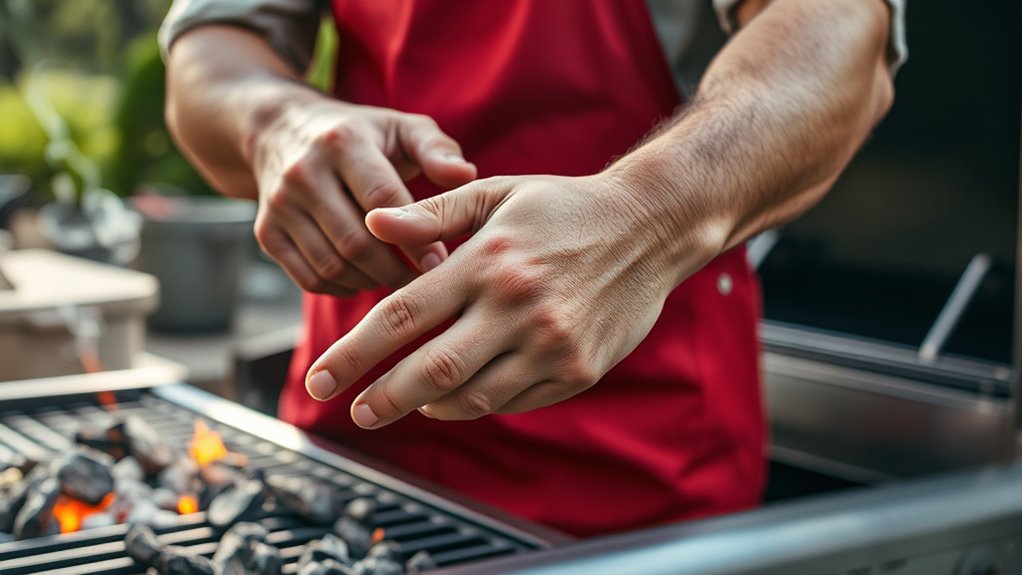

If you get burned while grilling, quickly remove the person from the heat source and cool the burn with running cold water for at least 10 minutes to reduce tissue damage. Do not apply ice or butter. Cover the burn with a clean, non-stick bandage or cloth, and seek medical help if the burn is large or blistered. Learning more about proper first aid can help you respond effectively in any grilling emergency.
Key Takeaways
- Immediately remove the person from the heat source to prevent further injury.
- Cool the burn with running cold water for at least 10 minutes to reduce tissue damage.
- Cover the burn with a clean, non-stick bandage or cloth to protect it from infection.
- Avoid applying ice, butter, or ointments that can trap heat and worsen the injury.
- Seek medical attention for large, blistered, or sensitive burns to ensure proper treatment.

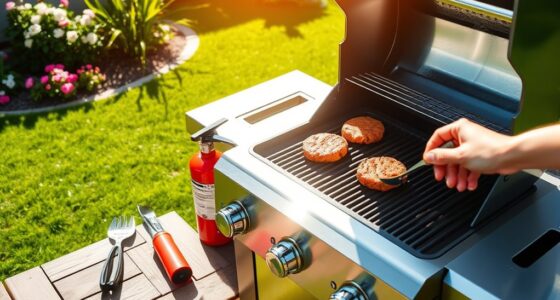
Grilling is all about enjoying great food and outdoor fun, but accidents can happen in an instant. One of the most common mishaps involves burns, which can occur if you’re not careful or if safety measures aren’t followed. That’s why understanding fire safety and burn prevention is essential for every grill master. When you’re tending to the flames, always keep a close eye on your grill, especially if you’re using charcoal or propane. Keep a fire extinguisher nearby, and know how to use it in case flames flare unexpectedly. Never leave the grill unattended, and make sure it’s placed on a stable, non-flammable surface away from overhanging branches or structures. Wearing appropriate clothing — like tight-fitting sleeves and heat-resistant gloves — can also help prevent accidental contact with hot surfaces.
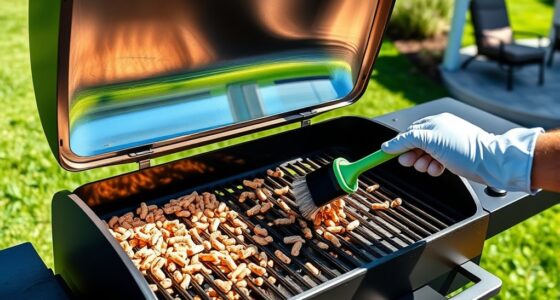
Burn prevention starts with proper setup and maintenance. Regularly check your grill for leaks, cracks, or buildup of grease, which can ignite unexpectedly. When lighting your grill, follow the manufacturer’s instructions carefully, and never use lighter fluid on a hot grill or add it after lighting. Keep a spray bottle of water handy to douse small flare-ups, but avoid pouring water directly onto hot coals or flames, as this can cause dangerous steam and splattering. Remember, a proactive approach to fire safety not only keeps you safe but also prevents the kind of accidents that lead to burns. Additionally, understanding Free Floating concepts can help you better manage your outdoor space and reduce hazards.
Regularly inspect your grill for leaks, cracks, and grease buildup to prevent unexpected fires.
Despite your best precautions, accidents can still happen. If you or someone else gets burned, the key is quick, calm action. Immediately remove the person from the source of heat, and cool the burn with running cold water for at least 10 minutes. This step is vital for burn prevention, as it helps limit tissue damage and reduce pain. Avoid applying ice or greasy substances like butter or ointments, which can trap heat and worsen the injury. Cover the burn with a clean, non-stick bandage or cloth to protect it from infection. If the burn is large, blistered, or involves the face, hands, or genitals, seek medical attention promptly.
Always remember, safety is your best tool in the backyard. By practicing good fire safety habits and burn prevention techniques, you can enjoy grilling without worry, knowing you’re prepared to handle any mishap swiftly and effectively.
Frequently Asked Questions
Can I Use Butter on a Burn From the Grill?
No, you shouldn’t use butter on a burn from the grill. Butter dangers include trapping heat and bacteria, making the burn worse and increasing infection risk. Instead, use alternative remedies like running cool water over the burn or applying a clean, cool, damp cloth. These methods help reduce pain and prevent infection. Avoid butter and seek medical attention if the burn is severe or blistered.
How Do I Prevent Burns While Grilling?
Did you know that nearly 10,000 people get burned while grilling each year? To prevent burns, stay focused on grilling safety and burn prevention techniques. Always wear heat-resistant gloves, keep a safe distance from hot surfaces, and use long-handled tools. Never leave the grill unattended, and keep a fire extinguisher nearby. These simple steps help you enjoy grilling safely without risking painful burns.
When Should I Seek Emergency Medical Help?
If your burn is severe—causing deep pain, blistering, or covering a large area—you should seek emergency medical help immediately. Also, if the burn results from electrical or chemical sources, or if the person shows signs of shock, call emergency services right away. Remember to prioritize fire safety and emergency preparedness, keeping a fire extinguisher nearby and knowing how to respond quickly to any grill-related accidents.
Are There Home Remedies for Severe Burns?
Think of severe burns as a blazing wildfire needing quick action. While herbal remedies and home treatments may soothe minor burns, they aren’t enough for serious injuries. For severe burns, avoid home remedies like butter or oil, which can worsen damage. Instead, cool the burn with cold water, cover it with a sterile cloth, and seek emergency care immediately. Trust professional treatment over home remedies for severe burns.
What’s the Best Way to Cool a Burn Quickly?
To cool a burn quickly, immediately place a cold compress or run cool water over the affected area. This helps reduce pain, swelling, and damage. Keep the area under cool water for at least 10 minutes, avoiding ice or very cold water, which can harm tissue. Applying a cold compress can also provide relief if running water isn’t available. Remember, prompt cooling is essential for proper burn care.
Conclusion
Now that you know how to handle grill burns quickly and effectively, you’re better prepared to keep your cookouts safe. Remember, acting fast can make all the difference in preventing serious injuries. Do you really want a small burn to ruin your perfect barbecue? Keep a cool head, follow these steps, and enjoy your grilling adventures with confidence. Safety first means more fun and fewer worries—happy grilling!