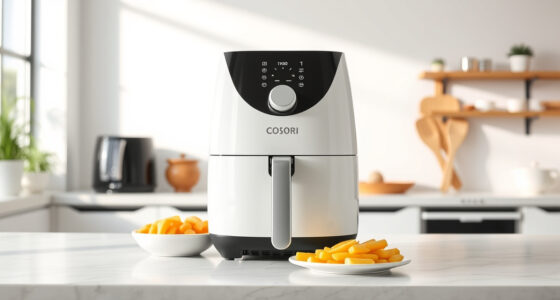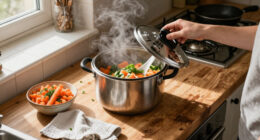
Choose a turkey roasting pan that fits your bird and oven, set it up to catch drippings, and use it to roast the turkey safely. This guide is for home cooks with basic kitchen skills; selecting and preparing the pan takes about 30–60 minutes, followed by the roasting time for your turkey.

Get kitchen gear delivered free with Prime
- Fast, free delivery on millions of items
- Prime Video, Amazon Music and more included
- Member-only deals all year

Nonstick Turkey Roasting Pan with U-Shaped Rack, 17 × 13 Inch
- ✔ Material: Carbon steel in listed specs; description also names aluminized steel
- ✔ Finish: Nonstick
- ✔ Rack: U-shaped, with lifting handles
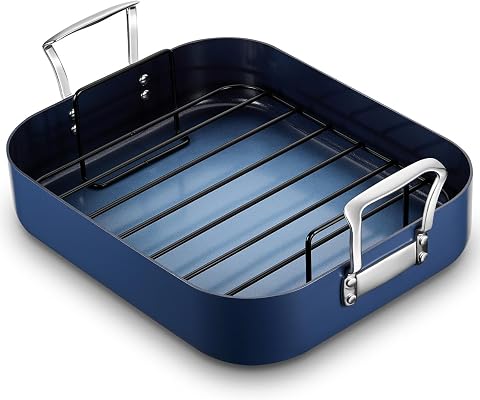
KOCH SYSTEME CS Ceramic Roasting Pan with Rack, 15 x 12.5-Inch Cooking Area
- ✔ Material: Aluminum
- ✔ Coating: Ceramic nonstick; stated free of PFOA and PFOS
- ✔ Rack: Stainless steel with black nonstick coating

Glad Nonstick Steel Roasting Pan with V-Shaped Rack, 15 x 10.3 Inches
- ✔ Material: Carbon steel
- ✔ Finish: Nonstick; listed as PFOA-free and PTFE-free
- ✔ Rack: V-shaped iron
Difficulty: Beginner | Time: 30–60 minutes for pan selection and setup, plus the turkey’s roasting time
What You’ll Need
Tools & Materials:
- Measuring tape or ruler
- Turkey roasting pan with sturdy handles
- Roasting rack that fits inside the pan, or vegetables to support the turkey
- Food thermometer
- Oven mitts
- Large cutting board or heat-safe surface for the hot pan
Knowledge:
- How to use an oven and follow a turkey recipe
- How to read a food thermometer
Check your turkey’s weight and the oven’s interior dimensions before buying a pan. Allow room for air to circulate and for you to lift the pan out without touching the oven walls. Follow the turkey recipe and package guidance for roasting temperature and timing.
Nonstick Turkey Roasting Pan with U-Shaped Rack, 17 × 13 Inch
For a substantial holiday bird, this pan makes the strongest capacity claim in the group: it is described as accommodating a turkey up to 22 pounds. Its U-shaped rack raises the meat above the pan to keep it out of excess grease, and the rack’s handles may make lifting it out more manageable. Compared with Glad’s smaller 15 x 10.3-inch pan, this option is positioned for a larger roast and offers angled handles intended to preserve more cooking area.That capacity advantage comes with an important uncertainty. The title gives a 17 x 13-inch size, while the listed item dimensions are 15 x 8 x 3 inches; the description also names both aluminized steel and carbon steel. Those differences make it difficult to know what space the pan actually occupies or how much turkey it can comfortably hold. We should confirm the measurements and construction before relying on the capacity claim. Its 450°F maximum is adequate for many roasting recipes, though below Glad’s stated 464°F limit.This is the best fit here when a larger turkey and a liftable rack matter most, provided we can verify the pan’s actual dimensions. If certainty about usable cooking area is our priority, KOCH SYSTEME provides a clearer cooking-area measurement. The nonstick finish may ease release and cleanup, but the listing does not supply the same detailed care directions as Glad.
Pros:
- Stated capacity of up to 22 pounds suits a large turkey.
- U-shaped rack lifts the bird above drippings and includes lifting handles.
- Angled handles are intended to leave more cooking area available.
- Nonstick coating is designed to support food release and cleanup.
Cons:
- Title dimensions of 17 x 13 inches conflict with listed item dimensions of 15 x 8 x 3 inches.
- Material descriptions conflict, naming both aluminized steel and carbon steel.
- The stated maximum temperature is 450°F.
Best for: Cooks planning a larger turkey who want an elevated U-shaped rack and angled handles, after confirming the pan’s actual dimensions.
Not ideal for: Buyers who need reliable, consistent size and material specifications before choosing, or who need a stated temperature limit above 450°F.
Bottom line: Choose this pan for its stated large-turkey capacity and U-shaped lifting rack, but verify its dimensions and material before purchase.
“Choose this pan for its stated large-turkey capacity and U-shaped lifting rack, but verify its dimensions and material before purchase.”
KOCH SYSTEME CS Ceramic Roasting Pan with Rack, 15 x 12.5-Inch Cooking Area
The KOCH SYSTEME pan gives us a useful distinction between the space available for the roast and the space the pan needs in the oven: its cooking area is about 15 x 12.5 inches, while the full footprint, including handles, is 17 x 12.7 inches. That wider cooking area is a step up from Glad’s 15 x 10.3-inch listed pan dimensions, making this a more compelling option when a turkey needs room across the base. Its stainless steel rack elevates the bird to let air circulate and collect drippings below.Handling is another advantage. The wide riveted handles leave room for oven mitts, and the lightweight aluminum body is described as heating quickly and distributing heat evenly. Those features make it easier to maneuver than a pan whose handles are cramped, though the full footprint still needs to clear our oven walls and racks. Compared with the larger turkey capacity claimed for the U-shaped pan, KOCH SYSTEME gives a specific cooking area but does not state a turkey weight limit.The ceramic nonstick coating is described as free of PFOA and PFOS, and the oven limit is 450°F. That is lower than Glad’s 464°F ceiling, and the 17-inch overall length may be awkward in a smaller oven. This pick makes sense when we want a broad, clearly measured cooking area and glove-friendly handles; it is less suitable when oven space is tight or we need an explicit large-bird capacity claim.
Pros:
- Cooking area is specified as approximately 15 x 12.5 x 3.2 inches.
- Wide riveted handles provide room for oven mitts.
- Lightweight aluminum is described as heating quickly and distributing heat evenly.
- Elevated stainless steel rack collects drippings beneath the roast.
Cons:
- The overall 17 x 12.7-inch footprint may not fit every oven.
- Maximum oven temperature is 450°F, below Glad’s stated 464°F limit.
- No turkey weight capacity is specified.
Best for: Cooks who want a relatively wide measured cooking area, lightweight aluminum construction, and room for oven mitts on the handles.
Not ideal for: Anyone with a compact oven, a recipe requiring temperatures above 450°F, or a need for a stated maximum turkey weight.
Bottom line: Pick KOCH SYSTEME when its wide cooking area and easy-grip handles fit our oven, and we do not need a published bird-weight limit.
“Pick KOCH SYSTEME when its wide cooking area and easy-grip handles fit our oven, and we do not need a published bird-weight limit.”
Glad Nonstick Steel Roasting Pan with V-Shaped Rack, 15 x 10.3 Inches
Among these three choices, Glad is the most compact based on its stated pan dimensions, which are 15 x 10.3 inches excluding handles. That smaller footprint may suit a tighter oven or a cook who also needs room for side dishes. Its V-shaped iron rack is designed to improve airflow around the meat, while sturdy handles help us transfer the pan. The 3.2-pound weight is also a practical detail when we are moving a hot roast, although the bird itself will add substantial weight.Compared with KOCH SYSTEME’s 15 x 12.5-inch cooking area, Glad gives up width, so it is less appealing when we need generous space for a broad turkey. It also lacks the U-shaped pan’s stated 22-pound capacity. In exchange, it has a clearly stated 464°F oven limit, higher than the 450°F ceiling on the other two pans. The nonstick coating and dishwasher-safe listing can simplify cleanup, though the care notes still call for towel drying and prohibit abrasive cleaners and metal cutting tools.Glad is a sensible choice for smaller roasts, kitchens with limited oven room, or buyers who value an easy-release surface and a defined temperature ceiling. Its restrictions matter: it is not broiler safe and should not be used on a stovetop or over an open flame. We should skip it if we need one pan to move from oven roasting to stovetop gravy-making or high-heat broiling.
Pros:
- Listed pan dimensions are a compact 15 x 10.3 inches, excluding handles.
- V-shaped iron rack is designed to improve airflow around the roast.
- 464°F oven limit is the highest stated among these three pans.
- Nonstick finish and dishwasher-safe listing can make cleanup easier.
Cons:
- Narrower listed dimensions offer less room than KOCH SYSTEME’s stated cooking area.
- Not broiler safe and not for stovetop or open-flame use.
- Care instructions prohibit abrasive cleaners and metal cutting tools.
Best for: Cooks with limited oven space who want a compact nonstick pan, a V-shaped rack, and a stated oven limit above 450°F.
Not ideal for: Anyone roasting a particularly large or wide turkey, using a broiler, or planning to make gravy directly on a stovetop in the roasting pan.
Bottom line: Choose Glad when oven space is limited and its compact dimensions suit the bird, as long as we do not need broiler or stovetop use.
“Choose Glad when oven space is limited and its compact dimensions suit the bird, as long as we do not need broiler or stovetop use.”
As an Amazon Associate we earn from qualifying purchases.
Before You Start
Confirm that the turkey is fully thawed and remove its packaging and giblets according to the recipe. Keep raw turkey and its juices away from ready-to-eat foods, and wash your hands and work surfaces after handling it. Do not put a disposable foil pan on the oven rack by itself; set it on a sturdy sheet pan for support. Never rely on the pan’s color, a pop-up timer, or cooking time alone to confirm doneness.
Step-by-Step Instructions
Step 1: Measure your oven and turkey
Measure the oven rack’s usable width and depth, leaving clearance around the sides so the pan can slide in and out. Check the turkey’s weight and approximate dimensions. Choose a pan large enough to hold the bird without its sides pressing against the pan walls, while still fitting safely in the oven.
Tip:Account for handles and any roasting rack when checking the pan’s overall dimensions.
Check: The empty pan fits on the oven rack with space around it, and the turkey fits inside without overhanging the pan.
Step 2: Choose a sturdy pan and rack
Select a heavy-duty metal roasting pan with a flat base, secure handles, and sides high enough to contain juices. Choose a rack that sits steadily inside and lifts the turkey above the pan bottom. If you do not have a rack, use a bed of sturdy vegetables, such as carrots, onions, and celery, to support the bird.
Tip:A very deep pan can limit heat circulation around the turkey. A lightweight pan may flex under the weight of a large bird and hot drippings.
Check: The pan rests flat, the handles feel secure, and the rack does not wobble when pressed lightly.
Step 3: Check material and care instructions
Read the manufacturer’s instructions for oven temperature limits, stovetop use, and cleaning. Use a pan rated for your recipe’s oven temperature. If you plan to make gravy in the roasting pan, confirm that it can be used on your stovetop; some pans are oven-safe but not suitable for direct burners.
Tip:Nonstick coatings and glass or ceramic cookware can have specific heat limits. Follow the product instructions rather than assuming all roasting pans behave the same way.
Check: You know the pan’s temperature limit and whether it can go on a burner after roasting.
Step 4: Set up the roasting pan
Place the rack inside the pan, or arrange the vegetables in an even layer. Set the pan on a stable surface near the oven. Pat the turkey dry and season it according to your recipe, then place it breast-side up on the rack or vegetables. Keep the bird centered so weight is distributed evenly.
Tip:Do not add water to the pan unless your recipe specifically calls for it. Extra liquid can reduce browning and may make the drippings less concentrated.
Check: The turkey sits securely and does not rock, and the pan remains stable when you gently test the handles before lifting.
Step 5: Roast the turkey according to your recipe
Preheat the oven to the recipe’s temperature. Slide the pan onto the oven rack, keeping it level, and roast for the recipe’s estimated time. Use oven mitts when handling the pan. If you baste, work quickly and avoid splashing hot fat. Do not open the oven more often than the recipe requires.
Tip:Place the pan where it is centered in the oven and does not touch the oven walls. If the turkey browns too quickly, follow the recipe’s direction for loosely covering it with foil.
Check: The turkey browns as expected, and juices collect in the pan without spilling over.
Step 6: Check the turkey’s internal temperature
Near the end of the estimated roasting time, insert a food thermometer into the thickest part of the breast and the innermost part of the thigh, avoiding bone. Check more than one spot. Follow current food-safety guidance and your recipe; the USDA recommends reaching 165°F (74°C) in the breast, thigh, and wing.
Tip:If a spot has not reached the target temperature, return the turkey to the oven and check again after a short interval. Wash the thermometer probe between readings if it touches undercooked meat.
Check: Every checked location reaches at least 165°F (74°C), measured away from bone.
Step 7: Move the turkey and handle the drippings
Lift the pan onto a heat-safe surface using both handles and oven mitts. Transfer the turkey to a cutting board or serving platter and let it rest as directed by your recipe. Use the drippings for gravy only after handling them safely; pour them carefully and use the pan on a burner only if its instructions allow it.
Tip:Hot fat can slosh when the pan is tilted. Ask another adult to steady the cutting board or clear the path before you carry a heavy pan.
Check: The turkey rests securely off the pan, and the pan is on a stable, heat-safe surface with no spilled hot drippings.
Step 8: Cool and clean the pan
Let the pan cool until it is safe to handle. Pour off or save the drippings as appropriate, then wash the pan and rack according to their care instructions. Avoid sudden temperature changes that can warp metal or damage glass or ceramic cookware.
Tip:Soak stuck-on residue in warm water if the manufacturer permits it. Avoid abrasive scrubbers on coated surfaces.
Check: The pan and rack are clean, dry, and free of cracks, loose handles, or visible damage before storage.
Common Mistakes to Avoid
- Buying a pan that fits the turkey but not the oven. — Measure the oven rack and include the pan’s handles in the fit check before purchasing.
- Using a flimsy disposable foil pan without support. — Set it on a sturdy sheet pan before adding the turkey, and lift both pans together with a secure grip.
- Choosing a pan that is too deep or overcrowding the bird. — Use a pan that holds the turkey with room around it and has sides sufficient to catch drippings without blocking heat circulation.
- Judging doneness by time or appearance alone. — Measure the internal temperature in several thick locations with a food thermometer.
Troubleshooting
Problem: The roasting pan does not fit on the oven rack.
Solution: Do not force it or let it rest against the oven walls. Remove the turkey, use a smaller suitable pan, or adjust the rack position if the oven manual and recipe allow.
Problem: The pan flexes or feels unstable when lifted.
Solution: Stop carrying it while loaded. Slide a sturdy sheet pan underneath if safe to do so, or ask for help supporting the load. Use a sturdier pan for future roasts.
Problem: The turkey is browning too quickly before it reaches the target temperature.
Solution: Follow the recipe’s guidance for loosely covering browned areas with foil, then continue roasting and check the temperature again.
Problem: The drippings are smoking.
Solution: Check the recipe and oven temperature, and carefully remove excess fat only if it is safe to do so. Keep the oven door closed if smoke is heavy, turn off the oven, and follow the appliance’s safety guidance.
What Success Looks Like
The pan fits the oven, remains stable under the turkey, and catches the juices without spilling. The turkey reaches at least 165°F (74°C) in the breast, thigh, and wing when checked away from bone. After cooking, the pan and rack can be cooled, cleaned, and stored without damage.
Next Steps
Carve and serve the rested turkey, then refrigerate leftovers promptly in shallow containers. Once the pan has cooled, clean it according to its care instructions and store the rack with it. Before the next roast, check handles, coating, and pan base for damage; replace the pan if it is unstable or no longer safe for its intended heat source.
Frequently Asked Questions
What size roasting pan do I need for a turkey?
Choose a pan large enough to hold the bird without crowding, and small enough to fit your oven with clearance around it. Check both the turkey’s weight and the oven rack measurements because turkey shape and pan handles affect fit.
Do I need a rack inside the roasting pan?
A rack raises the turkey so hot air can circulate and juices can collect below. If you do not have one, use a stable layer of sturdy vegetables as a support, as allowed by your recipe.
Can I make gravy in the roasting pan?
Only use the pan on a stovetop burner if the manufacturer says it is stovetop-safe. Otherwise, transfer the drippings to a suitable saucepan before making gravy.
Can I roast a turkey in a disposable foil pan?
Yes, if the pan is large enough and rated for oven use, but support it with a sturdy sheet pan. Foil pans can bend when loaded with a heavy turkey and hot juices.
How do I know the turkey is done?
Check the thickest parts of the breast and the innermost parts of the thigh and wing with a food thermometer, avoiding bone. The USDA recommends a minimum internal temperature of 165°F (74°C) in all three areas.