
To clean your pizza stone without ruining it, first let it cool completely to prevent cracks. Gently remove loose debris with a soft brush or damp cloth. For stubborn spots, use a plastic scraper or apply a baking soda paste, then scrub softly. Avoid soaking or using water, as this can damage the porous surface. Proper care keeps your stone in top shape—continue below to find out more tips.
Key Takeaways
- Allow the pizza stone to cool completely before cleaning to prevent damage.
- Gently remove loose debris with a soft brush or damp cloth without soaking.
- Use a plastic scraper or soft brush for stubborn spots, avoiding harsh tools.
- Apply a baking soda paste for deep cleaning, then wipe with a damp cloth.
- Keep the stone dry and avoid water or soaking to preserve seasoning and prevent cracks.
Allow Your Pizza Stone to Cool Completely Before Cleaning
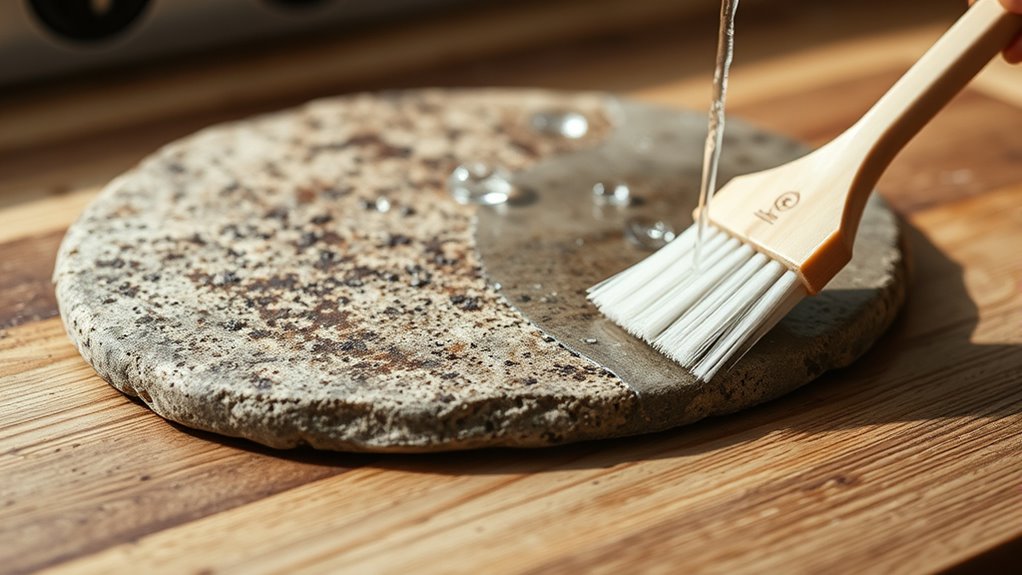
You should always let your pizza stone cool completely before cleaning it to prevent damage and guarantee safety. Attempting to clean it while hot can cause cracking or warping, ruining its seasoning and making future seasoning restoration difficult. Cooling also helps eliminate odors that may have built up during cooking, making odor removal easier. Once the stone has cooled, you can gently wipe away loose debris without risking damage. Patience during this step preserves the stone’s integrity and ensures it stays in top condition. Never rush the cooling process, as sudden temperature changes can crack the stone. Proper cooling is essential for effective cleaning and maintaining your pizza stone’s seasoning, keeping it in excellent shape for many delicious pizzas ahead.
Remove Loose Debris and Residue Gently

After the pizza stone has cooled completely, gently remove loose debris and residue using a soft brush or a damp cloth. This step helps avoid damaging the stone’s surface and preserves its seasoning techniques. Regularly removing crumbs and light residue reduces the need for harsh cleaning, maintaining the stone’s non-stick qualities. Keep in mind, cleaning frequency depends on how often you cook on it; more frequent cleaning prevents buildup and keeps your stone in top condition. Be careful not to scrub too hard, as abrasive tools can damage the surface and affect its ability to retain heat. Use gentle motions to keep the stone clean without compromising its integrity or seasoning. This cautious approach prolongs the life of your pizza stone and guarantees ideal cooking results.
Use a Soft Brush or Plastic Scraper to Clean Stubborn Spots

When stubborn spots remain on your pizza stone, using a soft brush or plastic scraper can make cleaning easier. These gentle tools help remove residue without damaging the stone’s surface. Always choose appropriate cleaning tools to keep your pizza stone in great shape.
Gentle Cleaning Techniques
To effectively remove stubborn spots from your pizza stone, a gentle approach is essential. Use a soft brush or plastic scraper to carefully loosen debris without damaging the surface. Avoid harsh chemicals or abrasive tools, as they can ruin the stone’s seasoning techniques and reduce its non-stick properties. Instead, focus on cleaning frequency—regular, light cleaning prevents buildup and minimizes the need for aggressive scrubbing. When spots persist, apply gentle pressure and work slowly to lift residues without causing cracks or scratches. Remember, the goal is to preserve the stone’s natural porosity and seasoning. By sticking to gentle cleaning techniques, you’ll extend your pizza stone’s lifespan and maintain ideal baking performance.
Suitable Cleaning Tools
Using the right tools is key to effectively cleaning stubborn spots on your pizza stone. A soft brush or plastic scraper works best for delicate surfaces, helping you remove residue without damage. For tougher stains, a metal scraper can be effective, but use it carefully to avoid scratching the stone. Avoid metal scrapers for regular cleaning, as they can harm the surface over time. Abrasive pads are generally not recommended, as they can also scratch or erode the stone’s surface. Instead, stick to gentle tools like a plastic scraper or soft brush to loosen stubborn debris. Always work carefully, applying light pressure, and avoid harsh tools that could compromise your pizza stone’s integrity. This approach preserves your stone’s quality and longevity.
Apply Baking Soda Paste for Deep Cleaning

Applying a baking soda paste is an effective way to deep clean a pizza stone. Mix baking soda with a small amount of water until you form a thick paste. Spread this paste evenly over the surface, focusing on stains or built-up grime. Let it sit for about 10-15 minutes to allow the baking soda to break down grease and residue. Using a soft brush or cloth, gently scrub the stone in circular motions. The baking soda’s abrasive quality helps lift stubborn debris without damaging the porous surface. Once cleaned, wipe away the paste with a damp cloth. This method guarantees a thorough deep cleaning while preserving your pizza stone’s integrity. Avoid using harsh chemicals to maintain its natural seasoning.
Avoid Using Water or Soaking the Stone
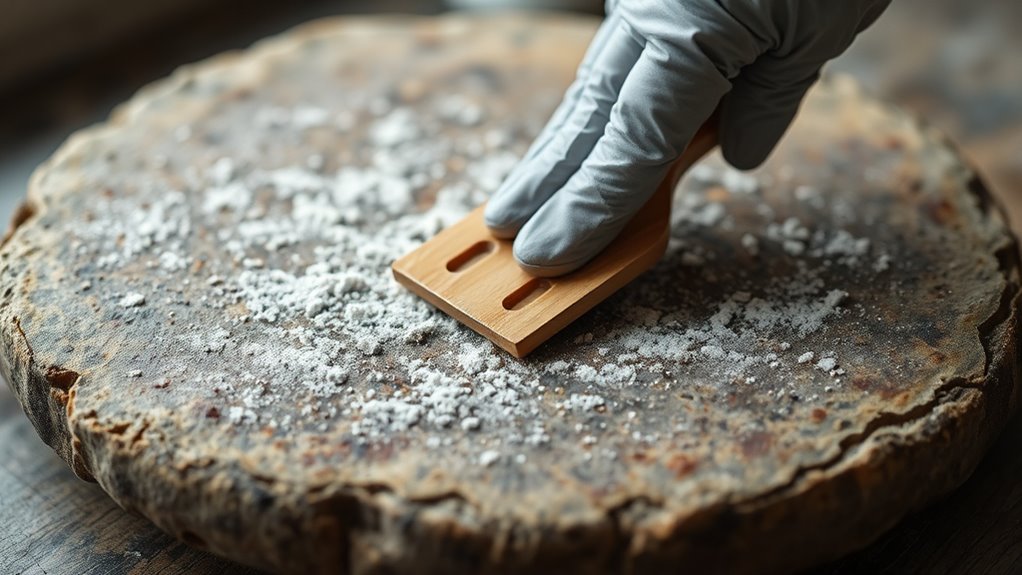
Since water can seep into the porous surface of a pizza stone and cause damage, it’s best to avoid soaking it altogether. Excess moisture can lead to seasoning removal, which affects the stone’s non-stick properties and flavor. Instead of soaking, rely on dry methods like brushing off crumbs and using a damp cloth for stubborn spots. Frequent cleaning isn’t necessary; over-cleaning can strip away the seasoned layer that helps prevent sticking. Only clean the stone when needed, and avoid using water or soap, as these can compromise its integrity. Proper maintenance involves minimal moisture and gentle brushing, ensuring the stone stays seasoned and ready for your next pizza. Keeping these practices in mind will extend your stone’s lifespan and performance.
Store and Maintain Your Pizza Stone Properly

Proper storage is key to maintaining your pizza stone’s longevity and performance. To prevent cracks or damage, keep it in a cool, dry place where it won’t be exposed to extreme temperature changes. Avoid storing your pizza stone near sources of heat or in humid environments, as these conditions can weaken the material. When not in use, guarantee the stone is completely dry before storing it away, and avoid stacking heavy items on top of it. Pay attention to the cooking temperature when using your stone; high heat can cause thermal shock if the stone isn’t properly conditioned or stored. By maintaining good storage conditions and controlling the cooking temperature, you’ll extend your pizza stone’s life and keep it in prime condition for many delicious pizzas.
Frequently Asked Questions
Can I Use Soap or Detergent to Clean My Pizza Stone?
You shouldn’t use soap or detergent to clean your pizza stone because dish soap concerns can leave residues that affect food safety and flavor. Instead, opt for detergent alternatives like a stiff brush or a damp cloth. Scrub off any baked-on food gently, then let the stone dry completely before using it again. This method keeps your pizza stone clean without risking damage or unwanted tastes.
How Often Should I Clean My Pizza Stone?
You should perform seasonal cleaning on your pizza stone, ideally every 3 to 6 months, depending on usage. Regular cleaning after each use involves scraping off loose food and avoiding soap or detergent. For more thorough cleaning, wait until the stone cools, then use a brush or damp cloth. Adjust your cleaning frequency based on how often you cook with it, ensuring it stays in good condition without over-cleaning.
Is It Safe to Put My Pizza Stone in the Dishwasher?
No, it’s not safe to put your pizza stone in the dishwasher. Dishwasher safety isn’t recommended for pizza stone maintenance because the harsh detergents and high heat can damage the porous surface. Instead, you should clean it by scraping off residue and wiping with a damp cloth. Proper care extends your pizza stone’s life and keeps it in good condition, so avoid dishwashers for maintenance.
What Should I Do if My Pizza Stone Develops Cracks?
Facing fissures in your pizza stone? First, carefully inspect for significant cracks, then consider professional pizza stone repairs or replace if damage is severe. Prevent future fissures with crack prevention techniques, like avoiding rapid temperature changes and not soaking it. For minor cracks, you might try sealing them with special heat-resistant adhesives, but always prioritize safety. Proper care, patience, and preventive practices protect your pizza stone’s longevity and performance.
Can I Use Vinegar to Clean My Pizza Stone?
You can use vinegar cleaning for your pizza stone, but do so sparingly. Mix equal parts of vinegar and water, then gently wipe the stone with a soft cloth or sponge. Avoid soaking it, as excess moisture can damage the stone. Vinegar is great for pizza stone maintenance by removing stains and odors, but always rinse with water afterward and dry thoroughly to keep your stone in top shape.
Conclusion
So, next time you’re tempted to scrub your pizza stone with soap or soak it overnight, remember—your pizza’s best friend prefers a gentle touch. Ironically, the very thing that makes a pizza stone so perfect is its delicate nature. Treat it with care, avoid water, and it’ll serve you countless delicious pies. After all, a little patience and a soft brush are all it takes to keep your stone happy—and your pizza crispy.