
To stay safe when grilling indoors, choose the right grill for your space and needs, ensuring proper ventilation by turning on fans and opening windows. Keep flammable items away, clean your grill regularly to prevent fires, and use appropriate utensils. Manage grease buildup safely and monitor carbon monoxide levels if using charcoal or gas grills. Follow manufacturer instructions and store your grill properly after use. Continue exploring tips to keep your indoor grilling experience safe and enjoyable.
Key Takeaways
- Use proper ventilation by turning on fans or opening windows to disperse smoke and fumes.
- Select an appropriate grill size and type for your space to prevent overcrowding and hazards.
- Store flammable materials away from the grill and keep the area clutter-free to reduce fire risks.
- Follow manufacturer instructions for setup, operation, and maintenance to ensure safe use.
- Always monitor carbon monoxide levels with detectors and never leave the grill unattended during use.
Choose the Right Indoor Grill for Your Space and Needs
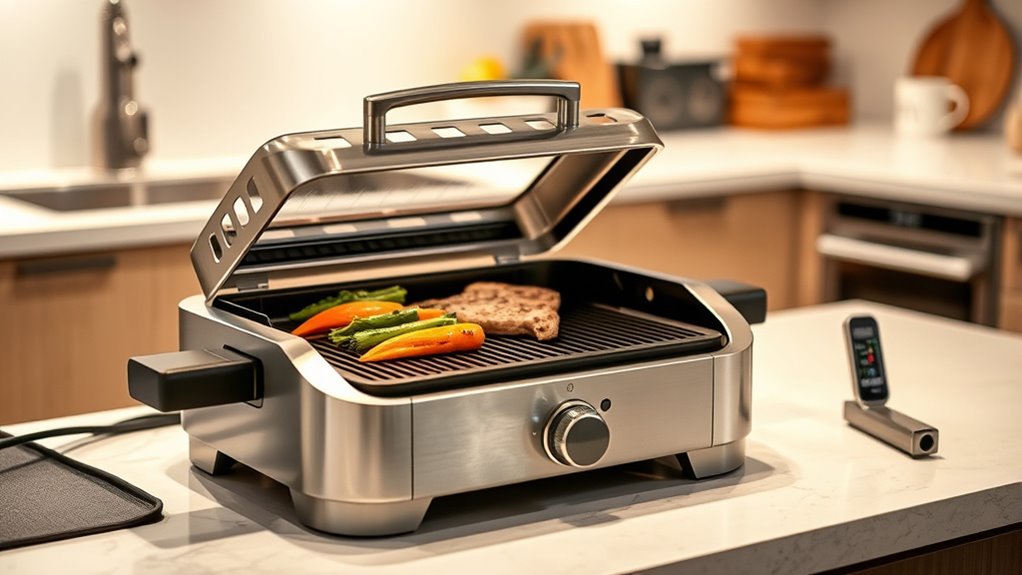
Selecting the right indoor grill depends on your available space and cooking needs. First, consider the different indoor grill types, such as contact grills, open grills, or panini presses, to find what suits your style. Grill size selection is vital—if you cook for one or two people, a compact model works best, while larger families may need a bigger surface area. Think about storage and countertop space, guaranteeing the grill fits comfortably without cluttering your kitchen. Also, evaluate features like adjustable temperature controls, drip trays, and ease of cleaning. Choosing a grill that matches your cooking habits and space constraints helps prevent safety hazards and enhances your grilling experience. Making the right choice now guarantees safer, more enjoyable indoor grilling sessions.
Ensure Proper Ventilation During Grilling

Make sure to turn on ventilation fans or open windows wide before you start grilling indoors. Proper airflow helps remove smoke and fumes, keeping the air safe to breathe. Taking these steps guarantees your indoor grilling remains both enjoyable and safe.
Use Ventilation Fans
Using ventilation fans is essential to keep the air fresh and safe while grilling indoors. These fans help improve indoor airflow, preventing smoke, fumes, and odors from accumulating. Turn on your ventilation fan before you start grilling, and keep it running throughout the process to effectively remove airborne particles. Make sure the fan is positioned near the grill or in the kitchen area to maximize airflow efficiency. Proper use of ventilation fans not only reduces the risk of inhaling harmful fumes but also helps maintain a comfortable cooking environment. Regularly check that your fans are clean and functioning properly to ensure peak performance. Good ventilation is key to safe indoor grilling, and using fans correctly makes a noticeable difference.
Open Windows Widely
Opening windows widely is one of the most effective ways to guarantee proper ventilation during indoor grilling. Proper ventilation strategies depend heavily on window positioning; opening windows on opposite sides of the room creates a cross-breeze that effectively disperses smoke and odors. If possible, open multiple windows to enhance airflow and reduce indoor pollutant buildup. Make sure to keep the windows fully open to maximize air exchange, especially when cooking with high heat or greasy foods. This simple step helps clear fumes quickly and maintains a safer environment. Remember, good ventilation isn’t just about opening a crack—it’s about creating a steady, unobstructed flow of fresh air that minimizes indoor air pollution while you grill.
Keep Flammable Materials Away From the Grill
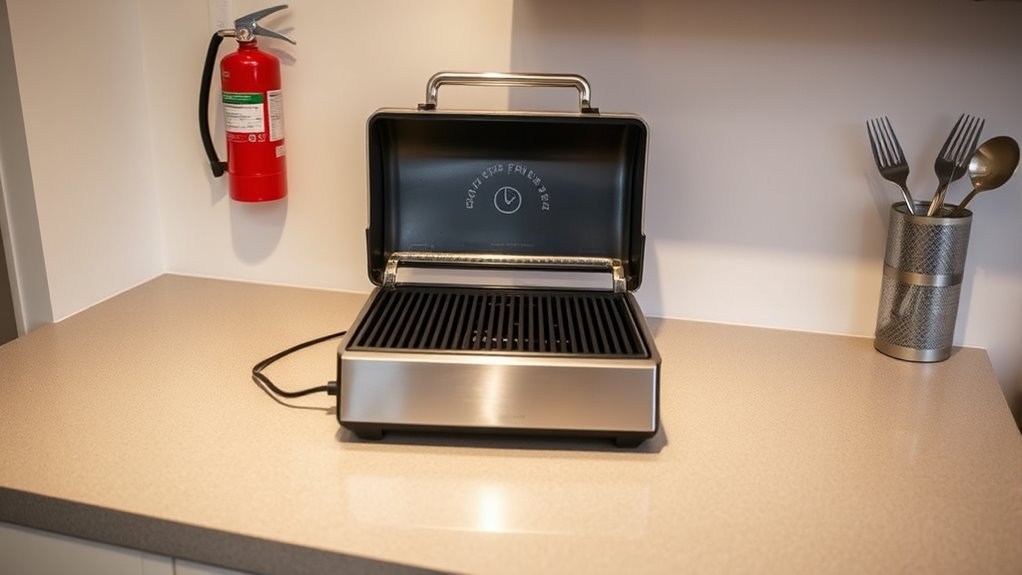
Keep flammable materials away from your indoor grill to prevent fires. Make sure you store things like paper towels and cleaning supplies properly, and keep the area clear of clutter. Using protective barriers can also help keep sparks or heat from reaching anything that could catch fire.
Store Flammables Properly
To prevent accidental fires, it’s essential to store flammable materials away from your indoor grill. Keep flammable liquids, such as cooking oils or aerosol sprays, in a designated area away from heat sources. Use sturdy storage cabinets designed for flammables to contain these materials safely. Never leave flammable liquids near the grill or in open containers on countertops. Proper storage reduces the risk of accidental ignition if sparks or high heat occur. Also, ensure the storage area is well-ventilated and out of reach of children. By keeping flammable materials properly stored, you minimize fire hazards and create a safer indoor grilling environment. Always double-check that no flammable items are near the grill before cooking.
Maintain Clear Surroundings
Because flammable materials pose a significant fire risk, maintaining a clear space around your indoor grill is essential. Keep combustible items like paper towels, dishcloths, and paper plates at least three feet away from the grill. This reduces the risk of accidental fires caused by sparks or heat. Be mindful of gas safety by ensuring propane or natural gas containers are stored properly and not near heat sources. Also, check your electrical wiring for damage or loose connections that could cause sparks or short circuits. Keeping the area clutter-free minimizes hazards and promotes safe grilling. Remember, a tidy space not only prevents fires but also makes it easier to monitor your cooking and respond quickly if needed.
Use Protective Barriers
Using protective barriers around your indoor grill is a smart way to prevent fires caused by flammable materials. Place your grill in a designated area free from paper, cloth, or other combustible items. Using grill covers can also serve as an additional layer of protection, shielding nearby surfaces from heat and splatters. Make certain that any protective barriers you use are heat-resistant and securely positioned to avoid accidental contact with flames or hot surfaces. Keep flammable objects at least a few feet away from the grill at all times. By establishing a safe perimeter with protective barriers, you reduce the risk of accidental fires and ensure a safer indoor grilling experience. Remember, safety starts with proper precautions and mindful setup.
Regularly Clean Your Grill to Prevent Fires and Smoke
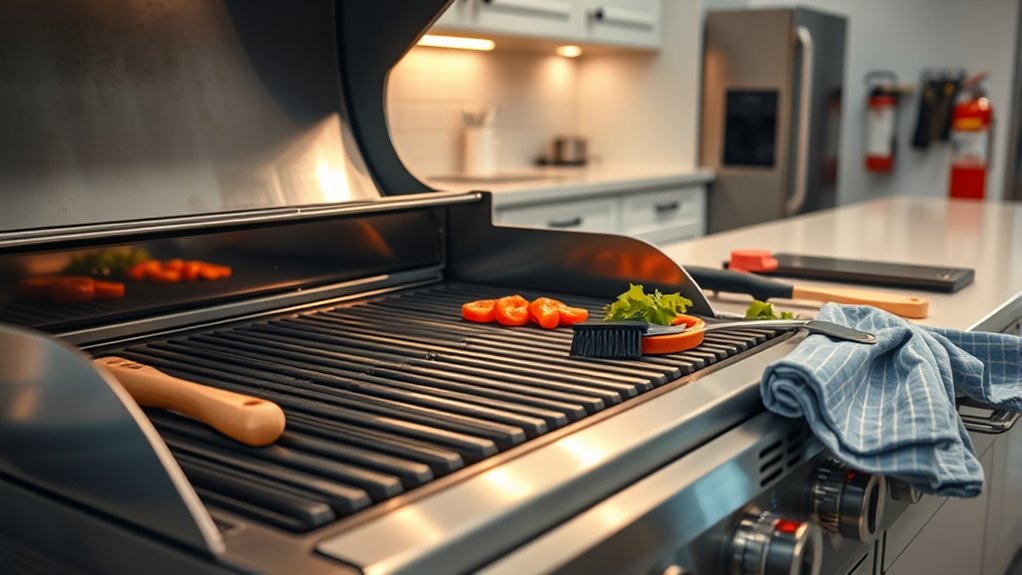
Regularly cleaning your grill is essential for preventing fires and reducing smoke buildup. When you neglect maintenance, grease and food debris can ignite or produce excess smoke, compromising safety. To guarantee proper fire prevention and smoke control, keep your grill spotless.
- Remove grease drippings and food residue after each use to minimize flare-ups.
- Clean the grill grates thoroughly to prevent buildup that can cause smoke.
- Check and clean drip trays or pans regularly to avoid accumulated grease that could ignite.
These simple steps help you maintain a safer indoor grilling environment, reducing fire hazards and controlling smoke. Regular cleaning not only prolongs your grill’s lifespan but also keeps your indoor space healthier and safer for everyone. Stay vigilant, and your indoor grilling experience will be both enjoyable and secure.
Use Appropriate Cooking Utensils and Accessories

Using the right utensils and accessories is key to safe indoor grilling. Make sure your tools are made from materials that won’t melt or release harmful substances when exposed to heat. Choosing proper grill accessories also helps prevent accidents and keeps your cooking safe and efficient.
Select Safe Utensil Materials
Choosing the right utensils and accessories is essential for safe indoor grilling. Proper material selection guarantees utensil safety and prevents hazardous reactions during cooking. When selecting your tools, opt for heat-resistant, non-reactive materials like silicone, stainless steel, or bamboo. These materials won’t leach chemicals into your food or warp under high heat. Avoid utensils made from plastic or low-quality metals, which can melt or release harmful substances.
- Silicone tools that withstand high temperatures
- Stainless steel utensils for durability and safety
- Bamboo utensils that won’t scratch cookware or contaminate food
Use Proper Grill Accessories
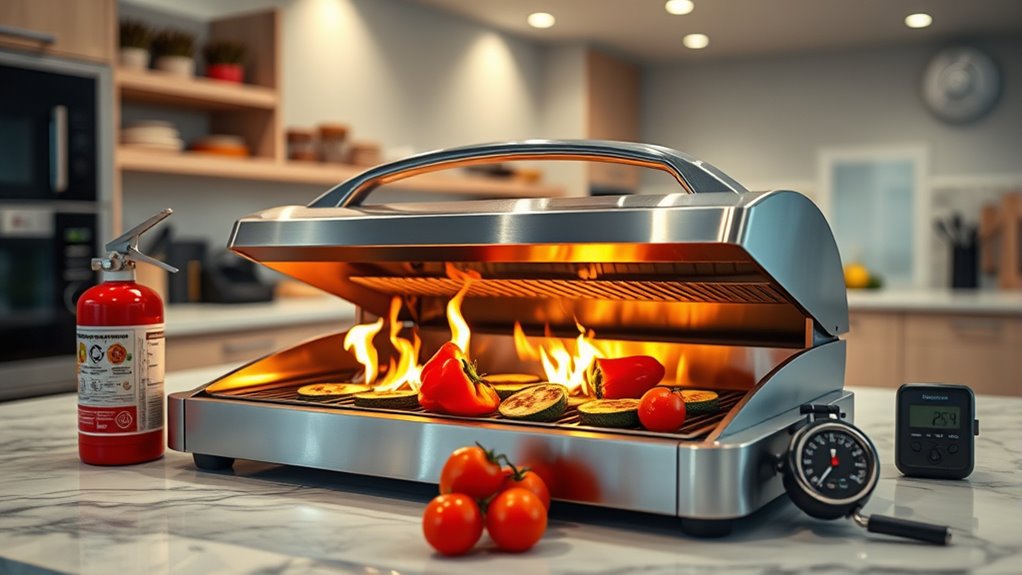
Selecting the right grill accessories and utensils is essential for safe and efficient indoor grilling. Use high-quality grill accessories made from heat-resistant, non-reactive materials to prevent accidents and contamination. Tongs, spatulas, and brushes with insulated handles protect you from burns and spills. Proper safety equipment, like oven mitts and splatter guards, help manage hot surfaces and prevent burns. Avoid thin or flimsy utensils that can break or melt during grilling. Keep a fire extinguisher nearby and ensure your accessories are easy to clean to avoid cross-contamination. Choosing appropriate grill accessories not only makes cooking easier but also reduces safety risks. Always inspect your tools before use and store them in an organized way to promote safe grilling habits indoors.
Never Leave the Grill Unattended While in Use

Leaving your indoor grill unattended while it’s in use can lead to dangerous situations, including fires or food accidents. For effective grill safety, never leave your grill unattended during cooking. Always stay nearby to monitor the process and respond quickly to any issues. Unattended grilling increases the risk of flare-ups, grease fires, or burnt food, which can ruin your meal or cause damage. Keep these safety tips in mind:
- Stay within arm’s reach to watch over your grill at all times.
- Turn off the grill immediately if you leave the room.
- Use a timer to remind you when to check on your food.
Practicing vigilant grill safety guarantees a safe indoor grilling experience and minimizes the risk of accidents.
Manage Grease and Fat Buildup Safely

To prevent dangerous flare-ups and fires, managing grease and fat buildup on your indoor grill carefully is essential. Regularly clear excess grease by safely disposing of it through proper grease disposal methods, such as pouring cooled grease into a container with a lid or using absorbent materials. Keep an eye on fat management by trimming excess fat from meats before grilling, reducing the amount that drips onto the heating elements. Clean your grill grates and drip trays after each use to prevent grease buildup. Avoid letting grease accumulate, which can ignite unexpectedly. By staying vigilant with grease disposal and fat management, you minimize fire risks and keep your indoor grilling safe and efficient.
Monitor Carbon Monoxide Levels When Using Certain Grills
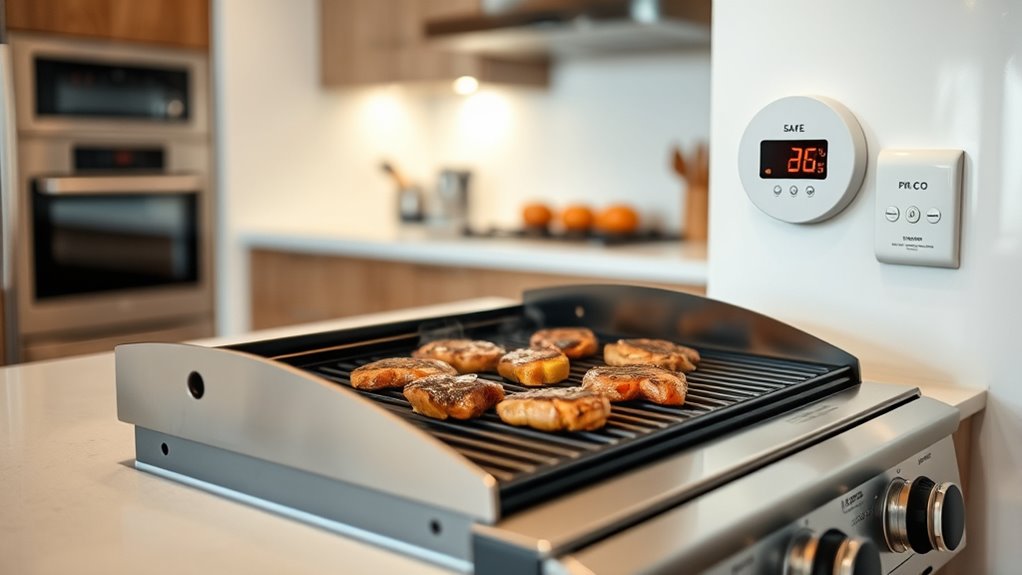
Since some indoor grills, especially those that use charcoal or propane, produce carbon monoxide (CO), it is crucial to monitor the levels of this colorless, odorless gas during use. To stay safe, invest in reliable detection devices designed to alert you when CO levels become dangerous. Keep these tips in mind:
Monitoring CO levels with reliable detectors is essential for safe indoor grilling.
- Place detection devices near the grill area for accurate readings.
- Regularly test and maintain your CO detectors to ensure they function properly.
- Never ignore an alarm; evacuate immediately if your detection devices indicate elevated CO levels.
Follow Manufacturer Guidelines and Safety Instructions
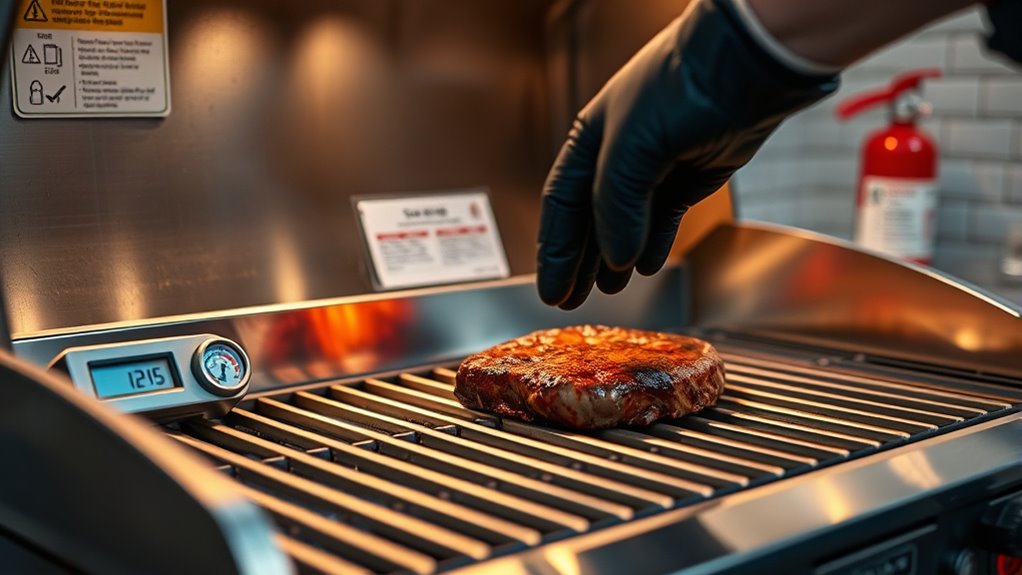
Following the manufacturer’s guidelines and safety instructions is essential for preventing accidents and ensuring your indoor grill operates safely. Always refer to the user manual for proper setup and maintenance. Pay close attention to recommended grill temperature ranges to avoid overheating, which can cause fires or damage. Safe cooking techniques, such as preheating the grill properly and avoiding overcrowding, help ensure even heating and reduce flare-ups. Use the correct utensils and avoid placing flammable objects near the grill. Regularly inspect cords, connections, and vents for wear or damage, and follow instructions for cleaning and storage. Adhering to these guidelines minimizes risks, enhances your grilling experience, and keeps your indoor environment safe.
Store Your Grill Safely After Use
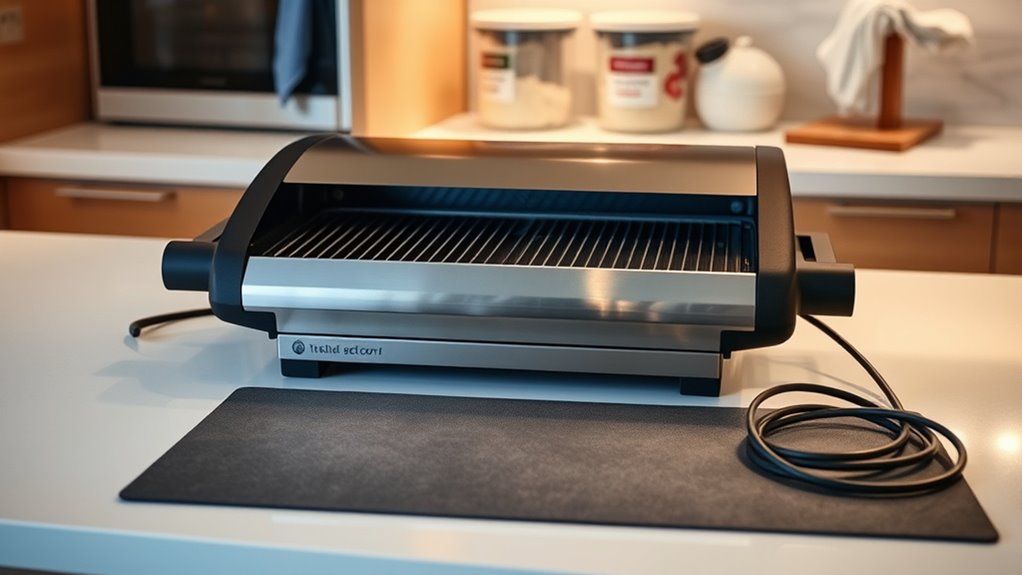
After you’ve finished grilling, it’s important to store your indoor grill properly to prevent accidents and damage. Good storage safety practices protect your home and extend your grill’s lifespan through proper grill maintenance. Always ensure the grill is completely cooled before storing it. Keep it in a dry, secure place away from children and pets. If your grill has removable parts, clean and dry them thoroughly to prevent rust and buildup. Use a cover if available to shield it from dust and debris. Proper storage reduces the risk of fire hazards and makes future grilling safer and more efficient. Remember, investing in storage safety now saves you time and effort later and keeps your indoor grilling experience enjoyable.
Frequently Asked Questions
How Can I Prevent Electrical Hazards When Using an Indoor Grill?
To prevent electrical hazards when using an indoor grill, guarantee electrical safety by checking cords and plugs for damage before use. Keep your appliance well-maintained by cleaning it regularly and following the manufacturer’s instructions. Avoid overloading outlets, and never use extension cords that aren’t rated for your grill’s power. By practicing proper appliance maintenance and electrical safety, you reduce the risk of shocks or fires during indoor grilling.
What Are the Signs of Carbon Monoxide Poisoning Indoors?
Carbon monoxide poisoning symptoms hit you like a fog rolling in—headaches, dizziness, nausea, and confusion. You might also feel short of breath or fatigued. To prevent poisoning, guarantee good ventilation and never run your indoor grill in an enclosed space for long. Regularly check for carbon monoxide detectors and heed their alerts. Recognizing these symptoms early and practicing prevention keeps you safe while enjoying indoor grilling.
How Often Should I Replace Grill Accessories for Safety?
You should replace your grill accessories regularly based on their safe replacement intervals, typically every 1-3 years, depending on usage and material. Regular grill accessory maintenance is essential to prevent buildup and deterioration that could compromise safety. Check for signs of wear, rust, or damage, and replace accessories promptly to guarantee safe grilling indoors. Following these guidelines helps prevent accidents and keeps your indoor grilling experience safe and enjoyable.
Can I Use My Outdoor Grill Indoors Safely?
Using your outdoor grill indoors is like inviting trouble into your home. It’s unsafe and can lead to dangerous carbon monoxide buildup. For outdoor safety, always operate your grill outside in well-ventilated areas. Proper grill maintenance is key; never bring an outdoor grill inside, even if it’s clean. Instead, invest in a proper indoor grill designed for indoor use. Keep safety first to enjoy grilling without risking your home or health.
What Should I Do if I Experience a Grease Fire Indoors?
If you experience a grease fire indoors, stay calm and act quickly. Turn off the grill and cover the flames with a metal lid or baking sheet to cut off oxygen. Never use water, as it makes grease fires worse. Keep a fire extinguisher nearby and use it if the fire persists. Prioritize fire safety, and call emergency services if you’re unable to control the fire safely.
Conclusion
Remember, your indoor grill is like a trusted partner—when you respect its needs and handle it with care, safety becomes second nature. Keep the flames of caution burning bright, clear the path for proper ventilation, and store your grill as a guardian of your home. By staying vigilant, you’re not just cooking—you’re safeguarding your sanctuary. Embrace safety as your guiding star, and enjoy delicious, worry-free grilling adventures indoors.