Ensuring proper outdoor kitchen ventilation is key to safe and enjoyable BBQs. Focus on choosing the right system, like range hoods or exhaust fans, and consider factors like placement, airflow, and local codes. Regular maintenance, such as cleaning filters and checking vents, helps prevent smoke buildup and fire risks. Adding lighting, pest control, and smart placement enhances safety and comfort. Keep exploring these tips to create a well-ventilated, enjoyable outdoor cooking space.
Key Takeaways
- Proper ventilation reduces smoke, fumes, and harmful gases, ensuring a safe and healthy outdoor cooking environment.
- Choose appropriate systems like range hoods, exhaust fans, or vented ceilings based on your setup and space.
- Ensure vents are correctly placed and maintained to maximize airflow, prevent smoke buildup, and comply with local regulations.
- Regularly clean and inspect ventilation components to prevent grease buildup and system failure, enhancing safety.
- Enhance safety with adequate lighting, pest control, and small adjustments that improve overall comfort and reduce hazards.
Understanding the Importance of Proper Ventilation

Proper ventilation is essential for keeping your outdoor kitchen safe and comfortable. Good airflow directly impacts air quality, reducing the buildup of smoke, fumes, and potentially harmful gases. Without adequate ventilation safety measures, you risk exposing yourself and others to health hazards, such as carbon monoxide or excessive smoke inhalation. Proper ventilation helps disperse these pollutants, ensuring fresh air circulates continuously. This not only creates a more pleasant cooking environment but also minimizes fire risks and prevents the accumulation of grease or debris that could ignite. When you prioritize ventilation safety, you’re protecting your family and guests while enjoying your outdoor cooking space. Remember, good airflow isn’t just about comfort; it’s a crucial safety feature for any outdoor kitchen.
Choosing the Right Ventilation System for Your Outdoor Kitchen
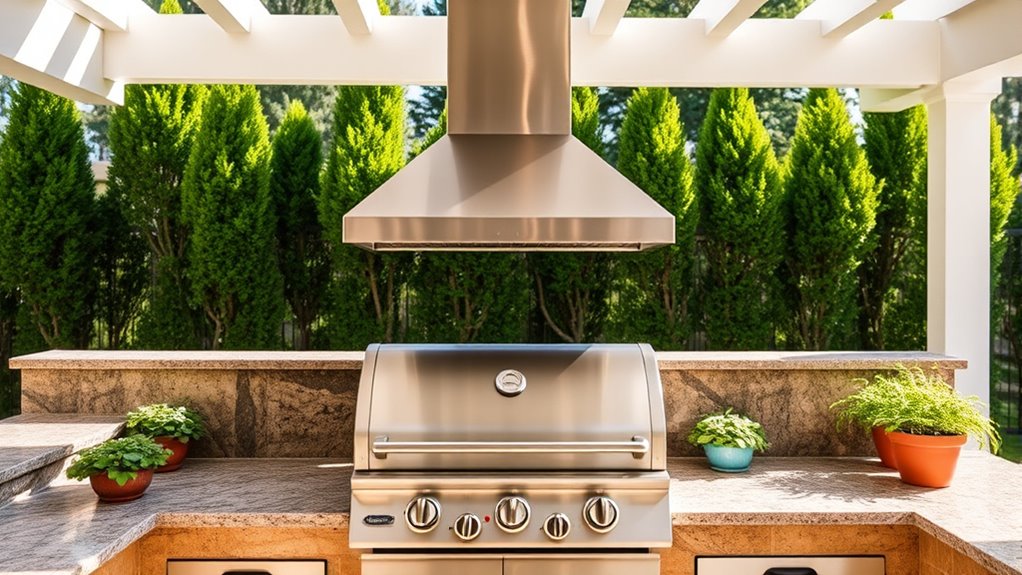
Selecting the right ventilation system is key to ensuring your outdoor kitchen remains safe and comfortable. You want a system that maintains good indoor air quality while blending seamlessly with your design. Consider options like range hoods, exhaust fans, or vented ceilings, based on your setup. Aesthetic considerations matter too; choose a system that complements your space without cluttering it. Proper ventilation reduces smoke, odors, and harmful fumes, enhancing safety and comfort. Review this table to compare common systems:
| System Type | Indoor Air Quality Impact | Aesthetic Considerations |
|---|---|---|
| Range Hood | High removal efficiency | Can be discreet or prominent |
| Exhaust Fan | Good airflow, modest size | Usually minimal design |
| Vented Ceiling | Effective, hidden | Seamless integration |
| Wall Vent | Focused airflow | Visible but customizable |
| Portable Fan | Temporary solution | No permanent aesthetic impact |
Key Factors to Consider When Planning Your Ventilation Setup
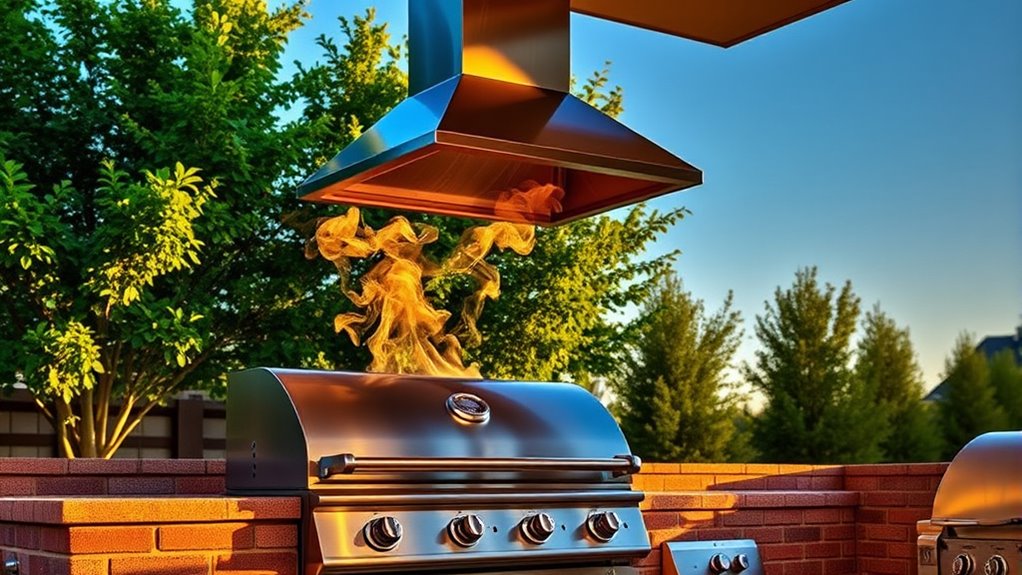
When planning your outdoor kitchen ventilation, you need to consider airflow needs to ensure smoke and fumes are effectively cleared. Proper vent placement is vital to maximize efficiency and safety, so think about where the air will flow best. Don’t forget to check local building regulations to make sure your setup complies with safety standards and requirements.
Adequate Airflow Requirements
Ensuring adequate airflow is essential for a safe and efficient outdoor kitchen ventilation setup. Proper airflow helps manage smoke dispersion, preventing it from lingering around your cooking area and reducing health risks. You need to understand airflow dynamics to guarantee fresh air enters while fumes exit effectively. This balance prevents smoke buildup and maintains good visibility. Factors like the size of your space, the placement of vents, and prevailing wind directions influence airflow requirements. Insufficient airflow can cause smoke to drift unpredictably, creating hazards and discomfort. By planning for proper ventilation, you support efficient smoke dispersion and enhance safety. Remember, consistent airflow not only clears out fumes but also improves your overall outdoor cooking experience.
Proper Vent Placement
Proper vent placement is crucial for effective outdoor kitchen ventilation because it directly influences how well fumes and smoke are directed away from your cooking area. To maximize safety and efficiency, consider these key factors:
- Confirm the chimney height is tall enough to clear obstructions and prevent smoke from drifting back into your space.
- Choose durable vent material resistant to weather and corrosion to ensure longevity.
- Position vents away from seating and dining areas to keep smoke and fumes at bay.
- Install the vent at the ideal angle to promote proper airflow and prevent backdrafts.
Getting these elements right creates a safer, more comfortable environment, allowing you to enjoy your outdoor cooking without worry about lingering smoke or harmful fumes.
Local Building Regulations
Before installing your outdoor kitchen ventilation, it’s important to familiarize yourself with local building regulations. Local building codes set the standards for safe ventilation setups, ensuring you meet safety and structural requirements. You’ll need to check if permit requirements apply to your project, especially if adding new vents or exhaust systems. Failing to comply with these regulations can result in fines or the need to redo work later. Contact your local building department or review their guidelines online to understand the specific rules in your area. This step helps you avoid potential legal issues and guarantees your ventilation system is safe and compliant. Taking the time to research local building codes and permit requirements ensures your outdoor kitchen setup is both legal and secure.
Installation Tips for Effective Smoke and Fume Management
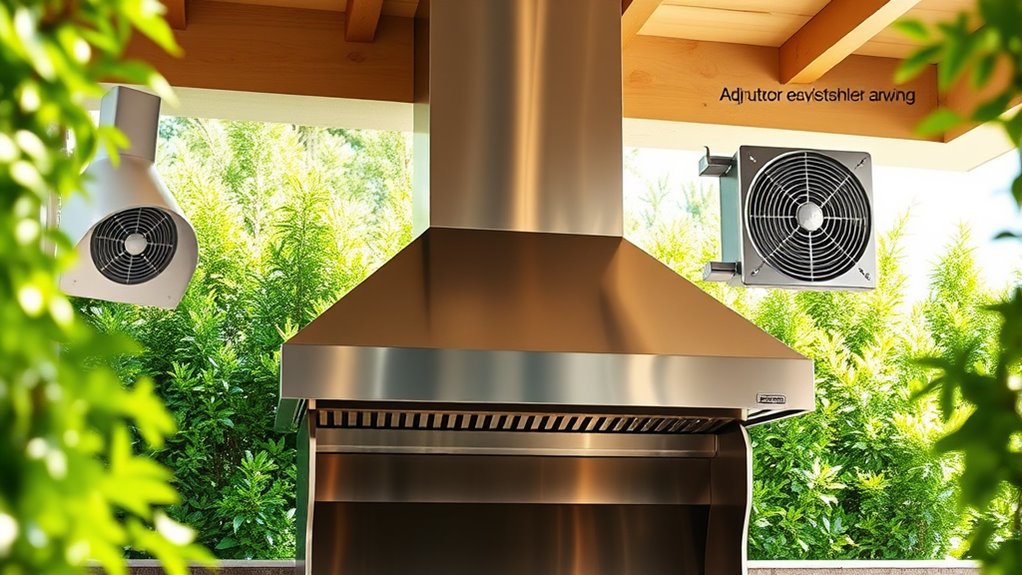
To manage smoke and fumes effectively, start by placing your vents in strategic locations where they can capture rising smoke quickly. Installing exhaust fans can also considerably improve airflow and remove fumes efficiently. Proper placement and the right equipment make all the difference in keeping your outdoor kitchen comfortable and safe.
Proper Vent Placement
Choosing the right location for your outdoor kitchen vent is essential for effective smoke and fume management. Proper placement guarantees safety and comfort. Consider these key points:
- Position the vent high enough to prevent smoke from drifting back into your cooking area, ideally with a chimney height that exceeds the surrounding structures.
- Use durable vent material like stainless steel to withstand weather and prevent corrosion.
- Install the vent away from frequently used seating areas to keep smoke away from guests.
- Ensure the vent’s opening faces away from prevailing winds to maximize smoke dispersal.
Use of Exhaust Fans
Installing an exhaust fan is a highly effective way to improve smoke and fume management in your outdoor kitchen. Make certain your fan is powerful enough to handle the volume of smoke generated during grilling. Position it near your cooking area, ideally above the grill, to efficiently capture fumes. To prevent water damage, use weatherproofing materials around the fan and its wiring. Incorporate smoke detectors nearby to alert you if smoke levels become unsafe. Proper weatherproofing not only prolongs the fan’s lifespan but also ensures consistent performance. Regularly clean the exhaust system to maintain airflow. With a well-installed exhaust fan, you’ll keep your outdoor space comfortable and safe, reducing smoke buildup and enhancing your overall cooking experience.
Maintenance and Troubleshooting of Outdoor Ventilation Systems
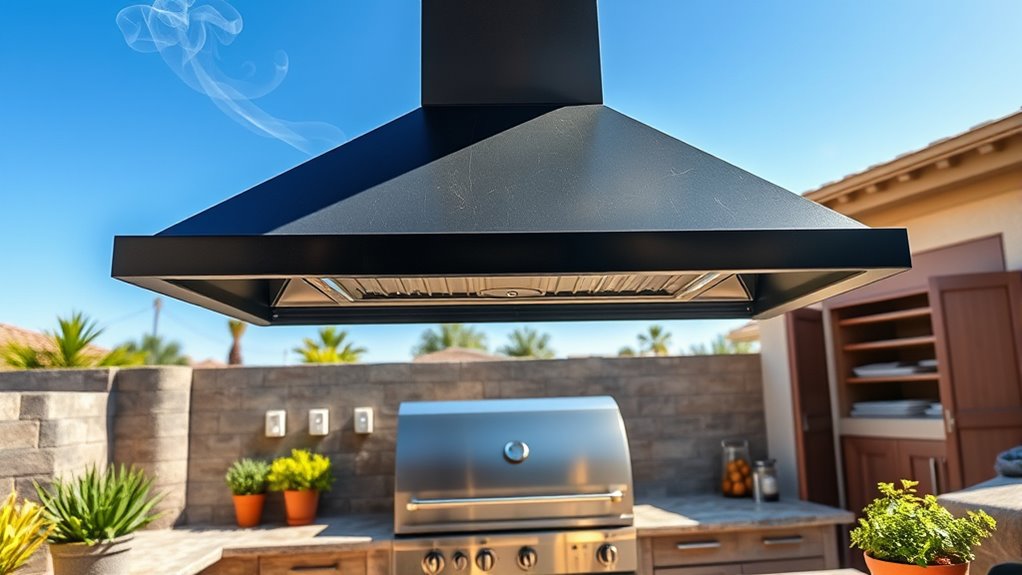
Regular maintenance is essential to keep your outdoor kitchen ventilation system functioning efficiently and safely. Staying on top of cleaning schedules prevents grease buildup and ensures proper airflow. If you notice persistent smoke or odors, it might be time for ventilation system upgrades to improve performance. To troubleshoot issues:
- Check for clogged filters or vents—clear debris to restore airflow.
- Inspect fans and motors—listen for unusual noises or lack of operation.
- Ensure electrical connections are secure—loose wiring can cause malfunctions.
- Schedule regular professional inspections—identify hidden problems early.
Enhancing Safety and Comfort With Additional Ventilation Measures
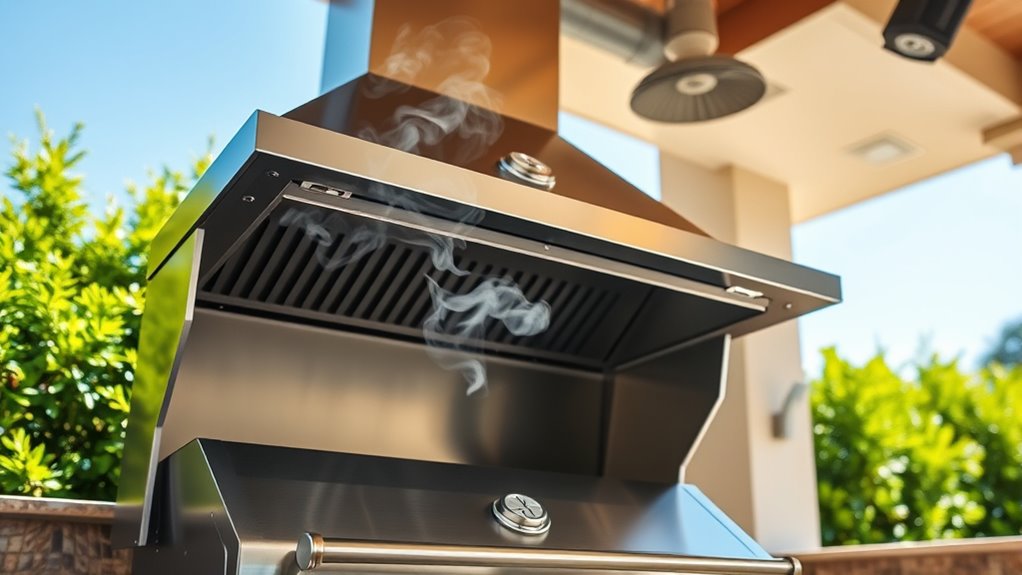
Maintaining your outdoor kitchen ventilation system is essential for safe and comfortable cooking, but adding extra measures can further enhance your outdoor environment. Incorporate lighting enhancements to improve visibility, reducing accidents and ensuring safe food handling during late-night grilling. Well-placed lighting not only boosts safety but also creates a welcoming ambiance. Additionally, implement pest control strategies to keep pests away from your cooking area, preventing contamination and discomfort. Use sealed fixtures and natural repellents to deter insects without relying on harmful chemicals. Combining these measures with your existing ventilation setup maximizes airflow, minimizes smoke buildup, and promotes a safer, more comfortable outdoor cooking experience. These small adjustments make a significant difference in creating an enjoyable and secure outdoor kitchen environment.
Frequently Asked Questions
How Do I Detect Poor Ventilation in My Outdoor Kitchen?
You can detect poor ventilation in your outdoor kitchen by performing an airflow assessment—notice if smoke or heat lingers instead of dispersing quickly. Pay attention to any lingering odors, which indicate inadequate airflow. If you smell strong fumes or smoke near your grill or cooking area, it’s a sign you need better ventilation. Regularly checking these signs helps make sure your outdoor cooking space stays safe and comfortable.
What Are the Local Regulations Regarding Outdoor Kitchen Ventilation?
You need to check your local building codes and permit requirements for outdoor kitchen ventilation. Regulations vary by area, so contact your city or county building department to obtain specific details. They’ll inform you about necessary permits, ventilation standards, and safety codes to make certain your setup is compliant. Following these rules helps prevent hazards, ensures safety, and keeps your outdoor kitchen legal and functional.
Can Portable Ventilation Units Be Effective for Outdoor Setups?
Portable fans can be pretty practical for outdoor setups, providing quick, DIY solutions to disperse dangerous fumes. They can improve airflow and enhance ventilation, but only if used correctly and positioned strategically. Keep in mind, they’re not a perfect substitute for proper ventilation systems. You should carefully consider your specific space, ensuring safety and sufficiency before relying solely on portable fans for outdoor kitchen ventilation.
How Often Should Outdoor Ventilation Systems Be Inspected or Cleaned?
You should inspect and clean your outdoor ventilation systems at least every three to six months, depending on usage. Regular maintenance schedules help prevent grease buildup and blockages. Use proper cleaning techniques like wiping down vents with a damp cloth and removing debris. If you notice reduced airflow or strange odors, increase the frequency of inspections and cleaning to make certain your ventilation remains effective and safe during BBQ seasons.
Are There Eco-Friendly or Energy-Efficient Ventilation Options Available?
Think of eco-friendly ventilation options as a refreshing gust for your outdoor kitchen. You can opt for solar exhaust fans that harness sunlight, reducing energy use while improving airflow. Natural ventilation, like open windows or vents, relies on the breeze to carry away smoke and fumes. These options are energy-efficient, environmentally friendly, and help you enjoy your BBQ safely without harming the planet.
Conclusion
By prioritizing proper ventilation, you’re not just keeping smoke at bay—you’re creating a safe, welcoming outdoor space where every cookout feels like a gust of fresh air. Think of your ventilation system as the lungs of your outdoor kitchen, working tirelessly to clear fumes and keep the atmosphere comfortable. With the right setup and regular care, you’ll enjoy countless flavorful gatherings without a hitch, turning your backyard into a true haven of safety and enjoyment.