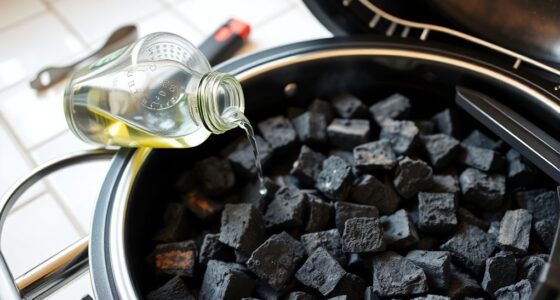
Seasoning your new grill or smoker is essential because it creates a durable, non-stick surface and protects against rust and moisture. Start by cleaning your equipment thoroughly, then apply a thin layer of high-smoke point oil like flaxseed or canola. Heat it at 400–500°F to polymerize the oil into a protective coating. Proper seasoning improves flavor and makes your grilling smoother. Keep exploring to learn effective steps and avoid common mistakes that can affect your results.
Key Takeaways
- Seasoning creates a durable, non-stick surface that protects your grill or smoker and enhances flavor.
- Proper cleaning and using high-smoke point oils ensure a smooth, even seasoning process.
- Heating to 400°F–500°F opens pores, allowing oil to polymerize and form a protective coating.
- Avoid excessive oil and rapid heating to prevent sticky surfaces, warping, or cracking.
- Regular maintenance and re-seasoning extend the lifespan and performance of your cooking surface.
Understanding the Importance of Seasoning

Seasoning your grill or smoker is a crucial step that helps protect the cooking surface and enhance flavor. When you properly season it, you create a durable, non-stick layer that improves your cooking experience. This process not only boosts flavor enhancement by adding a subtle, smoky coating but also prevents rust from forming on the metal. Rust prevention is essential for maintaining your grill’s longevity and ensuring safe, tasty meals. By heating oil onto the surface, you bond it to the metal, sealing pores and creating a protective barrier. This layer resists moisture and corrosion, keeping your equipment in top condition. Understanding this importance encourages you to invest time in seasoning, so your grill or smoker performs better and lasts longer.
Choosing the Right Materials and Preparations

Selecting the right materials and preparing your grill or smoker properly are essential steps to guarantee effective seasoning. Start by ensuring thorough grill cleaning to remove any manufacturing residues, rust, or debris that could affect the process. When choosing materials, opt for a durable, food-safe surface like cast iron, stainless steel, or seasoned steel, which can withstand high temperatures and promote even heat distribution. Avoid cheap or flimsy materials that may warp or trap dirt. Proper preparation also includes inspecting for damage, sealing any cracks, and ensuring vents or drainage points are clear. These steps help create an ideal environment for seasoning, allowing the coating to develop properly and ensuring your grill or smoker performs well and lasts longer.
Step-by-Step Guide to Seasoning Your Grill or Smoker

To properly season your grill or smoker, start by heating it up to a high temperature, typically around 400°F to 500°F, to open the pores of the surface. This step guarantees the coating bonds well and creates a durable layer. Next, clean the grill thoroughly to remove any factory residues or debris, which helps achieve a smooth, non-stick surface. Apply a thin layer of high-smoke point oil, like flaxseed or canola, across all surfaces. Turn on the grill and let it burn for about an hour, allowing the oil to polymerize and form a protective coating. Remember, good grill cleaning and proper smoking techniques during seasoning are crucial for ideal results. This process enhances flavor, prevents rust, and prepares your grill for delicious cooks ahead.
Common Mistakes to Avoid During Seasoning

One common mistake to avoid during seasoning is applying too much oil, which can lead to sticky, uneven surfaces instead of a smooth, durable coating. This seasoning pitfall results in a tacky surface that attracts dirt and impairs performance. Another common error is skipping proper cleaning beforehand, trapping residues that hinder the seasoning process. Additionally, neglecting to heat gradually or overheating can crack or warp your grill or smoker. To help you avoid these pitfalls, here’s a quick guide:
| Mistake | Effect | Solution |
|---|---|---|
| Using excessive oil | Sticky, uneven surface | Apply thin, even coat |
| Skipping cleaning | Trapped debris | Clean thoroughly before seasoning |
| Rapid heating or overheating | Warping or cracking | Gradually increase heat |
Avoid these common errors for a successful seasoning process.
Maintaining and Replenishing Your Seasoned Surface

Once you’ve successfully seasoned your grill or smoker, maintaining that seasoned surface becomes key to ensuring its longevity and performance. Regularly clean residues after cooking to prevent buildup that can affect flavor and protect the surface. When replenishing the seasoning layer, choose an oil with a high smoke point, like flaxseed or vegetable oil, to create a durable, non-stick coating. Proper maintenance involves reseasoning as needed, especially after deep cleaning or extended use. This keeps your surface protected from rust and ensures consistent heat distribution. Remember, neglecting maintenance can lead to uneven heating and deterioration over time. Staying attentive to cleaning residues and selecting the right oil helps preserve that perfect seasoned surface, making every cookout a success.
Frequently Asked Questions
How Often Should I Re-Season My Grill or Smoker?
You should re-season your grill or smoker whenever you notice rust, dullness, or food sticking, which indicates your seasoning needs revitalizing. Regular grill maintenance involves seasoning frequency based on usage; if you cook often, re-season every few months. For less frequent use, once or twice a year suffices. Consistent seasoning helps maintain a protective layer, preventing rust and ensuring your grill performs at its best during each cookout.
Can I Season My Grill or Smoker Indoors?
Like a tech whiz in a cave, you can season your grill or smoker indoors, but beware of indoor smoke and seasoning safety. Guarantee proper ventilation to prevent smoke buildup and potential hazards. Use a well-ventilated area, turn on exhaust fans, and open windows. While it’s possible, it’s safer to season outdoors—preventing smoke damage and keeping your home safe from lingering odors.
What Temperature Is Best for Seasoning?
You should set your grill or smoker to around 375-400°F for seasoning. This cooking temperature helps establish a good layer of polymerized oil, creating a non-stick surface. Keep it at this temperature for about 1-2 hours, allowing the seasoning process to fully develop. Make sure to monitor the temperature closely, and maintain it consistently to make certain an even, durable coating that will enhance your cookware’s performance.
Does Seasoning Affect the Flavor of Cooked Food?
Seasoning your grill is like giving it a flavorful foundation, and yes, it does affect your food’s flavor. Proper seasoning enhances flavor by creating a barrier that promotes even oil absorption, which results in richer, more complex tastes. It also prevents rust and sticking. When you season well, you’re not just protecting your grill—you’re ensuring each meal benefits from improved flavor enhancement, making every bite more delicious.
Are There Specific Oils Recommended for Seasoning?
You should use high smoke point cooking oils like vegetable oil, canola oil, or flaxseed oil for seasoning your grill or smoker. These oils withstand high temperatures without burning, ensuring a good seasoning layer. Avoid oils with low smoke points, like olive oil, which can produce smoke and unpleasant flavors. Selecting the right oil helps create a durable, non-stick surface, making your grill or smoker last longer and perform better.
Conclusion
Properly seasoning your grill or smoker creates a natural, non-stick surface that enhances flavor and protects your equipment. For example, imagine you skip this step and end up with rust or uneven cooking. Taking the time to season correctly means you’ll enjoy better-tasting meals and longer-lasting equipment. Think of it as laying a solid foundation—small effort now leads to big rewards on every cookout, making your grilling experience safer and more delicious.