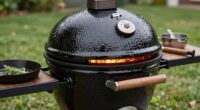
When you use a pellet grill in cold weather, it struggles to maintain consistent temperatures because cold air pulls heat away from the grill and makes the pellets burn less efficiently. You’ll notice more frequent temperature fluctuations and higher fuel consumption since the pellet feed system works harder to stay hot. Insufficient insulation and drafts worsen these problems. Want to know how to beat these challenges? Keep exploring to learn effective strategies.

Get kitchen gear delivered free — and shop member deals
- Fast, free delivery on millions of items
- Access to Prime Big Deal Days deals on October 6–7
- Prime Video, Amazon Music and more included
Key Takeaways
- Cold air accelerates heat loss, making it harder for pellet grills to maintain consistent internal temperatures.
- Low temperatures cause pellets to absorb moisture, impairing ignition and leading to uneven burning.
- External wind increases heat loss, requiring more fuel to sustain desired temperatures.
- Poor insulation allows heat to escape quickly, reducing efficiency and increasing fuel consumption.
- Temperature fluctuations become frequent due to increased pellet consumption and unstable burn conditions.
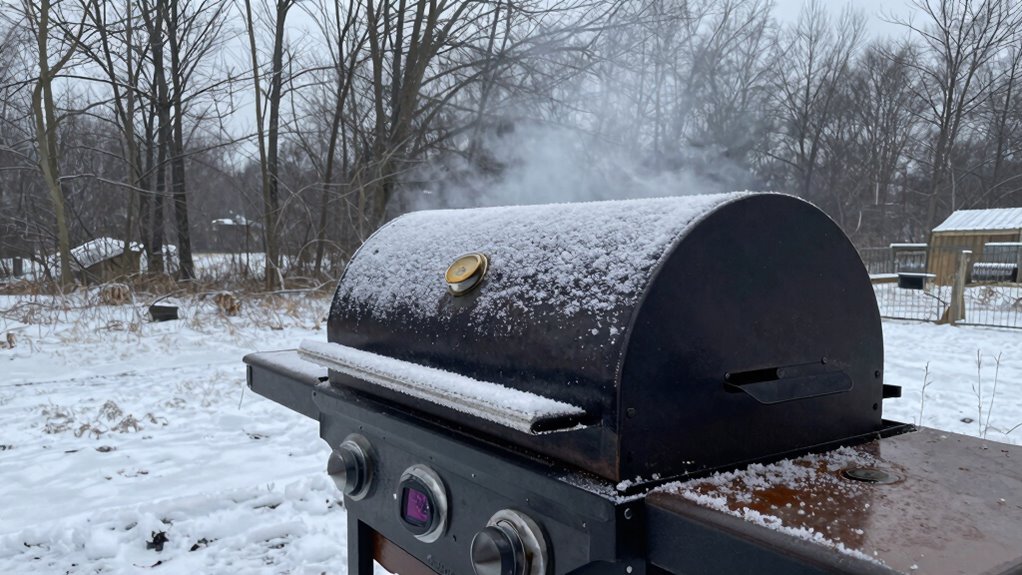
Cooking with pellet grills in cold weather can be challenging, but with the right techniques, you can still achieve delicious results. One of the main issues you’ll face is maintaining consistent temperatures, and that’s largely due to how cold air affects your grill’s fuel efficiency. When the temperature drops outside, your pellet grill has to work harder to sustain the heat needed for good cooking. Cold air pulls heat away from the grill’s interior, forcing the pellet feed system to run more frequently and burn more pellets to keep the temperature steady. This increased workload not only consumes more fuel but also makes your cooking process less predictable. To counter this, focusing on grill insulation becomes essential. If your pellet grill isn’t well-insulated, heat escapes quickly, and your grill struggles to maintain a stable temperature. Adding insulation or creating a windbreak around your grill helps retain heat, reducing the amount of fuel needed and making your cooking more efficient.
Cold weather also impacts the pellet delivery system. Since the pellets are stored in a hopper, low temperatures can cause the pellets to become less effective at feeding into the burn pot. Moisture can accumulate in the pellets, making them harder to ignite and burn evenly. When pellets don’t burn properly, your grill’s temperature fluctuates, which can ruin your dishes. To improve fuel efficiency and guarantee consistent heat, you might consider storing your pellets in a warmer, dry place and using a pellet hopper heater. This helps keep the pellets dry and flowing smoothly, even in freezing conditions. Additionally, understanding how fuel efficiency is affected by external factors can help you better prepare for cold-weather grilling. Incorporating temperature management techniques, such as preheating the grill longer or using a thermal blanket, can also help mitigate temperature drops. Being aware of pellet burn quality and how external conditions influence it can further optimize your grilling performance in cold weather. Proper heat retention strategies are crucial to maintaining steady temperatures and ensuring your grilled dishes turn out perfectly. Additionally, paying attention to indoor air quality and controlling humidity around your grill area can help in maintaining optimal conditions for consistent operation.
As an affiliate, we earn on qualifying purchases.
Frequently Asked Questions
Do Pellet Grills Perform Better With Insulation?
Yes, insulating your pellet grill helps improve its performance. It enhances fuel efficiency by reducing heat loss, allowing your grill to use less fuel to maintain desired temperatures. Additionally, insulation promotes better temperature stability, especially in cold weather, ensuring your food cooks evenly. When you add insulation, you’ll notice your grill heats up faster and keeps consistent temperatures, making outdoor cooking more reliable and enjoyable despite the cold.
Can You Use a Heat Reflector or Shield?
Think of a heat reflector or shield as a guardian, silently protecting your grill’s warmth. Yes, you can use one—its role is to bounce heat back, improving heat reflection and shield effectiveness in cold weather. By deflecting cold drafts and trapping heat, it helps your pellet grill maintain steady temperatures. This simple barrier becomes a symbol of resilience, turning icy challenges into warm, flavorful results.
How Does Cold Weather Affect Pellet Hopper Capacity?
Cold weather reduces your pellet hopper capacity because low temperatures cause the pellets to expand and become more prone to moisture absorption, increasing the pellet burn rate. This can lead to hopper blockages, as the pellets stick together or jam the feed system. To avoid this, you should keep your hopper dry and warm, and monitor pellet flow closely, especially during colder months, to prevent disruptions in your grilling.
Are There Specific Pellet Types for Winter Cooking?
Think of winter cooking as tuning a fine instrument—you need the right notes. While there aren’t specific pellet types solely for winter, choosing pellets with consistent pellet flavor and low moisture content helps maintain performance. Store your pellets in a dry, airtight container to prevent moisture absorption, which can clog your grill. By doing so, you guarantee your pellet storage remains ideal, giving you reliable heat and flavor even in cold weather.
Is It Necessary to Preheat Longer in Cold Temperatures?
Yes, you should preheat longer in cold temperatures to maintain temperature consistency and fuel efficiency. Cold weather causes pellet grills to work harder, so extending the preheat time allows the grill to reach and stabilize at your desired temperature. This helps guarantee even cooking and prevents fluctuations that can impact the final result. Taking this extra step keeps your grill running smoothly despite the chilly conditions.
pellet hopper heater for cold weather
As an affiliate, we earn on qualifying purchases.
As an affiliate, we earn on qualifying purchases.
Conclusion
When the cold hits, your pellet grill might feel like it’s trying to freeze in time, struggling to keep up with your fiery cooking spirit. It’s as if your trusty grill transforms into a frozen statue, refusing to ignite and turning your backyard feast into an icy disappointment. But don’t let winter win—brace it with extra insulation and patience, and soon your grill will thaw out and roar back to life, ready to serve up warm, smoky goodness no matter how freezing it gets!
As an affiliate, we earn on qualifying purchases.
pellet grill temperature controller
As an affiliate, we earn on qualifying purchases.
As an affiliate, we earn on qualifying purchases.
Fall Picks
fall essentials
As an affiliate, we earn on qualifying purchases.