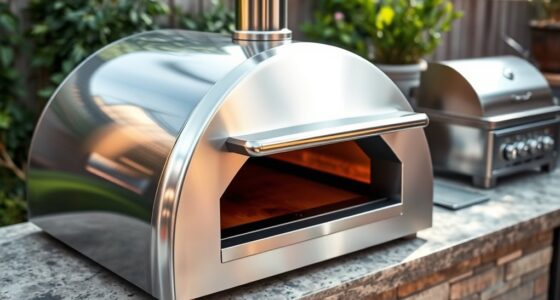
When choosing between building or buying a pizza oven, consider your budget, DIY skills, and how much time you’re willing to invest. Building offers customization and a rewarding experience, but requires patience and technical ability. Buying is quick and convenient, often providing reliable performance and features like adjustable vents. Think about how important authentic flavor, size, and ease of use are to you—there’s more to explore if you keep looking.
Key Takeaways
- Evaluate your DIY skills, time availability, and budget to decide between building or buying.
- Building offers customization and a rewarding experience, while buying ensures convenience and consistent performance.
- Prioritize features like a quality pizza stone and effective insulation regardless of choice.
- Consider the complexity of construction and sourcing materials when building versus the upfront cost of buying.
- Decide based on your desired level of personalization, effort willing to invest, and importance of authentic wood fire flavor.

Deciding whether to build or buy a pizza oven depends on your priorities, budget, and DIY skills. If you’re passionate about crafting your own cooking space and enjoy hands-on projects, building might be the way to go. On the other hand, if you want a quick, reliable solution with less hassle, buying an oven could suit you better. When considering a DIY build, one of the key components you’ll need is a high-quality pizza stone. This stone is essential because it absorbs heat evenly and mimics the traditional baking surface used in wood fire ovens. A well-chosen pizza stone ensures that your homemade pizzas develop that crispy crust and perfect char. If you decide to build your own oven, you’ll want to incorporate a wood fire element to achieve authentic flavor. Wood fire ovens provide intense, consistent heat and impart a smoky aroma that’s hard to replicate with other methods. You can design your oven to utilize a wood fire directly, or you might opt for a hybrid setup that combines traditional construction with a gas or electric element for convenience. Building a pizza oven with a wood fire requires some planning, especially around insulation and heat retention, but it offers a truly immersive experience and superior results. European cloud innovation can serve as inspiration for designing energy-efficient and sustainable oven structures.
When buying a pizza oven, you’ll find options ranging from portable models to large, masonry setups. These pre-made ovens often come with features like built-in thermometers, insulated walls, and adjustable vents, making it easier to control cooking temperatures. Buying also means saving time, as you don’t have to source materials or figure out construction details. Plus, many commercial and consumer-grade ovens are designed specifically to handle wood fire cooking, ensuring you get the same authentic flavor without the DIY effort. However, buying can be more expensive upfront, especially if you opt for high-end models, but it guarantees reliability and consistent performance.
Ultimately, your choice hinges on how much time, effort, and money you’re willing to invest. Building your own oven can be rewarding and tailored to your taste, especially if you love woodworking or masonry. It allows you to customize size, shape, and functionality, and you can incorporate features like a pizza stone for even heat distribution. But it takes patience and some skill. Buying a pre-made oven, in contrast, offers convenience, consistency, and often better insulation for maintaining high temperatures necessary for wood fire cooking. Whichever route you pick, focus on ensuring your oven has the right features—like a good pizza stone and a reliable wood fire setup—to achieve perfect, restaurant-quality pizza at home.
Frequently Asked Questions
What Are the Long-Term Maintenance Costs for Each Option?
Your long-term expenses will vary based on whether you build or buy. Building your pizza oven might have higher initial maintenance costs due to custom parts and repairs, but it can be cheaper over time if you maintain it well. Buying a ready-made oven usually comes with lower maintenance costs initially, but replacement parts and repairs can add up. Consider your budget and maintenance skills to determine which option minimizes ongoing expenses.
How Quickly Can I Have a Custom-Built Oven Installed?
Ever wondered how fast you can enjoy your perfect pizza? Custom-built ovens typically take about 4 to 8 weeks for installation, depending on the complexity of your design and customization options. The installation timeline can vary based on your project’s specifics and the builder’s schedule. If you need a quicker setup, buying an off-the-shelf model might be faster, but building allows you to tailor every detail to your preferences.
Are There Specific Building Codes for Homemade Pizza Ovens?
Yes, there are specific building codes you need to adhere to for homemade pizza ovens. You should check local building permits and safety regulations before starting construction. These codes ensure your oven meets safety standards, especially regarding fire hazards and structural integrity. Contact your local building department to confirm requirements, get necessary permits, and avoid potential fines or safety issues. Following these guidelines keeps your project safe and compliant.
What Are the Environmental Impacts of Building Versus Buying?
Think of your choice as planting a seed in the earth. Building your own pizza oven often uses sustainable materials, reducing waste and your carbon footprint, making it a greener choice. Buying a pre-made oven might have a larger environmental impact due to manufacturing and shipping. Your decision can help nurture a healthier planet, so consider how each option aligns with your eco-friendly values and long-term sustainability goals.
Can I Upgrade or Modify a Purchased Oven Easily Later?
Yes, you can often upgrade or modify a purchased oven, but it depends on the model. Look for ovens with good modification flexibility and upgrade potential, such as adjustable components or compatible parts. Some brands design their ovens for easy upgrades, like adding insulation or new heating elements. However, check manufacturer guidelines first, as not all ovens are built for extensive modifications, which could affect safety and performance.
Conclusion
Whether you build or buy, the perfect pizza oven is within reach. Imagine the aroma of freshly baked pies filling your backyard, just like a cozy restaurant’s warmth. As you tend to your oven, you realize that the choice isn’t just about cost or convenience — it’s about creating delicious memories. Whichever path you choose, you’ll find yourself turning an ordinary evening into a flavorful adventure, where every slice feels like a special occasion.