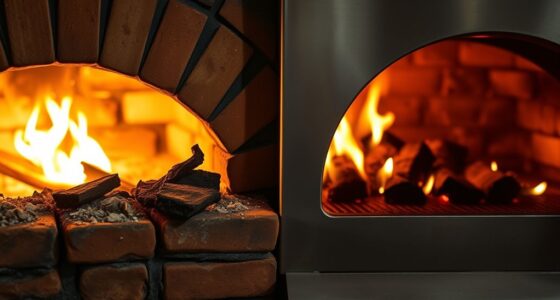
Using an outdoor pizza oven indoors is extremely dangerous and strongly discouraged. These ovens are designed for outdoor use, with high heat, open flames, and poor ventilation, increasing fire risks and exposing you to harmful fumes. Attempting to set one up inside can lead to fire hazards, toxic smoke buildup, and code violations. If you want safe, delicious pizza at home, keep reading to discover proper alternatives and safety tips.
Key Takeaways
- Outdoor pizza ovens are generally not designed for indoor use due to safety hazards like fire risk and toxic fumes.
- Indoor use requires proper ventilation, which outdoor ovens typically lack, increasing smoke and fume buildup.
- The high heat and open flames of outdoor ovens can ignite indoor materials and cause damage if not properly managed.
- Using an outdoor oven indoors may violate local safety codes and void warranties or safety certifications.
- It is safer to use a purpose-built indoor pizza oven that meets safety standards rather than attempting to adapt an outdoor model indoors.
Understanding the Differences Between Indoor and Outdoor Pizza Ovens

While both indoor and outdoor pizza ovens are designed to cook delicious pies, they differ markedly in size, construction, and functionality. Indoor ovens tend to be more compact, featuring precise oven insulation to maintain consistent temperatures without excessive heat loss. Outdoor models are larger, often built with durable materials to withstand weather and outdoor conditions. The choice of pizza stone materials is vital; indoor ovens typically use high-quality stone or ceramic that evenly distributes heat, while outdoor ovens may incorporate thicker, heat-retentive stones for high-temperature cooking. These differences influence how you operate and maintain each type. Indoor ovens prioritize safety and efficient insulation, whereas outdoor ovens focus on durability and heat retention, making each suitable for different settings and cooking styles.
The Risks of Using Outdoor Ovens Inside Your Home

Using an outdoor pizza oven inside your home can pose serious fire risks if not properly managed. You also risk exposure to toxic fumes that aren’t safe to breathe indoors. It’s essential to understand these dangers before attempting to use outdoor equipment inside.
Fire Hazard Risks
Bringing an outdoor pizza oven inside considerably increases the risk of fire hazards in your home. The intense heat and open flame can quickly ignite nearby materials, leading to dangerous fires. You must verify your smoke detectors are working properly and accessible fire extinguishers are nearby in case of an emergency. Additionally, indoor use can cause overheating of electrical systems, increasing fire risk. Be aware that:
- Combustible materials like curtains or furniture can catch fire easily
- Improper ventilation can cause smoke buildup and fire hazards
- Flammable liquids or aerosols nearby escalate danger
- Overuse or malfunctioning equipment might spark fires
- Lack of proper safety precautions heightens risk of serious damage
Always prioritize safety and avoid indoor installation to prevent potentially catastrophic fires.
Toxic Fumes Exposure
Indoor use of outdoor pizza ovens can release dangerous toxic fumes that pose serious health risks. When you operate these ovens inside, fumes from burning fuels or improperly vented gases can accumulate, exposing you to harmful chemicals. Poor cooking techniques, like using excessive charcoal or neglecting proper ventilation, increase this danger. Ingredient selection also matters; using certain woods or fuels can produce more toxic emissions. Breathing in these fumes over time can cause respiratory issues, headaches, or worse. To minimize risks, avoid indoor use altogether and focus on safe cooking methods. If you must use an oven indoors, ensure excellent ventilation, choose low-emission fuels, and be cautious with your ingredient choices to reduce toxic fumes exposure.
Ventilation and Air Quality Concerns

Even though an outdoor pizza oven is designed for open-air use, installing it indoors can raise significant ventilation and air quality concerns. Without proper ventilation requirements, harmful smoke, fumes, and particulate matter can accumulate, jeopardizing your indoor air quality. To mitigate these risks, consider the following:
- Installing high-quality air filtration systems to trap smoke and particulates
- Ensuring sufficient exhaust fans are properly vented outside
- Maintaining adequate airflow to prevent buildup of dangerous gases
- Using carbon monoxide detectors to monitor indoor air safety
- Consulting professionals to design effective ventilation solutions
Ignoring these measures can lead to poor air quality, health hazards, and potential code violations. Proper ventilation is essential to keep indoor air safe and breathable when operating an outdoor pizza oven indoors.
Temperature and Heat Management Challenges

Managing the intense heat from an outdoor pizza oven indoors can be tricky, especially when it comes to keeping temperatures consistent. You might notice uneven heat distribution that affects your cooking results, making it harder to get that perfect crust. Luckily, there are specific temperature control solutions that can help you maintain safe and steady heat levels for indoor use.
Managing High Temperatures
Controlling the intense heat generated by outdoor pizza ovens placed indoors can be a significant challenge. Proper temperature regulation is essential to prevent damage and ensure safety. You need to focus on effective heat dissipation to avoid overheating your space. Here are some tips:
- Install heat shields or barriers to block direct heat transfer
- Use thermostats or heat sensors for precise temperature control
- Ensure proper ventilation to facilitate heat escape
- Regularly inspect and maintain insulation materials
- Limit oven usage time to prevent excessive heat buildup
Managing these factors helps keep temperatures safe and consistent. You’ll want to monitor heat levels closely and adjust airflow or insulation as needed. This proactive approach minimizes risks and maintains a safe indoor environment.
Heat Distribution Issues
While effective temperature regulation focuses on preventing overheating, uneven heat distribution can still pose challenges inside an indoor pizza oven. You might find hot spots that cause inconsistent cooking or burnt crusts. Achieving even heat depends on proper fuel safety and placement, but heat can still concentrate in certain areas. To help visualize, consider this heat distribution overview:
| Zone | Issue |
|---|---|
| Near the fuel source | Excessive heat, risk of burning |
| Opposite side | Cooler spots, uneven cooking |
| Oven walls | Heat loss, inconsistent temperature |
| Center | Ideal, but hard to maintain |
Temperature Control Solutions
To effectively maintain a consistent temperature inside your indoor pizza oven, you need practical heat management strategies. Proper oven placement is essential—position it away from drafts and direct sunlight to prevent temperature fluctuations. Use a reliable thermometer to monitor oven heat closely, ensuring your pizza dough cooks evenly. Adjust heat sources or vents as needed to avoid hot spots and temperature spikes. Consider adding insulation to retain heat and stabilize cooking temperatures. Managing airflow helps prevent overheating and maintains uniform heat distribution. Keep a consistent oven placement to prevent sudden temperature drops or surges. Implementing these solutions allows you to control the heat more effectively, resulting in perfectly cooked pizza dough every time. Proper temperature control enhances safety and improves your overall pizza-making experience indoors.
Fuel Types and Combustion Safety

Choosing the right fuel for your indoor pizza oven is vital for both performance and safety. Different fuels have varying combustion risks and safety considerations. Gas, wood, and electric are common options. Gas offers convenience but requires proper ventilation to mitigate fuel safety concerns. Wood provides authentic flavor but produces more emissions, increasing combustion risks if not managed properly. Electric ovens eliminate combustion risks altogether but may lack the traditional taste. Keep these in mind:
| Fuel Type | Fuel Safety | Combustion Risks |
|---|---|---|
| Gas | Needs proper ventilation | Gas leaks, explosions |
| Wood | Ventilation essential | Smoke, fire hazards |
| Electric | Minimal risks | None |
Always follow manufacturer instructions and guarantee adequate safety measures when using any fuel indoors.
Potential Fire Hazards and Prevention Tips

Using the right fuel is important, but it’s equally vital to be aware of potential fire hazards when operating an indoor pizza oven. Fire risks can stem from unattended oven use, grease buildup, or improper handling of pizza dough. To prevent fires, always keep your oven well-maintained and clean. Regular oven cleaning removes grease and food debris that could ignite. Be cautious with pizza dough ingredients that may cause flare-ups if spilled or overcooked. Additionally, avoid placing flammable items nearby, like paper towels or oven mitts. Always monitor the oven during operation, especially when preheating or baking. Remember, a small spark or unattended oven can quickly turn into a fire hazard. Staying vigilant helps guarantee safe indoor pizza baking experiences.
Building Codes and Legal Regulations for Indoor Cooking Devices

Before installing an indoor pizza oven, you need to understand your local building requirements and safety codes. You’ll also need to obtain the necessary permits and schedule inspections to make sure everything is up to code. Staying compliant helps prevent legal issues and keeps your home safe.
Local Building Requirements
Making sure your indoor pizza oven complies with local building requirements is essential to avoid legal issues and ensure safety. Local codes often specify clear distance requirements from combustible materials, ventilation standards, and electrical or gas connections. You’ll need to follow these guidelines to safely cook pizza dough and top ingredients without risking fire or health hazards.
Here are key points to consider:
- Confirm proper ventilation to remove smoke and fumes
- Verify electrical wiring or gas connections meet local standards
- Maintain adequate clearance from walls and ceilings
- Use fire-resistant materials around the oven area
- Obtain necessary permits before installation
Failing to comply can lead to fines, safety risks, or the need to remove your oven. Always consult local building authorities or professionals to confirm your setup aligns with regulations.
Permits and Inspections
Ensuring your indoor pizza oven complies with permits and inspections is crucial to avoid legal issues and guarantee safety. You need to check local building codes to determine if a permit is required for installing an indoor oven, especially if it involves modifications to your kitchen or ventilation system. Inspections ensure your setup meets electrical, fire, and ventilation standards. Proper ingredient storage, such as keeping pizza dough and toppings away from heat sources, is also regulated under safety codes. Failing to obtain necessary permits or skipping inspections can result in fines or unsafe conditions. Before installing, consult your local authorities or a professional to confirm compliance. This step helps protect your home and ensures your pizza-making adventures stay within legal and safety guidelines.
Safety Code Compliance
Compliance with safety codes and building regulations is essential when installing an indoor pizza oven to prevent hazards and legal issues. You must ensure your setup meets local requirements for indoor ventilation and fire safety. Proper ventilation reduces smoke and fumes, protecting your indoor air quality. Fire safety standards mandate appropriate clearance, fire-resistant materials, and accessible fire extinguishers. To stay compliant, consider these key points:
- Verify local building codes for indoor cooking devices
- Install adequate indoor ventilation systems
- Use fire-resistant materials around the oven
- Maintain clear access to fire extinguishers
- Schedule inspections for code compliance
Following these guidelines helps you avoid fines and accidents, creating a safe indoor environment for pizza nights.
Alternatives to Using Outdoor Ovens Indoors

If you’re craving that authentic wood-fired flavor but don’t have outdoor space, there are several effective alternatives to outdoor pizza ovens that you can use indoors. A high-quality pizza stone is a great option, as it mimics the heat retention of traditional brick ovens, helping you achieve a crispy crust. Pair this with proper oven insulation to prevent heat loss and ensure safety during cooking. Electric pizza ovens designed for indoor use also deliver excellent results without the risks associated with outdoor appliances. These appliances often come with built-in temperature controls and safety features, making them a reliable choice for indoor pizza making. While not identical to outdoor wood-fired ovens, these alternatives let you enjoy delicious, restaurant-quality pizza safely inside your home.
Proper Setup and Safety Precautions if Attempting Indoor Use

When setting up an indoor pizza oven or alternative, prioritizing safety and proper installation is vital. Make certain your space has adequate indoor ventilation to prevent smoke and fumes from accumulating. Proper oven insulation helps maintain heat and reduces the risk of accidental burns or fires. Before use, check that your setup complies with local safety codes. Keep a fire extinguisher nearby, and never leave the oven unattended while operating. Use heat-resistant gloves when handling hot surfaces. Regularly inspect the oven for any damage or leaks. Proper placement away from walls, curtains, or flammable materials is essential. Finally, make sure your ventilation system is effective to keep indoor air safe and free of harmful particles.
Expert Recommendations for Safe Pizza Making at Home

To guarantee safe and enjoyable pizza making at home, it’s essential to follow expert advice on proper handling and preparation techniques. Always use a high-quality pizza stone to ensure even heat distribution and prevent hot spots that could crack your oven or cause burns. Proper oven insulation helps maintain high temperatures safely, reducing the risk of accidental fires. Experts recommend preheating your oven thoroughly and avoiding sudden temperature changes. Keep a fire extinguisher nearby and ensure good ventilation. Here’s a quick reminder:
| Safety Tip | Why It Matters | Best Practice |
|---|---|---|
| Use a pizza stone | Prevents cracking and uneven cooking | Preheat with the oven for at least 30 minutes |
| Maintain oven insulation | Keeps heat contained safely | Insulate exterior of oven properly |
| Handle with care | Avoid burns and accidents | Use oven mitts and keep a safe distance |
Frequently Asked Questions
Can Outdoor Pizza Ovens Be Modified for Indoor Use Safely?
You shouldn’t modify outdoor pizza ovens for indoor use because it’s unsafe. Oven modifications, like adding proper ventilation, are complex and often inadequate for indoor environments. Indoor ventilation is essential to prevent carbon monoxide buildup, which outdoor ovens aren’t designed to handle. Instead, invest in a pizza oven rated for indoor use. This guarantees safety, proper airflow, and ideal cooking without risking health or property damage.
What Are the Long-Term Health Effects of Indoor Outdoor Oven Fumes?
Sure, inhaling outdoor pizza oven fumes indoors is a recipe for long-term health issues. Over time, poor indoor air quality caused by these fumes can harm your respiratory health, leading to chronic coughs, asthma, or worse. So, if you love your lungs, avoid turning your outdoor oven into an indoor smog machine. Keep the air clean and your breathing easy—your future self will thank you.
Are There Certified Indoor Pizza Ovens That Mimic Outdoor Performance?
Yes, there are certified indoor pizza ovens designed to mimic outdoor performance. These ovens feature advanced indoor ventilation systems that safely vent smoke and fumes, ensuring fire safety and proper air circulation. When choosing one, look for models with proper certification and built-in ventilation options, so you can enjoy authentic pizza without risking indoor air quality or safety. Always follow manufacturer guidelines to maintain a safe cooking environment.
How Do I Detect Dangerous Gas Leaks From Outdoor Ovens Used Indoors?
You should regularly check for dangerous gas leaks from your outdoor oven used indoors by installing a carbon monoxide detector nearby. Use leak detection solutions or soapy water on connections and hoses—bubbles indicate leaks. Always verify proper ventilation and never ignore symptoms like dizziness or headaches, which could signal carbon monoxide buildup. Promptly address any leaks or detector alerts to keep your indoor space safe.
What Insurance Implications Exist if I Use an Outdoor Oven Indoors?
Imagine the warmth of a pizza oven filling your home, but know that using an outdoor oven indoors can increase liability risks. You might face insurance coverage issues if accidents happen, as many policies don’t cover damage or injuries caused by non-approved appliances. Before attempting indoor use, check with your insurer, because neglecting this can leave you vulnerable to costly claims and gaps in your coverage, risking your financial security.
Conclusion
Never try to use an outdoor pizza oven indoors, as the risks far outweigh the benefits. Imagine someone attempting this and unknowingly causing carbon monoxide buildup, leading to dangerous health issues. Instead, explore indoor-friendly options or proper setups with ventilation and safety measures. Prioritizing safety keeps your pizza nights enjoyable without risking your home or your health. When in doubt, consult experts or local codes to confirm you’re making the safest choice for delicious, worry-free pizza.