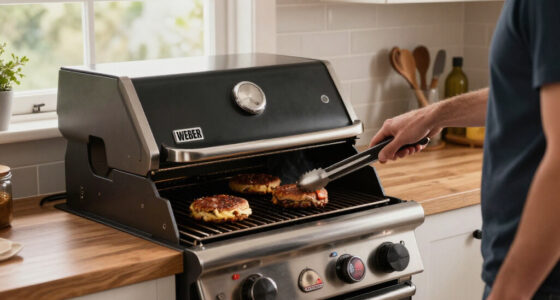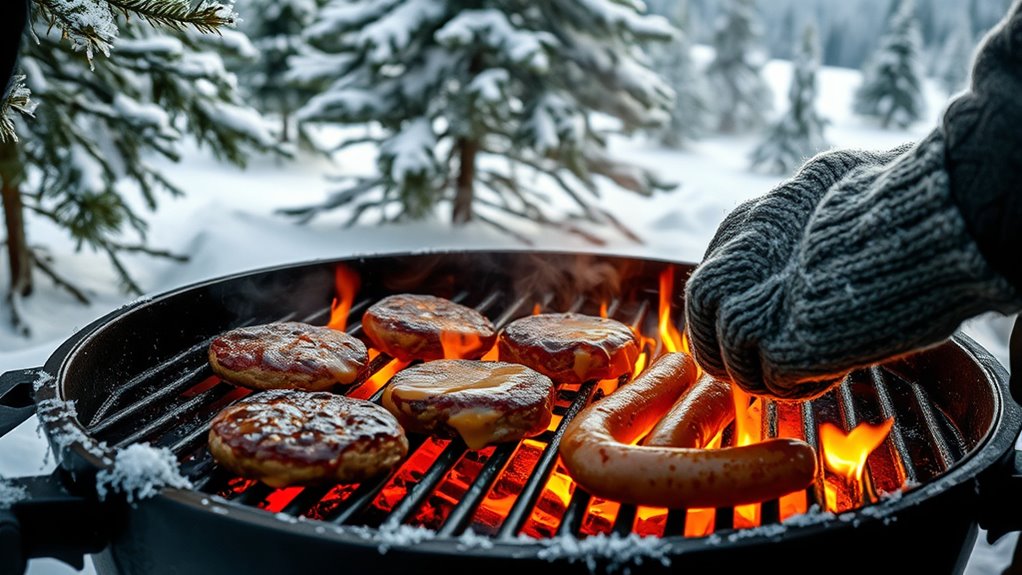
To succeed at grilling in cold weather, start by preparing your grill with weather-resistant covers and keep it sheltered. Use quality charcoal like lump or briquettes, and monitor your temperature closely, making small adjustments. Shield the grill from wind and snow, and extend cooking times since cold temperatures lower heat efficiency. Keep safety gear nearby, and use insulated containers to keep food warm. Stick with these tips, and you’ll master winter BBQs with ease.

Get kitchen gear delivered free with Prime
- Fast, free delivery on millions of items
- Prime Video, Amazon Music and more included
- Member-only deals all year
Key Takeaways
- Choose weather-resistant covers and shelter your grill to prevent moisture damage during winter.
- Use high-quality charcoal and monitor airflow to maintain consistent temperatures in cold conditions.
- Wear insulated, moisture-resistant gear and keep safety equipment accessible for safe winter grilling.
- Extend cooking times, use marinades to tenderize meat, and keep food warm with insulated containers and covers.
- Manage ventilation by partially closing vents and using heat-retaining accessories to preserve grill heat efficiently.
As an affiliate, we earn on qualifying purchases.
Preparing Your Grill for Cold Weather
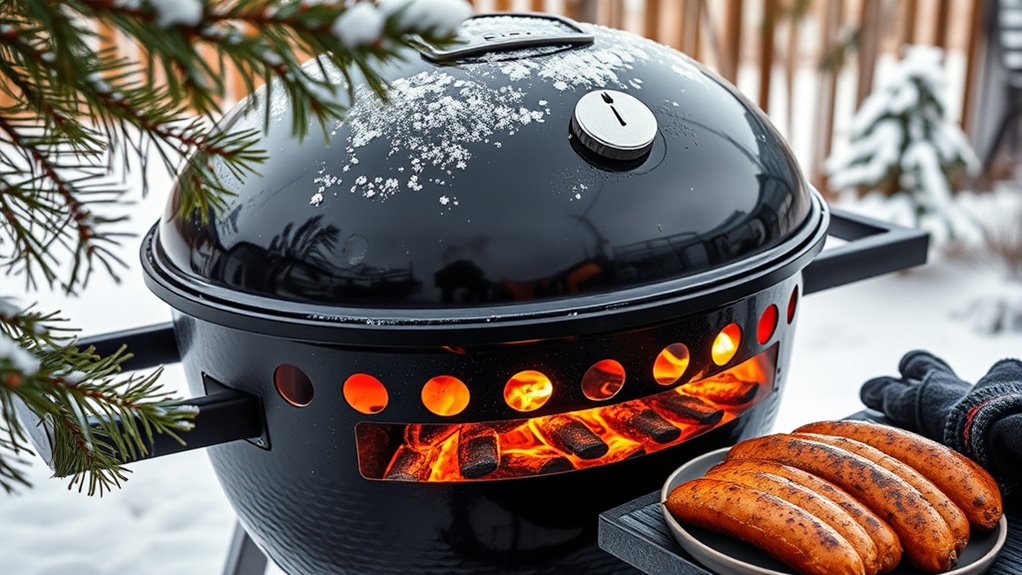
Cold weather can make grilling more challenging, but with proper preparation, you can enjoy winter barbecues without hassle. Start by choosing the right grill cover selection to protect your grill from snow, ice, and moisture. A durable, weather-resistant cover helps prevent rust and keeps your grill clean, making winter grill storage easier. Before storing, clean your grill thoroughly, removing grease and food residue to prevent corrosion. Check for any damage or rust and address it promptly. Cover your grill tightly to shield it from the elements, and store it in a sheltered area if possible. Proper winter grill storage extends your grill’s lifespan and ensures it’s ready for your next cookout. Taking these steps keeps your equipment in top shape throughout the cold months.
As an affiliate, we earn on qualifying purchases.
Choosing the Right Fuel and Charcoal for Winter
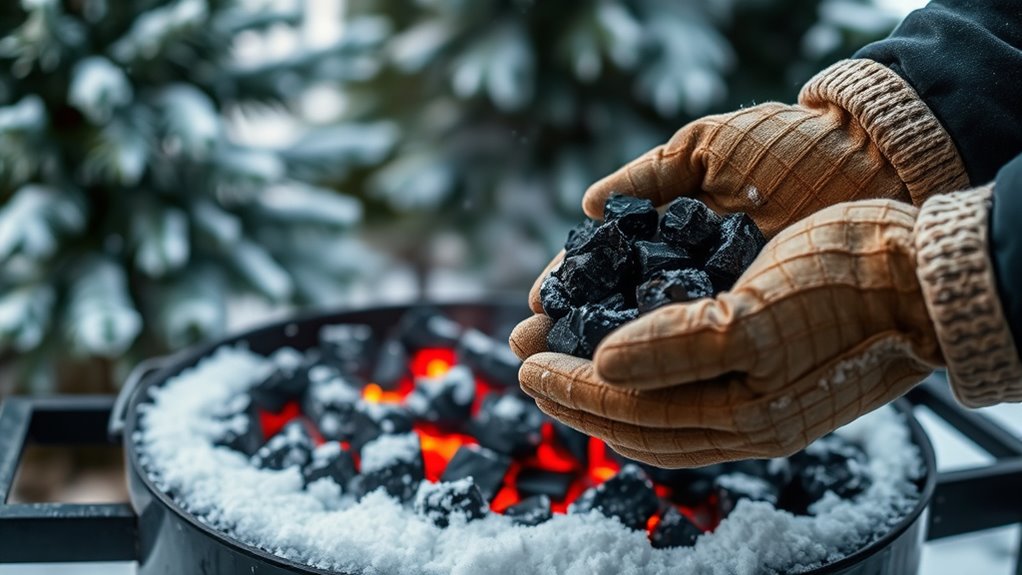
Choosing the right fuel and charcoal is essential for winter grilling, as colder temperatures can affect ignition and heat retention. When selecting fuel choices, opt for high-quality charcoal designed for consistent heat. Lump charcoal ignites quickly and burns hotter, making it ideal for cold weather, while briquettes provide steady, longer-lasting heat. For added convenience, consider charcoal with added binders or quick-light options, but avoid those with chemical starters that could affect flavor. Make sure your charcoal selection is appropriate for your grill size and cooking style. Using the right fuel helps maintain stable temperatures and reduces frustration during winter grilling sessions. Proper fuel choices ensure your food cooks evenly and saves you from unnecessary trouble in freezing conditions.
insulated food containers for grilling
As an affiliate, we earn on qualifying purchases.
As an affiliate, we earn on qualifying purchases.
Managing Temperature Fluctuations During Cold Days
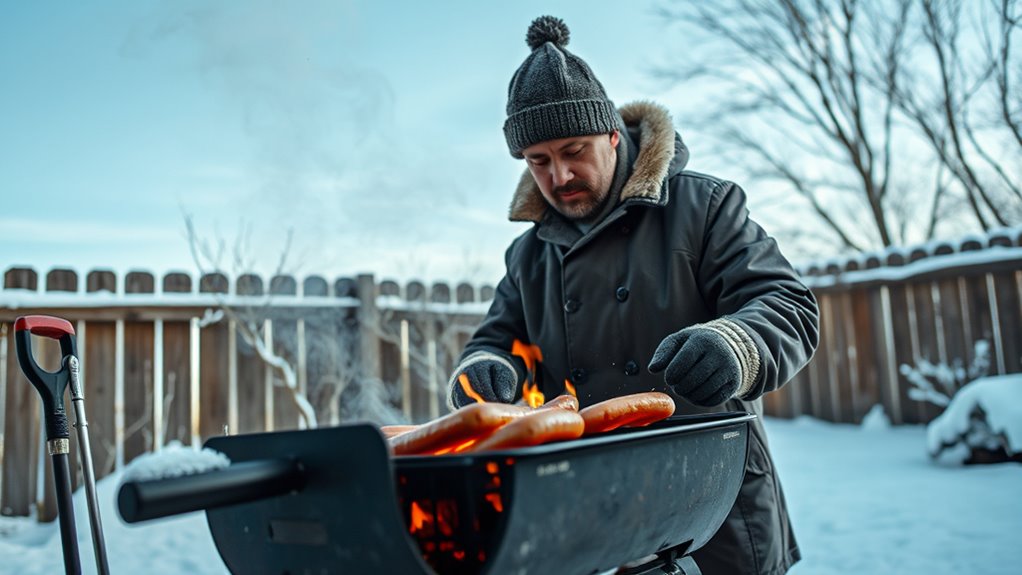
Managing temperature fluctuations during cold days requires careful attention to your grill’s performance and your cooking process. Temperature swings happen more often in winter, especially with wind effects that can drastically lower or raise your grill’s heat. To counter this, monitor your thermometer closely and make small adjustments as needed. Shield your grill from the wind using a windbreak or barrier to maintain consistent heat. Use the table below as a quick guide:
| Wind Effects | Adjustments Needed | Tips |
|---|---|---|
| Strong wind | Increase fuel supply | Use a windbreak |
| Calm conditions | Standard settings | Maintain steady heat |
| Sudden gusts | Reduce airflow | Keep lid closed |
high-quality lump charcoal for winter
As an affiliate, we earn on qualifying purchases.
As an affiliate, we earn on qualifying purchases.
Selecting Winter-Appropriate Cooking Gear and Accessories

To enjoy successful winter grilling, you need to select gear and accessories designed to withstand low temperatures and harsh conditions. Start with insulated gloves to protect your hands from the cold while handling hot items or adjusting the grill. Quality insulated gloves provide dexterity and warmth, making your cooking safer and more comfortable. Additionally, invest in weatherproof aprons that resist moisture, wind, and cold. These aprons keep your clothing dry and shield your body from chilly drafts. Look for durable, waterproof materials that can handle snow or rain. Combining insulated gloves and weatherproof aprons ensures you stay warm, dry, and focused on your grilling. Proper gear not only enhances safety but also improves your overall winter BBQ experience, allowing you to enjoy the process despite the cold.
Tips for Keeping Food Warm and Preventing Freezing
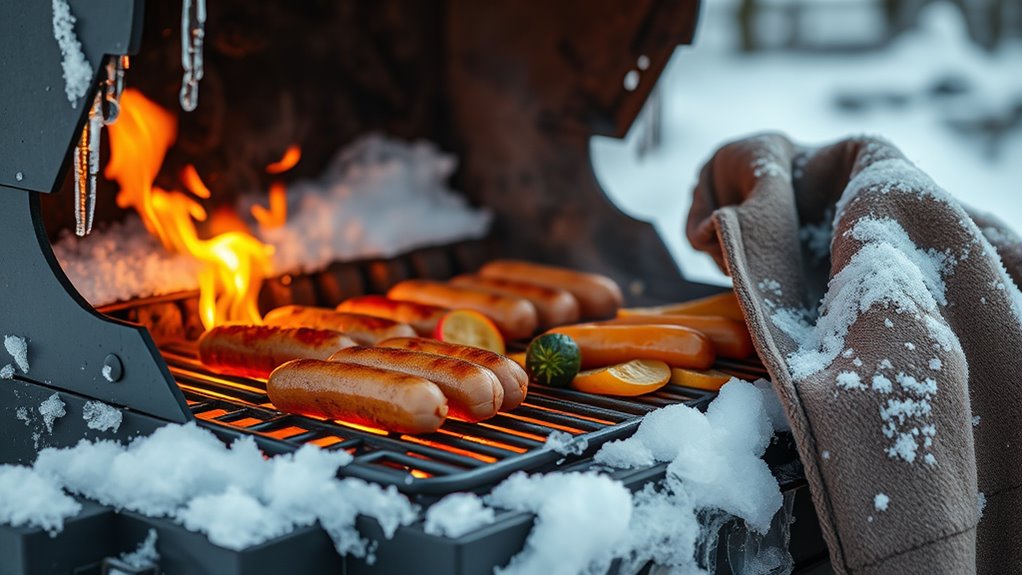
To keep your food warm and prevent freezing, use insulated containers to retain heat during serving. Cover dishes with foil tents or use heat lamps to maintain the right temperature outdoors. These simple tricks guarantee your food stays fresh and enjoyable throughout your winter BBQ.
Use Insulated Food Containers
Insulated food containers are essential for keeping your BBQ dishes hot and ready to serve, especially during cold winter days. These containers help with food preservation by maintaining the temperature and preventing your dishes from cooling too quickly. When you transfer cooked foods into insulated containers, you ensure they stay warm until you’re ready to eat, reducing the risk of freezing or cooling down. Choose high-quality insulated containers made of durable materials, and pre-warm them with hot water before filling, to maximize heat retention. Using these containers is a simple yet effective way to keep your sides, sauces, and leftovers at the perfect temperature. They’re especially handy when serving buffet-style or transporting food to outdoor gatherings in chilly weather.
Cover With Foil Tents
Covering your BBQ dishes with foil tents is a simple yet effective way to keep food warm and prevent it from freezing in cold weather. Foil tenting creates an insulating barrier that traps heat, enhancing heat retention around your dishes. To do this, gently drape aluminum foil over your plates or trays, shaping it into a tent without sealing the edges completely. This allows steam to escape while still maintaining warmth. Foil tenting is especially useful when resting cooked meats or keeping sides warm before serving. It’s a quick, inexpensive method that prevents cold air from directly cooling your food, ensuring it stays at the right temperature until everyone’s ready to eat. Use foil tents consistently to improve heat retention during your winter BBQs.
Keep Warm With Heat Lamps
When outdoor temperatures drop, heat lamps become an essential tool for keeping food warm and preventing freezing during winter BBQs. They provide effective outdoor heating and ensure your dishes stay at the right temperature until serving. Look for weatherproof lighting options designed for outdoor use, as they withstand snow, wind, and moisture. Position the heat lamps overhead or near food stations to maximize coverage without drying out your food. These lamps are easy to set up and help maintain food safety and quality throughout your gathering. Using weatherproof lighting not only keeps your food warm but also adds a professional touch to your outdoor setup. With the right heat lamps, you can enjoy a cozy, hassle-free winter barbecue without sacrificing warmth or safety.
Adjusting Cooking Times and Techniques in Low Temperatures

When grilling in cold weather, you’ll need to preheat your grill longer to guarantee it reaches the right temperature. Keep in mind that heat escapes faster, so managing heat loss is essential for consistent cooking. You might also need to adjust your cooking times to account for lower temperatures, ensuring your food is perfectly done.
Preheat Grill Longer
Since low outdoor temperatures can slow down the heating process, it’s vital to preheat your grill longer than usual to guarantee it reaches the right temperature. This extra time ensures the grill is hot enough for proper searing and helps lock in flavors like grill seasoning and marinade application. By allowing more preheat time, you prevent uneven cooking and ensure your meat gets that perfect crust. Keep an eye on the thermometer, and don’t rush the process.
- Use a lid thermometer to monitor heat and confirm the desired temp.
- Let your grill sit at high heat for an additional 10-15 minutes.
- Apply grill seasoning and marinade after preheating to avoid flavor loss.
Preheating thoroughly is especially essential in cold weather, helping you achieve ideal results every time.
Manage Heat Loss
As outdoor temperatures drop, heat can escape from your grill more quickly, making it harder to maintain consistent cooking temperatures. To manage heat loss, focus on insulation barriers and ventilation control. Use thick, heat-retaining covers or insulating pads around the grill to slow heat escape. Adjust vents carefully: closing them slightly reduces airflow, conserving heat, but avoid completely sealing vents, which can cause dangerous smoke buildup. Visualize this:
| Insulation Barriers | Ventilation Control |
|---|---|
| Insulating blankets or mats | Partially closing vents |
| Heat-retaining lids or covers | Regulating airflow |
Controlling heat loss ensures your grill stays hot enough for even cooking, preventing flare-ups and maintaining your desired temperature despite the cold.
Adjust Cooking Durations
Lower outdoor temperatures can hinder the cooking process, so you may need to extend your cooking times to guarantee your food is thoroughly cooked. Cold weather can cause your grill to work harder, affecting how long your meat or vegetables need on the grill. To adapt, start by monitoring internal temperatures more closely. Consider using marinade recipes that tenderize and add flavor, reducing the need for longer cook times. Keep your grill clean, as leftover residue can insulate burners and hinder heat transfer.
- Use a meat thermometer to check doneness accurately
- Adjust your grill’s heat settings for consistent cooking
- Plan for additional time, especially for thicker cuts or marinated foods
Ensuring Safety and Preventing Fire Hazards in Winter Conditions
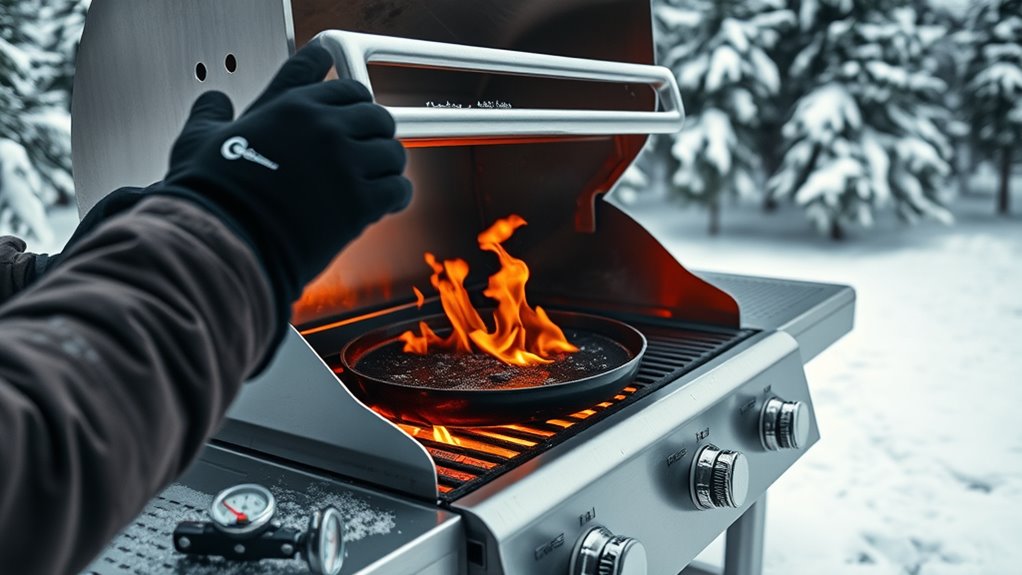
Winter conditions can increase the risk of fire hazards when grilling, so it’s essential to prioritize safety. Start by ensuring your fire extinguisher is within easy reach and properly placed nearby, so you can act quickly if needed. Pay attention to clothing safety considerations; wear snug-fitting, non-flammable clothing to reduce the risk of accidental ignition. Keep your grill on stable, non-slip surfaces to prevent tipping or accidents. Never leave the grill unattended, especially in cold weather when gusts of wind can cause flare-ups. Also, clear snow and ice from around your grilling area to prevent slips. By staying vigilant and prepared, you can enjoy winter grilling safely while minimizing fire risks.
Cleaning and Maintenance Tips for Winter Grilling
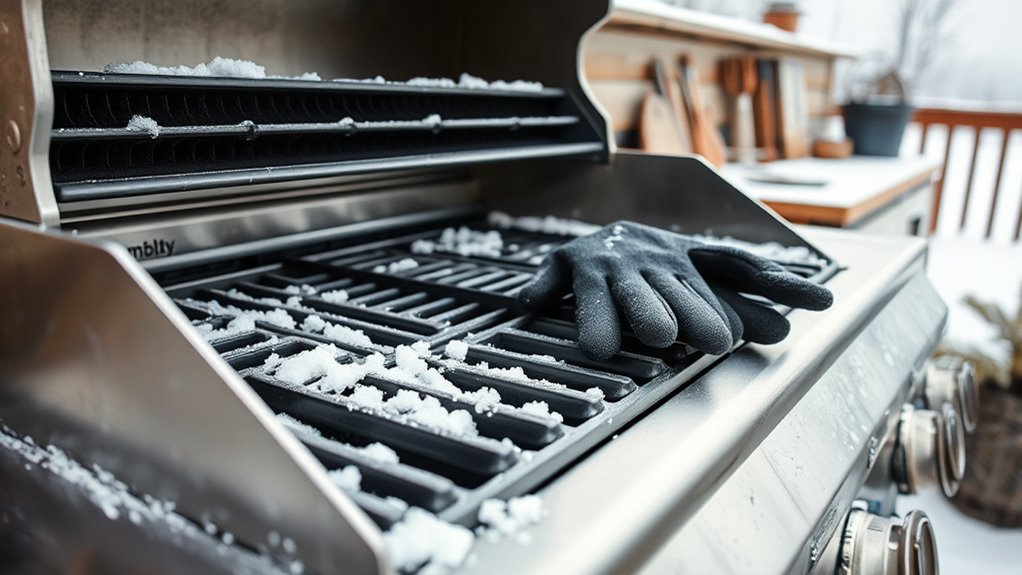
Cleaning and maintaining your grill during winter is essential to guarantee it stays in good condition and functions properly. Cold weather can cause grease buildup and ash accumulation, which may affect performance and safety. Regularly use a grill brush to scrub grates after each use, removing residue that can harden in low temperatures. Don’t forget to perform ash removal to prevent blockages and improve airflow. Additionally, inspect your grill for rust or damage caused by moisture and address issues promptly. Cover your grill with a weatherproof cover when not in use to protect it from snow and ice. Proper winter maintenance ensures your grill stays ready for your next barbecue session and extends its lifespan. Staying diligent keeps your winter grilling safe and enjoyable.
Frequently Asked Questions
How Can I Prevent My Grill From Rusting in Winter?
To prevent your grill from rusting in winter, you should prioritize proper grill maintenance. Always clean your grill thoroughly after each use to remove food debris and moisture. Cover it with a weather-resistant cover when not in use, and store it in a dry, sheltered location if possible. Applying a light coat of oil on the grates and metal surfaces also helps with rust prevention, ensuring your grill stays in good shape through the cold months.
What Are the Best Gloves for Handling Cold-Weather Grilling Equipment?
For handling cold-weather grilling equipment, you want insulated gloves that keep your hands warm and protected. Look for heat-resistant mitts that can withstand high temperatures while giving you a good grip. These gloves should be waterproof and flexible, so you can easily handle tools and hot items. Investing in quality insulated gloves and heat-resistant mitts guarantees safety and comfort, even in freezing temperatures, making your winter grilling experience safer and more enjoyable.
Can I Use My Regular Grill Cover During Winter?
During winter, using your regular grill cover isn’t ideal because it may lack the durability needed for harsh weather. Imagine a BBQ enthusiast in Minnesota who used a standard cover; heavy snow and wind compromised it quickly. For winter weather protection, invest in a heavy-duty, weather-resistant cover designed for cold climates. This ensures your grill stays protected from moisture, rust, and damage, extending its lifespan even during the toughest winter months.
How Do I Protect My Propane Tank From Freezing?
To protect your propane tank from freezing, you should use propane tank insulation, which helps maintain a stable temperature and prevents freezing. Keep the tank in a sheltered area, away from direct wind and low temperatures, and consider using a tank heater if necessary. Regularly check the tank’s pressure to ensure it’s functioning properly. These steps help with freezing point prevention and keep your grill ready for winter cooking.
Are There Specific Safety Precautions for Grilling in Snow or Icy Conditions?
When grilling in snow or icy conditions, prioritize snow safety by clearing a flat, stable area free of snow buildup. Keep wind precautions in mind; set up your grill in a sheltered spot to prevent gusts from affecting the flame or causing flare-ups. Always check for ice around the propane tank and make certain of proper ventilation. Wearing gloves and using long-handled tools also help you stay safe in winter weather.
Conclusion
Grilling in cold weather might seem intimidating, but with the right prep and mindset, you can enjoy winter barbecues like a pro. Just remember, you’re better off safe than sorry—so take extra precautions and stay prepared. Embrace these tips, and you’ll find that the chill doesn’t have to put a damper on your grilling fun. After all, a little cold weather shouldn’t stop you from having a hot meal and good times outdoors.
Halloween Picks
halloween
As an affiliate, we earn on qualifying purchases.