To use a pizza peel like a pro and prevent sticking, select the right peel material that suits your needs—wood for gentle handling or aluminum for maneuverability. Prepare your dough with proper hydration and dust generously with flour or cornmeal. Slide the pizza onto the peel with a quick, steady motion, keeping it tilted at an angle. Before transferring to the oven, shake gently and add more flour if needed. Keep practicing these tips to master flawless pizza transfers every time.
Key Takeaways
- Properly dust the peel with flour or cornmeal before sliding the pizza to prevent sticking.
- Use a quick, confident motion to slide the pizza onto the peel at a slight angle.
- Ensure dough hydration is balanced to reduce stickiness and make transfer easier.
- Gently lift edges with the peel to check for resistance and add more flour if needed.
- Maintain the peel in good condition and use the right materials for smooth, snag-free transfers.
Selecting the Right Pizza Peel for Your Needs

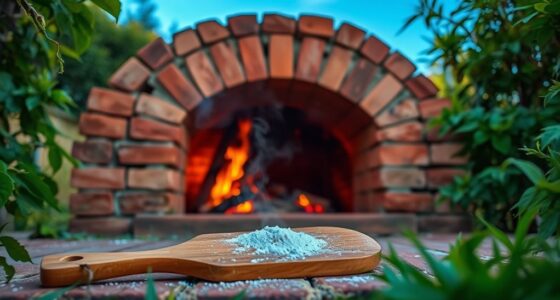
Choosing the right pizza peel depends on your baking setup and personal preferences. When selecting, consider pizza peel materials—wood, aluminum, or composite—each offering different benefits. Wooden peels are gentle on dough, reducing sticking, but can be heavier. Aluminum peels are lightweight and durable, making them easier to maneuver. Handle ergonomics also matter; look for a peel with a comfortable, well-balanced handle that provides a secure grip. An ergonomic handle reduces fatigue and gives better control when sliding pizzas in and out of the oven. Think about your comfort and the type of baking surface you use. The right combination of materials and handle design guarantees smooth handling, making your pizza-making experience more enjoyable and professional-looking.
Properly Preparing Your Pizza Before Transferring

Once you’ve prepared your pizza dough and toppings, the next step is to guarantee the pizza is ready for transfer. Proper preparation involves ensuring the dough has the right dough hydration—not too sticky or dry—so it moves smoothly. Before sliding the pizza onto the peel, dust it generously with flour to prevent sticking. Use a light, even dusting of flour on both the peel and the dough’s surface. This creates a barrier that allows the pizza to glide easily onto the peel without tearing or sticking. Make sure the dough is slightly floured and not overly wet or sticky, which can cause issues during transfer. Properly prepared, your pizza will move seamlessly from surface to oven with minimal fuss.
Techniques for Sliding Your Pizza Onto the Peel

To slide your pizza onto the peel smoothly, position the pizza close to the edge of your work surface and hold the peel at a slight angle. Make certain your dough has the right consistency—neither too sticky nor too dry—to prevent sticking. Proper flour application is key; lightly dust the peel with flour or cornmeal, especially near the edges.
Follow these techniques:
- Gently slide the peel under the pizza, starting from the edge, using a quick, steady motion.
- Lift the front of the pizza slightly, supporting it with your hand or a bench scraper.
- Shake the peel gently to check for sticking; if resistance occurs, sprinkle more flour underneath.
These tips help you transfer your pizza smoothly without tearing or sticking.
Safely Moving and Transferring the Pizza to the Oven

After sliding your pizza onto the peel, it’s important to handle it carefully to prevent damage or accidents. Keep your peel well-maintained by regularly checking for warping or loose handles, ensuring safe and smooth transfers. To avoid sticking or slipping, lightly flour or cornmeal your peel before sliding the pizza onto it. When transferring the pizza to the oven, hold the peel steady and use a quick, confident motion to slide it inside. If you find the pizza sticking, you can use alternative tools like a wide spatula or a second peel to help support and guide it. Proper peel maintenance and having these tools ready will make moving your pizza safer, easier, and more efficient, giving you that professional touch every time.
Tips for Removing the Pizza Without Sticking

Removing your pizza without sticking requires a combination of proper preparation and technique. First, pay attention to dough hydration; a well-hydrated dough is less likely to stick. Second, choose the right flour type—semolina or rice flour works best for dusting, preventing sticking and aiding release. Third, before sliding the pizza off, gently lift the edges with your peel to check for any resistance. If it feels sticky, sprinkle a little more flour or semolina underneath. Additionally, ensure your peel is lightly coated and not overloaded with toppings, which can cause sticking. By focusing on dough hydration, using the appropriate flour types, and testing the release, you’ll master removing your pizza easily and avoid frustrating sticking issues.
Frequently Asked Questions
How Do I Clean and Maintain My Pizza Peel?
To keep your pizza peel in top shape, regularly clean it with a damp cloth and mild soap for wooden peels, or wipe down a metal peel with a damp cloth. Store it properly in a dry, ventilated space to prevent warping or rust. Avoid soaking it in water, and periodically check for damage. Proper peel storage and consistent cleaning methods guarantee your peel stays durable and ready for perfect pizzas.
Can I Use a Metal Peel on a Non-Stick Surface?
You can use a metal peel on a non-stick surface, but it’s not ideal. Metal peels are durable and perfect for wood or metal ovens, but they may scratch or damage non-stick coatings. Wood peels are gentler and better for delicate surfaces. If durability and ease are your priorities, a metal peel works well, just be cautious to avoid scratches. Choose wisely based on your oven’s surface for the best results.
What Size Pizza Peel Is Best for Small Ovens?
For small ovens, a 10 to 12-inch pizza peel works best. This peel size allows you to easily maneuver pizzas without crowding your oven space. It’s compact enough to fit comfortably in tight areas, making it ideal for small oven baking. Plus, a smaller peel helps you control the pizza better, ensuring even placement and easy removal. Choose a peel that’s lightweight and fits your oven’s dimensions for the best results.
How Do I Prevent Dough From Sticking During Prep?
Imagine you’re in a medieval kitchen, and your secret weapon is flour dusting. To prevent dough from sticking during prep, generously sprinkle flour over your surface and dough. As you stretch and shape the dough, keep dusting if needed, ensuring a smooth, non-sticky surface. This simple step makes dough handling easier, prevents sticking, and helps you craft perfect pizza bases every time.
Are There Different Techniques for Thick Versus Thin Crusts?
Yes, there are different techniques for thick versus thin crusts. For thin crusts, keep the dough more flexible and use gentle dough handling techniques, like lightly flouring your peel and dough to prevent sticking. Thick crusts require sturdier handling, so don’t rush the transfer; instead, support the dough with your peel and use slower, more deliberate movements. Adjust your approach based on crust flexibility for best results.
Conclusion
With these tips, you’ll master the art of using a pizza peel like a seasoned chef, ensuring your pizzas slide smoothly every time. Remember to choose the right peel, prep your pizza properly, and use gentle techniques to prevent sticking. With patience and practice, you’ll impress your guests and perhaps even earn a nod from the gods of gastronomy. So go forth, and may your pizza adventures be as legendary as the tales of old!