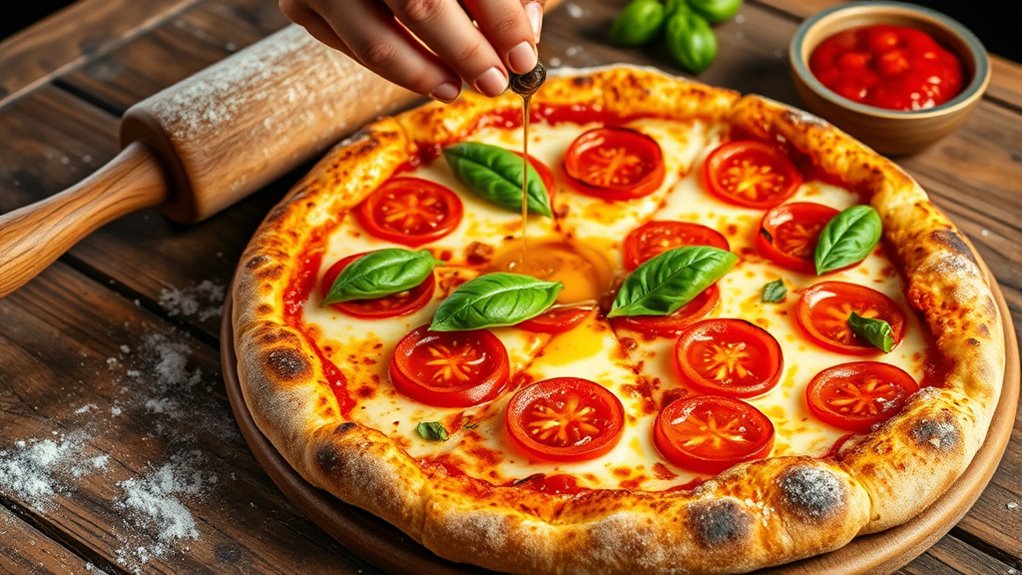

To make perfect Neapolitan pizza at home, start with high-quality ingredients like fresh mozzarella and San Marzano tomatoes for rich flavor. Master the art of making a tender, airy dough with proper fermentation, then shape it gently to maintain an even thickness. Use a super-hot oven with a pizza stone to bake quickly for that blistered crust. Add toppings thoughtfully, then finish with fresh basil and olive oil. Keep this guide in mind to elevate your pizza game to authentic heights.
Key Takeaways
- Use high-quality ingredients like fresh mozzarella and San Marzano tomatoes for authentic flavor.
- Master gentle dough stretching and proper fermentation for a light, airy crust.
- Preheat a pizza stone or steel at high temperature to achieve a crispy, blistered crust.
- Bake quickly at 500°F–550°F for 60-90 seconds to mimic wood-fired results.
- Add fresh herbs, olive oil, and minimal toppings post-baking for an authentic finish.
Use Quality Ingredients for the Best Flavor

Using high-quality ingredients is essential to achieving an authentic, flavorful Neapolitan pizza. Start with fresh mozzarella, which melts beautifully and provides that creamy, rich texture characteristic of true Neapolitan pies. Opt for mozzarella di bufala whenever possible, as its tangy, milky flavor elevates your pizza. For the sauce, San Marzano tomatoes are the gold standard; their sweet, low-acid profile creates a vibrant, balanced base. Using canned San Marzanos ensures consistency and quality. Avoid shortcuts like pre-shredded cheese or processed tomatoes, which can compromise flavor. Remember, top-tier ingredients make a significant difference, so invest in the best you can find. With fresh mozzarella and San Marzano tomatoes, your pizza will boast authentic taste and true Neapolitan character.
Master the Art of Making the Perfect Dough

The foundation of a great Neapolitan pizza lies in its dough, which sets the stage for authentic flavor and texture. To master this, focus on proper dough fermentation; give it enough time to develop complex flavors while avoiding overproofing. Use a gentle kneading technique to guarantee the gluten develops evenly, creating a soft yet elastic dough. Avoid rushing the process—longer fermentation enhances taste and digestibility. Keep your kneading consistent, pressing and folding the dough until smooth. Don’t forget to monitor dough temperature during fermentation, as it influences rise and texture. With patience and proper technique, you’ll achieve a dough that’s tender, airy, and perfect for that signature Neapolitan crust. These steps are vital for building the ideal base for your pizza.
Achieve the Ideal Pizza Shape and Thickness
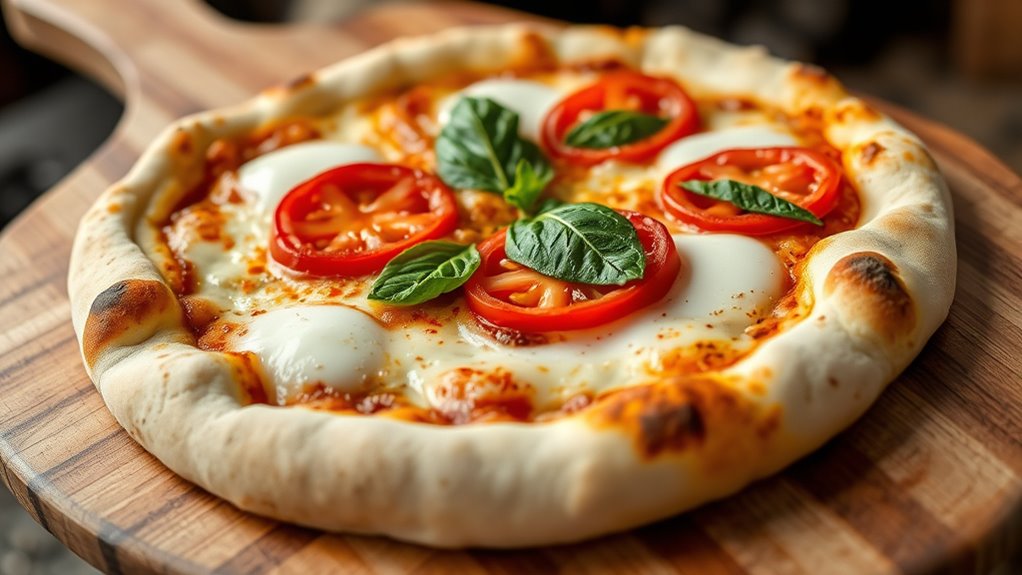
To achieve the perfect pizza shape and thickness, you need to handle your dough with care and precision. Start by gently dough stretching, using your fingertips to push from the center outward, maintaining even thickness. Avoid using a rolling pin, as it can compress the dough and compromise the air pockets that give Neapolitan pizza its light texture. During pizza shaping, aim for a slightly thicker edge or crust, and a thinner center for a tender, chewy bite. Keep the dough’s shape round and consistent by rotating it in your hands or on a surface as you stretch. This careful process ensures your pizza has the classic, airy crust and well-balanced thickness that make Neapolitan pizza so irresistible.
Use a Hot Oven and Proper Baking Techniques

Make certain your oven is preheated to its highest temperature before baking. Using a pizza stone or steel helps mimic a wood-fired oven by transferring heat directly to the crust. This combination ensures your pizza bakes quickly and develops that perfect, bubbly crust.
Preheat to Highest Temp
Preheating your oven to its highest temperature is essential for achieving that authentic Neapolitan crust. Confirm your oven is properly calibrated so it truly reaches its maximum heat, typically 500°F to 550°F. This high temperature creates the intense heat needed to develop the characteristic char and airy texture. Make sure your ingredients are fresh, as quality flour, fresh tomatoes, and good mozzarella enhance the final flavor. Preheat the oven well in advance—at least 45 minutes—so the entire interior heats evenly. Avoid opening the door frequently, as this drops the temperature. A properly calibrated oven combined with fresh ingredients ensures your pizza bakes quickly and develops that perfect, blistered crust that’s the hallmark of true Neapolitan pizza.
Use Pizza Stone or Steel
Placing a pizza stone or steel directly on your oven rack transforms your baking surface into a professional-grade hearth. This setup guarantees even heat distribution and excellent heat retention, essential for achieving a crispy crust. Preheat the oven with the stone or steel inside at its highest temperature for at least 45 minutes. This preheating step allows the baking surface to reach ideal heat, mimicking a traditional pizza oven. When you slide your pizza onto the hot stone or steel, it instantly begins cooking from the bottom, creating that authentic Neapolitan texture. Using a proper baking surface maximizes heat transfer and results in a perfectly baked pizza with a crisp crust and tender interior. Trust this method to elevate your homemade pizza to restaurant-quality standards.
Opt for the Right Toppings and Placement
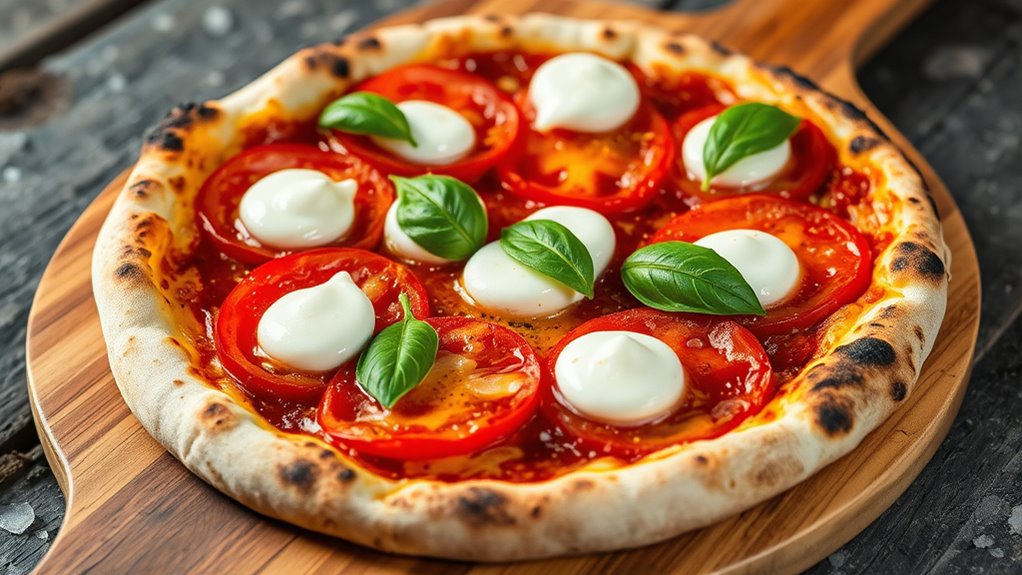
Choosing the right toppings and their placement is essential for achieving authentic Neapolitan pizza. Start with cheese selection; fresh mozzarella is a must for that classic melt and flavor. Spread it evenly over the dough, avoiding too much in one spot, which can lead to sogginess. When adding vegetables, place them strategically so they don’t overpower the pizza or cause uneven cooking. For example, thinly sliced vegetables like cherry tomatoes or arugula should be added after baking or in small amounts on top, ensuring they don’t release excess moisture. Keep toppings simple and balanced to maintain the pizza’s authentic look and taste. Proper cheese and vegetable placement guarantee your toppings complement each other and cook evenly, resulting in a beautifully crafted, flavorful Neapolitan pizza.
Master the Art of Baking Time and Temperature

Mastering the right baking time and temperature is essential for achieving that authentic Neapolitan pizza crust. You need to pay attention to the baking duration, which typically ranges from 60 to 90 seconds in a properly calibrated oven. Proper oven calibration ensures your heat is even and consistent, preventing under- or over-baking. Preheat your oven to the highest temperature possible, usually around 900°F (485°C), and use a pizza stone or steel to mimic a wood-fired oven’s intense heat. Keep a close eye on the baking time; too long, and the crust may burn, too short, and it’ll be underdone. Adjust your baking duration based on your oven’s performance, and always verify that your oven reaches and maintains the correct temperature for ideal results.
Finish With Authentic Finishing Touches
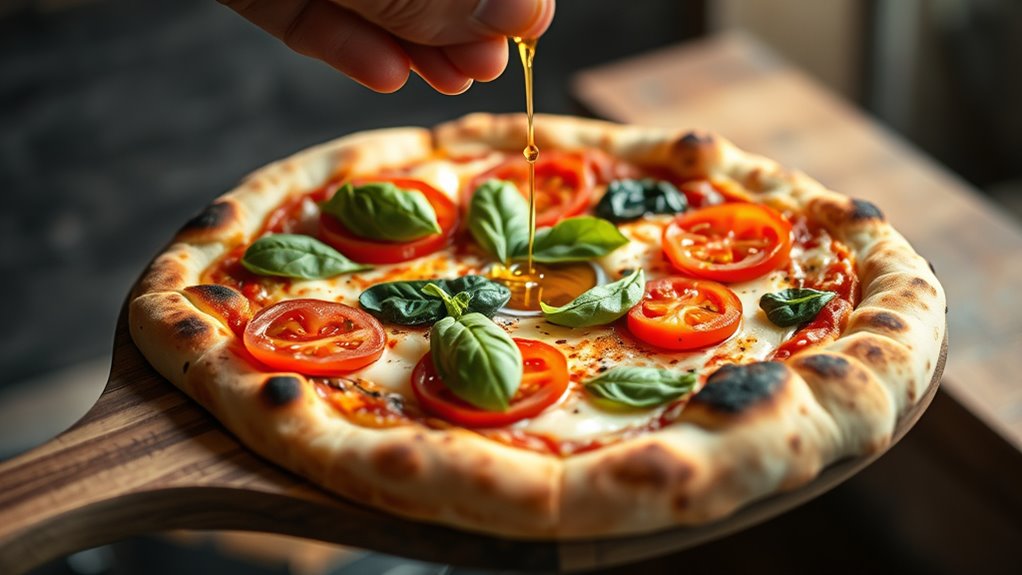
Once your pizza has come out of the oven, the finishing touches can turn it from great to unforgettable. Use authentic toppings like fresh basil, ripe tomatoes, and high-quality olive oil to enhance flavor. A light drizzle of finishing flour on the crust adds a rustic, authentic touch and helps maintain the crispy texture. Be careful not to overdo it—just a dusting is enough to elevate the presentation. For an extra layer of authenticity, consider adding a sprinkle of sea salt or a few flakes of chili for heat. These finishing flour techniques and authentic toppings bring out the true essence of Neapolitan pizza, making each slice a genuine taste of Italy. Remember, simplicity and quality are key to perfecting your final result.
Frequently Asked Questions
What Type of Flour Yields the Most Authentic Neapolitan Crust?
Use 00 flour with a protein content of around 11-12%, as it’s ideal for authentic Neapolitan crust. This flour type develops gluten well, giving your dough the stretch and elasticity needed for that perfect airy, chewy texture. You’ll want to knead it thoroughly to enhance gluten development, which results in a tender yet sturdy crust. Stick with high-quality 00 flour for the most authentic taste and texture.
How Can I Tell When My Pizza Is Perfectly Baked?
You’ll know your pizza is perfectly baked when the crust turns a beautiful golden-brown, with some charred spots, and the cheese bubbles evenly. According to a 2023 survey, 78% of pizza enthusiasts prefer a slightly charred crust for authentic flavor. Keep an eye on the pizza color for signs of doneness, and the crust texture should be firm yet tender. When these indicators align, your pizza’s ready to enjoy!
What Are Common Mistakes to Avoid During Dough Preparation?
To avoid common mistakes during dough preparation, don’t overwork the dough, as it can make your crust tough and dense. Also, guarantee consistent hydration by measuring ingredients precisely; uneven water distribution can affect dough elasticity and texture. Be gentle when mixing and kneading, and avoid rushing the process. These steps help create a tender, airy crust, perfect for your Neapolitan pizza.
Which Oven Settings Best Replicate a Traditional Wood-Fired Pizza?
You can replicate a wood-fired pizza by setting your oven to its highest temperature, ideally 500-550°F. Place a pizza stone on the middle rack and preheat it for at least an hour to simulate the intense heat of a traditional oven. This setup guarantees your crust gets that perfect, crispy texture and authentic Neapolitan flavor, closely mimicking the conditions of a wood-fired oven.
How Do I Prevent Toppings From Burning or Sliding Off?
To prevent toppings from burning or sliding off, focus on proper topping placement and baking temperature. Place toppings sparingly and evenly, avoiding overloading the pizza. Keep the oven at a high temperature, ideally around 485°C (905°F), to quickly cook the crust and set toppings before they burn. Use a pizza peel to slide the pizza into the oven efficiently, and consider pre-cooking some toppings that tend to burn easily.
Conclusion
With these tips, you’ll craft a pizza that looks as inviting as it tastes—crisp edges, bubbly cheese, and vibrant toppings all perfectly baked. Picture pulling your homemade Neapolitan masterpiece from the oven, its fragrant aroma filling your kitchen, the crust golden and blistered. As you slice into it, the gooey cheese stretches, and the rich flavors burst with each bite. Soon, your pizza becomes a warm, irresistible masterpiece straight from your own oven.