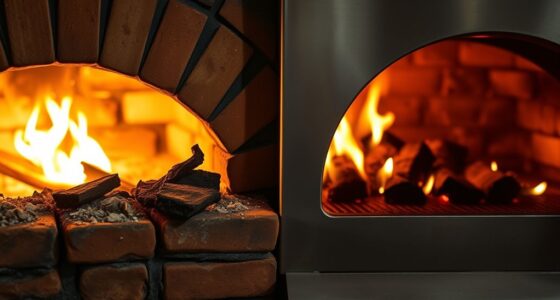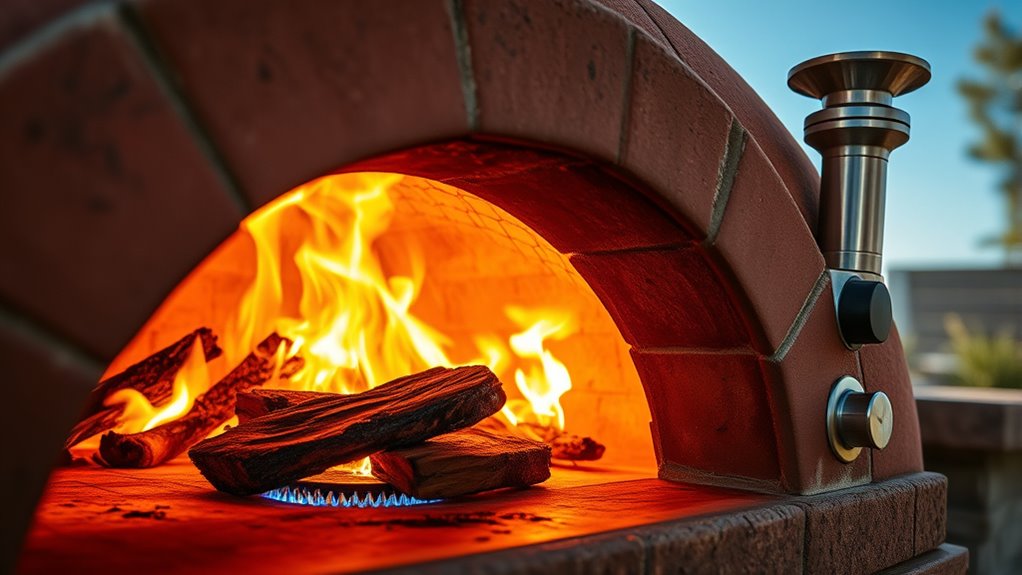

Most pizza ovens don’t use the same amount of fuel. Gas ovens are generally more efficient, heating quickly and maintaining consistent temperatures, which means less fuel is needed overall. Wood-fired ovens tend to consume more fuel because they require constant tending and higher heat output. If you’re looking to save on fuel costs and enjoy cleaner operation, gas is usually the better choice. To discover which option suits your needs best, keep exploring the details below.
Key Takeaways
- Gas pizza ovens generally use less fuel and are more energy-efficient than wood-fired ovens.
- Wood-fired ovens require a steady supply of wood, which can fluctuate in availability and cost.
- Gas ovens heat up faster, maintain stable temperatures, and consume less fuel overall.
- Wood ovens burn more fuel, especially if not properly managed, leading to higher consumption.
- Fuel choice impacts operational costs, with gas being more economical and environmentally friendly.

Understanding the fuel consumption of pizza ovens is essential if you want to manage costs and choose the right equipment for your pizzeria. When comparing wood vs gas ovens, you’ll find that fuel type markedly impacts not only expenses but also operational efficiency. Gas ovens tend to be more energy-efficient because they produce consistent heat with less waste, which can reduce your overall energy costs. Wood-fired ovens, on the other hand, often require more fuel and continuous tending, making them less energy-efficient but offering a unique flavor that many customers love.
Fuel efficiency varies: gas ovens offer consistent heat and lower costs, while wood-fired ovens provide unique flavor but consume more fuel.
Gas ovens generally heat up faster and maintain a stable temperature, helping you streamline your cooking process. This consistency means you’ll likely use less fuel overall, especially when you’re cooking multiple pizzas during busy hours. Gas burns cleaner and more predictably, so you don’t need to constantly stoke the fire, which can save time and effort. Plus, gas ovens tend to have better insulation, trapping heat more effectively and reducing fuel consumption. If energy efficiency is a priority, gas ovens usually come out ahead, providing precise control over temperature and reducing waste.
Wood-fired ovens, while often less energy-efficient, deliver a distinct taste that many pizzerias see as a competitive advantage. They require a steady supply of wood, and the cost can fluctuate depending on your source. Additionally, managing a wood fire demands more skill and attention, which can lead to higher labor costs and more fuel usage overall. However, some operators justify these costs because wood fires can reach higher temperatures and produce a unique, smoky flavor that appeals to customers seeking artisanal pizza.
From an energy efficiency perspective, gas ovens are generally more cost-effective and environmentally friendly. They convert energy into heat more efficiently, reducing the amount of fuel needed for each batch of pizzas. Wood ovens, while charming and traditional, tend to consume more fuel per cook, especially if not managed optimally. If your focus is on minimizing operational costs and maximizing energy efficiency, gas ovens usually serve you better. But if your brand emphasizes authenticity and a rustic appeal, investing in a wood-fired oven might be worth the extra fuel consumption and maintenance.
Ultimately, your choice depends on your priorities. If you want lower fuel costs and consistent performance, gas is the smarter option. But if your goal is to create a distinctive dining experience with a traditional touch, investing in a wood-fired oven might be worth the extra fuel consumption and maintenance. Considering fuel efficiency as a key factor can help you make a more informed decision aligned with your business goals.
Frequently Asked Questions
How Does Outdoor Climate Affect Fuel Efficiency in Pizza Ovens?
Outdoor climate especially impacts your pizza oven’s fuel efficiency. Weather impact, like wind and cold temperatures, causes heat loss, making your oven work harder and consume more fuel. Proper insulation effectiveness becomes vital in these conditions, helping retain heat and reduce fuel use. On chilly or windy days, make sure your oven is well-insulated and shielded to maintain consistent temperature and minimize fuel consumption.
Are There Eco-Friendly Fuel Options for Pizza Ovens?
Imagine transforming your pizza nights into eco-friendly celebrations—you can! Yes, there are sustainable fuel and eco-friendly alternatives for pizza ovens, like propane, natural gas, or even bioethanol. These options reduce emissions and environmental impact while maintaining excellent heat. By choosing these fuels, you’re not only making smarter energy choices but also helping to preserve the planet—because every pizza deserves a slice of sustainability.
What’s the Average Cost of Fuel per Pizza in Different Ovens?
On average, your fuel cost per pizza varies depending on the oven type. Gas ovens tend to be cheaper, with lower fuel cost comparisons, while wood-fired ovens can be more expensive due to fuel consumption. Keep in mind, ingredient impact also plays a role; higher-quality toppings may increase overall costs. To optimize expenses, consider energy-efficient ovens and balancing fuel use with ingredient choices for the best value.
Do Wood and Gas Pizza Ovens Produce Different Flavor Profiles?
You’ll notice that wood pizza ovens produce a rich wood flavor that adds depth and smoky notes to your pizza, creating a more authentic taste. In contrast, gas ovens emit a clean gas aroma that’s milder and consistent, allowing toppings and dough flavors to shine. The choice depends on whether you want a smoky, rustic flavor or a more neutral, controlled aroma that emphasizes ingredient freshness.
How Long Does a Typical Pizza Oven Burn Fuel During Use?
Imagine a flickering flame guiding your culinary journey—your pizza oven’s typical burn time. During use, it usually burns fuel for about 1 to 2 hours, depending on size and heat settings. This duration reflects the oven’s fuel consumption duration, fueling your passion and creativity. You’ll find that consistent heat keeps your toppings perfect and crust crispy, making every pizza a masterpiece, fueled by just the right amount of fire.
Conclusion
So, whether you choose a wood-fired or gas pizza oven, your fuel consumption depends on how often and how long you cook. Wood ovens might seem to use more fuel, but they’re often more efficient at high heat, saving you wood in the long run. Gas ovens may burn cleaner and more steadily, but they can cost more over time. Think of it like running a car: some burn fuel faster, but both get you to your delicious destination.