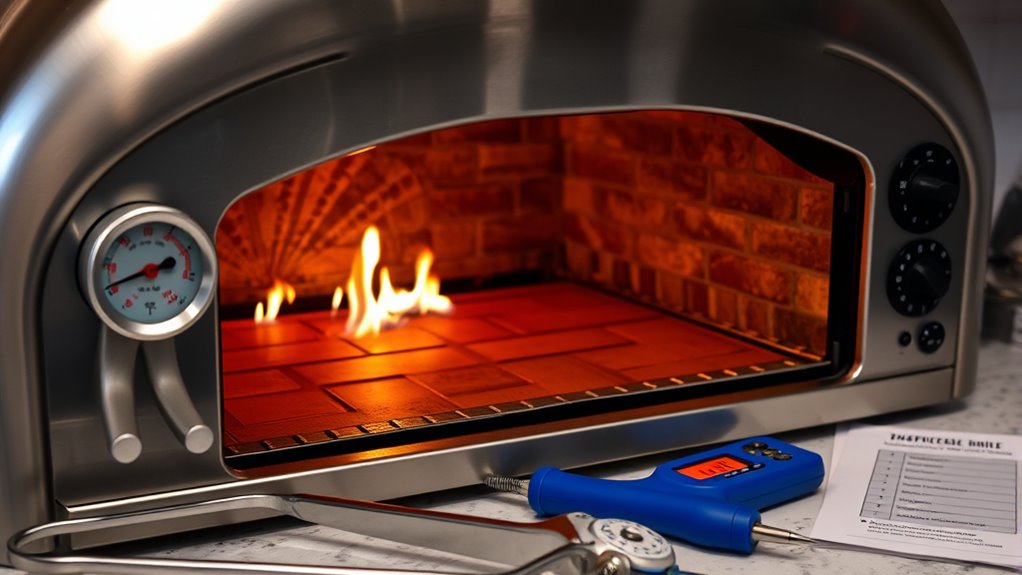

If your pizza oven isn’t getting hot enough, check your fuel type and management—using the right fuel and maintaining proper airflow helps reach high temperatures. verify your oven has good insulation to retain heat, and look for gaps around doors or walls that could be letting heat escape. Proper venting and adjusting dampers also improve combustion and temperature stability. If you want more tips to fix the issue, you’ll find useful insights ahead.
Key Takeaways
- Ensure you’re using the appropriate fuel type and fueling technique for consistent, high heat.
- Check for gaps or damage in insulation to prevent heat loss and improve oven temperature.
- Maintain proper airflow and venting to promote complete combustion and steady heat buildup.
- Confirm the oven’s door seals tightly and isn’t allowing heat to escape during operation.
- Regularly clean and maintain the fuel source and burners to ensure efficient heat generation.

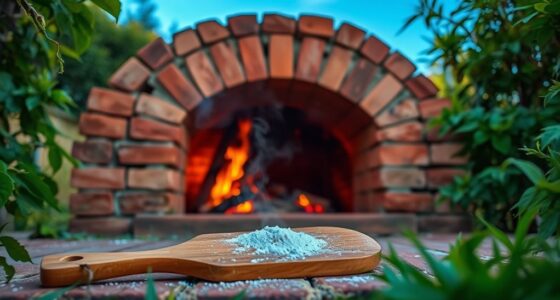
If your pizza oven isn’t reaching the desired temperature, it can be frustrating when your pies don’t turn out as expected. One common reason might be the type of fuel you’re using. Different fuel types, such as wood, gas, or coal, have varying heat outputs and burning efficiencies. For example, wood fires produce intense, smoky heat ideal for authentic flavor but require proper management to sustain consistent temperatures. Gas ovens, on the other hand, often heat up faster and allow more precise temperature control but can struggle to reach the high heat levels needed for perfect Neapolitan-style pizzas if not properly calibrated. Coal can create high, steady heat but needs consistent tending and sufficient airflow. Understanding your fuel type’s characteristics helps you troubleshoot heat issues effectively. If you’re using an unsuitable fuel or not fueling your oven properly, it could prevent the oven from reaching essential temperature.
Another vital factor affecting your oven’s heat is oven insulation. Good insulation minimizes heat loss, enabling your oven to maintain high temperatures with less fuel and effort. If your oven’s insulation is damaged, insufficient, or poorly installed, heat escapes through gaps or thin walls, making it harder to reach and sustain the desired temperature. Inspect your oven for any signs of damaged insulation or gaps around the door and walls. Upgrading or repairing insulation can greatly improve heat retention. Sometimes, even a simple addition of a thermal blanket or insulating board around the oven exterior can make a noticeable difference. Remember, a well-insulated oven doesn’t just reach high temperatures faster; it also maintains a stable heat, which is essential for consistent baking results.
In addition to fuel types and insulation, other factors like proper airflow and venting play roles in reaching the right temperature. Ensure your oven’s vents are clear and functioning correctly to promote complete combustion and steady heat flow. If airflow is restricted, your fuel won’t burn efficiently, causing temperature drops. Sometimes, adjusting the air intake or chimney damper can help achieve a hotter, more consistent fire.
Ultimately, troubleshooting your pizza oven’s heat involves reviewing your fuel choices, ensuring adequate insulation, and maintaining proper airflow. By addressing these aspects, you’ll set yourself up for success, enabling your oven to reach those high temperatures necessary for perfect pizza every time.
Frequently Asked Questions
Can Ambient Temperature Affect My Pizza Oven’s Heat?
Yes, ambient temperature can affect your pizza oven’s heat. When it’s colder outside, your oven has to work harder to reach and maintain high temperatures, especially if it lacks proper thermal insulation. If your outdoor environment is chilly, consider improving insulation or warming the area around the oven. This helps retain heat better, ensuring your pizza gets cooked evenly and reaches the desired temperature faster.
How Do I Calibrate My Oven’s Temperature Settings?
Think of your oven as a symphony conductor. To guarantee harmony, you need precise temperature calibration. Start by checking your oven sensors, making sure they’re clean and correctly positioned. Use an oven thermometer to compare actual temperature with your settings. Adjust the calibration settings according to your oven’s manual. This fine-tuning ensures your pizza reaches the perfect heat, just like a conductor perfects the music for a flawless performance.
Is Uneven Heat Distribution Normal in Pizza Ovens?
Uneven heat distribution is common in pizza ovens, especially if the heat isn’t uniformity optimized. You should regularly check your oven’s calibration to guarantee accurate temperature settings, as improper calibration can cause hot spots. To improve heat uniformity, consider adjusting the placement of heat sources or using a pizza stone. Proper calibration and strategic positioning help maintain consistent heat, ensuring your pizza cooks evenly every time.
What Safety Precautions Should I Take When Troubleshooting?
Troubleshooting your pizza oven is like walking a tightrope—you need to stay alert. Always turn off the power and disconnect it from electricity before inspecting. Keep fire safety in mind by avoiding flammable materials nearby, and watch out for electrical hazards like frayed cords or exposed wires. Wear protective gloves, and if unsure, consult a professional. Staying cautious helps prevent accidents and keeps you safe during troubleshooting.
How Often Should I Perform Maintenance on My Pizza Oven?
You should perform maintenance on your pizza oven at least once a year. Regular oven cleaning helps prevent grease buildup that can reduce heat, while inspecting parts replacement guarantees everything functions correctly. Keep an eye on burners, thermometers, and heating elements, replacing worn or damaged parts promptly. Regular checkups maintain peak performance, extend your oven’s lifespan, and ensure your pizzas cook evenly and safely.
Conclusion
If your pizza oven isn’t reaching the right temperature, don’t get discouraged—most issues are easy to fix. Did you know that proper insulation can boost oven heat by up to 30%? By checking your fuel source, vents, and insulation, you can quickly troubleshoot and improve your oven’s performance. With a little effort, you’ll be enjoying perfectly baked pizzas in no time. Keep experimenting, and soon your oven will reach those ideal high temperatures every time!