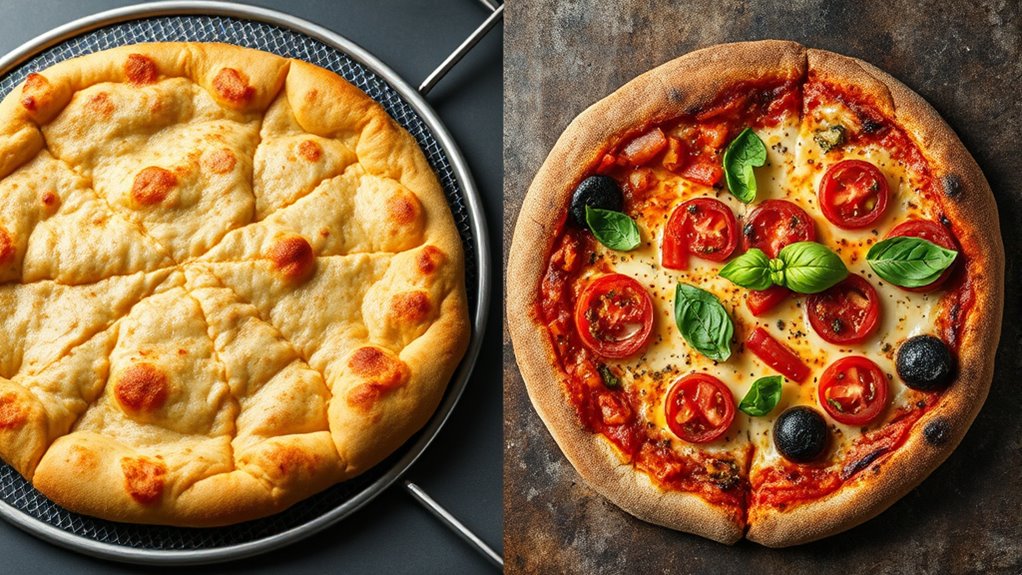

If you want easier handling and safer baking, a pizza screen is a good choice, especially if your oven doesn’t get very hot. Screens promote good airflow, reducing sogginess and making it easier to transfer your pizza. Baking on a stone offers a crispy crust and even heat, but it requires preheating and careful handling. To learn which option suits your style and oven setup best, consider the factors that matter most to you.
Key Takeaways
- Pizza screens improve airflow, promoting crispy edges and preventing sogginess, especially in ovens with lower temperatures.
- Baking on a stone offers intense, even heat for a superior crust, but requires careful preheating and handling.
- Screens are safer and easier to handle, reducing risk of burns and simplifying pizza transfer.
- Stones produce a characteristic chewy, crunchy crust but need proper preheating and careful handling to avoid cracking.
- Choose a screen for safety and ease, or a stone for optimal crust quality, depending on your oven setup and baking preferences.

When it comes to making the perfect pizza at home, choosing between using a pizza screen or baking directly on a stone can considerably impact your results. The decision hinges on factors like oven safety and dough consistency, which are vital for achieving that ideal crust and even cooking. If you opt for a pizza screen, you benefit from better airflow, which promotes crispy edges and prevents sogginess. This is especially helpful if your oven doesn’t get extremely hot or if you’re concerned about oven safety; screens are generally safer because they reduce direct contact with the oven’s heat, minimizing the risk of accidental burns or damage. They also make handling the pizza easier, allowing you to transfer it in and out of the oven without risking burns or dropping the pie.
However, using a pizza screen can sometimes lead to less dough contact with the heat, which might result in slightly less crispy bottoms compared to baking directly on a stone. If you prefer a crisper crust and have a high-heat oven, baking directly on a stone could be the better option. A stone mimics a traditional brick oven, providing intense, even heat that promotes excellent dough caramelization and a superb crust. That said, you need to be mindful of oven safety when working with stones. They can get extremely hot, and if not handled carefully, you risk burns or cracking the stone. Preheating the stone for at least 30 minutes ensures it’s hot enough to cook the pizza evenly, but you must handle it with proper tools like heavy-duty oven mitts.
Dough consistency plays a significant role in choosing your method. A well-hydrated, properly kneaded dough will stretch easily and hold up well on a stone, giving you that characteristic chew and crunch. If your dough is too sticky or underdeveloped, using a screen might be better to prevent sticking and make handling easier. The screen also helps maintain consistent dough thickness, which contributes to even baking and prevents burning or undercooking spots. Baking on a stone demands more precise dough preparation, as inconsistent thickness can lead to uneven cooking or burnt spots.
Frequently Asked Questions
Can Pizza Screens Be Reused Multiple Times Without Losing Quality?
Yes, pizza screens can be reused multiple times without losing quality if you handle them properly. To address durability concerns, avoid harsh scrubbing and use gentle cleaning methods. Store them flat or hang them to prevent warping. Regularly inspect for signs of wear, and if cared for, your pizza screens will last through many baking sessions, making them a reliable tool in your kitchen.
Do Pizza Screens Affect the Flavor of the Crust?
Using a pizza screen can slightly influence your crust texture and flavor development. The screen promotes even heat distribution, which helps create a crisp crust, but it may also prevent some direct contact with heat, slightly dulling the smoky flavor you get from traditional baking methods. Overall, it doesn’t drastically change the flavor, but it can subtly affect the crust’s texture and the way flavors develop during baking.
Are There Specific Types of Stones Better Suited for Certain Pizzas?
Yes, certain stone materials suit specific pizza styles. For example, cordierite stones excel at high temperatures, perfect for Neapolitan pizzas with a thin, blistered crust. Ceramic stones retain heat well and work great for deep-dish or thick-crust styles. You should choose a stone based on your preferred pizza style and desired crust texture, ensuring it can handle the heat and baking time needed for that particular pizza type.
How Do Cleaning and Maintenance Differ Between Screens and Stones?
Cleaning screens is straightforward; you just scrub off baked-on residue, and their durability means they last through many uses. You can usually put them in the dishwasher or wash by hand. Stones, however, require careful maintenance to preserve their seasoning—avoid soap, and scrub gently to prevent damage. Regularly removing baked-on food helps maintain their heat retention, ensuring consistent baking. Proper care extends both your screen’s durability and your stone’s performance.
Which Method Is Faster for Baking a Large Batch of Pizzas?
Using a pizza screen generally offers faster baking speed and shorter preparation time for large batches. The screen promotes even heat circulation, reducing bake time, and is easier to handle for quick loading and unloading. On the other hand, stones take longer to heat up and often require more careful preparation, making screens a more efficient choice when baking many pizzas quickly.
Conclusion
Ultimately, choosing between a pizza screen and a baking stone depends on your preferences and experience. If you want a crispier crust and quicker results, a screen might be your best bet. However, if you prefer a more traditional, evenly baked pie, a stone could be worth the effort. Remember, sometimes you have to bite the bullet and try both to see which method truly hits the mark. In the end, it’s all about finding what works best in your kitchen.