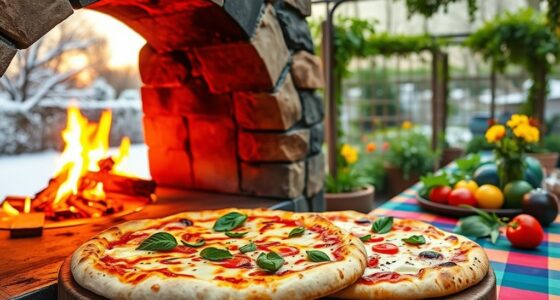
Preheat your oven to 500°F or higher with a pizza stone or inverted baking sheet inside to mimic a wood-fired oven. Place your frozen pizza directly on the hot surface and bake, rotating halfway to guarantee even cooking. For added authenticity, finish with a brief broil or use a kitchen torch to char the toppings and develop smoky flavor. Keep experimenting, and you’ll discover how simple tweaks can transform your store-bought pie into a gourmet-style pizza.
Key Takeaways
- Preheat a pizza stone or inverted baking sheet in the oven at 500°F+ to mimic a wood-fired surface.
- Transfer the frozen pizza directly onto the hot surface for even, crispy crust.
- Bake, rotate halfway through, and watch closely for proper doneness and crust development.
- Finish with broiling or torching to add smoky char and authentic wood-fired flavor.
- Add fresh toppings like basil or arugula after baking for enhanced flavor and gourmet appeal.

Frozen pizza has become a convenient and popular choice for quick meals, offering a variety of flavors and styles to suit every taste. While it’s easy to just pop one in the oven and enjoy, you can elevate your experience by customizing toppings and mastering oven techniques to mimic that authentic wood-fired flavor. One of the first things you’ll want to consider is your pizza toppings. Although store-bought pies often come with pre-set toppings, you can enhance them by adding fresh ingredients like basil, arugula, or even a drizzle of olive oil after baking. These additions not only improve flavor but also give your pizza a more gourmet touch. When selecting toppings, think about balancing flavors and textures—crispiness, creaminess, and tanginess all work well together. Avoid overcrowding the pizza, as too many toppings can weigh it down and prevent proper cooking, especially in a home oven.
To truly replicate a wood-fired pizza, oven techniques are key. Start by preheating your oven to the highest temperature it can reach—ideally 500°F or more—since intense heat is essential for that signature crisp crust. Place a pizza stone or an inverted baking sheet inside while preheating; this mimics the hot surface of a wood-fired oven and helps distribute heat evenly. When you’re ready to bake, transfer your frozen pizza onto the preheated surface. Keep an eye on it, as high temperatures mean it can cook quickly. About halfway through, consider rotating the pizza to ensure even cooking on all sides. This step is vital for avoiding hot spots and achieving a perfectly crisp crust reminiscent of a wood-fired pie.
For extra authenticity, you can experiment with oven techniques like broiling the pizza for the last minute or two. This helps to char the toppings slightly and develop a smoky flavor. If you want to go a step further, try using a kitchen torch to lightly caramelize the cheese or add a smoky aroma. Remember, the goal is to get a well-balanced combination of crunchy crust, bubbling cheese, and roasted toppings. With the right toppings and refined oven techniques, you can transform a simple frozen pizza into a satisfying meal that hints at the flavors and textures of a wood-fired pie, all from the comfort of your own kitchen.
Frequently Asked Questions
What Type of Wood Is Best for Firing Frozen Pizza?
You should choose hardwoods like oak, hickory, or maple for firing frozen pizza. These woods offer good heat and flavor without excessive smoke. When selecting wood, focus on seasoning techniques—make sure it’s well-dried, ideally with less than 20% moisture content, to prevent flare-ups. Proper seasoning improves combustion, ensuring consistent heat and a perfect crispy crust. Avoid softwoods like pine, which can produce unwanted resin and smoke.
How Long Should I Preheat the Wood Fire Before Cooking?
You should preheat your fire for about 30 to 45 minutes before cooking, ensuring the firewood is well seasoned for ideal heat. Keep the fire burning steadily, and place your pizza stone properly in the oven to absorb the heat evenly. This preheating time helps build a hot, consistent cooking environment, so your frozen pizza gets that perfect wood-fired crispness and flavor.
Can I Use a Gas or Charcoal Grill Instead of a Wood Fire?
Yes, you can use a gas grill or charcoal grill instead of a wood fire. Just make certain your grill is preheated to high heat, around 450-500°F, for even cooking. For a gas grill, turn on the burners and close the lid to heat up. For a charcoal grill, wait until the coals are glowing and covered with ash. Keep the pizza directly over the heat for a crispy, wood-fired-style crust.
What Temperature Should the Wood Fire Reach for Optimal Pizza?
You want the wood fire to reach about 700-900°F for ideal heat—think of a blazing inferno that transforms your pizza from mundane to masterpiece. Ironically, the hotter, the better, creating that perfect crispy crust and smoky flavor. Keep your fire steady, monitor temps with a reliable thermometer, and aim for that sweet spot where the flames dance, and your pizza gets that authentic wood-fired perfection.
How Do I Prevent the Pizza From Burning on the Outside?
To prevent your pizza crust from burning, focus on even heat distribution and controlling the heat source. Keep the wood fire at a moderate temperature, around 700-750°F, and avoid direct flames on the crust. Use a pizza stone or steel to help distribute heat evenly, and rotate the pizza regularly. This way, your crust cooks thoroughly without burning on the outside, giving you perfectly crispy results.
Conclusion
Now that you know how to wood-fire a store-bought frozen pizza, you’re ready to impress your friends with a gourmet twist. Just imagine, in a flashback to medieval feasts, you’re serving a perfectly charred slice straight from the flames. Remember, patience and attention to detail make all the difference. So, go ahead—fire up that wood stove, channel your inner pizzaiolo, and enjoy a delicious, smoky pie that’s truly one-of-a-kind.