
To bake bread in a wood-fired pizza oven, start by preparing a balanced dough and shaping it carefully. Build a well-managed fire with dry, seasoned wood, preheat the oven to the right temperature, and manage airflow for steady heat. Transfer your dough onto a peel or parchment, slide it into the hot oven, and monitor the baking process closely. For tips on perfect baking techniques, keep exploring the details ahead.
Key Takeaways
- Preheat the oven with a well-built fire, aiming for an even, steady temperature suitable for baking bread.
- Shape and transfer the dough onto a floured peel or baking surface, then slide it into the hot oven quickly.
- Maintain consistent heat by managing firewood and airflow, monitoring temperature with a reliable thermometer.
- Bake until the crust is golden and the bread sounds hollow when tapped, rotating if necessary for even baking.
- Cool the bread completely before storing to preserve freshness and avoid sogginess.
Selecting the Right Dough Recipe
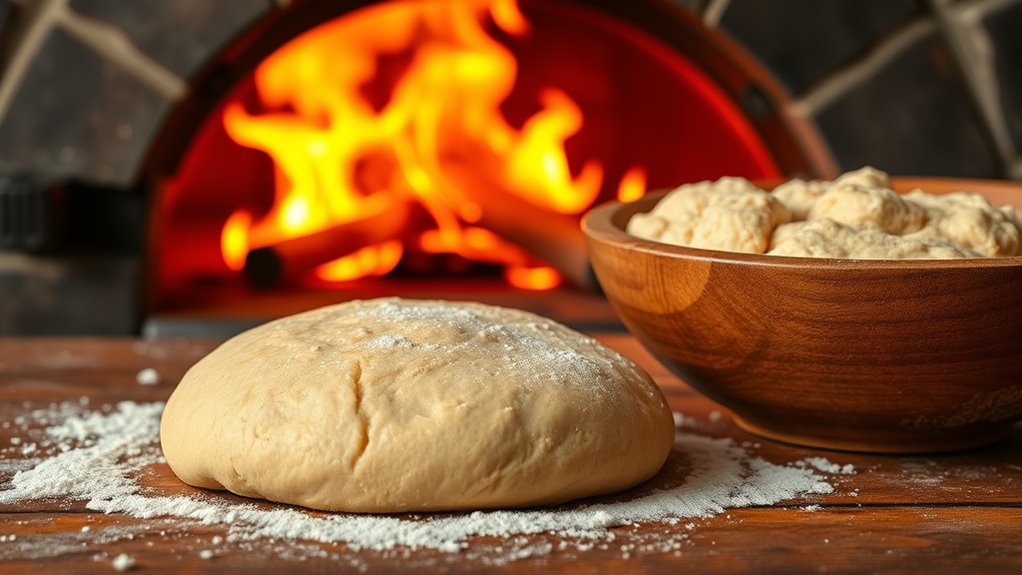
Choosing the right dough recipe is essential for achieving the best crust and texture when baking bread in a wood-fired pizza oven. You want a recipe that promotes proper dough fermentation, which develops flavor and creates a chewy, airy crumb. Pay attention to ingredient substitutions, as they can affect fermentation time and dough behavior. For example, using different types of flour or adjusting hydration levels can influence how well the dough ferments and how the crust develops in the high heat. Stick to a proven recipe that balances ingredients for ideal fermentation. This foundation ensures your bread will rise properly and develop the desirable crust and texture when baked in the intense, even heat of your wood-fired oven.
Preparing and Managing Your Wood-Fired Oven
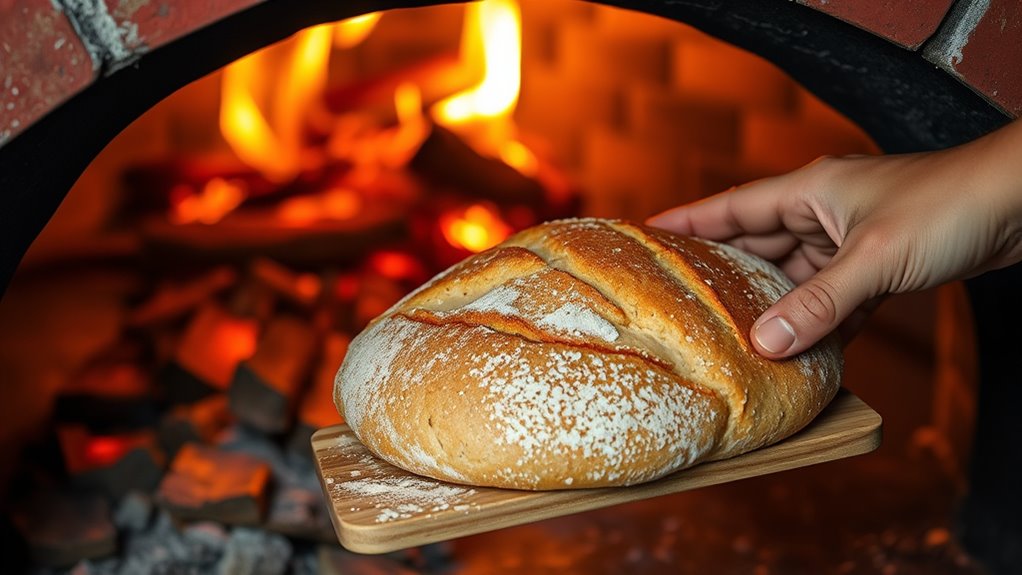
Before baking, you need to prepare and manage your wood-fired oven to guarantee ideal heat and airflow. Proper oven maintenance ensures consistent results, so regularly clean out ash and check for damage. When selecting firewood, choose seasoned, dry wood with low moisture content to produce steady, clean heat. To optimize your oven:
- Build a well-shaped fire at the center for even heat distribution.
- Maintain a steady fire, adding wood as needed without smothering flames.
- Manage airflow by adjusting the oven door or vents to control temperature and smoke flow.
Shaping Your Bread for Baking

To get perfect results, you need to handle your dough properly and shape it evenly. This guarantees your bread bakes uniformly and has the right texture. Paying attention to these details makes a big difference in your final loaf.
Proper Dough Handling
Handling your dough properly is essential for achieving the perfect bread shape. To guarantee good gluten development and prevent issues like fungal infections, follow these steps:
- Gently punch down the dough to release excess gas without destroying the gluten network.
- Shape it carefully, using a light touch to maintain surface tension and avoid tearing, which can introduce vulnerabilities.
- Use clean hands and tools to prevent contamination, reducing the risk of fungal infections and ensuring a healthy rise.
Proper dough handling promotes even fermentation and a strong gluten structure, leading to a better rise and crust. Be mindful not to overwork or mishandle the dough, as this can compromise its texture and safety. Precision in handling guarantees a well-shaped, flavorful loaf.
Achieving Uniform Shape
Achieving a uniform shape is crucial for even baking and a professional appearance. Proper dough fermentation helps develop elasticity, making shaping easier and more consistent. When shaping, start by gently deflating the dough to release excess gas, then form it into a tight ball or oval, depending on your preference. Flour selection plays a fundamental role; using unbleached, high-quality flour provides better grip and structure, aiding in a smooth, even shape. Ensure your surface is lightly floured to prevent sticking, but avoid over-flouring, which can hinder shaping. Pay attention to the dough’s tension as you shape it—this creates a tight surface that bakes evenly. With practice, your dough will maintain a uniform shape, resulting in a beautifully baked loaf in your wood-fired oven.
Achieving the Perfect Oven Temperature
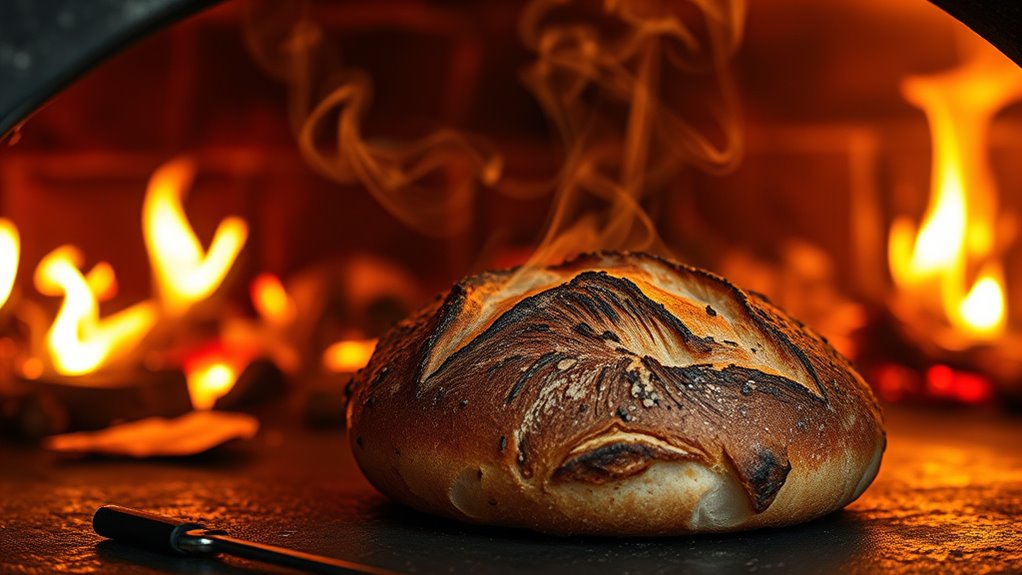
To get your bread just right, you need to keep a close eye on the oven temperature. Regularly monitoring with a reliable thermometer helps you make adjustments quickly. Using the right firewood guarantees consistent heat and better control over the baking process.
Monitoring Temperature Regularly
Regularly monitoring the temperature of your wood-fired pizza oven is essential for baking perfect bread. Consistent checks help you maintain ideal heat levels, ensuring even baking. Use a reliable infrared thermometer to gauge the oven’s core temperature accurately. Keep these points in mind:
- Check the temperature every 10-15 minutes, especially during initial heating.
- Adjust firewood selection to maintain a steady heat, focusing on well-seasoned wood.
- Ensure your oven insulation is intact, as it helps retain heat and reduces the need for constant monitoring.
Using Proper Firewood
Using the right firewood is vital for reaching and maintaining the ideal oven temperature. Choose quality firewood varieties like oak, maple, or cherry, which burn steadily and produce consistent heat. Avoid softwoods like pine, as they burn quickly and create excess soot. Proper wood storage tips are indispensable: keep firewood in a dry, ventilated area off the ground to prevent moisture absorption. Well-seasoned firewood, dried for at least six months, ignites faster and burns hotter, helping you achieve the perfect temperature for baking. Always split and stack your firewood properly to guarantee even drying. Using the right firewood and storing it correctly ensures steady heat, reduces smoke, and makes baking bread in your wood-fired pizza oven easier and more efficient.
Transferring the Dough Into the Hot Oven
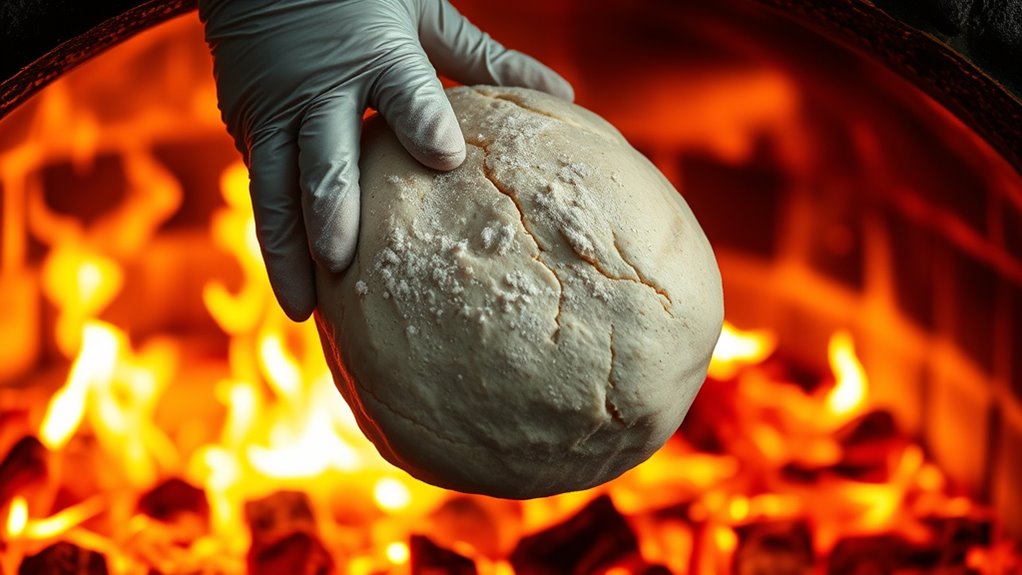
Once your dough is ready, it’s time to transfer it into the hot oven. Make sure your dough has proper dough hydration and has been proofed correctly, which helps it hold shape during transfer. To do this smoothly:
- Gently shape the dough on a floured surface or peel, avoiding deflating it.
- Use a pizza peel or parchment paper to slide the dough onto the oven’s hot surface.
- Be quick but careful to prevent losing heat and to keep the dough’s structure intact.
Monitoring and Adjusting the Baking Process
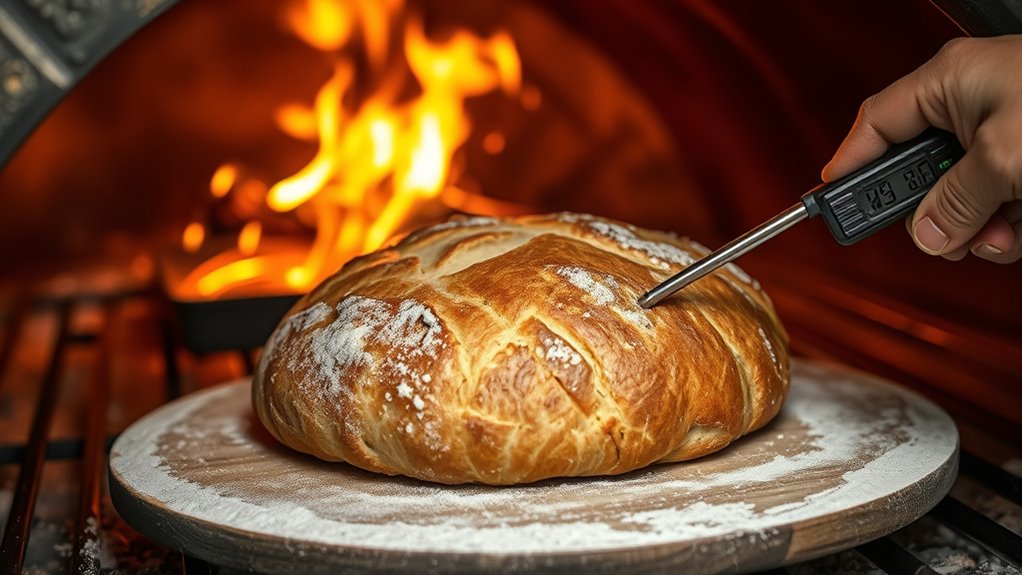
After placing the dough in the oven, keep a close eye on its progress. Check the oven’s temperature regularly, ensuring proper oven insulation to maintain consistent heat. Manage the fire carefully; too much flame can cause uneven baking or burning, while too little can slow the process. Adjust fire management by adding or reducing wood to sustain an even heat distribution. Use a infrared thermometer if possible to monitor surface temperatures precisely. Watch for signs like browning or bubbling to gauge if the bread bakes evenly. If the crust browns too quickly, shift the bread to a cooler part of the oven or reduce the fire. Consistent monitoring and fire management are key to achieving perfect, evenly baked bread in your wood-fired oven.
Recognizing When Your Bread Is Done

Knowing when your bread is done is essential for perfect results. Proper baking techniques ensure your bread reaches the ideal texture and flavor. To tell if it’s ready, look for these signs:
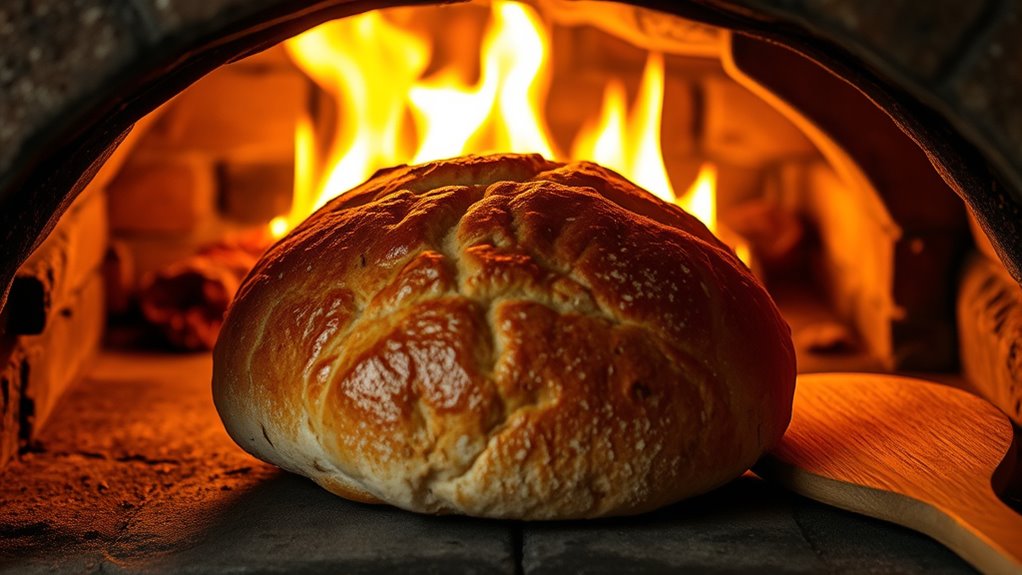
- The crust turns a deep golden brown.
- The bread sounds hollow when tapped on the bottom.
- The internal temperature reaches around 200°F (93°C).
Always keep oven safety in mind. Resist opening the door too often, as sudden temperature changes can affect baking. Using a thermometer can help you avoid under- or over-baking. The crust should be firm but not burnt. When these indicators align, your bread is ready to come out of the wood-fired oven. Recognizing these signs helps you achieve consistent, delicious results every time.
Cooling and Storing Your Homemade Bread

Cooling and storing your homemade bread properly is key to maintaining its freshness and flavor. After baking, allow your bread to cool on a wire rack using gentle cooling techniques to prevent condensation and sogginess. Avoid wrapping it while still warm, as trapped steam can spoil the crust. Once cooled completely, you can store your bread in a bread box or paper bag to keep the crust crisp while preventing it from drying out. For longer storage, consider freezing bread in an airtight bag; just make sure to slice it first for easy use later. Proper bread storage extends freshness and preserves flavor, so always take the time to cool your bread thoroughly before storing. This ensures your homemade loaf stays delicious for days.
Frequently Asked Questions
Can I Use Different Types of Wood for My Pizza Oven?
Yes, you can use different types of wood for your pizza oven. Each wood type offers unique flavor infusion, enhancing your bread’s taste. Hardwoods like oak, maple, or hickory burn longer and produce less smoke, while fruitwoods like apple or cherry add a gentle, sweet aroma. Avoid softwoods like pine, as they create excess soot and unpleasant flavors. Experiment with various woods to find your perfect flavor profile.
How Do I Prevent Ash From Affecting My Bread?
Ash contamination can impact your bread’s flavor and texture, with studies showing up to 30% of home bakers report ash-related issues. To prevent ash from affecting your bread, guarantee proper oven airflow by keeping the firewood well-seasoned and managing the fire size. Use a pizza oven brush or a gentle sweep to remove ash buildup regularly, and consider placing a barrier or baking on a preheated baking stone to keep ash away from your dough.
What’s the Best Way to Clean and Maintain My Oven?
To keep your oven in top shape, regularly perform oven cleaning by removing ashes and soot after each use. Maintain your oven with simple maintenance tips like checking the firebricks for cracks, ensuring proper airflow, and brushing away debris. Season your oven periodically to prevent rust and buildup. Consistent cleaning and maintenance will extend its lifespan, improve heat distribution, and ensure your bread bakes perfectly every time.
How Does Humidity Impact the Baking Process?
Humidity levels profoundly influence baking, especially in a wood-fired oven. When humidity is high, the dough retains more moisture, improving dough hydration and resulting in a softer crust. Conversely, low humidity causes quicker moisture loss, leading to a crispier crust. For ideal results, monitor humidity levels and adjust dough hydration accordingly, ensuring your bread bakes with the perfect balance of tenderness and crust.
Can I Bake Other Types of Bread Besides Traditional Loaves?
Yes, you can bake other types of bread besides traditional loaves in your wood-fired pizza oven. Try alternative bread recipes like flatbreads, focaccia, or gluten-free baking options. You just need to adjust your baking times and temperatures accordingly. Experiment with different doughs and ingredients to discover unique flavors and textures. Your oven offers a versatile space to get creative with various bread styles, making each baking session exciting and delicious.
Conclusion
Now that you know how to bake bread in a wood-fired pizza oven, you’re ready to create crusts that are truly legendary. With patience and practice, your homemade bread will outshine any bakery, soaring to new heights of flavor and texture. Remember, every loaf you bake is a step toward mastering this ancient art. So fire up that oven, embrace the process, and watch your baking skills become unstoppable—like a wildfire of deliciousness!