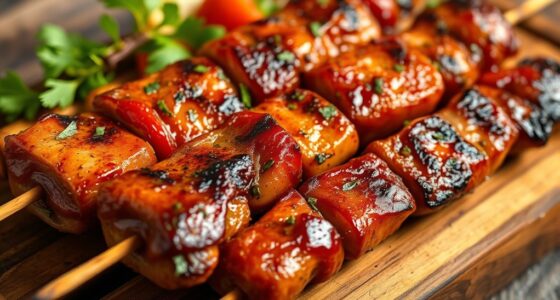
To make fall-off-the-bone BBQ ribs using low and slow methods, start by choosing high-quality, well-marbled ribs and prepare them with a flavorful dry rub. Set up your smoker to maintain a steady 225°F-250°F, adding soaked wood chips for consistent smoke. Cook the ribs slowly until tender, then wrap them to retain moisture and rest before serving. For detailed tips on perfecting texture, flavor, and presentation, keep exploring these essential steps.
Key Takeaways
- Select high-quality, well-marbled ribs and remove the silver skin for better seasoning absorption.
- Set the smoker between 225°F-250°F, using fruit woods or hickory for steady smoke and moisture.
- Cook ribs low and slow until they reach 190°F-203°F, developing a smoke ring and tender texture.
- Wrap ribs in foil or butcher paper during the final stage and rest for 10-15 minutes before serving.
- Check for tender, firm, and slightly flexible ribs with a good bark and smoke ring for perfect doneness.
Selecting the Perfect Ribs for Smoking
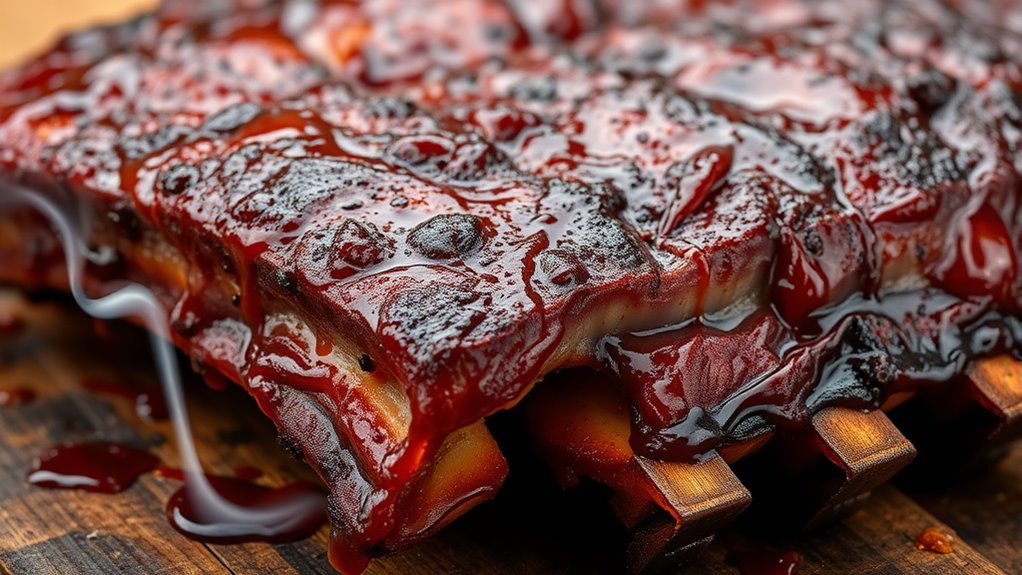
Choosing the right ribs is essential for achieving tender, flavorful smoked BBQ. Your ribs selection directly impacts the meat quality, which determines the final taste and texture. Look for ribs with good marbling, as fat adds flavor and keeps the meat moist during smoking. Whether you opt for baby back or spare ribs, choose fresh, pink-colored meat with a clean aroma. Avoid ribs that appear dry, overly fatty, or have discoloration. When shopping, check for meat that feels firm and moist to the touch. High-quality meat provides a solid foundation for your BBQ, ensuring it will become tender and flavorful after low-and-slow smoking. Making the right ribs selection sets the stage for a perfect, fall-off-the-bone result.
Preparing and Applying a Flavorful Rub

To create a mouthwatering rub, you need to pick the right spices that suit your taste. Make sure to balance sweetness and spiciness for a well-rounded flavor. When applying the rub, cover the ribs evenly to guarantee every bite is packed with flavor.
Choosing the Right Spices
Selecting the right spices for your BBQ ribs can make a significant difference in flavor. The key is to focus on spice blending, which creates depth through flavor layering. Start with a base of paprika and garlic powder, then add cumin or chili powder for warmth, and a touch of black pepper for heat. Experiment with herbs like thyme or oregano for complexity. Here’s a quick guide:
| Spice | Purpose |
|---|---|
| Paprika | Adds smoky sweetness |
| Garlic Powder | Boosts savory flavor |
| Cumin | Grounds the rub |
| Chili Powder | Adds heat and depth |
| Black Pepper | Enhances spice layering |
Choose your spices carefully, balancing bold and subtle flavors to craft a memorable rub.
Balancing Sweet and Spicy
Balancing sweetness and spiciness in your rub is essential for creating a well-rounded flavor profile. To achieve this, start with a base of sugar, which adds a pleasant sweetness and helps caramelize the ribs during cooking. Be mindful of the heat, adding just enough spice to enhance without overpowering. The key is to find a spice balance that complements the sugar, ensuring neither dominates. Incorporate ingredients like brown sugar or honey for sweetness, paired with chili powder, cayenne, or black pepper for heat. Taste your rub before applying to ensure the flavors are harmonious. Remember, a good balance of sugar and heat creates complex, mouthwatering ribs that are flavorful from the first bite to the last.
Applying Rub Properly
Properly applying your rub is key to building the flavor that makes your ribs stand out. Start by selecting quality meat, using meat selection tips like choosing ribs with good marbling for tenderness. Before applying the rub, pat the ribs dry to guarantee the seasoning adheres properly. When it comes to marinade techniques, some prefer to marinate the ribs beforehand, but for a dry rub, a light coating after drying works best. Sprinkle the rub generously and massage it into the meat, ensuring even coverage on all sides. Let the ribs rest with the rub for at least 30 minutes, or overnight for deeper flavor. This process enhances flavor penetration and creates a flavorful crust during cooking.
Setting Up Your Smoker for Low and Slow Cooking

To achieve tender, smoky BBQ ribs, you need to set up your smoker correctly for low and slow cooking. Start with proper smoker maintenance—clean out ash and residue from previous use to guarantee consistent airflow. Next, choose the right wood chips; fruit woods like apple or cherry add subtle sweetness, while hickory provides a stronger smoky flavor. Soak your wood chips for about 30 minutes before adding them to produce steady smoke without flare-ups. Maintain a stable temperature between 225°F and 250°F, adjusting vents as needed. Place a drip pan filled with water or apple juice beneath the ribs to maintain humidity. Proper setup assures even heat and smoke, giving you tender, flavorful ribs every time.
Managing Temperature and Smoke for Optimal Results
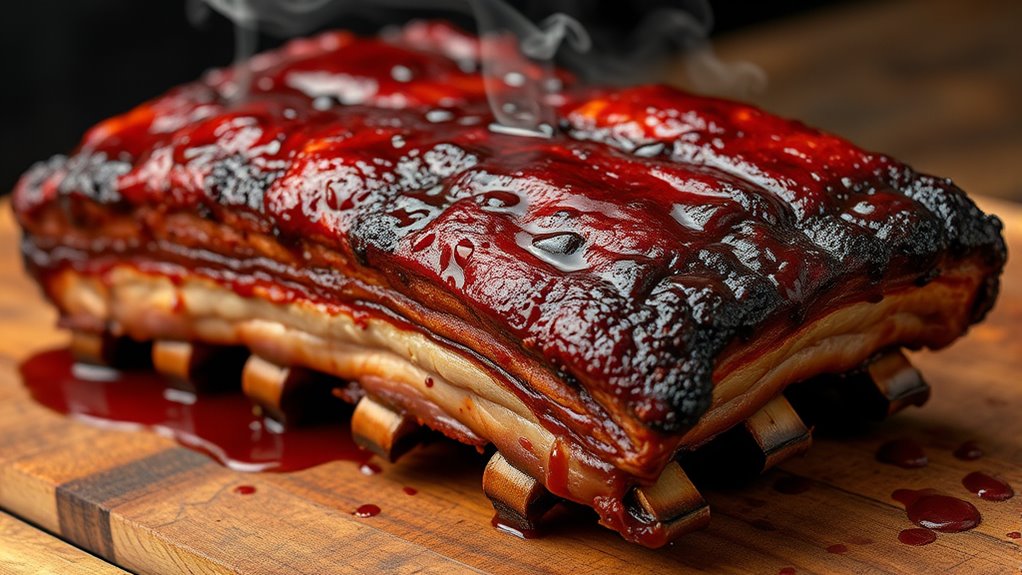
Controlling your smoker’s temperature and smoke output is essential for achieving perfectly cooked ribs. Consistent temperature control ensures even cooking, preventing drying or undercooking. Effective smoke management adds flavor without overwhelming the meat’s natural taste. To master this, monitor your smoker’s temperature with a reliable probe and adjust vents accordingly. Keep smoke at a steady, thin blue haze—too much smoke can cause bitterness. Here are key tips:
- Maintain a steady temperature between 225°F and 250°F
- Use quality wood chunks or chips for consistent smoke
- Adjust vents to regulate airflow and smoke output
- Avoid opening the lid frequently to preserve heat and smoke
- Keep a thermometer inside for real-time temperature readings
Focusing on these aspects guarantees tender, flavorful ribs with maximum smoke infusion.
The Importance of Wrapping and Resting Ribs
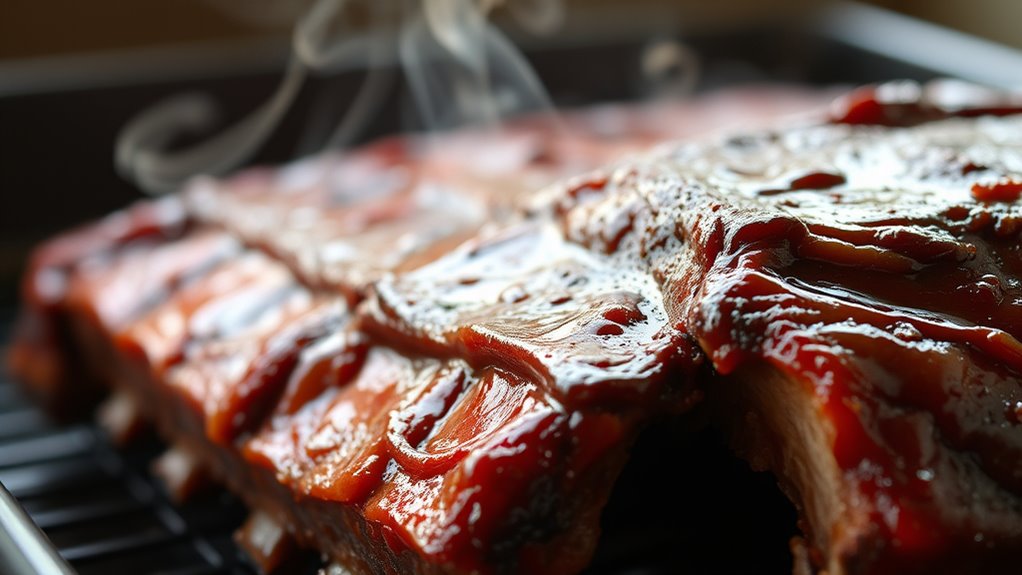
Wrapping and resting your ribs helps preserve moisture, keeping them juicy and tender. It also enhances flavor development by allowing the meat to reabsorb juices and spices. Mastering these steps ensures your ribs stay moist and full of rich, layered taste.
Moisture Retention Techniques
Moisture retention is essential for achieving tender, flavorful ribs, and mastering wrapping and resting techniques can make all the difference. Properly wrapping ribs helps trap juices and preserve moisture during the long cooking process. Resting allows the meat to reabsorb juices, ensuring each bite stays juicy. To enhance moisture locking methods, consider marinade techniques that penetrate deeply, adding flavor and moisture before wrapping. Wrapping tightly with foil or butcher paper creates a barrier that keeps steam in, preventing dehydration. When resting, keep the ribs wrapped in a warm environment for ideal moisture retention. Focus on these key points:
- Use marinades with moisture-retaining ingredients like apple cider vinegar
- Wrap ribs snugly in foil or butcher paper
- Rest ribs for at least 10-15 minutes before slicing
- Avoid overcooking to prevent moisture loss
- Incorporate gentle heat during resting to maintain juiciness
Flavor Development Benefits
By allowing ribs to rest and wrapping them during the final stages of cooking, you reveal deeper layers of flavor that develop over time. This technique enhances marinade infusion, allowing the spices and liquids to fully penetrate the meat, resulting in richer taste. Wrapping traps moisture and heat, which helps break down connective tissues, creating tender, fall-off-the-bone ribs. Additionally, this process amplifies aroma enhancement, as the enclosed environment concentrates savory scents, making each bite more flavorful. Resting the ribs after cooking lets the juices redistribute, ensuring every mouthful is moist and flavorful. Overall, wrapping and resting are essential steps that maximize flavor development, transforming good ribs into an unforgettable culinary experience.
Checking for Doneness and Serving Tips

To guarantee your BBQ ribs are perfectly cooked, it’s important to check for doneness before serving. Look for a deep, mahogany bark formation, which signals flavorful caramelization. The development of a smoke ring—an appealing pink layer just beneath the surface—indicates proper smoking and moisture retention. You can also gently bend the ribs; they should bend easily without breaking apart. Twist a rib to see if the meat begins to crack slightly, showing tenderness. Ultimately, probe the meat with a thermometer; target an internal temperature of 190-203°F for ideal doneness.
- Check for a firm, yet tender texture
- Observe the smoke ring development
- Confirm a sturdy but flexible bark formation
- Use a meat thermometer for accuracy
- Test tenderness with a gentle twist
Troubleshooting Common Issues and Enhancing Flavor

Even the best barbecue can encounter issues, but identifying and fixing common problems can make a big difference in your final result. If your ribs turn out too dry, try incorporating marinade variations that add moisture and flavor before cooking. A simple apple cider or honey-based marinade can boost juiciness and enhance taste. For bland or lackluster flavor, adjust your seasoning or add a glaze during the final minutes of cooking. Troubleshooting also involves perfecting your plating presentation—arranging ribs attractively with fresh herbs or colorful sides elevates the overall experience. Remember, small tweaks like brushing on a finishing sauce or experimenting with marinade variations can turn a good batch into a memorable one. Focus on these details to improve both the flavor and visual appeal of your ribs.
Frequently Asked Questions
What Are the Best Side Dishes to Serve With BBQ Ribs?
You should serve classic sides for BBQ like creamy coleslaw, baked beans, and cornbread to complement your ribs. Rib pairing suggestions also include grilled vegetables or potato salad for variety. These options balance the smoky, savory flavors of the ribs and make your meal more satisfying. Think about adding a tangy BBQ sauce or crispy fries for extra flavor. These sides elevate your BBQ experience and satisfy all your guests.
How Can I Make My Ribs Gluten-Free or Cater to Dietary Restrictions?
To honor dietary needs, consider exploring a gluten-free marinade that enhances flavor without compromise. You can easily adapt your recipe using safe substitutions for ingredients containing gluten, ensuring the ribs stay tender and delicious. By choosing gluten-free soy sauce or tamari and avoiding gluten-laden additives, you cater to restrictions seamlessly. This thoughtful approach allows everyone to enjoy your ribs, celebrating flavor while respecting dietary preferences.
Are There Vegetarian or Vegan Alternatives to Traditional BBQ Ribs?
Yes, you can enjoy vegetarian or vegan options by exploring plant-based alternatives that mimic traditional BBQ ribs. You might try using seitan, tempeh, or portobello mushrooms coated in flavorful vegan barbecue sauces. These vegan barbecue options are delicious, satisfying, and perfect for those seeking plant-based alternatives. Experiment with marinades and smoky seasonings to create a mouthwatering experience that rivals classic ribs, all while staying true to your dietary preferences.
How Do I Store Leftover Ribs to Maintain Freshness?
Think of leftover ribs as a treasure chest waiting to be preserved. To keep them fresh, wrap the ribs tightly in aluminum foil or place them in an airtight storage container. This meat preservation technique prevents air exposure and maintains flavor. Store the container in the refrigerator for up to 3-4 days. For longer storage, consider freezing them, ensuring they stay juicy and flavorful until you’re ready to enjoy again.
Can I Prepare Ribs in Advance for a Gathering?
Yes, you can prepare ribs in advance for a gathering. To do meal prep, cook the ribs fully and let them cool. Wrap them tightly in foil or plastic wrap, then store in the freezer for up to 3 months. When you’re ready to serve, reheat them slowly in the oven to maintain their tenderness and flavor. This method guarantees your ribs stay fresh and delicious for your event.
Conclusion
Your journey to perfect, fall-off-the-bone ribs mirrors a voyage of patience and trust. Just as slow smoke reveals its rich flavor over time, so too does true mastery unfold through dedication. When you master the low and slow rhythm, you *discover* a symphony of tenderness and taste that lingers like a lasting memory. Embrace each step as a symbol of perseverance, and your ribs will tell a story of passion, patience, and perfection.