Foil pack dinners on the grill are a quick, easy way to enjoy tasty camping meals with minimal mess. Simply prep ingredients ahead, pack them tightly in foil with some seasoning, and seal properly to allow heat circulation. Use a meat thermometer to guarantee proteins reach safe temperatures, and keep an eye on grill temperature to prevent burning. When done, let the packs rest before carefully opening—your go-to method for flavorful, stress-free camping dinners awaits beyond these tips.
Key Takeaways
- Prepare ingredients in advance, pack into sealed foil packets, and keep raw and cooked foods separate for safety.
- Seal foil packs tightly, leaving space for heat circulation to ensure even grilling and thorough cooking.
- Grill foil packs at a consistent temperature, monitoring to prevent burning or undercooking, and use a meat thermometer for safety.
- Allow foil packs to rest a few minutes after grilling to let steam escape and prevent burns when opening.
- Handle hot packs carefully with tongs or oven mitts, and refrigerate leftovers promptly for safe storage.
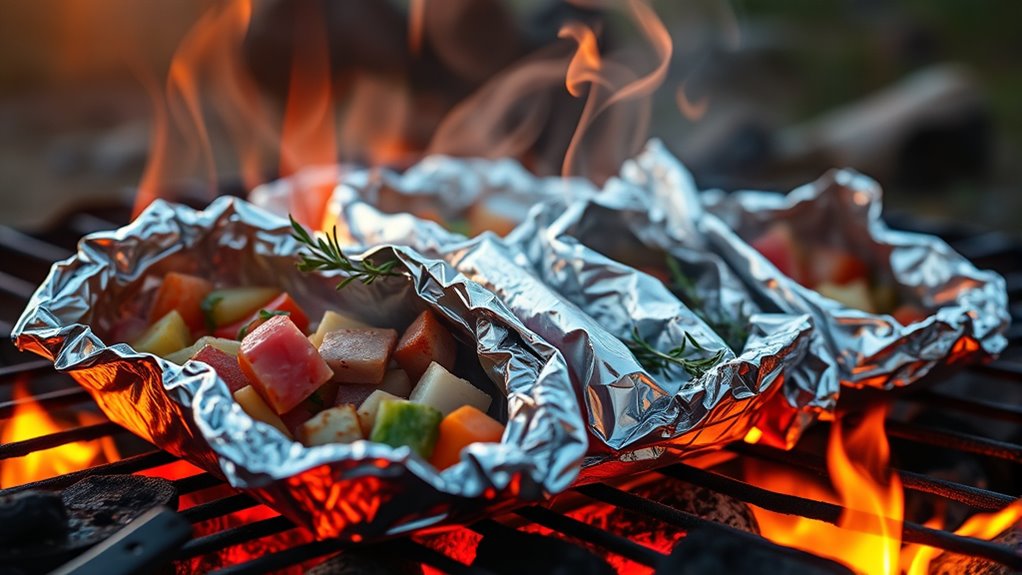
Grilling foil pack dinners is one of the easiest and most versatile ways to enjoy a flavorful meal outdoors. Whether you’re camping, having a backyard cookout, or just want a quick dinner, foil packs simplify meal prep and cleanup. You can prep ingredients ahead of time, packing everything neatly into individual foil packets, which makes serving and storing a breeze. But while convenience is a major perk, food safety should always be your top priority. Handling raw ingredients properly and cooking them to the right temperature ensures your meal is safe to eat and keeps everyone healthy.
Foil packs make outdoor meals easy, but food safety and proper cooking are essential for a healthy, delicious result.
When preparing your foil packs, it’s important to wash your hands thoroughly and keep raw ingredients separate from cooked foods. Use separate cutting boards and utensils to avoid cross-contamination, especially when working with raw meats. During meal prep, portion your ingredients carefully, and avoid overstuffing the foil packets. Overstuffed packs can prevent even cooking and increase the risk of bacteria growth if not cooked thoroughly. Seal the foil tightly to prevent leaks and contamination, but also leave a little space for heat circulation—this helps everything cook evenly.
While cooking, pay close attention to the internal temperature of your ingredients. Use a meat thermometer if needed to ensure proteins reach safe temperatures—165°F for poultry, 145°F for beef, and 160°F for pork. Proper cooking not only guarantees food safety but also enhances flavor and texture. Remember, foil packs are thin, so they heat up quickly, meaning you should monitor your grill’s temperature and avoid flare-ups that can char the food or cause uneven cooking. If you’re grilling for a group, ensure each pack is cooked thoroughly before serving; don’t rely solely on visual cues like browning, which can be misleading. Additionally, understanding kitchen science & materials can help optimize cooking times and heat distribution for more consistent results.
After cooking, handle the foil packs with care. Use tongs or oven mitts to avoid burns, and let the packs rest for a few minutes before opening—they’ll be hot, and steam can escape suddenly. When serving, be mindful of leftovers; refrigerate any uneaten portions promptly to prevent bacteria growth. Proper storage is key to maintaining food safety until you’re ready to enjoy the leftovers later.
Frequently Asked Questions
Can Foil Pack Dinners Be Cooked in an Oven Instead of on the Grill?
Yes, you can definitely cook foil pack dinners in your oven instead of on the grill. Just prepare your foil packs as usual and oven bake them at 375°F to 400°F, depending on your recipe. This method works great for indoor cooking and is perfect when outdoor grilling isn’t an option. Keep an eye on the cooking time, usually around 20-30 minutes, until everything’s tender and cooked through.
What Are Some Vegetarian Options for Foil Pack Dinners?
You can make vegetarian foil pack dinners using fresh vegetables like peppers, zucchini, mushrooms, and cherry tomatoes, combined with hearty grains or beans. These options are not only delicious but also eco-friendly, especially when you use reusable or biodegradable packaging. By choosing vegetarian ingredients, you enjoy a healthy, plant-based meal that’s easy to prepare, minimizes waste, and reduces your environmental impact—perfect for quick, satisfying dinners on the grill or in the oven.
How Do I Prevent Foil Packs From Sticking or Burning?
To prevent foil packs from sticking or burning, start with foil pack seasoning to add flavor and create a barrier. Use the right foil pack size; too small, and ingredients may spill or burn, too large, and heat won’t distribute evenly. Lightly oil the foil’s surface before adding ingredients, and turn the packs occasionally while grilling. This guarantees even cooking and keeps your meal intact.
Are There Any Safety Tips for Handling Hot Foil Packs?
Did you know that burns from hot foil packs can cause serious injuries? To guarantee safe handling and prevent burns, always use tongs or heat-resistant gloves when touching or moving hot packs. Open foil carefully to avoid steam burns, and let packs cool slightly before handling. Keep a fire extinguisher nearby, and never leave grilling foil packs unattended. These tips help keep your cooking safe and enjoyable.
How Long Can Prepared Foil Packs Be Stored Before Cooking?
You should store prepared foil packs in the refrigerator for up to 24 hours before cooking. Follow proper refrigeration guidelines to keep the ingredients fresh and safe. Make sure the foil packs are sealed tightly to prevent contamination and odor transfer. If you plan to store them longer, consider freezing, but for best taste and safety, cook within a day. Always check for any spoilage before grilling.
Conclusion
Now that you know how simple and delicious foil pack dinners are, why not give them a try on your next camping trip? They make cleanup easy and flavors stay locked in, so you can focus on enjoying the great outdoors. Are you ready to elevate your camping meals with minimal effort and maximum taste? Just grab your ingredients, toss them in a pack, and let the grill do the work. Happy camping and happy eating!