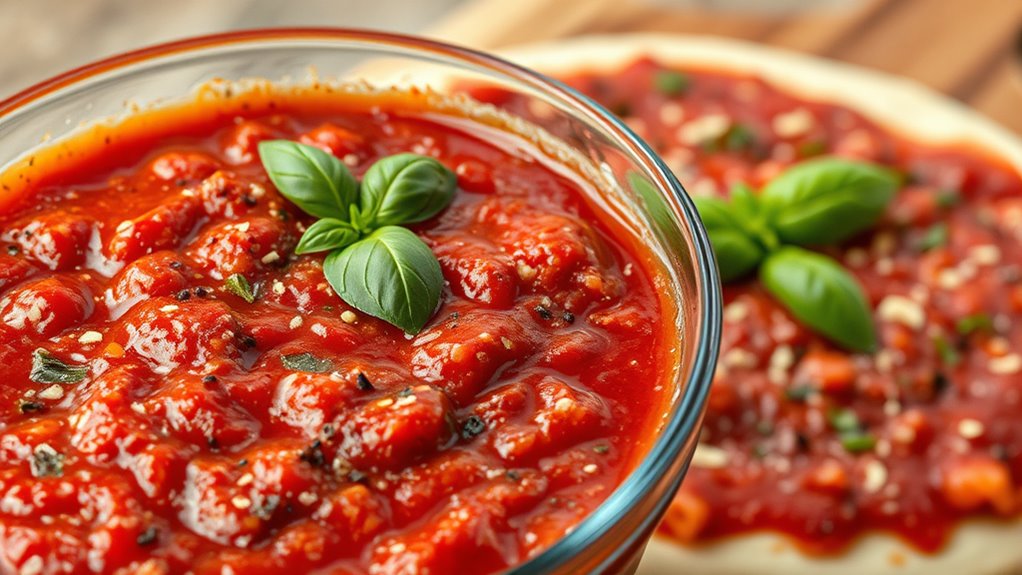

To make a homemade pizza sauce that tastes like a pizzeria, start with high-quality San Marzano or Roma tomatoes, preferably vine-ripened for rich flavor. Blend them until smooth, then simmer with garlic, onion, fresh basil, oregano, salt, and a touch of sugar for balanced acidity. Adjust the consistency with tomato paste or crushed tomatoes. For extra depth, add a bit of crushed red pepper or rosemary. Keep your sauce fresh in the fridge or freezer, and you’ll enjoy that authentic taste every time. Keep exploring for more tips!
Key Takeaways
- Use high-quality vine-ripened San Marzano or Roma tomatoes for authentic, rich flavor and smooth texture.
- Incorporate fresh basil, oregano, garlic, and a touch of sugar to create a balanced, layered taste similar to pizzeria sauce.
- Simmer the sauce until thick and flavorful, adjusting seasoning for perfect consistency and depth.
- Store in airtight containers or freeze in small portions to maintain freshness and convenience.
- Spread evenly on prepared dough, add toppings, and bake for a crisp, flavorful pizza resembling a pizzeria experience.
Gathering the Essential Ingredients for Your Perfect Sauce
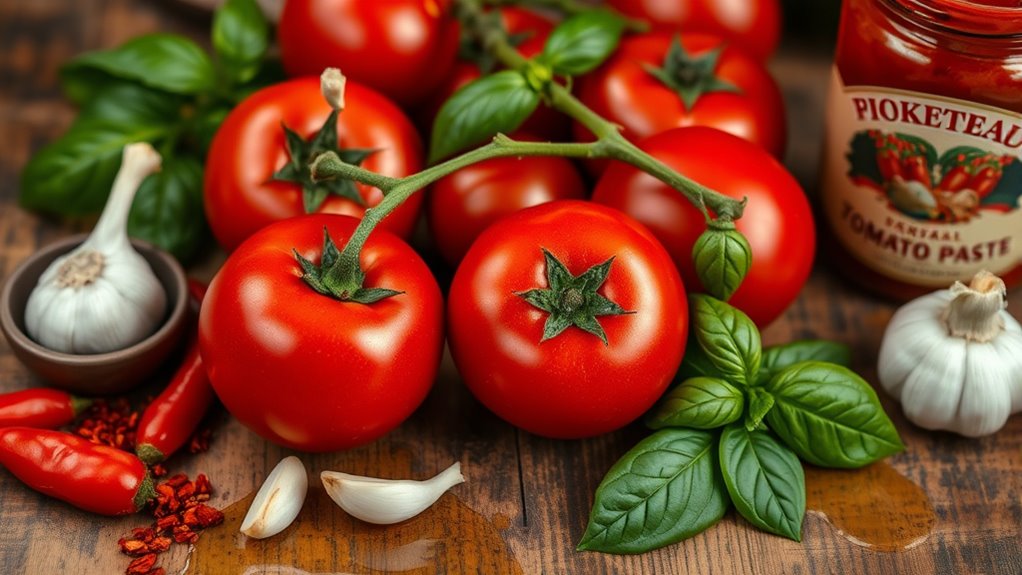
To make a delicious homemade pizza sauce, you need to gather a few key ingredients. First, choose the right tomato varieties; options like San Marzano or Roma tomatoes provide a rich, balanced flavor ideal for sauce. These varieties have low moisture and thick flesh, giving your sauce a smooth texture. Next, consider flavor enhancers such as garlic, onion, and a touch of sugar to balance acidity. Fresh herbs like basil and oregano will add aromatic depth. Don’t forget good-quality olive oil to bring everything together and enhance the overall taste. Using the right tomato varieties and incorporating thoughtful flavor enhancers ensure your sauce will have the vibrant, authentic flavor that makes homemade pizza truly special.
Choosing the Right Tomatoes for Rich Flavor

Selecting the right tomatoes is essential for achieving a rich, flavorful pizza sauce. For the best results, choose vine ripened tomatoes; they develop full flavor and sweetness on the vine. Heirloom varieties are also excellent, offering complex taste profiles that add depth to your sauce. When selecting, look for tomatoes that are firm, plump, and richly colored without blemishes. The key is to prioritize freshness and ripeness to maximize flavor. Here’s a quick comparison:
| Attribute | Benefits |
|---|---|
| Vine ripened | Fully developed flavor, naturally sweet |
| Heirloom varieties | Unique, rich taste, enhances complexity |
| Firmness | Ensures freshness, better texture |
| Color | Indicates ripeness and sweetness |
| Blemish-free | Better flavor, avoids bitterness |
Choosing the right tomatoes makes all the difference in creating that authentic, pizzeria-quality sauce.
The Art of Balancing Flavor: Herbs and Spices
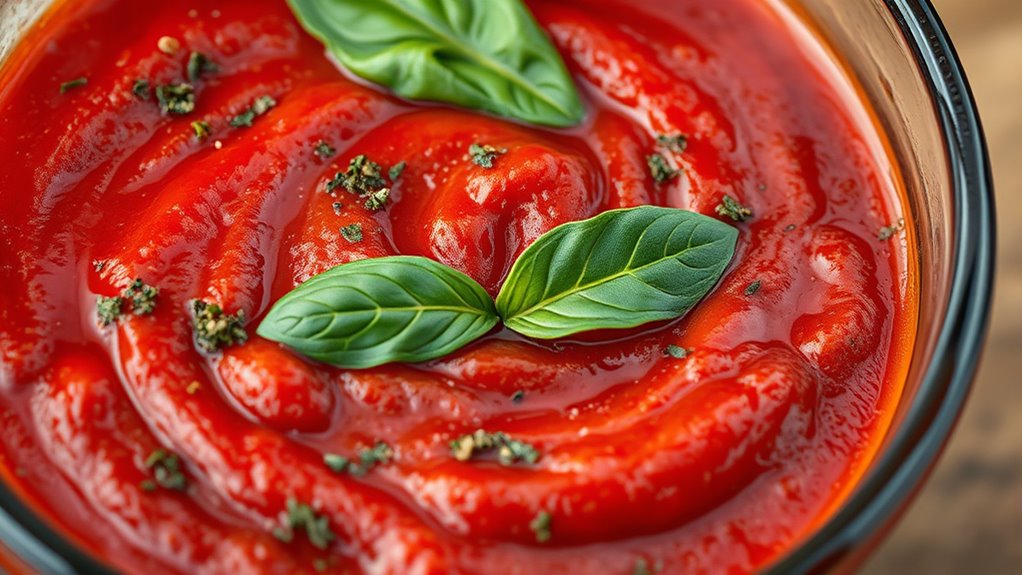
Achieving a perfectly balanced pizza sauce involves more than just quality ingredients; it requires skillful use of herbs and spices to enhance and harmonize flavors. You want seasoning complexity that adds depth without overpowering the tomatoes’ natural taste. Start with classic herbs like oregano and basil, but don’t be afraid to experiment with thyme or a touch of rosemary for added dimension. Spices such as crushed red pepper or black pepper introduce subtle heat, enriching flavor harmony. Be cautious with salt, as it amplifies all other flavors. Remember, the goal is to create a sauce where each herb and spice complements the others, building a layered, well-rounded taste that elevates your pizza to pizzeria quality. Balance is key—less is often more.
Step-by-Step Guide to Making Your Sauce
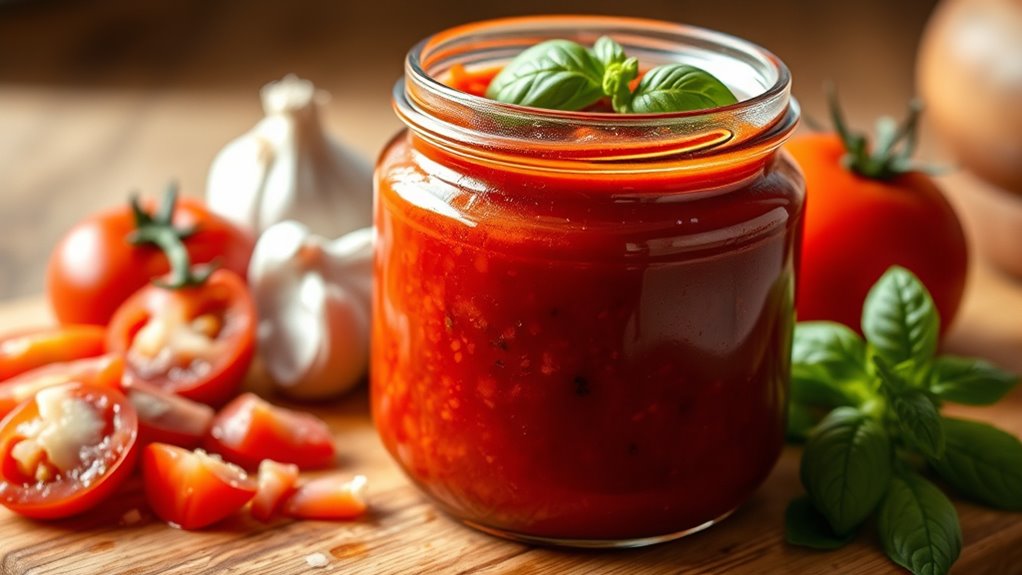
Making your own pizza sauce at home is simple and rewarding when you follow a few key steps. First, gather high-quality canned tomatoes and blend them until smooth, adjusting for your preferred dough consistency. The sauce should be thick enough to spread easily without making the dough soggy, so avoid overly watery mixtures. Next, stir in your herbs and spices, ensuring they complement your toppings. Topping compatibility is essential—if you plan to use hearty ingredients like sausage or vegetables, opt for a slightly thicker sauce to prevent sogginess. Taste and adjust seasoning as needed. Spread the sauce evenly over your prepared dough, making sure it’s not too thick in the center, which can affect dough consistency and overall pizza balance.
Tips for Achieving the Ideal Consistency
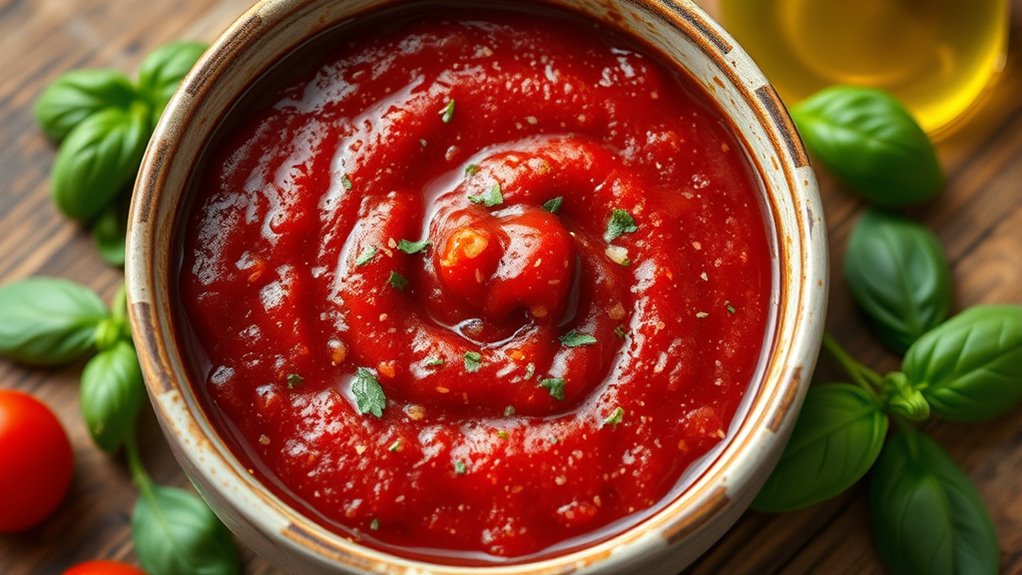
Getting the consistency just right guarantees your pizza turns out delicious and easy to handle. To achieve this, pay attention to dough kneading, as over-kneading can make the crust tough, while under-kneading results in a floppy base. Your sauce should be thick enough to stay on the dough without sliding off, which means adjusting the amount of tomato paste or crushed tomatoes. When it comes to cheese selection, opt for a blend that melts smoothly and evenly, helping to bind the sauce and toppings. Avoid adding too much liquid to your sauce, as it can make the pizza soggy. Keep the ingredients balanced to ensure your sauce maintains a perfect consistency, providing a sturdy base that’s neither too runny nor too thick.
Customizing Your Sauce for Personal Taste

You can easily tailor your pizza sauce to match your flavor preferences by adjusting the spice level. Experiment with different herbs and spices to find the perfect combination that suits your taste. Don’t be afraid to get creative and make the sauce uniquely yours.
Spice Level Adjustments
Adjusting the spice level of your homemade pizza sauce allows you to tailor its flavor to your personal taste. Whether you prefer mild or fiery, this spice level adjustment helps you control the heat and overall flavor intensity. To increase spice, add a pinch of crushed red pepper flakes or a dash of hot sauce, mixing thoroughly. For a milder sauce, reduce or omit spicy ingredients, or add a touch of honey to balance the heat. Visualize the heat:
- Fiery red pepper flakes dancing in the sauce
- A splash of hot sauce swirling around the tomatoes
- A sprinkle of black pepper adding depth
- A hint of cayenne for an extra kick
These adjustments give you flavor intensity control, ensuring your pizza is exactly how you like it.
Herb & Spice Variations
Herb and spice variations offer a simple way to customize your homemade pizza sauce to match your personal taste. Dried herbs like oregano, basil, and thyme can enhance the classic flavor, allowing you to tailor the sauce to your preference. Experiment with different spice blends, such as Italian seasoning or herbes de Provence, to add depth and complexity. Adjust the quantities to make the sauce more aromatic or punchy, depending on your mood. If you love a bit of heat, consider adding crushed red pepper flakes or a pinch of cayenne. Remember, the key is balancing the herbs and spices to complement your toppings. With these variations, you can create a unique sauce that elevates your homemade pizza every time.
Cooking Techniques to Enhance Flavor Depth

To deepen the flavor of your homemade pizza sauce, employing specific cooking techniques can make a significant difference. One key method is layering flavors by adding ingredients at different stages, which builds complexity. Simmer the sauce slowly to allow the flavors to meld and develop fully. To enhance umami, consider incorporating ingredients like tomato paste, anchovies, or a splash of soy sauce—they boost depth without overpowering. Roasting garlic or onions beforehand can also add a smoky richness.
Layer flavors by adding ingredients at different stages and simmer slowly for richer, more complex homemade pizza sauce.
- Sauté garlic and onions until golden for a caramelized base
- Simmer gently to blend flavors seamlessly
- Add concentrated tomato paste for umami boost
- Let the sauce rest off heat for a few minutes to deepen flavors
Storing and Preserving Your Homemade Sauce
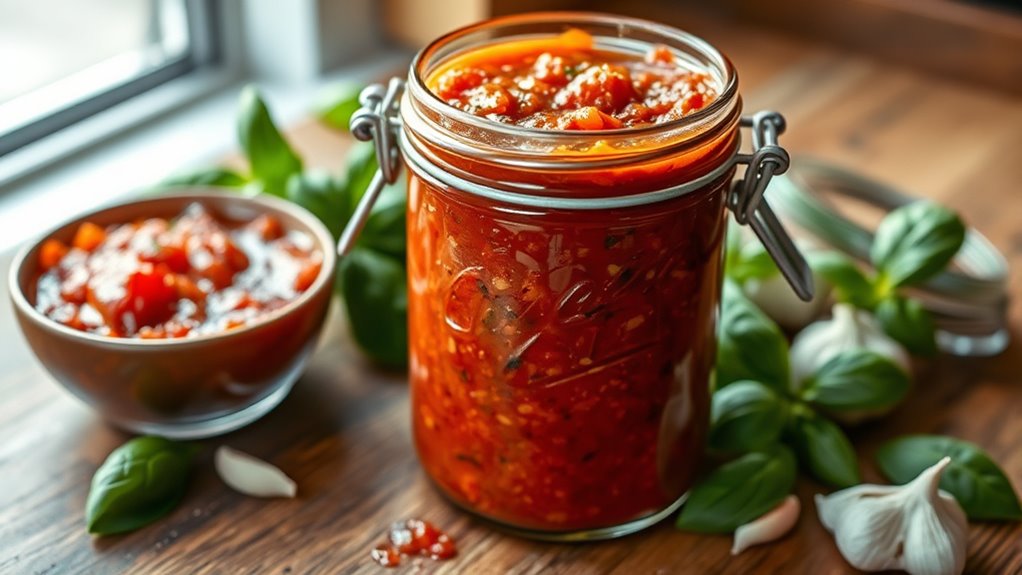
To keep your homemade pizza sauce fresh, choosing the right container is key; airtight jars or plastic containers work best. You should also know how long it stays good in the fridge and when freezing is a better option for long-term storage. Properly stored, your sauce will taste great whenever you’re ready to use it.
Proper Container Selection
Choosing the right container is essential for keeping your homemade pizza sauce fresh and flavorful. The container’s capacity should match your batch size, preventing excess air exposure that can spoil the sauce. Opt for a container material that won’t react with the acidity of the sauce—glass or BPA-free plastic are ideal choices. When selecting a container, think about:
- The size that fits your typical batch without too much extra space
- Airtight lids to lock in freshness and prevent spills
- Clear containers for easy visibility of the sauce level
- Durable material that withstands temperature changes
Refrigeration and Shelf Life
Proper refrigeration is key to keeping your homemade pizza sauce fresh and safe to eat. When stored at the right temperature, you slow down bacterial growth, which can cause spoilage and pose health risks. Always keep your sauce in an airtight container to prevent contamination and maintain quality. Be sure to refrigerate your sauce promptly after making it, ideally within two hours, to ensure refrigeration safety. Check the sauce regularly for any signs of spoilage, such as sour smell or mold. Generally, homemade pizza sauce lasts about 4 to 5 days in the fridge. To extend its shelf life and preserve flavor, consider proper storage practices and avoid leaving it out at room temperature for extended periods. This way, you enjoy your sauce safely over several days.
Freezing for Long-Term Use
If you want to keep your homemade pizza sauce beyond a few days, freezing offers an effective solution. Proper storage preserves flavor and makes meal prep easier. Use airtight containers or freezer bags, leaving some headspace for expansion. Label with the date to track freshness. When ready to use, thaw in the refrigerator overnight. Picture your pizza dough ready on the counter, cheese selection at hand, and your sauce frozen in perfect portions. Freeze in small, single-use amounts for quick meals. This way, you can enjoy fresh-tasting sauce anytime, without worry of spoilage. Keep your ingredients organized so you can assemble your pizza swiftly. Freezing ensures you always have delicious sauce on hand, making homemade pizza nights effortless and flavorful.
Serving Suggestions to Maximize Your Pizza Experience
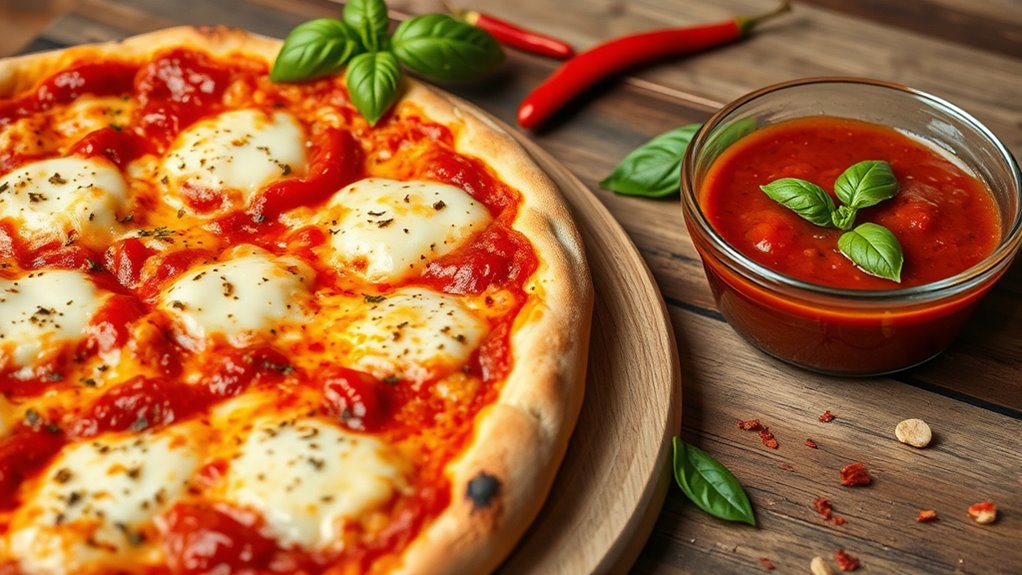
To truly elevate your homemade pizza experience, focus on thoughtful serving suggestions that highlight your sauce’s flavor. Start by selecting vibrant pizza toppings that complement your sauce, such as fresh basil, sliced pepperoni, or colorful vegetables. Arrange your slices on clean serving plates to showcase their appealing colors and textures. Consider offering a variety of toppings on the side, allowing everyone to customize their slice for maximum enjoyment. Serve your pizza while it’s hot to guarantee the sauce remains flavorful and gooey. Pair your slices with a crisp salad or a cold beverage to enhance the overall experience. Thoughtful presentation and a well-chosen combination of toppings and servingware will make your pizza feel like a true pizzeria masterpiece.
Frequently Asked Questions
Can I Use Canned Tomatoes for the Best Flavor?
Yes, you can use canned tomatoes for the best flavor. Choose high-quality canned tomato brands, as their quality directly impacts your sauce’s taste. To enhance flavor, consider roasting the canned tomatoes slightly or simmering them with garlic, herbs, and a pinch of sugar. This extra step boosts natural sweetness and depth, making your pizza sauce taste fresh and vibrant—closer to that authentic pizzeria flavor you’re aiming for.
How Long Should I Simmer My Sauce for Optimal Taste?
You should simmer your pizza sauce for about 30 to 45 minutes for ideal flavor development. During this simmering time, the flavors meld together, creating a rich, well-rounded taste that mimics a pizzeria-quality sauce. Stir occasionally to prevent sticking, and taste as you go to adjust seasonings if needed. This simmering time allows the ingredients to deepen, giving your sauce that authentic, homemade flavor.
Is It Necessary to Peel or Seed the Tomatoes?
No, peeling or seeding tomatoes isn’t necessary. Imagine the tomato’s texture as a vibrant mosaic—seeds and skins can add texture but may cloud your sauce’s clarity. Leaving skins and seeds intact gives a rustic, hearty feel, while removing them creates a smoother, more refined sauce. If you prefer a clear, velvety sauce, peel and seed; for a chunkier, textured one, leave them in.
What Substitutes Can I Use for Fresh Herbs?
If you don’t have fresh herbs, you can use herb alternatives like dried herbs. Dried vs. fresh makes a difference; dried herbs are more concentrated, so use about one-third of the amount called for in fresh. For example, replace fresh basil with dried basil, but remember to add dried herbs earlier in the cooking process to let their flavors develop fully.
How Do I Prevent My Sauce From Becoming Too Watery?
Think of your sauce as a sponge soaking up flavors—if it’s too watery, it’s like it’s lost its grip. To prevent this, use thickening techniques like simmering longer or adding ingredient substitutions such as tomato paste or a cornstarch slurry. These methods help thicken your sauce, giving it that rich, velvety consistency. Keep an eye on it, and stir often, so you don’t lose that perfect balance of flavor and texture.
Conclusion
With this homemade pizza sauce, you hold the key to capturing that pizzeria magic—like an artist wielding a brush, you craft perfection. Every batch becomes your masterpiece, echoing the timeless allure of Italy’s finest kitchens. So, embrace the process, trust your palate, and savor the journey. Because in the end, the true flavor of your pizza mirrors the passion you pour into every ingredient, turning simple ingredients into a culinary legend.