Using two thermometers during grilling or smoking is a smart hack to achieve perfect results. Place one thermometer near the meat for internal temperature and keep the other outside in the smoker or grill to monitor the overall heat. Regularly compare readings to spot hot spots or temperature fluctuations. Calibrate your thermometers often to stay accurate. Want tips on setting up your thermometers for flawless cooking? Keep going to learn more.
Key Takeaways
- Use one thermometer near the meat for internal temperature and another to monitor smoker temperature for accuracy.
- Regularly calibrate both thermometers at known temperatures to ensure precise readings.
- Compare readings from both thermometers to identify hot spots or temperature inconsistencies inside the smoker.
- Adjust smoker vents or airflow based on dual readings to maintain a steady cooking temperature.
- Use the data from two thermometers to fine-tune placement and achieve consistent, perfect cooking results.

If you’ve ever struggled to get an accurate read from your grill thermometer, there’s a simple hack that can save you time and improve your cooking results. Using two thermometers simultaneously allows you to verify your smoker temperature and ensures your probe calibration is spot on. This approach helps you avoid undercooked or overcooked food and gives you confidence in your grill’s performance.
Using two thermometers ensures accurate smoker readings and perfect-cooked results every time.
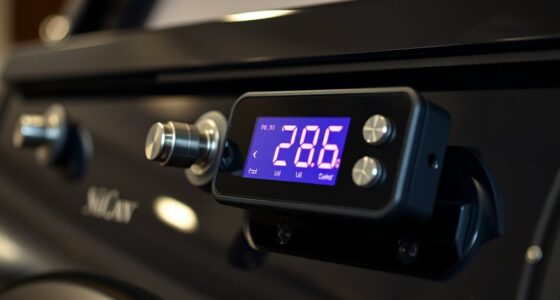
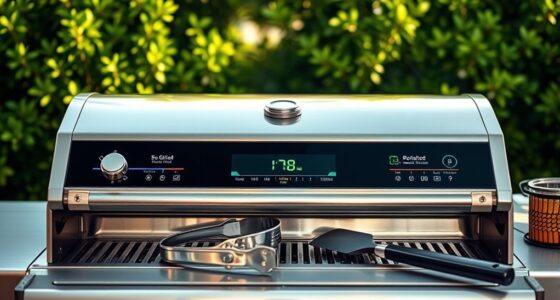
Start by placing one thermometer directly into the smoker or grill, ideally near the meat but not touching it, to measure the smoker temperature. This gives you a real-time reading of how hot your smoker truly is. The second thermometer should be a high-quality probe thermometer, which you insert into the meat during cooking. But before relying on these readings, it’s essential to confirm that your probe is calibrated correctly. Probe calibration involves checking if your thermometer reads accurately at known temperatures, such as boiling water at 212°F or ice water at 32°F. If your probe shows a different temperature, you can adjust it accordingly or note the discrepancy for future reference.
Once you’ve calibrated your probe, monitor its reading alongside the smoker temperature. If there’s a significant difference between the two, it could indicate an issue with your smoker temperature or an uncalibrated probe. For example, if your smoker thermometer reads 225°F but your probe shows 210°F, your smoker might be running cooler than indicated, or your probe could be off. In this case, you might need to adjust your smoker’s settings or recalibrate your probe to ensure accurate readings throughout the cook.
Using two thermometers also helps you identify hot spots or temperature fluctuations inside your smoker, which are common in many setups. By keeping an eye on both readings, you can make informed adjustments, such as moving meat to different areas or tweaking airflow and vents for more consistent heat. This method minimizes guesswork and helps you achieve a steady smoker temperature, critical for low-and-slow cooking like brisket or ribs.
Additionally, understanding your smoker’s heat distribution can further improve your results by allowing you to optimize airflow and placement. By paying close attention to both thermometer readings, you can fine-tune your equipment for more precise control. In the end, the key to perfect grilling and smoking lies in trusting your thermometer readings. Regular probe calibration and vigilant monitoring of smoker temperature with a secondary thermometer give you the control needed for consistent results. This simple hack ensures your food reaches the ideal internal temperature without surprises, making every cook a success.
Frequently Asked Questions
Can I Use Two Different Types of Thermometers Simultaneously?
Yes, you can use two different types of thermometers simultaneously, but you should check their compatibility and calibration. Using thermometers with similar temperature ranges ensures better accuracy and consistency. Keep in mind that different models may have slight variations, so monitor temperature consistency closely. Regularly calibrate both thermometers to maintain reliable readings. This way, you get precise temperature control, helping you cook perfect results every time.
How Do I Calibrate Both Thermometers for Accuracy?
To calibrate both thermometers for accuracy, start with calibration techniques like boiling water for 212°F or ice water for 32°F, ensuring consistent readings. Verify their accuracy by comparing each thermometer’s reading to a reliable standard. Adjust if needed, following the manufacturer’s instructions. Regularly perform accuracy verification to maintain precise measurements, especially when using two thermometers simultaneously, so you can confidently monitor your grill’s temperature.
What Are Signs That One Thermometer Is Malfunctioning?
If your thermometer isn’t showing consistent readings or fluctuates wildly, it’s a sign of malfunction indicators affecting thermometer accuracy. You might notice it responds slowly or remains stuck at one temperature. To confirm, compare it with a known accurate thermometer; significant discrepancies suggest it’s malfunctioning. Regularly checking for these signs helps ensure your grill thermometer functions properly, giving you reliable temperature readings for perfect grilling results.
Is It Safe to Leave Thermometers in the Grill During Cooking?
Yes, you can leave thermometers in the grill during cooking, but prioritize safety and proper placement. Be cautious with grill safety, ensuring thermometers aren’t exposed to direct flames or extreme heat that could damage them. Place them securely to prevent accidents or interference with cooking. Remember, thermometer placement matters—position them away from flames and hot spots for accurate readings, keeping your grilling safe, steady, and sensational.
How Often Should I Check the Thermometers During Grilling?
You should check your thermometers every 15 to 20 minutes during grilling to guarantee accurate readings. This checking frequency helps you maintain precise temperature control and avoid overcooking. Regular thermometer maintenance, like cleaning probes and calibrating when needed, keeps your devices functioning properly. By staying attentive and checking frequently, you’ll achieve perfectly cooked results and extend your thermometers’ lifespan.
Conclusion
By using two thermometers, you can achieve perfect grilling results every time. Imagine you’re cooking a thick steak; one thermometer checks the surface temp, while the other monitors the internal doneness. This hack helps prevent overcooking or undercooking, ensuring juicy, flavorful meat. Next time you grill, try this simple trick—your guests will notice the difference. With a little practice, you’ll master the art of precise grilling, making every meal a delicious success.