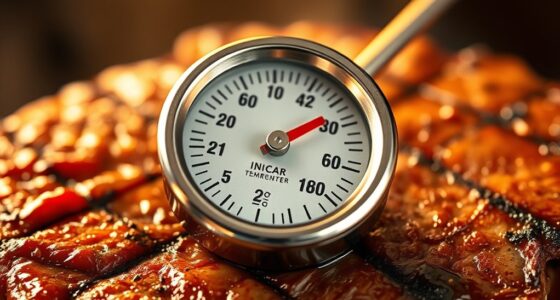

Inside a pellet grill, the auger feeds pellets into the fire at a controlled rate, while the fan manages airflow and oxygen, keeping the temperature steady. The electronic controller constantly monitors the internal heat and adjusts the auger and fan accordingly, preventing fluctuations. If external conditions change, like wind or opening the lid, the system quickly compensates. Want to learn more about how these parts work together? Keep exploring for a deeper understanding.
Key Takeaways
- The auger controls pellet feeding to maintain a consistent fire and temperature.
- The fan adjusts airflow over the fire to regulate heat levels and ensure even cooking.
- The electronic controller uses temperature sensors to coordinate auger and fan actions dynamically.
- External factors like wind or lid opening are compensated for by the control system to keep temps steady.
- Proper operation of both components ensures reliable, stable cooking temperatures and optimal results.
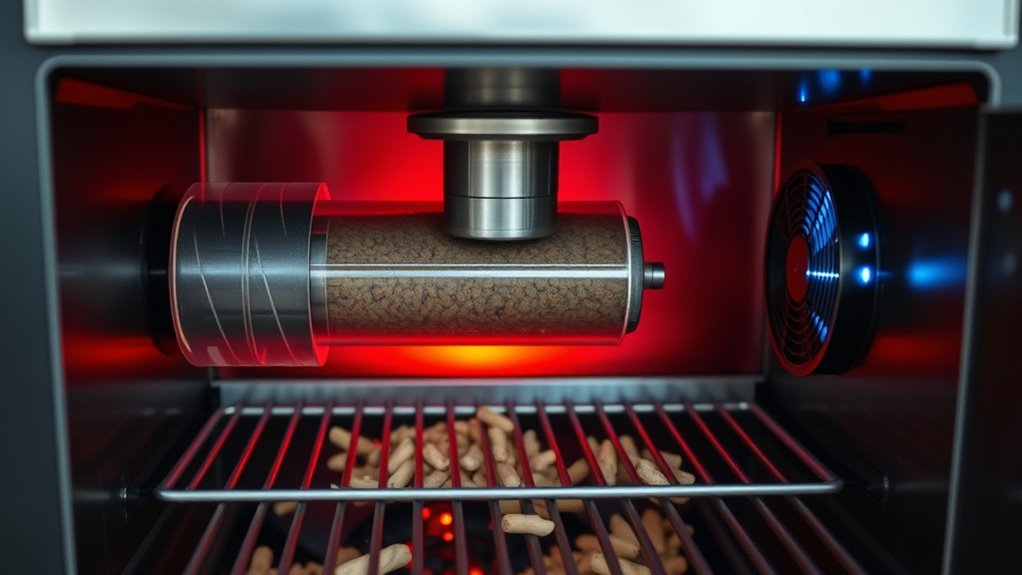
Maintaining a steady temperature is key to achieving perfectly cooked meals on your pellet grill, and this stability relies heavily on two critical components: the auger and the fan. These parts work together to ensure consistent temperature regulation, which is essential for good results. When you set your grill to a specific temperature, you’re relying on the auger to deliver the right amount of wood pellets into the firepot. It feeds pellets at a controlled rate, making sure the fire stays steady and the heat remains consistent without fluctuations. If the auger moves too quickly or too slowly, it can cause your grill’s temperature to spike or drop, leading to uneven cooking. That’s why the precision of the auger’s feed is so important for maintaining the right temperature throughout your cook.
A steady temperature depends on precise pellet feed from the auger.
Meanwhile, airflow management is equally crucial. The fan in your pellet grill is responsible for controlling the airflow over the fire and through the cooking chamber. By adjusting the fan’s speed, you influence how much oxygen reaches the fire, which directly impacts the intensity of the heat. When you want a higher temperature for searing, the fan increases airflow, feeding more oxygen to the fire and boosting the heat. Conversely, lowering the fan reduces airflow, helping to bring the temperature down for slow cooking or delicate smoking. This regulation of airflow ensures the fire burns consistently and that heat disperses evenly across your food.
Both the auger and fan are connected to the grill’s electronic controller, which constantly monitors the internal temperature through sensors. When the temperature dips below your desired setting, the controller signals the auger to feed more pellets and the fan to adjust airflow accordingly. Conversely, if the temperature rises too high, the controller reduces pellet flow and airflow to bring things back into balance. This ongoing feedback loop keeps your grill’s temperature stable, even when external conditions change, like a gust of wind or opening the lid.
You’ll notice that precise temperature regulation and airflow management are what make pellet grilling so dependable. Instead of constantly babysitting your cook, you can trust that the auger and fan will do the work behind the scenes. As long as these components are functioning properly, your grill will maintain consistent heat, helping you achieve tender, flavorful results every time. So, understanding how the auger and fan operate gives you a better grasp of why pellet grills are so effective at keeping temperatures steady and ensuring your meals turn out just right. connected technology plays a key role in this precise control system.
Frequently Asked Questions
What Causes Temperature Fluctuations in Pellet Grills?
Temperature fluctuations in pellet grills happen when the pellet feed rate isn’t consistent or when fan speed adjustments aren’t properly managed. If the auger delivers pellets too quickly or slowly, heat levels change. Similarly, adjusting the fan speed improperly can cause uneven airflow, leading to temp swings. To keep temps steady, you need to monitor and balance both pellet feed rate and fan speed adjustments carefully.
How Often Should the Auger Feed Pellets?
Did you know that a well-maintained pellet grill can save you up to 30% in fuel costs? When it comes to pellet feed frequency, you should generally let the auger feed pellets as needed, usually every 15-30 minutes, depending on your grill’s temperature and the recipe. Regular auger maintenance guarantees consistent pellet delivery, preventing temperature swings and keeping your cookout on point.
Can the Fan Malfunction Affect Grill Temperature?
A fan failure can definitely affect your grill’s temperature stability. If the fan malfunctions, it won’t properly circulate air, causing uneven heat and potential temperature fluctuations. This can lead to temperature instability, making it hard to maintain consistent cooking conditions. Regularly check your fan to verify it’s working correctly, and address any issues promptly to keep your pellet grill operating smoothly and at the right temperature.
Are There Differences in Temp Control Between Brands?
Yes, there are differences in temp control between brands. You’ll notice some brands prioritize brand consistency, ensuring reliable performance, while others focus on temperature precision to offer fine-tuned control. Your experience may vary depending on these factors, so it’s wise to research user reviews and specifications. Choosing a brand known for consistent temp control can help you achieve better cooking results and maintain steady temperatures throughout your grilling sessions.
How Does Ambient Weather Influence Pellet Grill Temps?
Weather resistance and grill insulation play vital roles in how ambient weather influences your pellet grill temps. Wind, rain, and cold temperatures challenge the grill’s ability to maintain steady heat. Good insulation helps keep heat inside, reducing the impact of outdoor conditions. When weather is harsh, your grill might work harder, causing fluctuations. To minimize this, position your grill in a sheltered spot and make certain it has proper weather-resistant features.
Conclusion
Understanding how the auger and fan work together helps you master steady temperatures on your pellet grill. Did you know that a well-maintained pellet grill can keep temperatures within just 5 degrees of your target? That precision means perfectly smoked meats every time. So, keep an eye on those components, and you’ll enjoy consistently delicious results. With a little care, your grill will become your ultimate backyard chef, serving up smoky perfection each and every time.