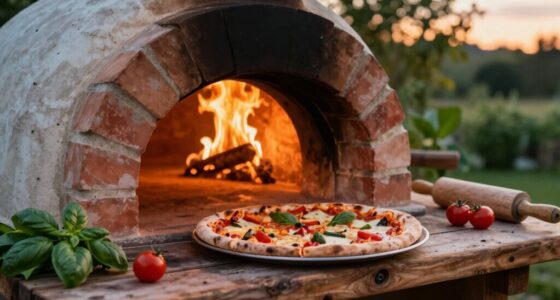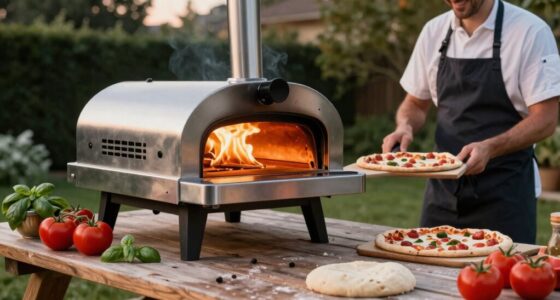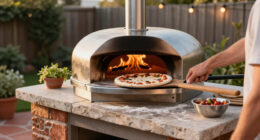
Choosing a backyard pizza oven comes down to how you want to cook: turn a control and focus on the food, or build and tend a fire as part of the experience. Gas pizza ovens suit cooks who want fast starts, steady heat and easier temperature adjustments. Wood-fired ovens appeal to people who enjoy managing a live flame and want the aroma and character that wood can add. Both can make excellent pizza, but their differences show up in setup time, control, fuel handling and the kind of cooking session they encourage. For frequent weeknight use, gas is the more practical fit for many households. Choose wood if tending the fire is part of what makes outdoor cooking enjoyable.

Get kitchen gear delivered free — and shop member deals
- Fast, free delivery on millions of items
- Access to Prime Big Deal Days deals on October 6–7
- Prime Video, Amazon Music and more included

BIG HORN Portable Propane Gas Pizza Oven with 15 Inch Pizza Stone, Stainless Steel Outdoor Pizza Maker
- ✔ Fuel: Propane
- ✔ Burners: Dual-side burners, 23,000 BTU total
- ✔ Maximum temperature: 1070°F

BIG HORN 12" Outdoor Pizza Oven, 3-in-1 Multi-Fuel (Wood Pellet, Gas, Electric), Max 1110°F
- ✔ Fuel: Wood pellets included; compatible gas and electric burners sold separately
- ✔ Maximum temperature: 1110°F
- ✔ Heat-up time: 18–20 minutes

BIG HORN 12-Inch Multi-Fuel Outdoor Pizza Oven, Wood/Gas/Electric Compatible, Portable, Black
- ✔ Fuel: Wood pellets; compatible gas and electric burners sold separately
- ✔ Maximum temperature: 1110°F
- ✔ Heat-up time: 18–20 minutes
At a Glance
| Criteria | Gas pizza ovens | Wood-fired pizza ovens | Winner |
|---|---|---|---|
| Startup and convenience | Usually quick to light and straightforward to run; no wood handling or fire building. | Requires kindling or fire-starting, tending, and more time before cooking. | A |
| Temperature control | Adjustable burner makes heat changes easier and more repeatable. | Heat changes require adjusting the fire and managing fuel; results depend on technique. | A |
| Flavor and cooking experience | Clean heat leaves toppings and dough flavors prominent, with little fuel aroma. | Wood smoke and live-fire cooking can add aroma and a more hands-on character. | B |
| Heat-up and recovery | Often reaches pizza temperatures quickly; recovery depends on oven design and burner output. | Can heat rapidly once the fire is established, but maintaining the desired heat takes attention. | Depends |
| Fuel and operating costs | Uses propane or natural gas; costs vary by local fuel prices and use frequency. | Uses firewood; cost and availability depend on wood type, location and how often you cook. | Depends |
| Cleaning and maintenance | No ash from wood, though the stone, burner and oven still need routine care. | Ash removal and firebox care add work after cooking. | A |
| Versatility | Well suited to pizza and other high-heat cooking when the oven design supports it. | Can handle pizza and live-fire roasting, though heat distribution takes practice. | Depends |
BIG HORN Portable Propane Gas Pizza Oven with 15 Inch Pizza Stone, Stainless Steel Outdoor Pizza Maker
For a backyard where the oven is likely to handle pizza night, vegetables, and the occasional steak, this is the most adaptable starting point. Its 15-inch stone is substantially larger than the 12-inch stones in the other two picks, giving us extra space for a larger pizza and a little more flexibility with food placement. The listing states that the dual-side propane burners deliver 23,000 BTU and bring the oven to 750°F in 10 minutes, with a maximum of 1070°F. That combination makes this the lineup’s clearest choice for cooks who value a gas-powered routine and broader cooking capacity over the highest stated temperature.Compared with the pellet-first multi-fuel ovens, this model avoids buying a separate attachment to switch to gas: propane is its intended fuel. It also includes a foldable peel, stone, and regulator hose, which makes the package more complete for a backyard setup. The tradeoff is that we still need a propane tank, and a 60-second pizza cook leaves little room for distraction. The product description also warns that high heat takes practice; its built-in thermometer helps us monitor conditions, but it does not remove the need to watch and turn food for even cooking. Choose it for a convenient, larger cooking surface, and skip it if compact carry weight or wood-pellet operation matters more.
Pros:
- 15-inch stated stone offers more cooking room than either 12-inch alternative.
- Dual-side propane burners and included regulator hose make the gas setup direct.
- Includes a foldable peel and can cook foods beyond pizza.
- Heats to a stated 750°F in 10 minutes and reaches a maximum of 1070°F.
Cons:
- Propane tank must be purchased separately.
- Fast cooking at high heat requires close attention and practice.
- The listing does not state the oven’s weight, making portability harder to compare.
Best for: Backyard cooks who want a propane-fired oven with the largest stated stone in this comparison and accessories included.
Not ideal for: Buyers who prioritize a lighter, 12-inch portable oven, want pellet cooking, or prefer to avoid managing a propane tank and very high heat.
Bottom line: We recommend this propane model for most backyard cooks who want a larger cooking surface and a ready-to-use gas oven kit.
“We recommend this propane model for most backyard cooks who want a larger cooking surface and a ready-to-use gas oven kit.”
BIG HORN 12" Outdoor Pizza Oven, 3-in-1 Multi-Fuel (Wood Pellet, Gas, Electric), Max 1110°F
This 12-inch oven makes sense for us when we want a small outdoor oven that can begin with wood pellets and potentially adapt to other fuel sources later. Its stated maximum of 1110°F is the highest in this group, and the listing gives an 18–20 minute heat-up time followed by 60–90 second pizza cooking. The oven weighs 25 pounds, has folding legs, and needs minimal tool-free assembly, so it is easier to imagine moving between a backyard, campsite, and tailgate than the larger propane model.Its flexibility has a condition: gas and electric burners are separate purchases, while wood pellets are included. That makes it less turnkey for gas cooking than the propane pick, whose burners and regulator hose are part of the described package. The smaller 12-inch stone also limits pizza size compared with the 15-inch model. In pellet mode, the oven requires all-natural hardwood pellets kept airtight, and the listing says pizzas need frequent turning for even cooking. The separate B0CQ2DK39N listing has nearly the same stated dimensions, weight, heat-up time, and temperature, so we would not assume this version cooks better; its role here is for buyers drawn to a clearly described multi-fuel format.
Pros:
- Pellet cooking is included, with compatible gas and electric attachments available separately.
- Stated 1110°F maximum supports very high-heat pizza cooking.
- At 25 pounds with folding legs, it is portable for an outdoor oven.
- Tool-free, minimal assembly simplifies setup.
Cons:
- Gas and electric burners are sold separately.
- The 12-inch stone is smaller than the propane model’s stated 15-inch stone.
- Pellet fuel needs airtight storage, and pizzas need frequent turning.
Best for: Cooks who want pellet-fueled pizza now and value the option to add compatible gas or electric burners later.
Not ideal for: Anyone seeking the simplest gas setup, the largest pizza capacity, or a no-attention cooking process.
Bottom line: We would choose this model when pellet cooking and future fuel options matter more than cooking a larger pizza or getting a complete gas package.
“We would choose this model when pellet cooking and future fuel options matter more than cooking a larger pizza or getting a complete gas package.”
BIG HORN 12-Inch Multi-Fuel Outdoor Pizza Oven, Wood/Gas/Electric Compatible, Portable, Black
If storage and portability are the first constraints, this black 12-inch model offers the same basic compact format as the other multi-fuel pick: 25 pounds, folding legs, and a 12 × 12-inch stone. Its stated 1110°F maximum and 18–20 minute heat-up time put it on comparable footing with B08T9HMMWC on paper. The listing also describes cooking meats and vegetables, which gives it some flexibility for outdoor meals, though its smaller stone makes it less suitable than the propane model for larger pizzas or cooking space.The distinction between these two 12-inch listings is modest. Both accept wood pellets and separately sold gas or electric burners, and both require frequent pizza turning according to the supplied claims. The black finish and compact portable framing make this a reasonable pick when those details suit our storage or setup preferences, but the specifications do not establish a performance advantage over B08T9HMMWC. We should weigh the same fuel costs and pellet handling requirements: buying an attachment to use gas or electric, and storing pellets in airtight conditions. Choose it for a compact pellet-capable oven; if a larger stone and included gas accessories are more useful, the 15-inch propane oven is the stronger fit.
Pros:
- Compact 25-pound body with folding legs is suited to portable outdoor cooking.
- Wood pellets are supported, with compatible gas and electric burner options.
- Stated 1110°F maximum and 60–90 second pizza cooking claims.
- Stainless steel body and minimal assembly.
Cons:
- Gas and electric burner attachments are sold separately.
- The 12-inch stone provides less room than the propane pick.
- No clear specification advantage over the other BIG HORN 12-inch multi-fuel listing.
Best for: Buyers who want a portable, black-finish 12-inch pellet oven for backyard use that can also travel to campsites or tailgates.
Not ideal for: Cooks who want a larger pizza surface, included gas or electric burners, or a clearly differentiated feature set over the other 12-inch model.
Bottom line: We would pick the black model for its compact multi-fuel format when its finish or listing best matches our setup, while recognizing that its stated performance closely matches the other 12-inch oven.
“We would pick the black model for its compact multi-fuel format when its finish or listing best matches our setup, while recognizing that its stated performance closely matches the other 12-inch oven.”
As an Amazon Associate we earn from qualifying purchases.
Key Differences
The practical divide is control versus participation. Gas makes it simpler to light the oven, adjust the flame and repeat a cooking routine. That matters when dinner has a schedule, several people are waiting to eat, or the cook would rather concentrate on stretching dough and managing toppings. Wood asks for more attention: the fire must be started, fed and positioned, and the cook needs to read how its heat is changing. For some households that is extra work; for others, it is the point of cooking outdoors.
Neither fuel guarantees better pizza. Oven design, heat retention, the cooking surface and the cook’s technique all affect the result. Wood can contribute smoke aroma and a lively flame, while gas provides a cleaner, more predictable heat source. Both can reach the high temperatures associated with Neapolitan-style pizza, but the stated maximum temperature alone does not tell you how evenly an oven cooks or how well it recovers between pizzas. A gas oven is often the easier value for regular, low-fuss use. Paying extra for wood-fired cooking makes sense when you will use the fire experience and flavor enough to justify the added tending and cleanup.
Detailed Comparison
Startup and convenience (Gas pizza ovens wins — moderate)
Gas wins by a moderate margin for ease of use. A burner is typically easier to light and does not require building a fire or handling logs. That makes spontaneous dinners and short cooking sessions more realistic. Wood-fired cooking takes preparation and active tending, so it fits best when the cook has time to make the fire part of the meal.
Temperature control (Gas pizza ovens wins — moderate)
Gas wins by a moderate margin for repeatability. A burner control gives the cook a direct way to adjust heat, though the stone and oven still respond with some delay. Wood heat can be managed by changing fuel and fire placement, but it takes practice and the temperature may vary more during a session. Choose gas when predictable batches matter; choose wood when you are comfortable reading the fire.
Flavor and cooking experience (Wood-fired pizza ovens wins — moderate)
Wood wins by a moderate margin if you value fire aroma and the process of cooking over a live flame. Smoke character depends on the wood and the way the oven is used; it is not a guarantee that every pizza will taste markedly different. Gas keeps the flavor cleaner and puts less attention on fuel management. This is a preference-led difference rather than a universal quality ranking.
Heat-up and recovery (moderate difference)
This is a close comparison, with the winner depending on the oven. Both fuel types can support high-heat pizza cooking, and a well-designed wood oven can heat quickly once its fire is established. Gas often makes the start and adjustments easier, while a wood fire may need active management to hold heat across a run of pizzas. Compare independent temperature and recovery information for the specific models rather than relying on fuel type or maximum-temperature claims alone.
Fuel and operating costs (minor difference)
There is no dependable winner without local fuel prices and actual use. Gas uses propane or a natural gas connection; wood requires suitable firewood that is available and dry enough to burn well. The oven’s purchase price, fuel consumption and how often you cook matter more than a broad assumption that one fuel is always cheaper. Check ongoing costs before paying a premium for a particular format.
Cleaning and maintenance (Gas pizza ovens wins — minor)
Gas wins by a minor to moderate margin for routine cleanup because it does not leave a wood-ash bed to remove. It still needs sensible care: pizza residue, the cooking surface and burner area may require attention according to the manufacturer. Wood-fired ovens add ash and fire management to the after-cooking routine. If you want to finish dinner and tidy up quickly, gas is the easier fit.
Versatility (minor difference)
This depends on the oven’s design and the meals you plan to make. Some ovens of either type can roast vegetables, cook meat or handle other high-heat dishes, but cooking space, flame location and temperature control vary by model. Wood offers live-fire roasting for cooks who enjoy managing the heat; gas offers easier adjustment for cooks who value control. Check the oven’s cooking modes and accessories before treating either fuel as more versatile.
Gas pizza ovens: Pros and Cons
Pros:
- Easy lighting and straightforward operation.
- Convenient flame adjustment for repeatable cooking.
- No wood storage, fire building or ash removal.
- A practical fit for frequent and shorter cooking sessions.
Cons:
- Does not provide wood smoke aroma.
- Depends on propane supply or a natural gas connection.
- Gas control does not remove the need to learn heat management.
- Actual performance and versatility vary by oven model.
Wood-fired pizza ovens: Pros and Cons
Pros:
- Live-fire cooking adds aroma and a distinctive outdoor experience.
- Appeals to cooks who enjoy building and managing a fire.
- Can support high-heat pizza and fire-led roasting when the oven is designed for it.
- Wood choice and fire placement give the cook hands-on control over the cooking session.
Cons:
- Takes more preparation and attention during cooking.
- Heat adjustment and repeatability require practice.
- Produces ash that needs clearing after use.
- Requires suitable firewood and space to store it.
Who Should Choose What
Choose Gas pizza ovens if:
- You want to cook pizza on weeknights or in short sessions with less preparation.
- You value easier heat adjustment and repeatable batches.
- You would rather focus on dough, toppings and serving than tend a fire.
- You want less fuel residue and cleanup after cooking.
Choose Wood-fired pizza ovens if:
- You enjoy starting and managing a live fire as part of outdoor cooking.
- Wood aroma and fire-led character matter more to you than quick setup.
- You are willing to practice temperature management for the experience you want.
- You have reliable access to appropriate firewood and a place to store it.
Skip both if: Skip both if you will cook pizza only rarely and do not want to store, clean or maintain another outdoor appliance; a conventional oven or grill setup may suit that use better.
Value for Money
Gas is often the stronger value for people who expect to cook often but want the oven ready with less effort. Its value comes from convenience and repeatability, not a promise that every gas model costs less to buy or run. Wood can justify a higher purchase price for cooks who will regularly enjoy live-fire cooking and its aroma. If that experience is only an occasional novelty, paying more for a wood-fired setup may not repay the added time, fuel handling and cleanup. Compare the specific oven price, fuel use, included accessories and maintenance needs before deciding.
Final Verdict
For most backyard cooks seeking an oven they can use often and operate with minimal preparation, choose gas. It makes lighting, adjustment and cleanup easier, which can turn pizza night into a more dependable routine. Choose wood if tending the fire is part of the pleasure and the wood-fired character is worth the extra work to you. The deciding factor is not which fuel is capable of making good pizza; both can be. It is whether you value predictable convenience more than the live-fire process.
Frequently Asked Questions
Does a wood-fired oven make better pizza than a gas oven?
Not automatically. Both can produce excellent pizza, and oven design, heat management and technique matter greatly. Wood can add smoke aroma and a live-fire experience; gas usually makes heat easier to adjust. Decide which qualities you value instead of treating fuel as a quality guarantee.
Which type is easier for a beginner?
Gas is usually easier to learn because lighting and flame adjustment are more direct. A beginner can still learn wood-fired cooking, but managing a fire and reading changing heat adds a skill to practice.
Is a wood-fired oven worth paying more for?
It can be worth the added cost if you expect to cook with wood often and enjoy the fire tending, aroma and atmosphere. If you mainly want quick, regular pizza dinners, gas is likely to offer better practical value.
Can gas and wood pizza ovens cook more than pizza?
Some models can roast or cook other high-heat foods, but capability depends on the oven’s size, design and temperature control. Check the manufacturer’s instructions and supported cooking methods for the specific model.
Fall Picks
fall essentials
As an affiliate, we earn on qualifying purchases.