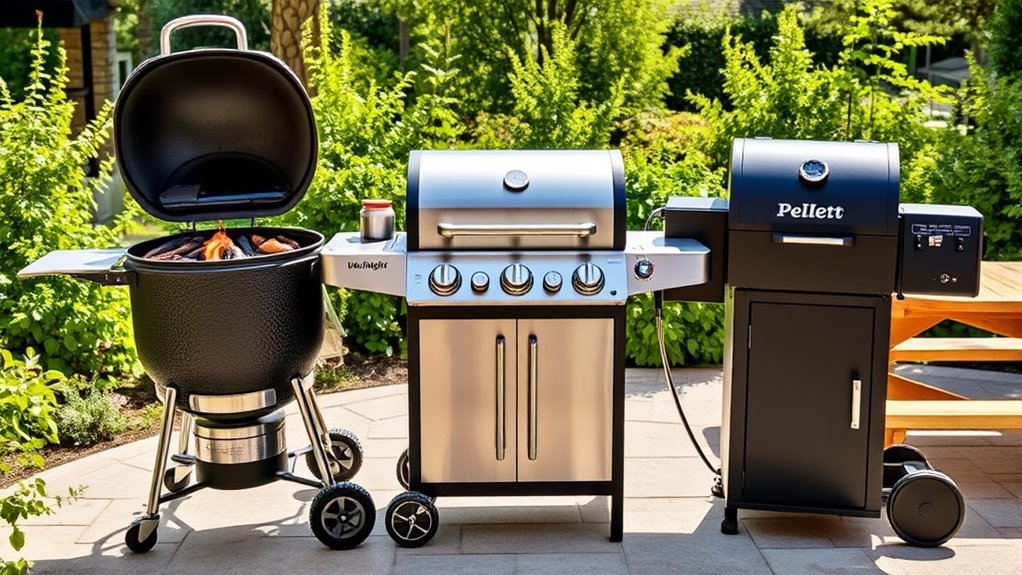
Choosing between charcoal, gas, and pellet grills depends on your flavor preferences, convenience, budget, and eco concerns. Charcoal offers rich smoky taste but requires more effort, while gas grills are quick and easy to control. Pellet grills deliver a balance of flavor and convenience with precise temperature control. If you want to discover which fits your style and needs best, explore deeper into their benefits and features.
Key Takeaways
- Charcoal grills offer rich smoky flavor but require more time and effort to light and maintain temperature.
- Gas grills provide quick, precise heat control and ease of use, ideal for convenience-focused cooks.
- Pellet grills balance smoke flavor with consistent temperature, suitable for versatile and controlled cooking.
- Consider environmental impact: pellet and certain eco-friendly models produce fewer emissions than traditional charcoal.
- Your choice depends on flavor preference, convenience needs, budget, and eco-conscious values.
Flavor Profiles and Cooking Results
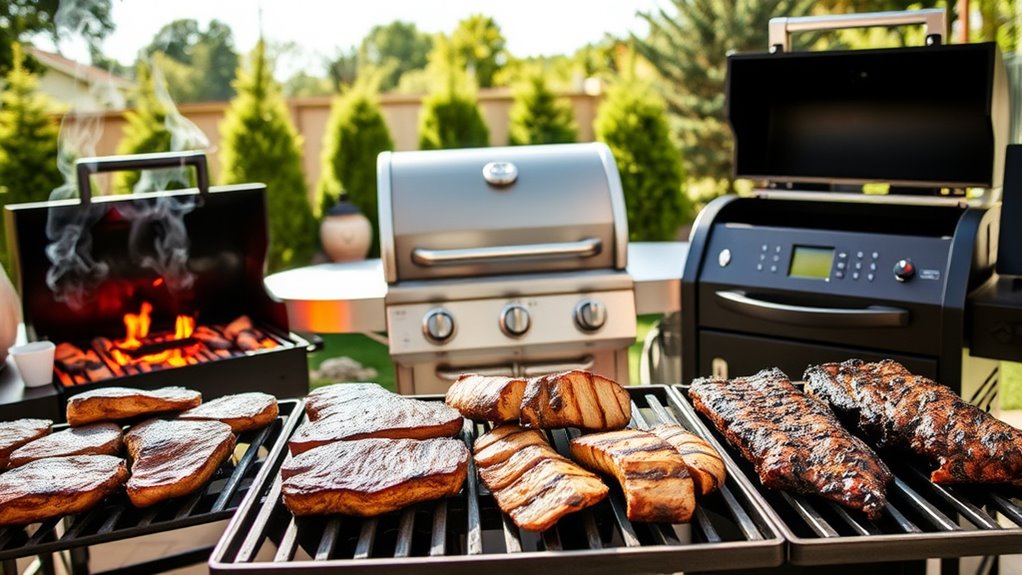
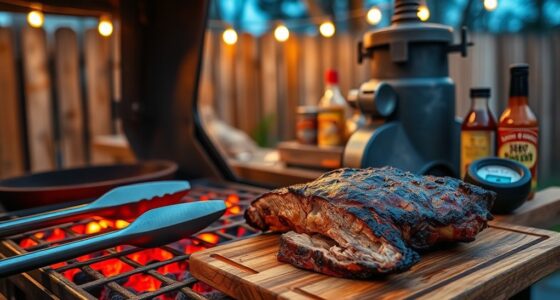
When choosing a grill, understanding how different types influence flavor profiles and cooking results can make a big difference. Charcoal grills excel at smoke infusion, adding rich, smoky layers that deepen flavors, while gas grills tend to produce cleaner, more neutral tastes. Pellet grills strike a balance, delivering both smoke infusion and consistent heat. Aroma retention is also key; charcoal’s open flame helps lock in smoky scents, enhancing the overall aroma of your food. Gas grills may lose some aroma during cooking due to less smoke contact, but they offer more control. Ultimately, your choice impacts how much flavor your food develops and how well it retains that smoky aroma, shaping your grilling experience from the first bite.
Ease of Use and Convenience

When choosing a grill, you’ll want one that’s simple to set up and light. Easy temperature controls make cooking more convenient and help you avoid guesswork. Considering these factors can save you time and frustration during your grilling sessions.
Setup and Lighting
Setting up and lighting a grill is usually straightforward, especially with modern designs that prioritize user convenience. Your choice of fuel types affects how easy it is to get started and manage smoke production. Here’s what to expect:
- Charcoal grills often require arranging coals and using lighter fluid or starters, which can take time and produce more smoke.
- Gas grills start with a simple turn of a knob, igniting quickly and cleanly, with minimal smoke.
- Pellet grills use electric starters to ignite pellets, offering a hassle-free setup with consistent smoke output.
- All grill types benefit from clear instructions and proper safety measures for quick, safe lighting.
Temperature Control Ease
Temperature control is a key factor in choosing a grill because it directly impacts your cooking precision and convenience. Charcoal grills require manual adjustments, which can be challenging but offer better fuel efficiency once you master the technique. Gas grills feature adjustable dials for quick, precise temperature changes, making them more user-friendly. Pellet grills excel at maintaining steady temperatures thanks to their automated feed systems, providing consistent results with minimal effort. Safety features also play a role; gas and pellet grills often include shut-off valves and insulated handles for safe operation. Ease of temperature control helps you focus on cooking rather than constant monitoring, ensuring better results and a more enjoyable grilling experience.
Temperature Control and Precision
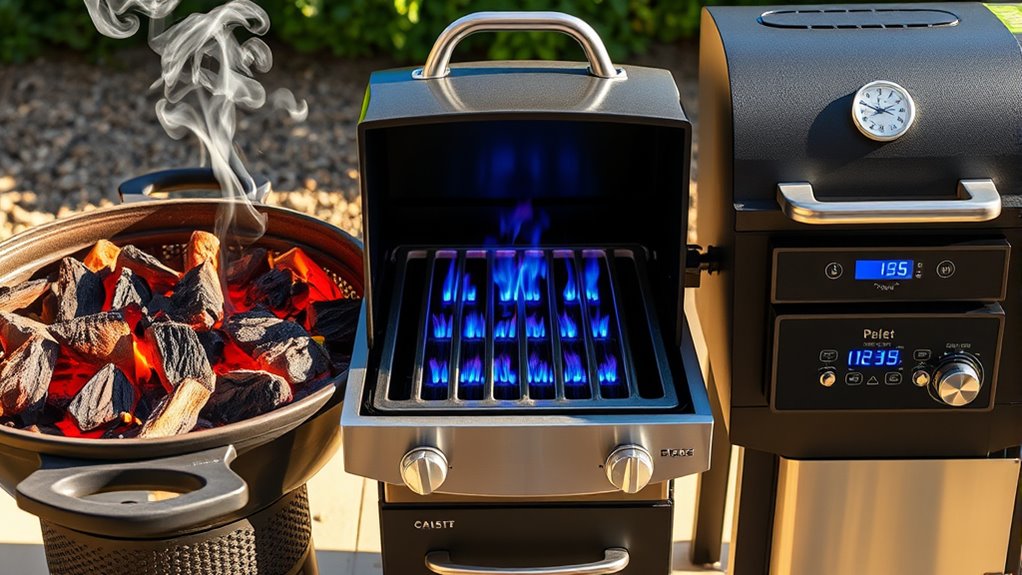
Achieving precise temperature control is essential for grilling success, as it allows you to cook foods evenly and avoid under- or over-cooking. Your choice of grill impacts how well you manage temperature stability and fuel efficiency. Here’s what you need to contemplate:
- Charcoal grills offer great temperature control with vents, but require more attention to maintain stability.
- Gas grills excel at quick adjustments, providing consistent heat with minimal effort.
- Pellet grills combine digital controls for precise temperature settings, optimizing fuel use.
- Fuel efficiency varies; pellet grills often use less fuel due to controlled combustion, while charcoal needs more attention for stability.
Your choice depends on how much control and consistency you need during cooking.
Cost and Budget Considerations
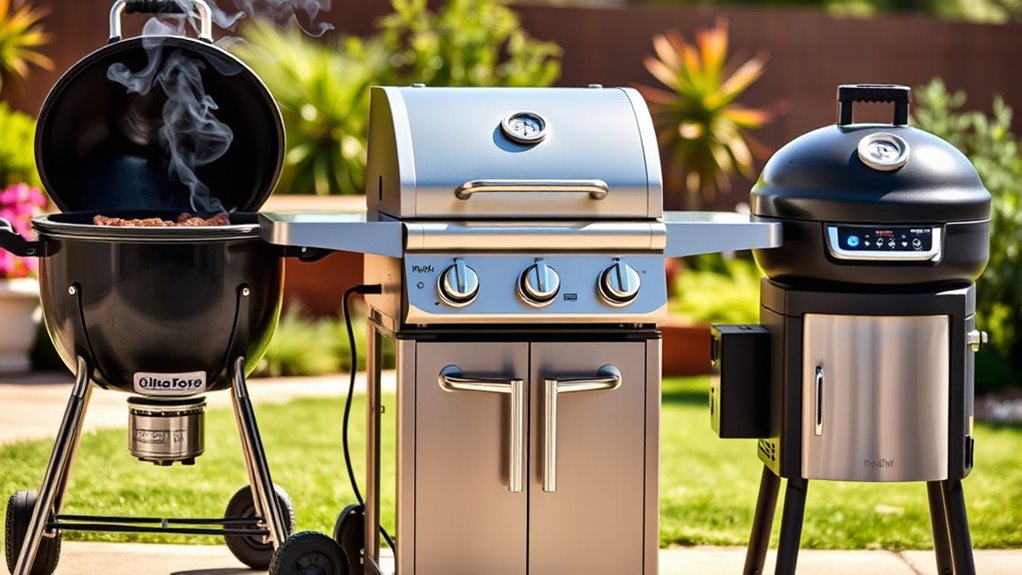
When choosing a grill, you need to consider both the initial purchase price and the ongoing costs of operation. Some grills may be cheaper upfront but cost more to run over time, while others might require a higher initial investment but save you money later. Balancing these expenses helps you find a grill that fits your budget without sacrificing quality.
Initial Purchase Expenses
Are you wondering how much you’ll need to invest upfront when choosing a grill? Your initial purchase depends on several factors, especially fuel types and grill size.
- Charcoal grills tend to be more affordable, often costing less initially, but you’ll need to buy charcoal regularly.
- Gas grills usually have higher upfront costs, especially for larger sizes, but offer convenience.
- Pellet grills are typically the most expensive initially, given their advanced features and fuel efficiency.
- Consider the size of the grill, as larger models with more cooking area generally come with a higher price tag, regardless of fuel type.
Balancing your budget with your preferred fuel options and grill size will help you find the right fit for your needs.
Long-term Operating Costs
Long-term operating costs can substantially influence your overall barbecue budget, so it’s essential to take them into account before making a final decision. Fuel efficiency varies notably among grill types, affecting how much you’ll spend over time. Charcoal grills tend to have lower upfront costs but can be less fuel-efficient, leading to higher ongoing expenses. Gas grills generally offer better fuel efficiency, reducing weekly costs, but may have higher replacement costs for parts like burners. Pellet grills often balance fuel efficiency with consistent performance, though pellets can add up over time. Consider how often you’ll cook and the costs of fuel or fuel substitutes. Evaluating these factors helps you choose a grill that fits your budget not just initially but in the long run.
Maintenance and Cleaning
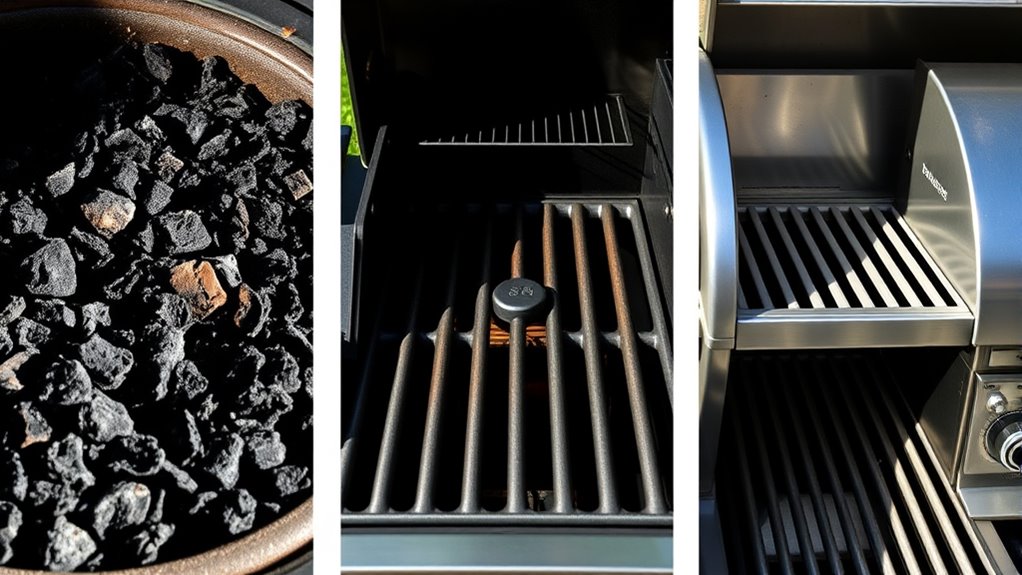
Regular maintenance and cleaning are essential to keep your grill functioning properly and producing great-tasting food. Proper ash disposal prevents buildup that can hinder airflow and affect cooking. Grease management helps avoid flare-ups and keeps your grill safe. To maintain your grill:
- Regularly remove ash from charcoal and pellet grills to prevent blockages.
- Clean grease trays and drip pans to avoid overflow and grease fires.
- Wipe down grates after each use to remove residue and prevent rust.
- Check and clear vents for proper airflow and efficient combustion.
Consistently attending to these tasks ensures your grill operates efficiently, maintains good heat, and extends its lifespan. Proper maintenance directly impacts your grilling experience and the quality of your food.
Versatility and Cooking Options

Many grill types excel in offering a wide range of cooking options, making them versatile tools for every backyard chef. Charcoal grills provide smoky flavors and support innovative cooking techniques like indirect grilling and smoking, allowing you to experiment with different textures and tastes. Gas grills, on the other hand, excel in quick heat control and versatility, enabling you to sear, roast, and even sauté with compatible cookware such as cast iron pans or griddles. Pellet grills combine the convenience of precise temperature control with the ability to smoke, bake, or braise, expanding your culinary possibilities. Your choice depends on how much variety you want in your cooking methods and the types of cookware you prefer, ensuring you can prepare a wide array of dishes effortlessly.
Environmental Impact and Sustainability

Choosing a grill not only affects your cooking experience but also impacts the environment. Each type offers different sustainability benefits.
- Charcoal grills often use renewable materials like hardwood, but produce higher emissions, making emission reduction challenging.
- Gas grills tend to have lower emissions, especially if powered by natural gas, which is cleaner and more efficient.
- Pellet grills use compressed renewable materials, such as wood pellets, promoting sustainable sourcing and reducing waste.
- Overall, opting for grills that prioritize emission reduction and renewable materials helps lower your carbon footprint. By choosing eco-friendly options, you contribute to a healthier planet without sacrificing your grilling experience.
Frequently Asked Questions
Which Grill Type Is Best for Beginner Cooks?
For beginner cooks, a gas grill is your best choice. It offers easy starter tips like simple ignition and consistent temperature control, making it user-friendly. Plus, gas grills provide a clean, quick setup, so you can focus on mastering your skills. While charcoal and pellet grills add richer flavor profiles, they require more effort. Start with gas to build confidence, then explore other options as you improve.
How Long Does Each Grill Type Typically Last?
If you want a grill that lasts longer, gas grills often top the list, thanks to easier grill maintenance and better fuel efficiency, lasting around 10-15 years with proper care. Charcoal grills typically last 5-10 years but need more frequent maintenance due to rust. Pellet grills fall in between, lasting about 5-8 years, but you should consider their pellet consumption for ongoing fuel efficiency.
Are There Health Concerns Associated With Each Grill?
You should know that each grill type has potential health risks related to air quality. Charcoal grills release more smoke and potentially harmful fumes, increasing health concerns with prolonged exposure. Gas grills produce fewer emissions but still emit some pollutants. Pellet grills tend to be cleaner but can emit fine particles. To minimize health risks, always grill in well-ventilated areas and avoid inhaling smoke or fumes directly.
Can These Grills Be Used in All Weather Conditions?
You can use charcoal, gas, and pellet grills in various weather conditions, but their weather adaptability varies. Gas grills perform well in cold or rainy weather, offering reliable seasonal performance. Charcoal grills may be trickier in rain or wind, so using a cover or shelter helps. Pellet grills work best in mild weather but might face issues in extreme cold. Always consider shelter options to maximize your grilling experience year-round.
What Safety Features Are Available on Different Grill Types?
Think of your grill as a trusted partner—safety features keep it reliable. Most grills come with safety certifications, like UL or CSA, ensuring they meet safety standards. Look for features like automatic shut-off, lid locks, and heat-resistant handles to prevent accidents. Regular grill maintenance also helps avoid hazards. Choosing a grill with these safety features guarantees your cookouts are fun and safe, giving you peace of mind every time you fire it up.
Conclusion
Choosing the right grill depends on your cooking style and priorities. For instance, if you value quick setup and convenience, a gas grill might be perfect. Imagine hosting a backyard BBQ effortlessly—gas heats up fast and keeps things simple. But if flavor is your top priority, charcoal could be your best bet. Ultimately, your choice shapes your grilling experience, so pick one that fits your lifestyle and culinary goals for delicious results every time.