
To get a perfect smoke ring, choose tender cuts like brisket or pork shoulder with good marbling, then maintain a steady smoker temperature around 225°F to 250°F. Use hardwoods like hickory or apple for consistent smoke, and soak your wood chips beforehand to prolong the burn. Keep humidity steady inside the smoker to help smoke penetrate the meat, and avoid opening the lid too often. For more tips, continue exploring how to master the perfect smoke ring.
Key Takeaways
- Choose tender, well-marbled cuts like brisket, pork shoulder, or chicken thighs for optimal smoke absorption.
- Use hardwoods such as hickory, oak, or apple, soaked in water before adding to the smoker for steady, clean smoke.
- Maintain a consistent smoker temperature between 225°F and 250°F, avoiding frequent lid openings.
- Keep the environment slightly humid inside the smoker to facilitate smoke penetration and color development.
- Minimize exposure to chemicals and excessive smoke, and use proper technique to ensure even pink smoke ring formation.

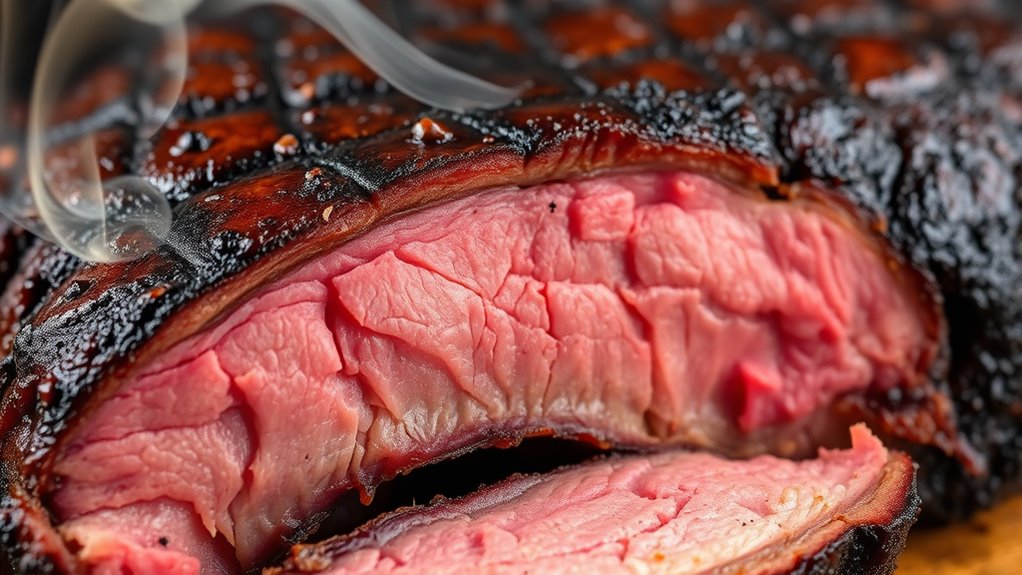
Ever wondered how to achieve that iconic, deep pink smoke ring on your barbecue? The secret lies in the right combination of meat selection and smoke wood choices, along with proper smoking techniques. When it comes to meat, opt for cuts that are tender and have enough connective tissue to break down during low and slow cooking. Classic options include brisket, pork shoulder, ribs, and chicken thighs. These cuts have a good fat ratio and marbling, which help develop that beautiful smoke ring. Avoid lean meats like loin or skinless chicken breasts if you’re aiming for a pronounced smoke ring, as they tend to produce less of that characteristic pink edge. Additionally, controlling the smoke absorption process by maintaining the right humidity and temperature enhances the development of the smoke ring. Now, the type of smoke wood you choose plays a essential role in achieving the perfect smoke ring. Hardwoods like hickory, oak, maple, and fruit woods such as apple and cherry are popular because they burn clean and produce a steady, moderate smoke that promotes the formation of the smoke ring. You want to avoid softwoods like pine or cedar, which can impart unwanted flavors and create excessive soot. When selecting your wood, consider using chunks or thick chips rather than sawdust, as they burn more evenly and generate a consistent smoke. Soak your wood chips in water for about 30 minutes before adding them to your smoker to prolong the smoke production and maintain a steady temperature, which is essential for developing that pink ring. Temperature control is equally important. Keep your smoker’s temperature steady around 225°F to 250°F. This low and slow approach allows the meat to absorb smoke evenly and helps form the characteristic pink hue just beneath the surface. During the smoking process, make sure to maintain proper airflow and avoid opening the lid too often, as sudden temperature fluctuations can hinder the formation of the smoke ring. Also, avoid using lighter fluid or quick-start methods that produce chemical residues, as they can interfere with the natural smoke absorption and compromise the appearance of the smoke ring. Finally, remember that moisture and proper curing contribute too. A slightly humid environment inside your smoker helps the smoke adhere better and penetrates the meat more effectively. When you combine quality meat, the right hardwoods, consistent temperature, and good smoking techniques, you’ll set yourself up for success. The result will be a beautifully smoked piece of meat with that deep pink, appetizing smoke ring that’s a sign of perfect barbecue.
Frequently Asked Questions
Does the Type of Wood Affect the Smoke Ring Color?
Yes, wood types considerably affect the smoke ring color. Hardwoods like hickory, oak, and fruitwoods produce a richer, deeper smoke that enhances the smoke ring’s appearance. Softer woods or those with high moisture can result in a weaker or less defined smoke ring. To achieve a vibrant smoke ring, choose the right wood types, ensuring they produce clean, consistent smoke for ideal smoke ring color.
Can Skinless Meats Develop a Good Smoke Ring?
Imagine a painter’s brush gliding across a canvas, creating a vibrant border. Skinless meats can develop a good smoke ring, but it’s a bit like that painting’s edge—less defined. Without skin, the meat’s texture changes, making the smoke ring’s consistency slightly more delicate. To improve results, guarantee proper curing, maintain low temperatures, and use a steady smoke source. With patience, your meat’s smoke ring can be just as striking.
How Does Altitude Influence Smoke Ring Formation?
Altitude effects can influence smoke ring formation because lower oxygen levels slow down the smoke ring chemistry process. At higher elevations, less oxygen and thinner air can hinder the development of that vibrant pink ring. You might need to adjust your smoking time or increase humidity to compensate. Understanding altitude effects helps you optimize your technique, ensuring your BBQ meats develop a beautiful, consistent smoke ring regardless of elevation.
Is There a Difference Between Using Gas and Charcoal for Smoke Rings?
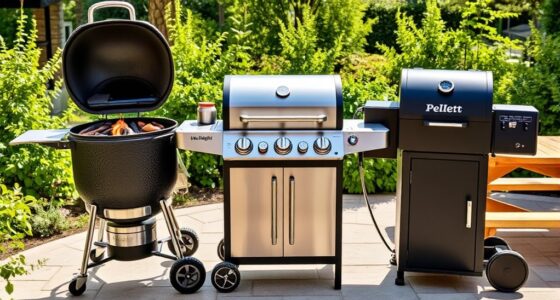
A picture is worth a thousand words, so using gas or charcoal makes a big difference. You’ll notice that charcoal often produces a richer, smokier flavor, which can enhance your smoke ring due to more soot and carbon compounds. Gas grills offer cleaner, more controlled heat but may lack the deep smoke flavor. Choosing between them depends on whether you prioritize flavor differences or convenience for achieving that perfect smoke ring.
Will Marinating Meat Prevent a Perfect Smoke Ring?
Marinating meat can slightly affect the smoke ring, mainly because marinade effects often introduce moisture that might hinder the formation of the characteristic pink ring. However, if you use a marinade that doesn’t dilute the surface, it won’t prevent a perfect smoke ring. To guarantee good smoke ring formation, focus on proper smoke exposure and temperature control, while keeping moisture retention in mind during marination.
Conclusion
Getting that perfect smoke ring isn’t just about looks; it’s a sign of well-cooked, flavorful BBQ. Did you know that a true smoke ring indicates proper smoking techniques and can even enhance the meat’s taste? When you master these simple steps, you’ll impress friends and family with your skills. So, keep practicing, stay patient, and enjoy every delicious bite—because that beautiful pink edge is a badge of BBQ honor!