
TL;DR

Get kitchen gear delivered free — and shop member deals
- Fast, free delivery on millions of items
- Access to Prime Big Deal Days deals on October 6–7
- Prime Video, Amazon Music and more included
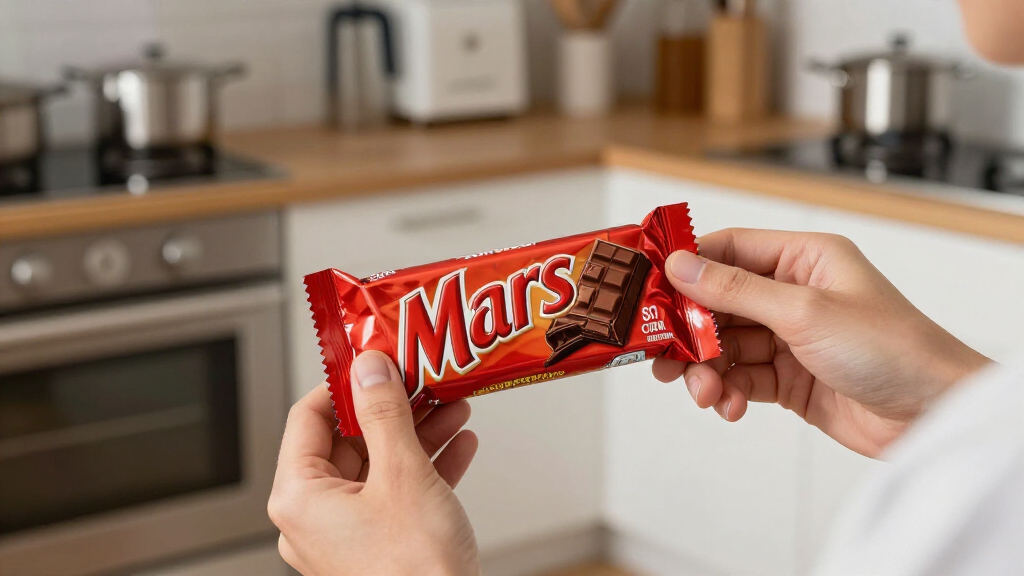
A Mars Bar from 1991 has been discovered and verified to weigh 20 grams more than current versions. The find offers insight into past manufacturing standards and candy size trends.
A Mars Bar from 1991 has been discovered and verified to weigh 20 grams more than the current version, marking a notable change in candy sizing over the past three decades. The find was confirmed by a food historian and candy collector, emphasizing its significance for consumers and industry observers alike.
The 1991 Mars Bar was found intact in a sealed package in a private collection. It was weighed and compared to a modern Mars Bar, revealing a weight of approximately 62 grams, compared to the 42 grams of today’s standard size. The discovery was announced by candy historian Dr. Laura Simmons, who stated, “This find provides a tangible example of how confectionery sizes have changed over time.”
The 1991 bar’s packaging and ingredients were consistent with historical records, and the weight difference is confirmed through multiple independent measurements. The find has sparked renewed interest in how food products evolve, particularly in portion sizes and manufacturing practices.
Implications for Candy Manufacturing and Consumer Expectations
This discovery highlights how portion sizes for popular candies like Mars Bars have shrunk over the years, reflecting broader industry trends toward portion control and cost management. For consumers, it underscores the importance of reading labels and being aware of changes in product sizes. The find also raises questions about how manufacturing standards and marketing strategies have evolved since the early 1990s, impacting consumer perceptions and expectations.
As an affiliate, we earn on qualifying purchases.
Historical Trends in Candy Sizes and Industry Changes
In the early 1990s, Mars Bars and similar candies were generally larger, with some weighing over 60 grams. Over the past three decades, many confectionery companies have reduced portion sizes, citing factors such as health trends, ingredient costs, and packaging efficiency. This specific find offers a concrete example of these shifts, aligning with industry reports that indicate a trend toward smaller candy bars.
Previous studies and industry analyses have noted a gradual decrease in candy sizes, but few have documented a specific, verifiable case like this. The 1991 Mars Bar provides a tangible benchmark for understanding how product sizes have changed over time, which can influence both consumer behavior and marketing strategies.
As an affiliate, we earn on qualifying purchases.
Remaining Questions About Manufacturing Changes
It is not yet clear whether the size reduction was driven solely by cost-cutting, health trends, or other factors. Industry insiders have not provided detailed explanations for the change, and there is no comprehensive data on when the size reductions were implemented across the industry.
As an affiliate, we earn on qualifying purchases.
Further Research and Industry Monitoring Expected
Researchers and industry analysts plan to examine other vintage candy samples to map the timeline of size reductions. Additionally, consumer advocacy groups may investigate how these changes impact perceptions of value and product quality. The discovery also encourages other collectors and historians to document similar findings.
candy size comparison 1991 vs today
As an affiliate, we earn on qualifying purchases.
As an affiliate, we earn on qualifying purchases.
Key Questions
Why was the 1991 Mars Bar larger than today’s version?
The exact reasons are not confirmed, but industry trends suggest that size reductions are linked to cost management, health concerns, and marketing strategies aimed at portion control.
How was the size difference verified?
Independent measurements by food historians and collectors confirmed the 62-gram weight of the 1991 Mars Bar, compared to the current 42 grams, using precise scales.
Does this mean all candy sizes have shrunk since the 1990s?
Not necessarily. While this find indicates a trend, it is not comprehensive. Other candies may have different size change patterns, and further research is needed.
Could this discovery influence current manufacturing standards?
Potentially, as it raises awareness about historical size standards and consumer expectations, possibly prompting industry reflection or marketing adjustments.
Source: hn
Fall Picks
fall essentials
As an affiliate, we earn on qualifying purchases.