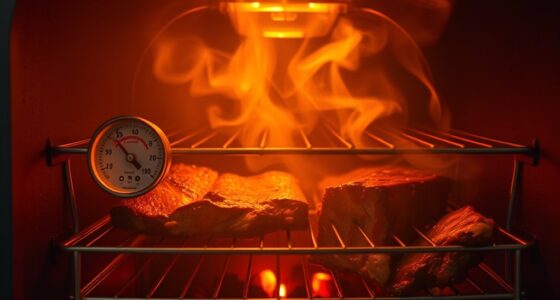
If your gas grill isn’t getting hot enough, start by checking your propane tank or natural gas supply for leaks or low levels and make certain all connections are secure. Clean and clear out clogged burners, using a wire brush or pin, to remove grease or debris. Test the ignition system, replacing batteries or cleaning spark areas if needed. If issues persist, faulty valves or damaged parts may be involved. For more detailed steps, keep exploring how to troubleshoot your grill effectively.
Key Takeaways
- Check propane or natural gas supply levels and ensure gas lines are securely connected without leaks.
- Clean and clear burner holes to prevent clogs, grease buildup, or rust obstructing airflow.
- Test the ignition system; replace batteries or ignition modules if no clicking sound occurs.
- Inspect the temperature control valve for malfunctions or restrictions and replace if necessary.
- Consider switching to an electric grill or charcoal option if persistent heat issues cannot be resolved.

Gas grills are a popular choice for outdoor cooking, but they can sometimes run into problems that ruin your outdoor fun. One common issue is when your grill refuses to get hot enough, leaving you frustrated and unsure of what’s wrong. Before you give up and switch to a charcoal alternative or even an electric grill, there are several troubleshooting steps worth trying.
First, check the propane tank or natural gas supply. Often, the issue is as simple as an empty tank or a disconnected hose. If your tank is low, replace or refill it. Confirm the gas line is securely connected and free of leaks. A loose or damaged connection can prevent gas from reaching the burners, making the grill fail to heat properly. You can test for leaks by applying a soapy water solution to the connections; bubbles will form if there’s a leak. Tighten or replace faulty parts as needed.
Check propane or gas supply; refuel, reconnect hoses, and test for leaks to ensure proper grill function.
Next, examine the burners themselves. Over time, grease, food debris, or rust can clog the small holes that distribute gas. If these are blocked, your grill won’t heat evenly or reach the desired temperature. Remove the burners carefully and clean them with a wire brush or a pin to clear out any obstructions. Regular maintenance prevents buildup and ensures your grill performs at its best. Additionally, using proper cleaning techniques can extend the lifespan of your burners and improve performance.
The ignition system is another common culprit. If you hear a clicking sound but no flame, the ignition may be faulty or misaligned. Replace the batteries if your grill has a push-button ignition or consider replacing the ignition module altogether. Sometimes, moisture or dirt can interfere with spark generation, so give the area a good cleaning.
If these steps don’t solve the problem, it’s worth considering if your grill’s temperature control valve is malfunctioning. A faulty valve can restrict gas flow, preventing the grill from heating up. Replacing or repairing this component may be necessary, especially if the grill is older.
While troubleshooting, keep in mind that if your gas grill continues to fail, you might want to explore other options like a high-quality electric grill. Electric grills offer consistent heat and are easier to maintain, making them a viable alternative. For those who prefer the smoky flavor of traditional grilling but want a different experience, a charcoal alternative can be an option, though it requires a different setup and patience.
In any case, proper maintenance and quick troubleshooting can save you time and frustration, letting you get back to enjoying your outdoor cooking. Whether you fix your gas grill or switch to an electric model, the key is understanding what might be causing the issue and knowing how to solve it efficiently.
Frequently Asked Questions
Why Does My Gas Grill Not Ignite at All?
If your gas grill won’t ignite, check the ignition switch to confirm it’s on and functioning properly. Next, inspect the spark generator; if it’s dirty or damaged, it won’t produce a spark. Clean or replace the spark generator if needed. Make sure the propane tank has enough fuel, and verify all connections are secure. These steps should help you get your grill igniting again.
How Can I Check if My Propane Tank Is Empty?
To check if your propane tank is empty, start by feeling its weight—an empty tank feels noticeably lighter. You can also weigh the tank on a scale and compare it to the full tank weight listed on its collar. If it’s close to or lighter than the empty weight, you likely need a refill. Remember, low propane levels can cause your grill not to heat properly.
What’s the Best Way to Clean Clogged Burner Ports?
If you notice uneven flames or no heat, start with grill cleaning by removing the grates and covers. Use a brush or pipe cleaner to clear clogged burner ports, ensuring proper airflow. Regular burner maintenance prevents blockages and keeps your grill performing efficiently. Take your time, and don’t rush—cleaning thoroughly guarantees even heat distribution, making your grilling experience enjoyable and safe.
How Do I Adjust the Temperature on My Gas Grill?
To modify the temperature on your gas grill, turn the knobs to your desired heat level. Keep the grill lid closed to trap heat and maintain consistent cooking temperatures. Use the built-in thermometer or place a separate thermometer on the grill lid to monitor temperature accurately. Adjust the knobs accordingly, and wait a few minutes for the grill to stabilize before cooking. This ensures even heat and perfect results.
Why Is My Grill Producing Uneven Heat?
Your grill producing uneven heat likely results from poor heat distribution, often caused by incomplete grill maintenance. You should clean the burners and grease traps regularly, guaranteeing they’re free of debris that blocks airflow. Check the heat plates and ensure they’re properly positioned, as misaligned parts can cause hot spots. Also, consider using zone cooking techniques, adjusting the burners for even heat distribution across your grill surface.
Conclusion
Don’t let a hot grill frustration ruin your barbecue plans. With a few simple troubleshooting steps, you can often identify and fix the issue quickly. Remember, regular maintenance and proper cleaning can prevent many problems before they start. If you still can’t get it hot enough, consulting a professional guarantees safety and long-term performance. By staying proactive, you’ll enjoy perfectly grilled meals and avoid unnecessary headaches, turning every cookout into a success.