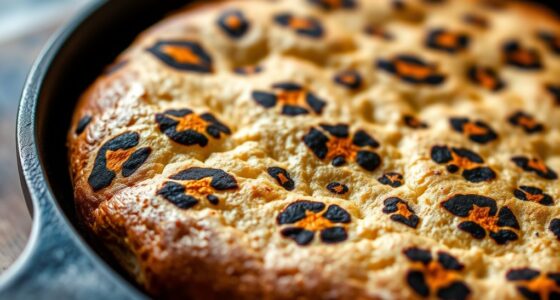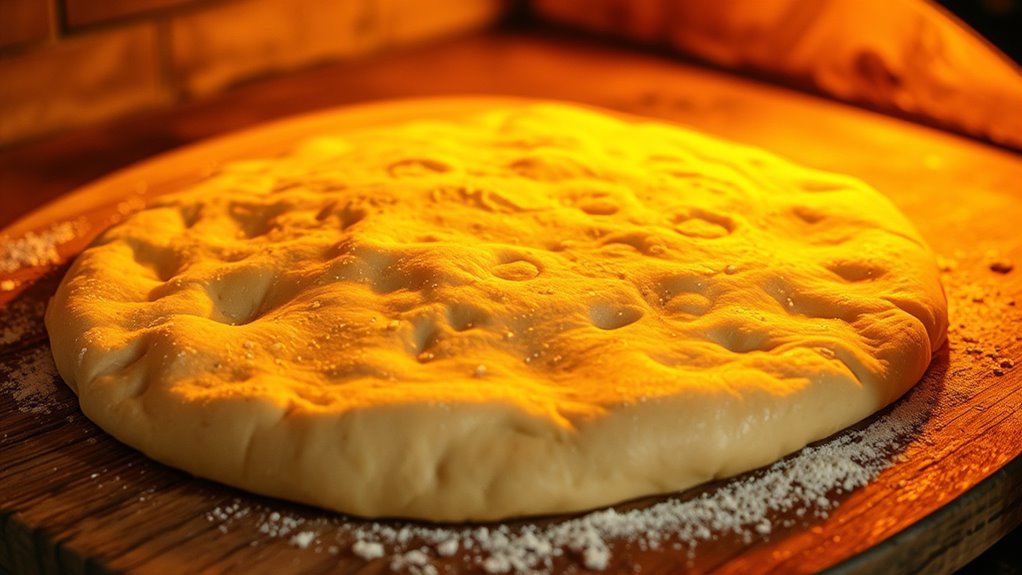

To master pizza dough for high-heat ovens, focus on gluten development, which provides the dough’s structure and elasticity to trap gases for a airy, chewy crust. Proper fermentation enhances flavor and dough resilience, while hydration levels affect crust texture—higher for airiness, lower for density. Using high-protein flour and accurate oven temperatures guarantees excellent oven spring and crust crispiness. Keep your technique precise, and you’ll unlock the science behind perfect high-heat pizza every time.
Key Takeaways
- Proper gluten development creates a strong, elastic dough that traps gases and supports oven spring in high-heat baking.
- High hydration levels produce softer, airier crusts with larger holes, enhancing texture in high-temperature ovens.
- Optimal oven temperature (450–500°F) ensures efficient heat transfer, browning, and crust development through Maillard reaction and caramelization.
- Using preheated stones or steels improves heat conduction, promoting even baking and superior crust crispiness.
- Controlled fermentation timing balances dough strength and flavor, vital for achieving resilience and desirable oven spring.
The Role of Gluten Development in High-Heat Baking

Gluten development is essential when baking pizza dough at high temperatures because it creates the structure that traps gases and gives the crust its chewy texture. As you knead, the gluten matrix forms through the alignment of glutenin and gliadin proteins, creating a resilient protein network. This network provides elasticity and strength, allowing the dough to hold the gases produced during fermentation. When exposed to high heat, a well-developed gluten matrix ensures the crust expands evenly without collapsing. The protein network’s integrity determines how well the dough rises and maintains its shape during baking. Proper gluten development results in a chewy, airy crust with a pleasing texture, making it a critical step for achieving that perfect high-heat pizza crust.
How Yeast Fermentation Influences Dough Strength and Flavor

Yeast fermentation plays a crucial role in shaping both the strength and flavor of your pizza dough. As yeast activity progresses, it produces carbon dioxide, which creates the dough’s rise and airy structure. Simultaneously, fermentation enhances flavor development through the breakdown of sugars and starches, adding complexity to your crust. Proper fermentation balances dough strength with flavor richness, ensuring resilience in high-heat ovens. Here’s a quick overview:
| Factor | Effect on Dough |
|---|---|
| Yeast activity | Develops gluten structure, increases strength |
| Flavor development | Adds depth and tang through byproducts of fermentation |
| Fermentation time | Longer times boost flavor and dough elasticity |
| Temperature | Higher temps accelerate yeast activity |
Understanding this process helps you control dough characteristics for perfect baking results.
The Impact of Hydration Levels on Crust Texture
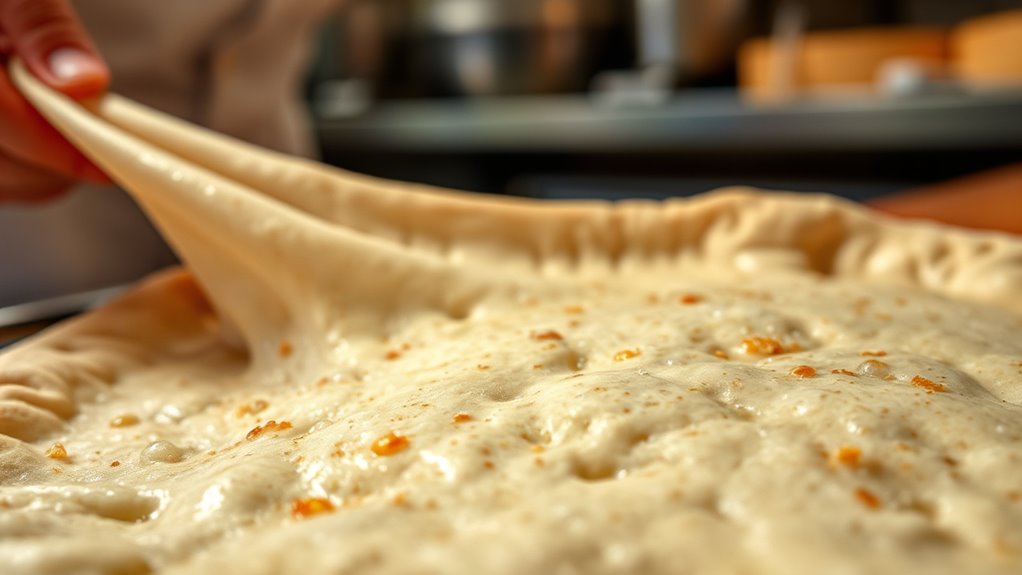
The amount of water in your dough—its hydration level—significantly influences the final crust texture. Proper hydration control is essential because higher hydration usually results in a softer, airier crust with larger holes, while lower hydration creates a denser, chewier crust. When you increase hydration, the dough becomes more extensible, making it easier to develop a light, open crumb. Conversely, reducing hydration tightens the gluten network, producing a firmer crust. Achieving the right hydration level requires experimentation based on your ingredients and oven conditions. Too much water can cause the dough to be sticky and difficult to handle, while too little may yield a dry, tough crust. Mastering hydration control allows you to craft a pizza with the ideal crust texture for your high-heat oven.
Effect of Flour Type and Protein Content on Dough Performance

The type of flour you choose directly affects your dough’s elasticity and strength, thanks to its protein content. Higher protein flours create a more robust structure, especially when combined with proper hydration. Understanding how protein impacts dough helps you optimize performance for a perfect crust.
Protein Impact on Structure
Since protein content directly influences dough’s structure, choosing the right flour is essential for achieving the desired crust and texture. Higher protein levels develop stronger protein structures, which enhance dough elasticity, allowing it to stretch without tearing. This elasticity helps trap carbon dioxide during fermentation, resulting in a light, airy crumb. Conversely, flours with lower protein content produce a softer, more tender dough, but may lack the strength needed for high-heat ovens. The balance of protein impacts how well the dough holds its shape and resists collapse under high temperatures. By understanding how protein structure affects dough elasticity, you can select the appropriate flour to optimize oven performance and achieve a perfect pizza crust. This knowledge helps you tailor your dough for specific textures and baking conditions.
Flour Type and Elasticity
Choosing the right flour type directly affects your dough’s elasticity and overall performance. Higher-quality flours with greater flour strength develop a stronger gluten network, which gives your dough better stretch and resilience. Bread flour, with its higher protein content, creates a more robust gluten structure, making the dough more elastic and capable of trapping gases during fermentation. Conversely, lower-protein flours produce a softer, less elastic dough, which may not hold up well in high-heat ovens. The flour’s protein content influences gluten development, directly impacting dough elasticity, stretchability, and the final crust’s texture. Selecting the appropriate flour guarantees your dough can withstand high temperatures without tearing or collapsing, achieving that perfect balance of chewiness and crispness in your pizza.
Hydration and Dough Strength
Hydration level plays a crucial role in determining dough strength, especially when considering the flour’s protein content. Higher hydration improves water retention within the dough, which enhances dough elasticity and makes it more extensible. When your dough has adequate hydration, the gluten proteins develop better, creating a stronger, more resilient structure. This is particularly important for high-heat ovens, where a well-hydrated dough withstands intense heat without tearing or becoming too stiff. Conversely, too little water results in a stiff, less elastic dough that’s difficult to stretch. Achieving the right hydration balance depends on your flour’s protein content—higher protein flours typically require more water. Proper hydration ensures essential dough performance, leading to a lighter, airier crust with better oven spring.
Maillard Reaction and Caramelization During High-Temperature Baking
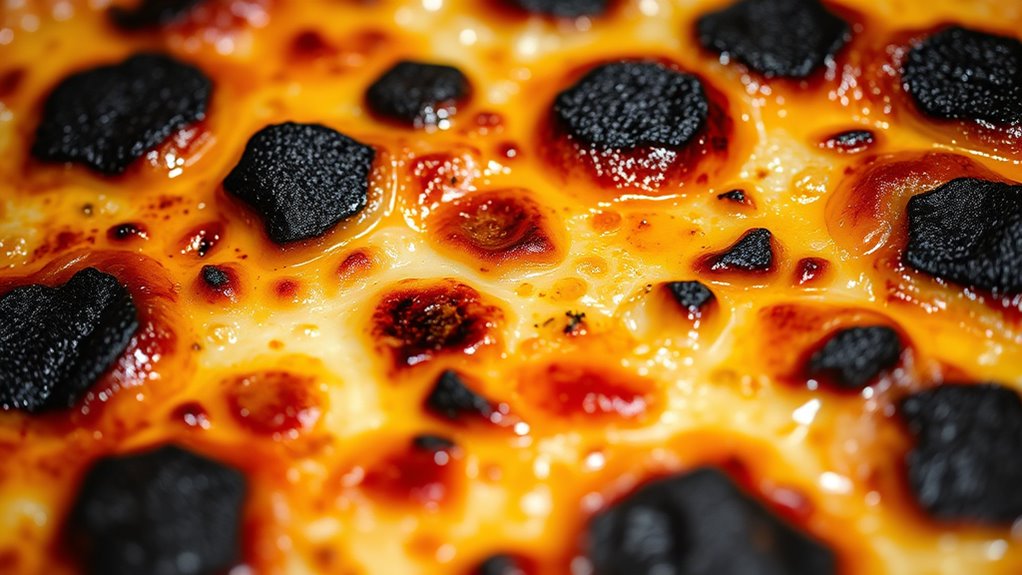
When you bake pizza at high temperatures, the heat triggers chemical reactions that develop rich flavors and appealing colors. The Maillard reaction occurs when amino acids and sugars interact, creating complex flavor compounds and a golden-brown crust. Simultaneously, sugar caramelization happens as sugars break down at high heat, producing deeper caramel tones and enhancing flavor development. These processes give your pizza its inviting aroma, savory taste, and attractive appearance. Controlling oven temperature ensures these reactions happen as effectively as possible without burning the crust. The Maillard reaction and caramelization work together, transforming simple ingredients into a delicious, flavorful masterpiece. Understanding these reactions helps you craft pizza with perfect coloration, depth of flavor, and irresistible aroma—key elements of a high-quality, high-heat baked pizza.
Techniques for Achieving the Perfect Oven Spring and Crust Crispiness

To get the perfect oven spring and a crispy crust, you need to focus on proper dough fermentation, which develops flavor and structure. Using an ideal oven temperature guarantees rapid rise and browning without burning. Additionally, applying correct baking techniques helps you achieve that ideal balance between a light interior and a crunchy exterior.
Proper Dough Fermentation
Proper dough fermentation is essential for achieving that perfect oven spring and a crisp crust. During fermentation, yeast consumes sugars, producing gases that improve dough elasticity and flavor. Correct fermentation timing ensures the dough develops enough structure without over-proofing, which can weaken gluten. To maximize fermentation, consider factors like ambient temperature and dough thickness.
| Fermentation Stage | Key Focus |
|---|---|
| Initial Fermentation | Develop dough elasticity |
| Proofing | Achieve optimal fermentation timing |
| Final Rise | Prepare for baking |
Adjusting fermentation timing allows you to control dough strength and gas retention, directly impacting oven spring and crust texture. Mastering this process ensures consistent, high-quality results in your high-heat oven.
Optimal Oven Temperature
Achieving the perfect oven spring and a crispy crust hinges on controlling your oven’s temperature precisely. First, ensure your oven is properly calibrated; inaccurate settings can hinder heat transfer and result in uneven baking. High temperatures—around 450–500°F—maximize thermal conductivity, allowing heat to penetrate the dough quickly and promote excellent oven spring. Preheat thoroughly to guarantee consistent heat distribution, which is essential for crust crispiness. Using a pizza stone or steel helps absorb and radiate heat evenly, improving crust texture. Keep in mind that fluctuating temperatures can affect dough expansion and crust formation. Regular oven calibration and understanding thermal conductivity are indispensable to maintaining the ideal environment for high-heat baking, ensuring your pizza develops the desired rise and crunch every time.
Correct Baking Techniques
Ever wonder how to guarantee your pizza develops that perfect oven spring and a satisfyingly crispy crust? The key is mastering your baking technique. Start by ensuring your dough has good elasticity, which depends on the right flour protein content. Higher protein flours, like bread flour, create stronger gluten networks that trap gases during baking, promoting better oven spring. Before baking, let your dough rest and proof properly—this allows gluten to develop fully. When placing your pizza in the oven, avoid overloading it; a hot, well-preheated surface helps achieve crispiness. Bake at high temperatures to maximize oven spring and crust texture. Finally, use a pizza peel or parchment paper for easy transfer. Consistent technique and the right flour protein level deliver that ideal balance of rise and crunch.
Frequently Asked Questions
How Does Oven Temperature Affect Dough Elasticity and Handling?
Oven heat substantially impacts dough elasticity and handling. When you increase oven temperature, the intense heat causes the dough to stretch more easily, making it more manageable. Higher oven heat activates gluten quickly, helping the dough retain its shape without tearing. You’ll notice that with proper oven heat, your dough becomes more elastic, allowing you to achieve a thin, even crust while maintaining good handling during shaping.
What Role Does Air Circulation Play in High-Heat Pizza Baking?
Air circulation plays a vital role in high-heat pizza baking by optimizing ventilation efficiency and airflow dynamics. When you guarantee proper airflow, the heat distributes evenly across the pizza, resulting in a perfectly crisp crust and well-cooked toppings. Good ventilation prevents hot spots, reduces moisture buildup, and helps achieve that professional-quality finish. You should monitor and enhance airflow to get consistent, delicious results every time you bake at high temperatures.
How Can I Prevent Burning the Crust While Achieving High Heat?
To prevent burning your crust while using high heat, focus on proper dough hydration and fermentation timing. Keep your dough slightly wetter, which helps create a resilient crust that withstands high temperatures. Also, make certain you don’t overferment—allow enough time for flavor development without compromising structure. Use a pizza peel to monitor crust color closely, and consider adjusting oven rack placement to protect the edges from direct heat, preventing burning.
Does Sugar Content in Dough Influence Browning at High Temperatures?
Imagine your pizza crust turning a beautiful golden-brown, thanks to sugar caramelization. Yes, the sugar content in your dough influences crust coloration at high temperatures; more sugar accelerates browning, creating a richer flavor. However, too much can cause over-browning or burning. Balance the sugar to achieve perfect crust coloration without risking burnt spots, and you’ll enjoy that enticing, appetizing look and taste every time.
What Are Common Mistakes in Preparing Dough for High-Heat Ovens?
You often make mistakes by not paying attention to dough hydration, which affects oven spring and crust texture. Rushing fermentation timing can lead to underdeveloped flavor and poor gluten structure. To avoid these errors, make certain your dough has proper hydration levels and allow sufficient fermentation time. This helps your pizza develop better browning, elasticity, and overall quality when baked in high-heat ovens.
Conclusion
Think of your pizza dough as a symphony, each element playing its part—gluten, yeast, hydration—creating harmony in the oven’s heat. When you master these science-backed techniques, every slice becomes a masterpiece. I remember my first high-heat bake, the crackling crust like a fireworks display—proof that understanding dough science transforms your pizza from good to unforgettable. Keep experimenting, and let your passion turn your oven into a culinary fireworks show.