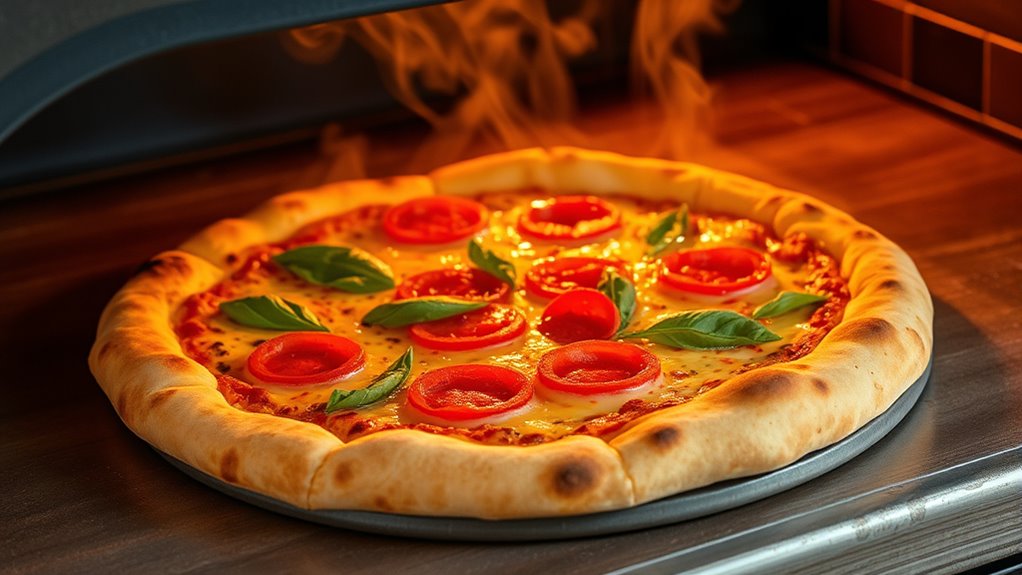

To make pizzeria-quality pizza at home without professional gear, start by preheating your oven to 500°F with a pizza stone or inverted baking sheet inside. Let your dough ferment for 1-2 hours at room temp or refrigerate overnight for better flavor and texture. Handle the dough gently, shape it by hand, and keep toppings light. Bake on the hot surface until the crust is golden and toppings are bubbling—discover more tips just ahead.

Get kitchen gear delivered free with Prime
- Fast, free delivery on millions of items
- Prime Video, Amazon Music and more included
- Member-only deals all year
Key Takeaways
- Preheat a pizza stone or inverted baking sheet at 500°F (260°C) for a crispy crust.
- Ferment dough at room temperature 1-2 hours or refrigerate overnight for enhanced flavor.
- Hand-stretch or roll dough onto parchment for light, airy texture without overhandling.
- Bake on the hot surface for 10-15 minutes until crust is golden and cheese bubbles.
- Use broiler or high heat techniques to mimic professional oven intensity and improve crust quality.
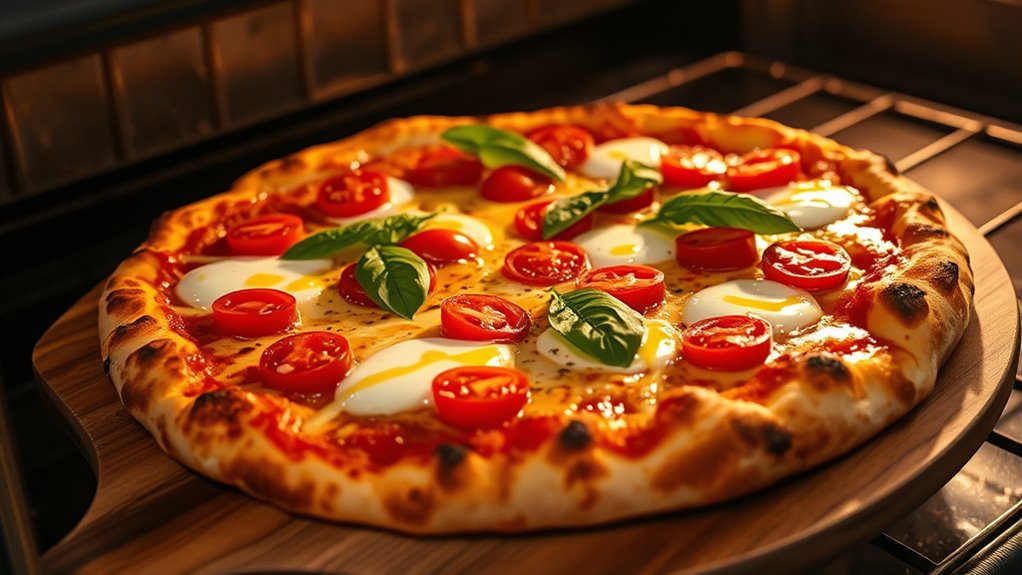
You don’t need professional equipment to make pizza that rivals your favorite pizzeria. Your home oven, combined with some simple techniques, can produce a crust that’s crispy on the outside and tender inside. The key is understanding how to optimize your oven’s capabilities and master the dough fermentation process.
Start by preheating your home oven as high as it can go, ideally around 500°F (260°C). Many home ovens have a broiler setting, which can help mimic the intense heat of commercial pizza ovens. Place a pizza stone or an inverted baking sheet on the middle rack while the oven heats up. This creates a hot surface that promotes even baking and a crisp crust.
Preheat your oven to 500°F with a pizza stone for perfect, crispy crust.
When it comes to dough fermentation, patience is your best friend. The fermentation process develops flavor and structure in your dough, leading to a more authentic pizzeria-style pizza. To do this right, mix your ingredients and knead the dough until smooth. Then, let it ferment at room temperature for about 1 to 2 hours, allowing it to rise and develop gluten. For even better results, refrigerate the dough overnight. Slow fermentation in the fridge enhances flavor and gives the crust a chewy, airy texture. Just cover it tightly with plastic wrap or a damp cloth and let it sit in the fridge for at least 12 hours or up to 48 hours.
When ready to bake, punch down the dough and stretch or roll it into your desired shape. Avoid using a rolling pin if you want a more artisanal look — hand-stretching preserves the air bubbles that create a light, airy crust. Transfer the dough onto a parchment paper-lined peel or a baking sheet. Add your toppings sparingly; too much moisture or overload can hinder crisping. Slide your prepared pizza onto the hot pizza stone or baking sheet, then bake for 10-15 minutes, checking for a golden-brown crust and bubbling cheese.
The secret to pizzeria-quality results lies in your dough’s fermentation and the high heat of your home oven. Don’t rush the fermentation process; it’s what builds depth of flavor. Additionally, using proper oven techniques and tools like a pizza stone or steel can significantly improve your crust’s texture. And remember, using your home oven to its maximum temperature with a preheated stone simulates the intense heat of professional pizza ovens. With patience and practice, you can craft pizzas that impress everyone, all without expensive gear.
As an affiliate, we earn on qualifying purchases.
Frequently Asked Questions
Can I Make Pizza Dough Without a Stand Mixer?
Yes, you can make pizza dough without a stand mixer. Just use manual kneading to develop gluten, which is essential for a good crust. Mix your ingredients until combined, then knead the dough on a floured surface for about 10 minutes. This process helps build the gluten structure, giving your pizza that authentic, chewy texture. It’s a bit more effort, but the results are well worth it.
How Do I Prevent My Pizza From Sticking?
To prevent your pizza from sticking, start by flour dusting your work surface and rolling pin to keep the dough from adhering. Lightly flour the dough and your hands when handling it. You can also spray your baking surface with a non-stick spray before placing the pizza on it. These simple steps help guarantee your pizza slides off easily and maintains that perfect crust without tearing or sticking.
What’s the Best Way to Store Leftover Pizza?
When it’s time to tuck away your leftover pizza, think of it as giving it a cozy nap. Store slices in a pizza box or airtight container, ensuring they stay fresh. For reheating, use techniques like a skillet or oven to revive that crispy crust. Avoid sogginess by steering clear of the microwave or wrapping too tightly. Proper storage and reheating keep your pizza tasting just as delicious as day one.
Can I Use a Regular Oven for High-Temperature Baking?
Yes, you can use a regular oven for high-temperature baking. Set the oven temperature to at least 500°F (260°C), and for even, pizzeria-quality results, place a pizza stone inside while preheating. The hot stone mimics a brick oven’s effect, crisping the crust perfectly. Just guarantee your oven can reach and maintain high heat, and give the stone enough time to heat thoroughly before baking your pizza.
How Do I Achieve a Crispy Crust Without Professional Equipment?
Achieving a crispy crust is like turning a soft pillow into a cracker. Use oven tricks like preheating your baking stone or steel, if you have one, and setting your oven to its highest temperature. Ingredient substitutions, such as a touch of cornmeal or semolina on your dough, help crisp it up. Don’t forget to bake on the lowest rack for that perfect, pizzeria-style crunch you crave.
As an affiliate, we earn on qualifying purchases.
Conclusion
Remember, making pizzeria-quality pizza at home is like crafting a masterpiece with your own hands—imperfect yet beautiful. I once tried recreating my favorite slice using only a basic oven, and it turned out so delicious my friends couldn’t believe I didn’t have professional equipment. With patience and a little practice, you’ll realize that great pizza isn’t about fancy gear but about your passion and effort. Your perfect pie is just a few simple steps away.
pizza dough fermentation container
As an affiliate, we earn on qualifying purchases.
As an affiliate, we earn on qualifying purchases.
As an affiliate, we earn on qualifying purchases.
Halloween Picks
halloween
As an affiliate, we earn on qualifying purchases.