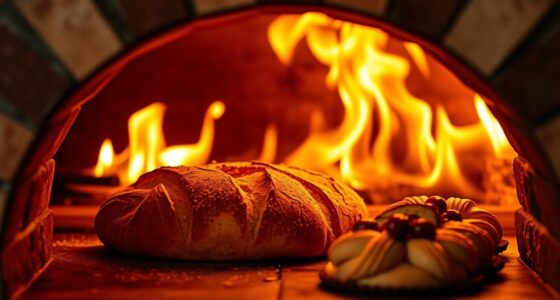
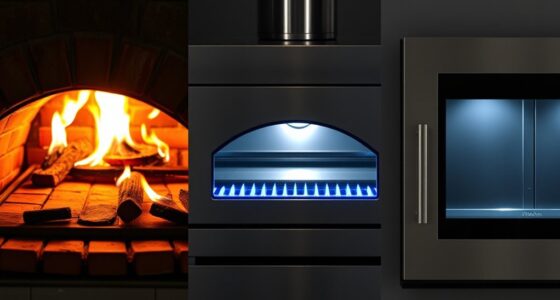
When choosing between portable and brick pizza ovens, you can enjoy the convenience and flexibility of portable models that are easy to move and set up, perfect for casual use and outdoor adventures. Brick ovens, however, deliver authentic, restaurant-quality results with high heat and crisp crusts but require more space, time, and effort to install. Keep in mind climate and environmental factors can surprise you—understanding these details guarantees you pick the best oven for your needs. Want to explore more?
Key Takeaways
- Portable ovens offer mobility and ease of setup, ideal for outdoor events, while brick ovens provide authentic heat and flavor but require permanent installation.
- Brick ovens deliver high, consistent temperatures for superior pizza quality, whereas portable models may have limited heat performance.
- Installation and maintenance are more complex for brick ovens, involving space, foundation, and weatherproofing; portable ovens are more convenient to move and maintain.
- Climate and weather impact oven durability and performance; portable ovens handle varying conditions better, while brick ovens need extra weatherproofing.
- Proper evaluation of space, budget, and environment is essential to choose the most suitable oven, as ignoring these factors can lead to performance issues or higher costs.
Advantages and Disadvantages of Portable Pizza Ovens
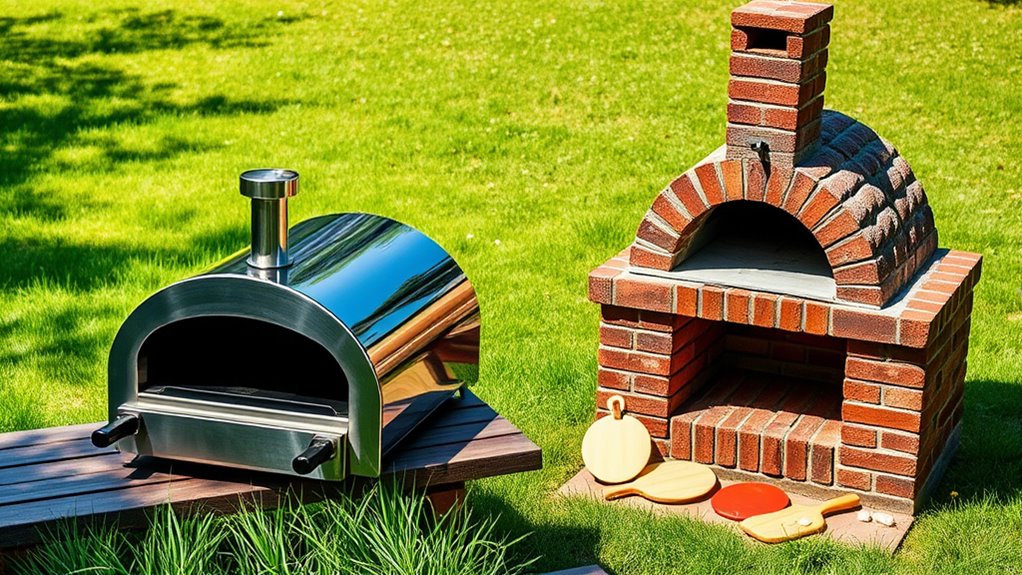
Portable pizza ovens offer flexibility and convenience, making them a popular choice for both casual cooks and professional chefs. Their pizza versatility allows you to experiment with different styles and recipes without needing a permanent setup. You can easily transport them to picnics, camping trips, or backyard parties, providing fresh, hot pizza wherever you go. The portability convenience means you don’t have to be tied down to a single location, giving you more freedom to cook outdoors or in different spaces. However, there are some downsides. Portable ovens often have limited capacity and may take longer to heat up compared to brick ovens. Additionally, they might not reach the same high temperatures, which could affect pizza quality. Despite these drawbacks, their ease of use keeps them a favorite for many.
Benefits and Drawbacks of Brick Pizza Ovens

Brick pizza ovens are renowned for their ability to produce authentic, restaurant-quality pies thanks to their high, sustained heat and excellent heat retention. This results in perfectly cooked crusts and flavorful toppings. Using a pizza stone inside the oven helps distribute heat evenly, ensuring consistent results. However, brick ovens are bulky and require significant oven insulation to maintain temperature, which can make installation challenging and costly. They also take longer to heat up and cool down, limiting convenience. Maintenance can be demanding, as bricks and mortar may need repairs over time. Despite these drawbacks, many pizza enthusiasts value the rich flavor and crispy crust that only a brick oven can deliver. Ultimately, the decision depends on your space, budget, and commitment to quality.
Unexpected Factors to Consider When Choosing Your Pizza Oven
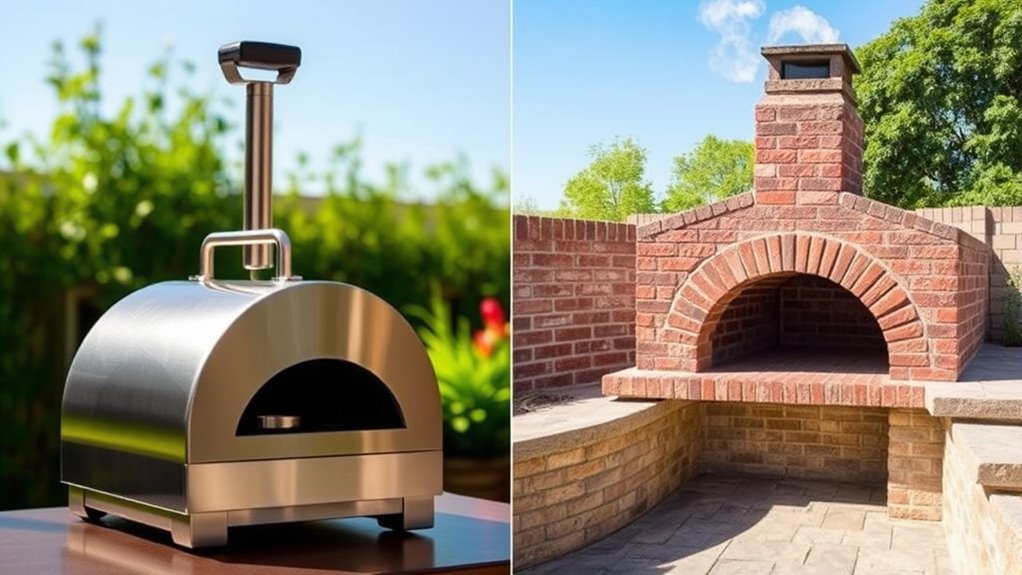
When selecting a pizza oven, you might overlook some unexpected factors that can profoundly affect your overall experience. Climate adaptability is essential—if you live in a cold or humid area, your oven’s performance and durability could suffer if it’s not designed for your climate. Portable ovens often handle varying conditions better, while brick ovens may require additional weatherproofing. Installation complexity is another key consideration. Brick ovens can be challenging to set up, needing a sturdy foundation and proper ventilation, which might involve considerable effort and cost. Conversely, portable ovens are generally easy to assemble and relocate, offering convenience. Ignoring these factors could lead to frustration or costly adjustments later, so evaluate how your environment and installation needs align with the oven you choose.
Frequently Asked Questions
How Does Oven Size Impact Cooking Time and Pizza Quality?
Larger oven capacity allows you to cook more pizzas at once, but it can also impact cooking time and pizza quality. A bigger oven generally retains heat better, reducing cooking time and ensuring even heat distribution. However, if the oven is too large and poorly insulated, heat retention may suffer, leading to uneven cooking. Choose an oven size that balances capacity with efficient heat retention for ideal pizza results.
Can Portable Ovens Handle High-Altitude Baking Challenges?
Yes, portable ovens can handle high-altitude baking challenges if you focus on altitude adaptation. You’ll need to adjust your recipes for lower air pressure and longer cooking times. Proper oven insulation helps maintain consistent heat, which is essential at high altitudes. Make sure your portable oven has good insulation, so it retains heat effectively. With these adjustments, you can bake delicious pizzas even at challenging elevations.
What Are the Environmental Impacts of Each Oven Type?
You’ll find that portable pizza ovens generally have lower environmental impacts, using less energy and often made from sustainable materials. For example, their smaller size means up to 50% less energy consumption compared to brick ovens, which require more resources for construction and insulation. Brick ovens, however, can last decades, reducing waste over time. Your choice affects not just your cooking but also the planet’s health.
Are There Significant Safety Concerns With Portable Versus Brick Ovens?
You should be aware that portable ovens pose a fire hazard if not used carefully, especially outdoors with proper clearance. Ventilation concerns are also critical, as portable models often produce more smoke and fumes, requiring good airflow. Brick ovens tend to be safer if built correctly, with less risk of fire spread, but you still need to make certain of proper ventilation and safety measures to prevent accidents.
How Do Maintenance Requirements Differ Between the Two Oven Options?
Maintaining your oven is like tending a garden—you need consistent care. Portable ovens demand frequent cleaning routines due to their smaller size and exposure to outdoor elements, and repair frequency can be higher because of fragile parts. Brick ovens, on the other hand, require less frequent cleaning but need occasional mortar checks and repairs over time. Overall, portable ovens are more hands-on, but brick ovens reward your patience with durability.
Conclusion
Choosing between portable and brick pizza ovens is like selecting a trusted companion or a steadfast fortress. Both serve as gateways to delicious pizza, but each carries its own symbolism—freedom and flexibility versus tradition and permanence. Whichever you pick, remember that your oven is more than just a tool; it’s the heart of your culinary journey. Embrace what aligns with your lifestyle, and let your oven symbolize your passion for perfect pizza, no matter where the journey takes you.