
To connect a propane tank safely, start by gathering all necessary tools like gloves, safety goggles, and a wrench. Inspect the tank for damage, corrosion, and leaks, then choose an open, well-ventilated spot away from heat or flames. Attach the regulator and hose firmly, making sure fittings are tight. Before use, perform a leak test with soapy water, and always double-check connections. Continue along to learn detailed steps for a safe, reliable setup.

Get kitchen gear delivered free with Prime
- Fast, free delivery on millions of items
- Prime Video, Amazon Music and more included
- Member-only deals all year
Key Takeaways
- Inspect the propane tank for damage, leaks, and safety tags before connecting.
- Choose a well-ventilated, outdoor location away from ignition sources for setup.
- Attach the regulator securely to the tank valve, ensuring all fittings are tight without over-tightening.
- Conduct a leak test with soapy water on all connections before turning on the gas.
- Double-check connections for leaks, then safely ignite the appliance following proper procedures.
As an affiliate, we earn on qualifying purchases.
Gathering the Necessary Tools and Equipment
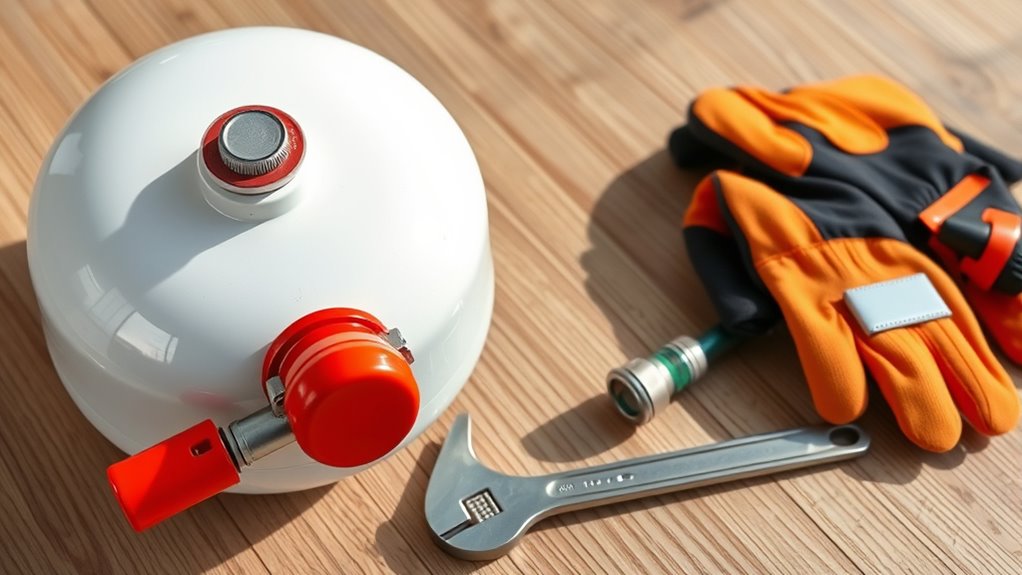
Before you begin connecting a propane tank, gather all the tools and equipment you’ll need to guarantee the process is safe and efficient. You should have gloves, safety goggles, and a wrench to handle fittings securely. Ensure the tank is stored according to storage regulations, keeping it upright and away from heat sources. Check that the regulator and hose are in good condition, free of leaks or damage. Proper transportation safety measures are essential—make sure the tank remains upright and is secured during movement. Having these items ready minimizes risks and ensures a smooth connection. Being prepared with the right tools and understanding storage and transportation safety helps prevent accidents and ensures you handle the propane tank correctly from start to finish.
leak test soap solution for propane
As an affiliate, we earn on qualifying purchases.
As an affiliate, we earn on qualifying purchases.
Inspecting the Propane Tank for Safety

Inspecting the propane tank for safety is a vital step before connecting it to your appliance. First, check for signs of tank corrosion, such as rust or pitting, which can weaken the tank’s structure. If you notice corrosion, do not use the tank and contact a professional for inspection. Next, examine the valve integrity; ensure the valve is clean, free of damage, and tightly sealed. Look for any leaks or cracks around the valve area. If you detect a hissing sound or smell gas, immediately turn off the valve and move the tank to a well-ventilated area. Confirm that the tank has a proper inspection tag indicating recent safety checks. Performing these inspections helps prevent leaks, accidents, and guarantees safe operation.
propane tank safety inspection tools
As an affiliate, we earn on qualifying purchases.
As an affiliate, we earn on qualifying purchases.
Choosing the Right Location for Connection

Choosing the right location for connecting your propane tank is essential for safety and efficient operation. You need a spot with proper ventilation considerations to prevent gas buildup in case of leaks. Avoid enclosed or poorly ventilated areas, as propane can accumulate and pose a fire hazard. Additionally, select a location that offers weather protection, shielding the tank from direct sunlight, rain, and snow. This helps maintain the tank’s integrity and prevents temperature fluctuations that could affect pressure and performance. Keep the tank away from ignition sources, high-traffic areas, and anything flammable. By choosing a well-ventilated, weather-protected spot, you ensure safe, reliable operation while minimizing risks associated with propane use.
As an affiliate, we earn on qualifying purchases.
Preparing the Connection Area
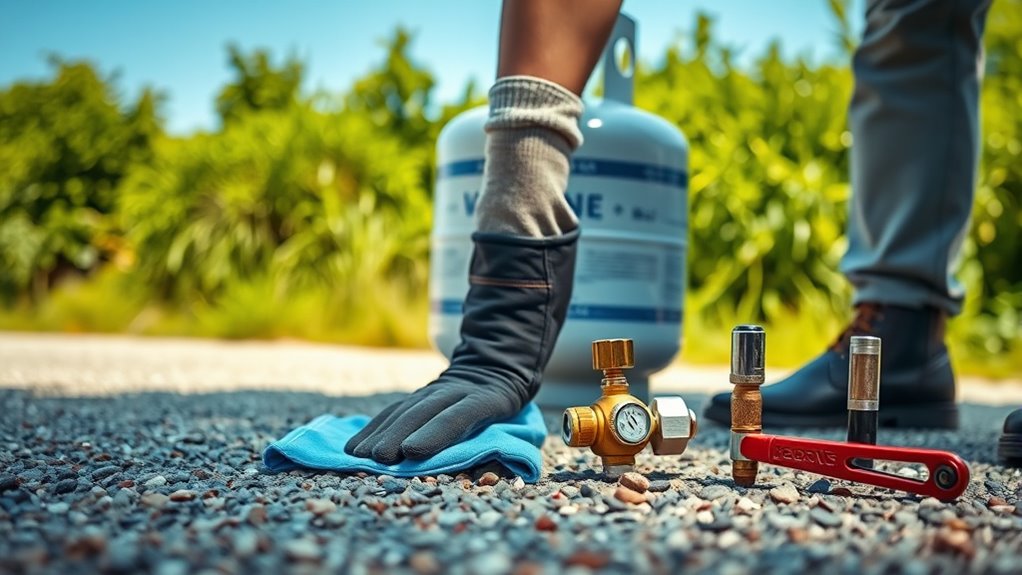
To guarantee a secure and leak-free connection, you need to prepare the area around your propane tank properly. Ensure the fuel storage area is clear of debris, clutter, and any flammable materials. A tidy space reduces the risk of accidents and makes inspection easier. Check that the area meets ventilation requirements; good airflow is vital to prevent gas buildup. Keep the space well-ventilated and free of obstructions, especially if you’re working indoors or in enclosed spaces. Confirm there are no sources of ignition nearby, such as open flames or electrical devices. Proper preparation minimizes hazards and helps you identify potential issues before connecting the tank. Taking these steps ensures a safe environment for the connection process.
Attaching the Regulator and Hose Properly
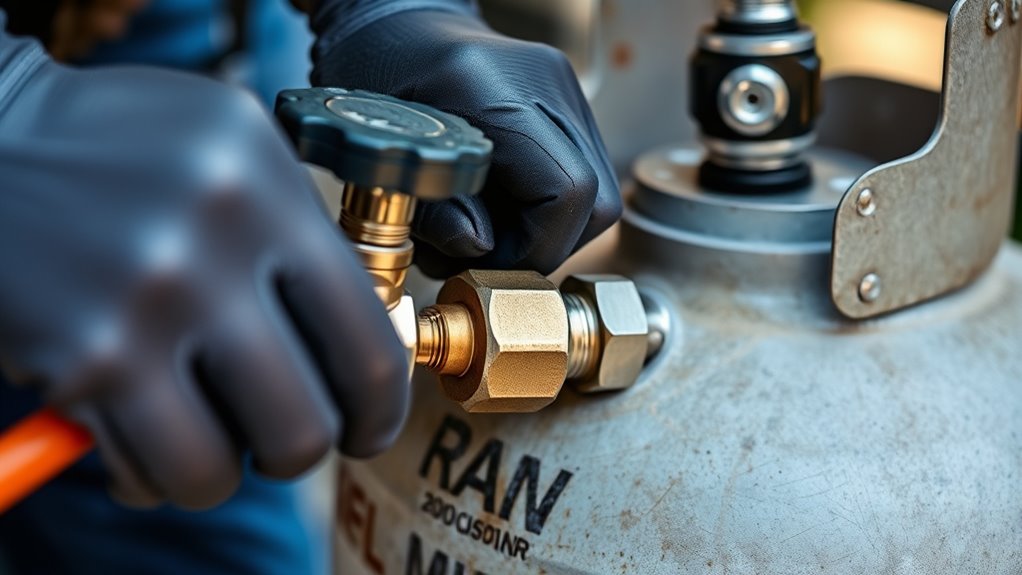
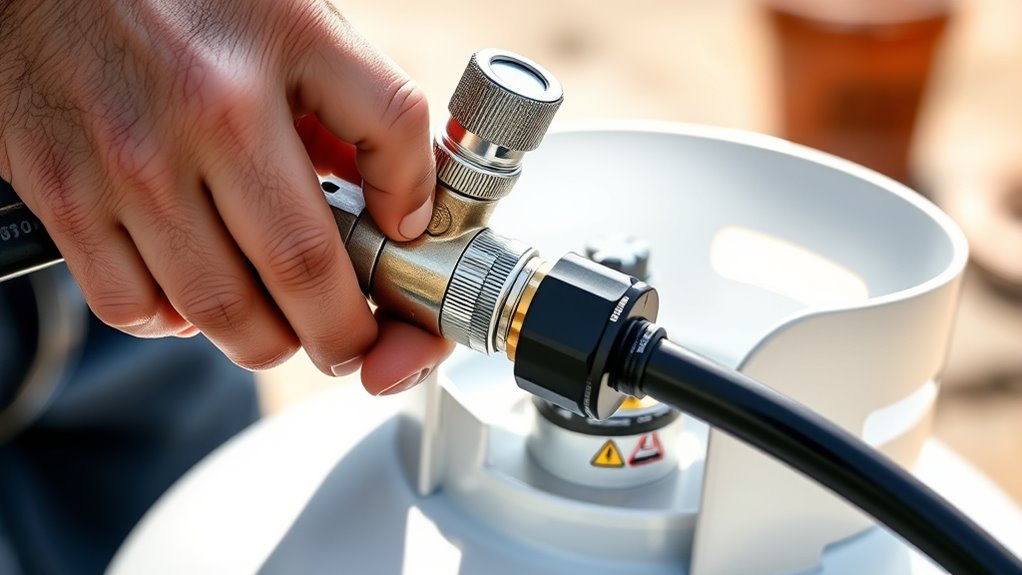
Attaching the regulator and hose correctly is vital to guarantee a safe and secure propane connection. First, ensure the hose compatibility matches your equipment to prevent leaks or damage. When attaching the regulator, screw it onto the propane tank’s valve by hand, turning clockwise until it’s snug. Avoid over-tightening, which can damage fittings. Next, connect the hose to the regulator’s outlet port, ensuring it’s securely attached. Use the proper fittings designed for propane use, and check that all connections are tight but not forced. A secure connection prevents leaks and ensures safe operation. After attaching, gently tug on the hose to confirm it’s firmly connected. Proper attachment of the regulator and hose is a vital step in maintaining safety during propane use.
Conducting a Leak Test Before Use
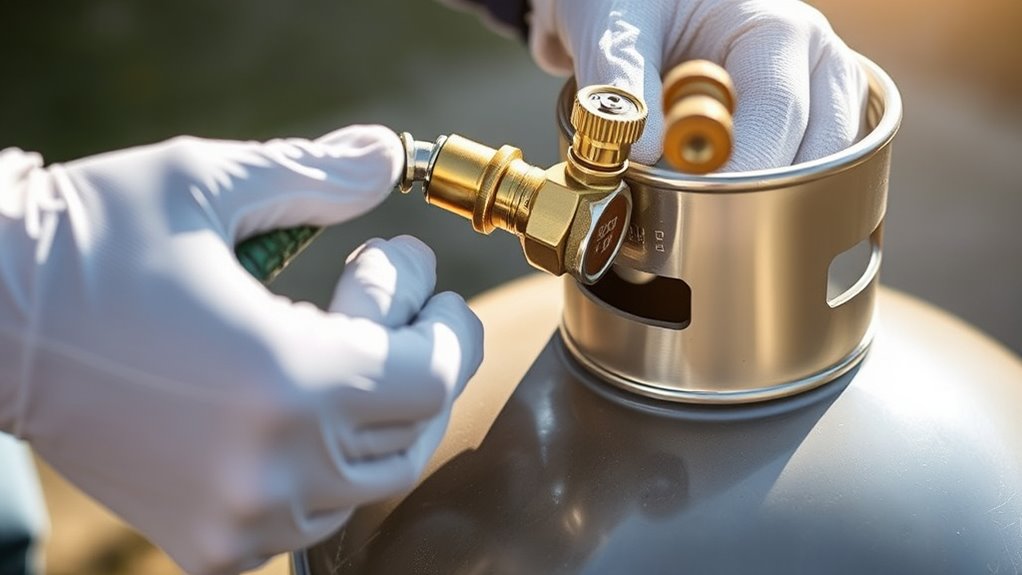
Before using your propane setup, it’s essential to conduct a leak test to make sure all connections are secure. Leak detection is a crucial step in following safety protocols, as it helps prevent dangerous gas leaks. To do this, turn on the propane tank valve slightly, but do not ignite the appliance. Apply a soapy water solution to all connections and hoses. If bubbles form, it indicates a leak, and you need to tighten fittings or replace faulty components before proceeding. If no bubbles appear, the connections are safe. Remember, never ignore leak detection—it’s a simple yet vital step to ensure safe operation and avoid accidents. Always perform this test each time you connect or reconnect your propane tank.
Final Safety Checks and Starting Your Appliance
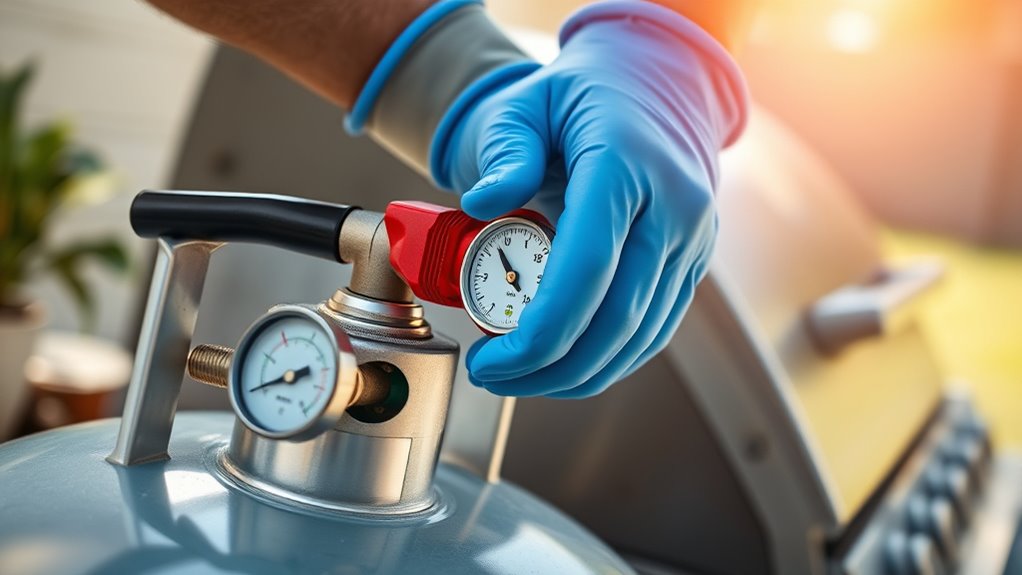
Before igniting your appliance, double-check for leaks and make certain the gas flow is proper. Once you’re confident there are no leaks, carefully ignite the appliance and observe its operation. If everything runs smoothly, you’re ready to enjoy your setup safely.
Inspect for Leaks
Have you double-checked all connections for leaks before turning on your propane appliance? This is a vital step in ensuring ventilation safety and preventing accidents. To detect leaks, apply a soapy water solution to all fittings and connections. Turn on the propane supply slightly—do not ignite the appliance yet—and watch for bubbles indicating a leak. If you see bubbles, turn off the gas immediately and tighten or reseat the fittings. Never use a flame to check for leaks, as this is dangerous. Proper leak detection keeps you safe and confirms that your setup is secure. Once you’re confident there are no leaks, you can proceed to start your appliance safely. Always prioritize safety during these final checks to avoid hazards.
Confirm Gas Flow
Once you’ve confirmed there are no leaks, it’s time to verify that the gas is flowing correctly to your appliance. Turn on the propane supply slightly and listen for a steady hissing sound, which indicates gas flow. Check the pressure regulation device—ensure it’s functioning properly and set to the recommended pressure for your appliance. If you notice any irregular sounds or if the pressure seems off, turn off the gas immediately and recheck your connections. Proper pressure regulation ensures safe and consistent gas flow, preventing potential hazards. Confirm that the gas flows smoothly without interruption or fluctuation. Once you’re confident that the gas flow is steady and the pressure regulation is correct, you’re ready to proceed with igniting your appliance.
Ignite and Test
Now, it’s time to ignite your appliance and perform the final safety checks. Begin by following the proper lighting procedures, ensuring all connections are secure and there are no gas leaks. Turn on the propane supply slowly, then ignite the appliance using a match or spark igniter, following your manufacturer’s instructions. Keep your face and body away from the burner during ignition. Once lit, observe the flame; it should be steady and blue. If the flame is yellow or flickering, turn off the appliance immediately for troubleshooting. Always have an emergency shutdown plan in place, so you can quickly turn off the gas if needed. Confirm the appliance operates correctly before leaving it unattended, ensuring safe, reliable use.
Frequently Asked Questions
How Often Should I Schedule Propane Tank Inspections?
You should schedule propane tank inspections annually to guarantee safe tank maintenance. Regular inspection frequency helps catch potential issues early, like leaks or corrosion, preventing accidents. It’s essential to have a professional check your tank at least once a year, especially if you use propane heavily or if your tank is older. Keep track of inspection dates and follow safety guidelines to maintain peak performance and avoid hazards.
Can I Connect a Propane Tank Indoors Safely?
Think of your home as a delicate greenhouse, where propane’s warmth must be carefully balanced. Connecting a propane tank indoors isn’t safe unless you meet strict indoor safety standards and ventilation requirements. Without proper ventilation, gases can accumulate and pose risks. Always make certain your space is well-ventilated, use approved equipment, and follow local codes. When in doubt, consult a professional to keep your indoor environment safe and secure.
What Are Common Signs of a Leaking Propane Tank?
If your propane tank is leaking, you’ll notice a strong smell of rotten eggs or sulfur, which is a key sign. You might also see tank corrosion or damage to the valve, indicating a potential leak. Listen for hissing sounds near the valve area, and check for frost or moisture around the tank. If you suspect a leak, turn off the tank immediately and get it inspected or replaced to stay safe.
How Do Weather Conditions Affect Propane Tank Safety?
Weather conditions critically impact propane tank safety. Extreme temperatures, whether hot or cold, affect the tank’s pressure and can cause leaks or bursts if not managed properly. During hot weather, tanks expand, increasing pressure, so make certain to have good ventilation and avoid direct sunlight. Cold temperatures lower pressure, affecting performance. Always check weather safety guidelines, monitor temperature effects, and store your propane tank in a shaded, well-ventilated area to prevent accidents.
Is It Safe to Leave a Propane Tank Connected Overnight?
Leaving your propane tank connected overnight is generally safe if you follow proper tank storage and regulator maintenance. Think of it as giving your outdoor kitchen a night’s rest—no need to disconnect every time. Just make certain the valve is tightly closed, and check for leaks or damage before storing. Regularly inspect your regulator, keep the area clear, and you’ll keep your propane setup safe and sound through the night.
Conclusion
By following these steps, you guarantee a safe and smooth propane connection. Imagine a beginner, like you, who skipped a leak test and faced a small fire; that’s avoidable with proper precautions. Always double-check connections and conduct leak tests before use. When you prioritize safety, you’ll enjoy your outdoor cooking or heating without worry. Taking these simple measures protects you and your loved ones—making every propane session safe and stress-free.
Halloween Picks
halloween
As an affiliate, we earn on qualifying purchases.