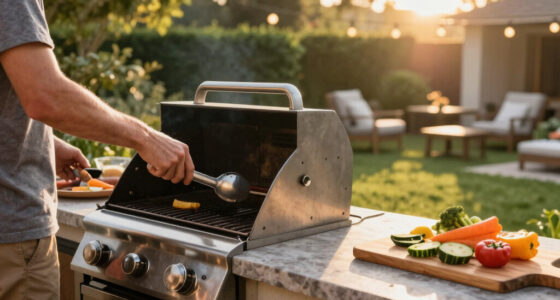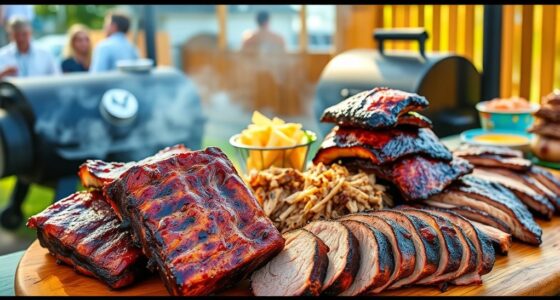
If your grill heats unevenly, flares up often, or struggles to maintain consistent temperatures, it’s time for an upgrade. Over time, burners and heat plates can clog or damage, leading to poor performance and frustrating cookouts. Outdated features and limited space also suggest it’s time to think about a new model. Upgrading not only improves your grilling results but also enhances your outdoor cooking experience—keep going to discover even more telltale signs that it’s time for new gear.
Key Takeaways
- Your grill shows uneven heating or persistent flare-ups, indicating declining performance.
- The cooking surface is too small for your gathering needs or lacks modern features.
- Repairs are frequent and costly, outweighing the benefits of fixing your current grill.
- Your grill’s appearance is deteriorating beyond simple cosmetic fixes, affecting backyard aesthetics.
- Upgrading to a modern model offers better heat control, efficiency, and outdoor cooking features for improved results.

Knowing when to upgrade your grill can save you from frustrating barbecues and subpar results. Over time, even the best grills can show signs of wear that impact your outdoor cooking experiences. If you’ve noticed uneven heating, persistent flare-ups, or difficulty maintaining temperature, it might be time to consider a new model. Regular grill maintenance helps extend your equipment’s lifespan, but there comes a point when repairs no longer make sense. Staying aware of current outdoor cooking trends can also guide you toward better options that match your evolving grilling style. With so many innovative features available, upgrading can dramatically improve your grilling results and enjoyment.
Knowing when to upgrade your grill ensures better results and more enjoyable outdoor cooking experiences.
One of the clearest signs you need a new grill is inconsistent heat distribution. If your current grill heats unevenly, you’ll struggle to cook food evenly, risking burnt steaks or undercooked chicken. This problem often worsens over time, especially if your grill’s burners or heat plates become clogged or damaged. Regular grill maintenance can help maintain performance, but if the problem persists despite cleaning and repairs, it’s a good indicator it’s time for an upgrade. Modern grills incorporate advanced heat control technology, allowing you to achieve precise temperatures and better control over your outdoor cooking. Staying informed about outdoor cooking trends can help you select a grill that offers features like infrared burners, smart controls, or even app connectivity, making your grilling sessions more efficient and enjoyable.
Another sign to consider upgrading is when your grill no longer meets your needs or limits your culinary creativity. Maybe you’re yearning for bigger cooking surfaces, rotisserie options, or additional zones for different foods simultaneously. If your current grill feels cramped or outdated compared to new models boasting innovative features, upgrading can elevate your outdoor cooking game. Additionally, if your grill’s appearance is deteriorating beyond cosmetic fixes, replacing it might be more practical. A modern grill not only performs better but also adds aesthetic appeal to your backyard space, aligning with current outdoor cooking trends that emphasize style and functionality. Recognizing the importance of innovative features can help you choose a model that enhances your outdoor culinary experiences.
Ultimately, if your grill demands constant repairs or just doesn’t deliver the results you want anymore, it’s time to consider an upgrade. Pay attention to how your equipment performs during regular use, and don’t hesitate to explore new options that incorporate the latest technology and design features. Embracing outdoor cooking trends can help you choose a grill that fits your lifestyle, making every cookout more satisfying. Remember, investing in a new grill can be a game-changer, turning ordinary barbecues into memorable outdoor gatherings.

Charbroil Pro Series with Amplifire Infrared Technology 4-Burner Propane Gas Grill Cabinet with Side Burner, Black – 463281024
MODULAR COOKING SYSTEM: Go from classic grilling to versatile griddling in under 90 seconds or swap to charcoal…
As an affiliate, we earn on qualifying purchases.
As an affiliate, we earn on qualifying purchases.
Frequently Asked Questions
How Long Should a Grill Typically Last Before Replacement?
A grill usually lasts about 5 to 15 years, depending on its material durability and how well you maintain it. Check your grill warranty—many cover issues for several years, giving you a sense of its lifespan. If your grill shows rust, uneven heating, or the parts are worn out despite proper care, it’s time to contemplate a replacement. Regular maintenance helps extend its useful life considerably.
Can I Repair My Old Grill Instead of Buying a New One?
Yes, you can consider grill repair instead of buying a new one if the issues are minor, like rust or faulty burners. However, weigh the costs of repair against a new grill’s benefits. If your old grill has significant damage, poor heat distribution, or safety concerns, it’s better to opt for a new model. In the long run, an upgrade often offers improved performance and durability over fixing an aging, less efficient grill.
Are Newer Grill Models More Energy-Efficient?
Yes, newer grill models often offer better fuel efficiency and eco-friendly grilling features. They use advanced technology to minimize fuel consumption while maintaining excellent heat output. This means you can enjoy your barbecues with less environmental impact and lower energy costs. Upgrading to the latest models helps you stay eco-conscious while still achieving delicious results, making it a smart choice for both your wallet and the environment.
What Safety Concerns Indicate I Need a New Grill?
If you notice gas leaks or rust corrosion on your grill, it’s time to get a new one. Gas leaks can cause dangerous fires or explosions, so don’t ignore the smell of gas or hissing sounds. Rust corrosion weakens the structure and can lead to leaks or collapse. Prioritize safety by replacing your grill if you see these warning signs to prevent accidents and guarantee safe grilling.
How Does Grill Maintenance Impact Its Lifespan?
Proper grill maintenance maximizes its longevity and performance. Regular grill cleaning removes grease and debris, preventing buildup that can cause rust and damage. Additionally, consistent rust prevention techniques shield your grill from corrosion, extending its lifespan. When you prioritize cleaning and rust prevention, you preserve the grill’s condition, ensuring it remains reliable for many more meals. Neglecting maintenance, however, accelerates deterioration and shortens your grill’s lifespan.

Ninja FlexFlame ProConnect Grill & Smoker | 5-in-1 Smart Cooking System | Electric & Propane | App-Connected | 3-Burner Digital Control | Roast, Griddle & Pizza Maker | Black/Gold | PG305
PRO-CONNECTIVITY: Monitor and adjust your temperatures from your phone and get notifications on your food status, exact temperatures,…
As an affiliate, we earn on qualifying purchases.
As an affiliate, we earn on qualifying purchases.
Conclusion
Eventually, your grill’s performance will fade like a sunset slipping below the horizon. If you notice uneven cooking, rust, or difficulty maintaining temperature, it’s time to upgrade. Think of your grill as the heartbeat of your backyard; when it stalls, so do your cookouts. Don’t wait until it’s completely burnt out—invest in a new grill and keep your summer feasts sizzling and your gatherings unforgettable. Your next backyard masterpiece awaits just a decision away.

Royal Gourmet 8-Burner Gas Grill, 104,000 BTU Liquid Propane Grill, Independently Controlled Dual Systems, Outdoor Party or Backyard BBQ, Black
Spacious Cooking Surface and High Output: 993 sq. in. porcelain-enameled steel wire cooking grates are with food-grade treatment,…
As an affiliate, we earn on qualifying purchases.
As an affiliate, we earn on qualifying purchases.

Dyna-Glo Universal Deluxe Rotisserie Kit for Grills
NOTABLE SPECS
As an affiliate, we earn on qualifying purchases.
As an affiliate, we earn on qualifying purchases.