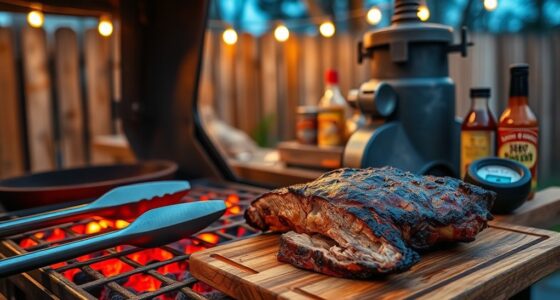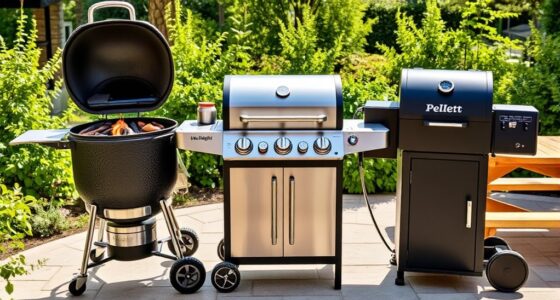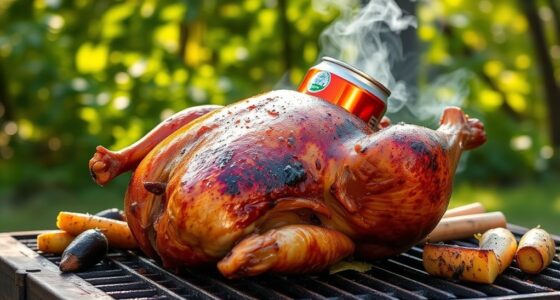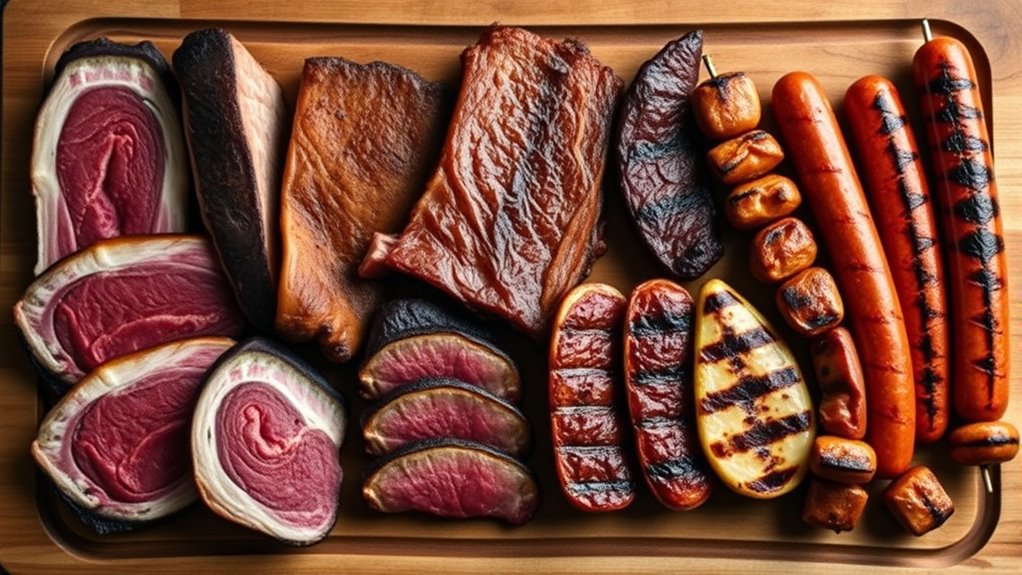

For smoking, opt for cuts like brisket, pork shoulder, chuck roast, ribs, and turkey thighs, which have good marbling and connective tissue that break down to become tender and flavorful. For grilling, choose leaner cuts such as ribeye, sirloin, tenderloin, chicken breasts, and flank steak, which cook quickly and develop a tasty crust. Keep in mind, matching the cut to your cooking method makes all the difference—discover how to pick the best options for your next cookout.
Key Takeaways
- Perfect smoking cuts include well-marbled brisket, pork shoulder, and chuck roast with high fat and connective tissue.
- Suitable grilling cuts are lean and tender, such as ribeye, tenderloin, and sirloin, for quick high-heat cooking.
- Smoking benefits tougher cuts that break down over slow cooking, creating tender, flavorful meat.
- Grilling works best with cuts that cook fast and develop a crust, avoiding dry-out.
- Marbling and connective tissue content determine whether a cut is ideal for smoking or grilling.

When it comes to smoking and grilling, choosing the right cut of meat can make all the difference in flavor and tenderness. The key is selecting cuts that respond well to slow cooking and develop rich, smoky flavors. For smoking, you’ll want cuts with good marbling techniques, which help keep the meat moist and tender during the long, low-and-slow process. Look for well-marbled briskets, chuck roasts, or pork shoulder—these cuts have intramuscular fat that melts during smoking, infusing the meat with flavor and juiciness. To enhance this process, you can experiment with marinade options. Marinating tougher cuts beforehand can soften fibers, add flavor, and improve overall tenderness, especially if you’re working with less marbled meat. A marinade with acid, like vinegar or citrus, can break down connective tissues, while herbs and spices boost flavor layers.
For grilling, the ideal cuts are generally leaner and cook quickly, so you get a nice sear and juicy interior without drying out. Ribeye steaks, sirloin, and tenderloin are excellent choices because they cook fast and develop a flavorful crust. These cuts don’t need extensive marinating, but a quick marinade or dry rub can add depth to their natural flavors. If you want to maximize flavor, consider marinades that include oil, garlic, and herbs, which penetrate quickly and create a tasty crust when grilled. When grilling, the focus is on high heat and short cooking times, so choosing cuts that are tender enough to handle this style without becoming tough is essential.
In contrast, some cuts are better suited for smoking rather than grilling, thanks to their structure and fat content. Cuts like beef brisket or pork butt benefit from the slow, smoky process because they break down connective tissues over time, resulting in melt-in-your-mouth tenderness. Conversely, cuts like flank steak or chicken breasts are better for grilling—they’re lean, cook rapidly, and respond well to quick searing. If you’re experimenting, try marinating leaner cuts with flavorful options that add moisture and prevent drying out during grilling.
Ultimately, understanding the unique qualities of each cut and how they respond to different cooking techniques will elevate your barbecue game. Whether you’re smoking a brisket with perfectly marbled fat or grilling a tenderloin with a simple marinade, matching the right meat to the method ensures a delicious, satisfying result every time.

Meat Illustrated: A Foolproof Guide to Understanding and Cooking with Cuts of All Kinds
As an affiliate, we earn on qualifying purchases.
As an affiliate, we earn on qualifying purchases.
Frequently Asked Questions
Which Cuts Are Best for Cold Smoking?
You should choose lean, firm cuts like salmon, trout, and cheese for cold smoking. These foods absorb smoke flavor combinations well without needing heat, but always prioritize cold smoking safety to prevent spoilage. Avoid fatty meats, which can become rancid. Keep temperatures below 90°F, and guarantee proper airflow. Cold smoking enhances flavor while maintaining safety, giving you delicious, smoky results perfect for appetizers or charcuterie boards.
How Thick Should Meat Be Sliced for Smoking?
You should slice meat about 1/8 to 1/4 inch thick for smoking. This thickness allows the smoke to penetrate evenly without causing the meat to become tough. Use proper slicing techniques, keeping your knife sharp and slicing against the grain for tender results. Thinner slices work best for cold smoking, while slightly thicker cuts are better for hot smoking. Adjust thickness based on the type of meat and smoking method you’re using.
Can I Smoke More Than One Cut at Once?
You can definitely smoke more than one cut at once, but keep in mind that smoking techniques require proper airflow and temperature control. It’s best to space out the meat to prevent overcrowding, which can affect smoke circulation and even seasoning. When arranging multiple pieces, make certain they’re seasoned evenly and avoid stacking them directly on top of each other. This way, you get consistent flavor and perfect results every time.
What’s the Ideal Resting Time After Smoking?
You should rest your smoked meat for about 15 to 30 minutes, depending on the cut. This allows the meat tenderness to improve and the juices to redistribute evenly, ensuring a moist, flavorful bite. Keep the meat at a resting temperature of around 140°F to prevent it from cooling too much. Skipping this step can result in a dry, less tender result, so don’t rush the resting process.
Are There Specific Woods Better for Certain Meats?
Yes, certain woods work better for specific meats due to their flavor infusion and wood pairing. For example, apple wood adds a sweet, fruity aroma perfect for poultry and pork, while hickory gives a rich, smoky flavor ideal for beef and ribs. Cherry wood provides a mild, sweet taste great for fish and chicken. Choosing the right wood enhances your meat’s natural flavor and creates a delicious, well-balanced smoky profile.

Hardcore Carnivore Black | All-Purpose Beef Seasoning Rub, 13oz Shaker
- Made in Texas: Crafted by BBQ expert Jess Pryles
- Bold Flavor for Grilling: Enhances steak, brisket, and burgers
- Creates Epic Crust: Forms a legendary bark on red meats
As an affiliate, we earn on qualifying purchases.
As an affiliate, we earn on qualifying purchases.
Conclusion
Now that you know which cuts are perfect for smoking and grilling, you’re ready to channel your inner pitmaster. Whether you’re chasing that smoky, tender brisket or flipping a juicy steak, these cuts will never let you down. Think of it as your culinary Excalibur—ready to conquer any cookout. So fire up your grill or smoker, grab your tongs, and turn your backyard into a legendary feast. Happy grilling and smoking, my friend!

Verde Farms, Beef Ribeye Steak, Organic, Grass-Fed | 0.625 lbs.
- Organic and Grass-Fed: USDA Organic, 100% grass-fed and finished
- Regenerative Farming: Sourced from verified regenerative farms
- Humanely Raised: Pasture-raised, free-range, no feedlots
As an affiliate, we earn on qualifying purchases.
As an affiliate, we earn on qualifying purchases.
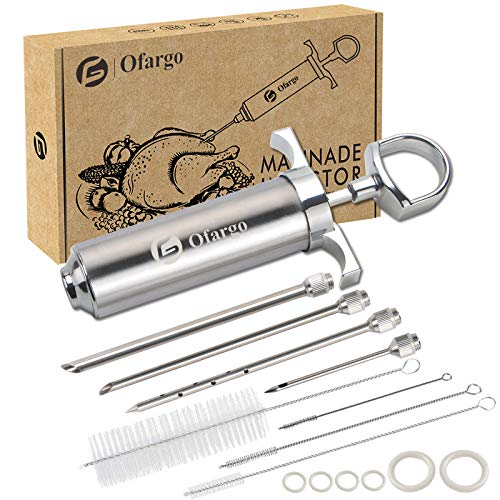
Ofargo Stainless Steel Meat Injector Syringe Kit with 4 Marinade Needles for BBQ Grill Smoker, Father Day Gifts for Dad Husband Men Him, 2-oz Large Capacity, Both Paper User Manual and E-Book Recipe
- Material: Stainless steel and silicone construction
- Safety: Food-safe, leak-proof design
- Durability: Heavy-duty, long-lasting construction
As an affiliate, we earn on qualifying purchases.
As an affiliate, we earn on qualifying purchases.