At high altitude, you should raise your grill’s temperature by about 15-25°F to counteract slower heat transfer and guarantee food cooks properly. Use a reliable thermometer to check internal temperatures and avoid undercooking. Keep your lid closed to conserve fuel and preheat longer. Consider adding denser fuels or wood chunks for better heat retention and control airflow with adjustable vents. If you’re enthusiastic to perfect your technique at altitude, you’ll find useful tips below.
Key Takeaways
- Increase grill temperature by 15-25°F to counteract reduced heat transfer efficiency at high altitude.
- Preheat the grill longer and minimize lid openings to retain heat and improve fuel efficiency.
- Use a reliable meat thermometer to ensure proper internal temperatures and food safety.
- Adjust smoking airflow with adjustable vents and add denser fuels or wood chunks for consistent temperature.
- Monitor fuel consumption closely and practice temperature adjustments for optimal results at high altitude.
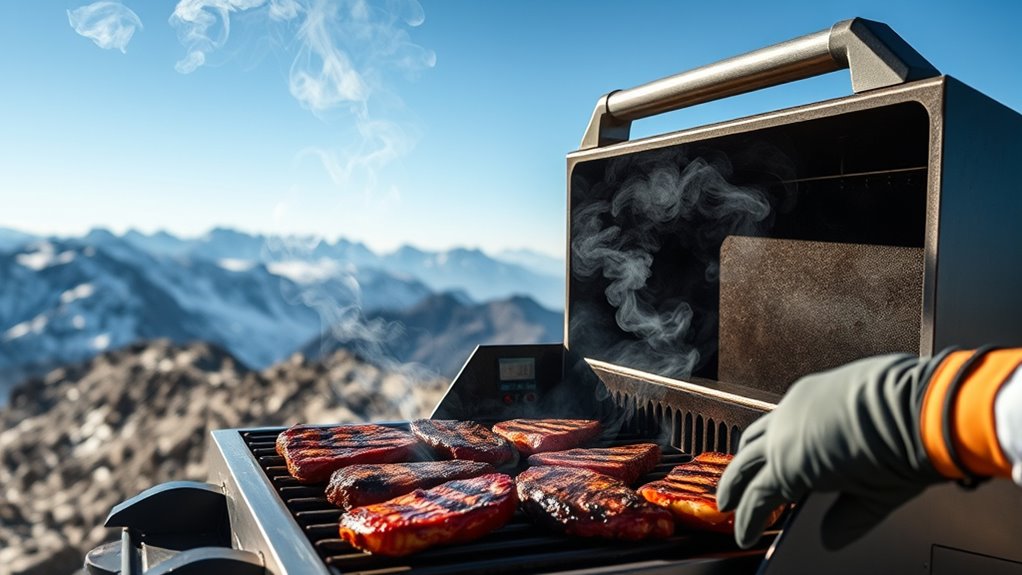
Grilling at high altitudes presents unique challenges because the lower air pressure affects how temperatures and cooking times work. When you’re up there, the reduced atmospheric pressure means heat doesn’t transfer as efficiently, so you’ll need to adjust your cooking temperature to guarantee your food cooks thoroughly. If you stick to sea-level standards, you might find your meat undercooked or your vegetables still firm because the heat isn’t penetrating as deeply. To compensate, raise your grill’s temperature slightly—about 15 to 25 degrees Fahrenheit higher than usual—to reach the desired internal temperature. This adjustment helps you maintain proper doneness without overcooking or drying out your food. Keep a reliable meat thermometer on hand to monitor internal temperatures precisely, making sure your steaks, chicken, or ribs are cooked safely and to your preference. Additionally, understanding the natural environment of your backyard can help optimize your grilling setup for better results. Fuel efficiency is another important consideration at high altitudes. Because the air is thinner, your grill’s fuel might burn differently, often less efficiently. You could find yourself needing more fuel to reach the same cooking temperature you’d achieve at sea level. To improve fuel efficiency, consider preheating your grill longer before placing food on it, so it reaches the right temperature faster. Additionally, avoid opening the lid too often, as heat loss can be more significant, causing you to burn more fuel trying to reheat. Using a lid thermometer can help you keep track of the internal temperature, preventing unnecessary fuel consumption. When smoking, maintaining a consistent temperature is vital, so invest in a good smoker with adjustable vents to better control airflow and fuel use. You might also find that using denser fuels or adding wood chunks can help sustain your desired temperature more efficiently, reducing the need for constant adjustments. Adjusting your cooking temperature and paying attention to fuel efficiency go hand-in-hand when grilling at high altitudes. Small tweaks can make a big difference in how your food turns out and how much fuel you consume. Remember, patience is key—taking the time to fine-tune your grill’s setup assures you get perfectly cooked meals without wasting resources. With practice, you’ll learn to anticipate how your grill responds to altitude changes, making your grilling experience more successful and enjoyable. So, next time you fire up your grill at a higher elevation, keep these adjustments in mind, and you’ll be able to serve delicious, properly cooked meals every time, regardless of the altitude.
Frequently Asked Questions
How Does Altitude Affect Grill Fuel Consumption?
At higher altitudes, you’ll notice your grill consumes more fuel because the combustion rate decreases due to thinner air. This reduced efficiency means you need to use more fuel to maintain the same temperature. To counteract this, you should adjust your grill’s air vents and increase the amount of fuel, helping improve combustion and maintain ideal cooking conditions despite the altitude-related changes.
What Safety Precautions Are Recommended at High Elevations?
Remember, safety first! At high elevations, you should prioritize altitude safety by ensuring proper ventilation precautions to prevent dangerous carbon monoxide buildup. Use your grill in well-ventilated areas, keep a fire extinguisher nearby, and monitor the flames closely. Always check local regulations and avoid indoor grilling. These steps help you enjoy your cookout safely, just like a wise captain steering clear of stormy seas.
Can I Use the Same Recipes at High Altitude?
Yes, you can use the same recipes at high altitude, but you’ll need to make some recipe modifications. You should adjust cooking times and temperatures to account for lower air pressure, which can affect how food cooks. Also, consider flavor adjustments, like adding extra seasonings or liquids to prevent dryness. These tweaks help make sure your dishes turn out flavorful and properly cooked, even at higher elevations.
How Do Weather Conditions Influence Grilling at High Elevations?
Ever wondered how weather impacts your grill at high elevations? Temperature swings, wind impact, and boiling point variations can all alter cooking times and heat consistency. Wind can cool or blow out flames, making it harder to control temperature. Higher boiling points mean you might need longer cooking times. So, do you adjust your grill setup or cooking approach to stay in control? It’s key for perfect results every time.
Are Special Tools Needed for High-Altitude Grilling?
You don’t necessarily need special tools for high-altitude grilling, but altitude-specific equipment can make your cooking easier. Look for grilling gear adjustments like higher BTU burners or pressure-controlled lids to compensate for lower air pressure. These tools help maintain consistent heat and ensure your food cooks properly. Investing in altitude-specific equipment improves your grilling results and saves you time, making your outdoor cooking more enjoyable and successful at high elevations.
Conclusion
So, are you ready to elevate your grilling game and master those altitude adjustments? With a few simple tweaks, you’ll be amazed at how perfectly your dishes turn out, no matter how high you go. Don’t let the thin air hold you back—embrace the challenge and enjoy delicious, smoky flavors every time. After all, isn’t the thrill of mastering new skills what makes outdoor cooking so rewarding? Happy grilling at any altitude!