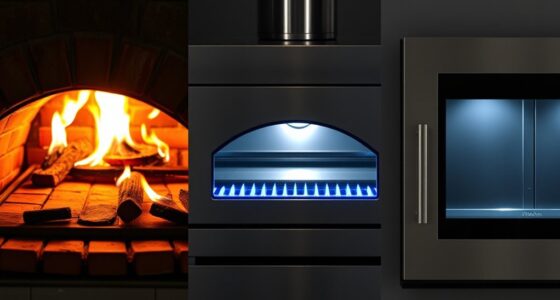
To use your pizza oven year-round, you should prepare it for different seasons by inspecting and cleaning it regularly, covering it during extreme weather, and adjusting your temperature settings. During winter, insulate well and use dry, seasoned wood, while in summer, lower the temperature and use wind barriers. Manage weather conditions by monitoring forecasts and ingredients to match seasonal flavors. Keep ventilation and safety in check, and experiment with creative toppings—continue to explore these tips for peak performance all year.
Key Takeaways
- Regularly inspect, clean, and cover your oven to prevent damage and weather-related wear during all seasons.
- Adjust temperature settings based on seasonal conditions, using insulation in winter and lowering heat in summer.
- Use wind barriers and sheltered locations to maintain steady heat and safety in varying weather.
- Select seasonal ingredients and toppings to enhance flavor and freshness throughout the year.
- Ensure proper ventilation, safety measures, and regular maintenance for optimal oven performance year-round.
Preparing Your Pizza Oven for Different Seasons

As the seasons change, it’s important to adapt your pizza oven to guarantee ideal performance and longevity year-round. Proper pizza stone maintenance is key, so inspect your stone regularly for cracks or damage and clean off any residue after each use. Incorporate consistent oven cleaning routines to remove grease and debris, which can affect heat distribution. During colder months, ensure your oven is thoroughly cleaned before storage or extended off-season periods, preventing mold or buildup. In warmer months, keep the oven covered when not in use to protect it from dust and moisture. Regularly checking the condition of your pizza stone and maintaining a clean oven environment helps your oven perform reliably, no matter the season.
Adjusting Temperature Settings for Winter and Summer

As the seasons change, you’ll need to tweak your oven’s temperature settings to stay comfortable. In winter, focus on heating strategies to keep the oven warm without wasting fuel, while summer calls for cooling tips to prevent overheating. Modifying these settings ensures you get the best performance and flavor all year round.
Winter Heating Strategies
To guarantee your pizza oven performs at its best year-round, you need to adjust its temperature settings based on the season. During winter, focus on insulation techniques to retain heat and minimize fuel consumption. Use firebricks or insulating blankets to reduce heat loss and keep the oven warm longer. When choosing fuel options, opt for dry, seasoned wood or high-quality charcoal to generate consistent heat without overtaxing your setup. Proper insulation helps maintain stable temperatures despite cold outdoor air, ensuring efficient cooking.
| Insulation Techniques | Fuel Options |
|---|---|
| Firebricks, blankets | Seasoned wood, charcoal |
| Seal gaps, cover vents | Avoid wet wood |
| Add thermal mass | Use efficient fuels |
Summer Cooling Tips
When summer arrives, adjusting your pizza oven’s temperature settings is essential to keep your outdoor cooking comfortable and efficient. High summer humidity can cause your oven to run hotter than usual, so lower the temperature slightly to prevent overheating. This helps maintain a stable environment, ensuring your pizza crust cooks evenly. Additionally, warmer weather affects ingredient freshness; cooler oven settings help preserve fresh toppings and prevent them from spoiling quickly. Consider using a fan or shade nearby to reduce ambient heat, which can influence oven performance. Regularly monitor your oven’s temperature with a reliable thermometer, making small adjustments as needed. By fine-tuning your settings for summer’s unique conditions, you’ll enjoy perfect pizzas regardless of the season.
Managing Wind and Weather Conditions During Use
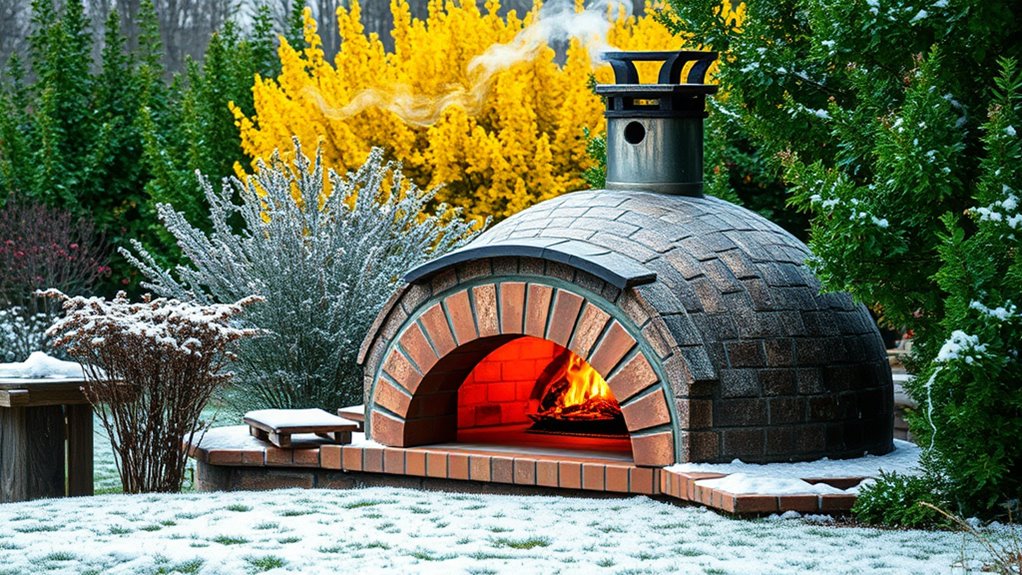
Wind can quickly disrupt your pizza cooking, so it’s important to safeguard your oven from gusts. Use wind-resistant setups like barriers or positioning your oven in a protected spot to keep flames steady. Keep a close eye on weather changes to adjust your setup and ensure consistent results.
Shield From Gusts
Gusts can quickly disrupt your pizza cooking process, causing uneven heat and making it harder to control the oven’s temperature. To shield from gusts, set up wind barriers around your oven, such as bricks, shields, or thick tarps. These barriers help block gust protection, ensuring steady heat and consistent results. Proper placement is key—position barriers at a distance that doesn’t interfere with airflow but still prevents strong gusts from hitting the oven directly.
| Tip | Benefit |
|---|---|
| Use wind barriers | Minimize heat loss and gust interference |
| Position carefully | Maintain steady temperatures |
| Secure barriers | Prevent movement during windy conditions |
| Adjust as needed | Adapt to changing weather for best control |
Wind-Resistant Setup Tips
To effectively manage wind and weather conditions during pizza oven use, you need to proactively adapt your setup as conditions change. Start by enhancing ventilation improvements to prevent dangerous buildup of smoke or heat, especially in breezy conditions. Use windbreaks or shields to deflect gusts and stabilize airflow around the oven. Insulation techniques are also key; well-insulated ovens retain heat better and resist temperature fluctuations caused by wind. Consider wrapping the oven with insulating materials or building a partial enclosure to protect it from direct wind exposure. These adjustments help maintain consistent heat and improve safety. Always check local weather forecasts before cooking in windy conditions, and adjust your setup accordingly to ensure a smooth, safe pizza-making experience year-round.
Monitor Weather Changes
Keeping a close eye on weather changes is essential for safe and consistent pizza oven use. Weather forecasting helps you anticipate wind shifts, temperature drops, or storms that could affect performance. During seasonal planning, monitor forecasts to adjust your setup or timing accordingly. Wind can disrupt heat flow and cause uneven cooking, so stay alert to changing conditions. Use a weather app or local forecasts to track upcoming weather patterns.
| Weather Factor | Action | Tips |
|---|---|---|
| Wind | Shield or reposition oven | Use windbreaks or relocate to sheltered spot |
| Temperature | Adjust cooking time | Lower temps require longer cook times |
| Storms | Postpone use | Wait for calm weather before firing up |
| Humidity | Expect longer cooling | Higher humidity can affect oven heat retention |
| Seasonal Changes | Plan ahead | Prepare for variations in wind and temperature |
Choosing the Right Ingredients Based on Seasonality

Choosing the right ingredients based on seasonality allows you to enjoy fresher, more flavorful pizzas throughout the year. By focusing on seasonal ingredient selection, you guarantee your toppings reflect what’s best at each time. Incorporate climate-specific flavor pairing to enhance taste and balance. For example, in summer, opt for ripe tomatoes and fresh basil, while in winter, choose hearty greens and root vegetables. Adjust your toppings to match seasonal produce, maximizing freshness and flavor. This approach not only improves taste but also supports local farmers and reduces your carbon footprint. Keep these tips in mind to make your pizza truly reflect the season’s best offerings.
- Select ripe, in-season produce for vibrant flavors
- Use climate specific flavor pairing to balance ingredients
- Incorporate local, seasonal vegetables and fruits
- Avoid out-of-season ingredients that lack freshness
- Experiment with seasonal herbs and spices
Timing Your Pizzas for Optimal Results in Hot and Cold Weather

Adapting your pizza timing to hot and cold weather guarantees ideal results and the best possible flavor and texture. In hot weather, keep dough hydration slightly lower to prevent excessive stickiness, and ensure toppings are fresh to avoid sogginess. During cold weather, let the dough rest longer and increase hydration for better elasticity. Use this table to guide your timing:
| Weather Condition | Tips for Perfect Pizza |
|---|---|
| Hot Weather | Shorten baking time, use less water in dough, ensure toppings are fresh |
| Cold Weather | Extend dough rising, increase hydration, allow for longer baking |
| Both | Monitor oven temp, adjust timing based on dough and topping conditions |
| Year-Round | Balance dough hydration and topping freshness for consistent results |
Ensuring Proper Ventilation and Safety Year-Round

Proper ventilation and safety measures are essential to maintaining a healthy and efficient pizza oven environment throughout the year. Ensuring your ventilation systems are functioning correctly helps remove smoke, fumes, and excess heat, preventing dangerous buildup. Follow safety protocols like keeping a fire extinguisher nearby and never leaving the oven unattended while in use. Regularly inspect chimneys and vents for blockages or debris. Wear protective gear such as gloves and safety glasses during operation. Keep the surrounding area clear of combustible materials. Proper ventilation not only improves air quality but also prolongs your oven’s lifespan. By adhering to safety protocols and maintaining your ventilation systems, you create a safer, more enjoyable pizza-making experience year-round.
- Regularly inspect and clean ventilation systems
- Keep fire extinguishers accessible and in working order
- Use protective gear during operation
- Maintain clear surrounding areas free of debris
- Follow safety protocols consistently
Using Seasonal Flavors to Enhance Your Pizzas

Seizing the opportunity to incorporate seasonal flavors into your pizzas can elevate your culinary creations and delight your guests. Use seasonal ingredient pairing to match toppings with the time of year—think butternut squash and sage in fall, fresh tomatoes and basil in summer, or hearty greens and root vegetables in winter. Flavor infusion techniques, like drizzling honey or balsamic glaze, or adding herbs during baking, help bring out the natural qualities of seasonal ingredients. Experiment with spice blends and fresh herbs to enhance flavors without overpowering the pizza. By thoughtfully selecting ingredients and applying these techniques, you create vibrant, memorable pizzas that celebrate each season’s unique bounty. This approach keeps your menu exciting and your oven in constant creative use.
Maintaining Your Pizza Oven Throughout the Year

As you explore seasonal ingredients and flavor techniques, maintaining your pizza oven becomes key to guaranteeing consistent, high-quality results year-round. Regular pizza stone maintenance helps prevent buildup and thermal shock, keeping your oven performing at its best. Develop a routine for oven cleaning that removes ash and debris without damaging surfaces. Check and repair any cracks or wear to extend your oven’s lifespan. Cover your oven during harsh weather to protect it from moisture and dirt. Keep ventilation clear to avoid smoke buildup and ensure proper airflow. Also, inspect the firebricks periodically for damage and replace them if necessary. Proper maintenance isn’t complicated but is essential for reliable, delicious pizzas no matter the season.
- Clean the pizza stone thoroughly after each use
- Remove ashes and debris regularly
- Inspect and repair oven surfaces as needed
- Cover your oven during bad weather
- Check for cracks or damage periodically
Creative Ways to Use Your Pizza Oven Beyond Pizza

Your pizza oven isn’t just for baking perfect pies—it’s a versatile tool that can elevate a variety of dishes. With a little creativity, you can experiment with creative toppings on flatbreads or focaccia, transforming simple ingredients into gourmet starters. You can also prepare alternative dishes like roasted vegetables, seafood, or even slow-cooked meats, thanks to the high heat and even cooking environment. The intense heat lends itself well to making crispy bread, naan, or calzones filled with your favorite fillings. Plus, you can craft desserts such as fruit tarts or s’mores using the residual heat. Don’t limit your oven to just pizza—use it to explore new flavors and textures, making every meal an exciting culinary adventure.
Frequently Asked Questions
Can I Use My Pizza Oven During Rainy or Snowy Days?
Yes, you can use your pizza oven during rainy or snowy days, but you should follow rainy weather tips and snowy day precautions. Make sure to keep the oven in a sheltered area or use a cover to protect it from moisture. Check that the airflow isn’t blocked and avoid using it in heavy rain or snow to prevent safety hazards. With these precautions, you can enjoy pizza regardless of the weather.
How Do I Prevent Pests From Entering the Oven in Different Seasons?
Think of your pizza oven as a fortress against unwanted guests. To keep pests out, implement seasonal pest prevention by sealing any gaps and covering vents during off-seasons. Pest-proofing strategies like adding mesh screens and storing firewood away from the oven also help. Regularly inspect and clean your oven to prevent pests from making it their home, ensuring your pizza paradise stays pest-free, no matter the season.
Is There a Recommended Cleaning Schedule for Seasonal Use?
Yes, following a seasonal cleaning and maintenance schedule keeps your pizza oven in top shape. After each season, thoroughly scrub the interior to remove ash and debris, and inspect for any damage. In winter, cover the oven to protect from moisture, while in summer, clean the exterior regularly. Establish a routine, like deep cleaning every three to six months, to guarantee peak performance and longevity of your pizza oven year-round.
Can Temperature Fluctuations Damage My Pizza Oven?
A stitch in time saves nine, and temperature fluctuations can indeed harm your pizza oven. Rapid thermal expansion from frequent hot-cold changes stresses the materials, potentially causing cracks or warping. To prevent this, guarantee proper insulation requirements and gradually heat or cool your oven. This approach minimizes damage, helping your oven endure year-round use without costly repairs, keeping your pizza nights delicious and worry-free.
How Do I Store My Pizza Oven During Off-Season Months?
You should store your pizza oven during off-season months by covering it with insulation and outdoor protection to shield it from weather damage. Make sure it’s clean and dry before covering, and use a weather-resistant cover that fits snugly. Store it in a sheltered area if possible. Proper insulation and outdoor protection prevent rust, moisture, and temperature fluctuations from harming your oven, ensuring it stays in great shape for next season.
Conclusion
No matter the season, keep your pizza oven ready. Adjust your settings, adapt to the weather, choose seasonal ingredients, and explore new flavors. Maintain your oven, stay safe, and experiment with creative recipes. Embrace the endless possibilities — from cozy winter pies to fresh summer bites. With a little care and creativity, your pizza oven becomes your all-year-round culinary companion, turning everyday moments into delicious memories.